
COMMERCIAL PEST CONTROL SERVICES
Professional Commercial Pantry Pest Control Services in Aventura, FL
South Florida’s climate creates year-round challenges for stored product pests. In Aventura, commercial properties that handle packaged food, dry goods, and bulk inventory need structured monitoring and prevention programs. Our commercial pantry pest control services are designed to protect grocery stores, warehouses, and food storage facilities from recurring infestations.
Licensed & Insured
Professional Commercial Pantry Pest Control
40+ Years
Protecting South Florida Commercial Properties
UNDERSTANDING THE PROBLEM
Why Pantry Pest Problems Affect Commercial Properties in Aventura
Pantry pest issues are common in South Florida due to humidity, heat, and constant product movement. In Aventura, grocery stores, distribution centers, and storage facilities face increased risk when stored goods remain on shelves for extended periods.
Stored product pests such as moths, beetles, and weevils often enter through packaged goods and quickly spread through inventory if not detected early. Without structured inspection programs, infestations can disrupt operations, damage inventory, and impact compliance standards.
Our commercial pantry pest control services in Aventura focus on identifying the source, reducing active populations, and implementing long-term monitoring systems to prevent recurrence.
COMMON pantry pest INFESTATIONS
Types of Pantry Pests We Treat in Aventura Commercial Properties
Commercial pantry pest infestations often originate from incoming inventory or long-term storage areas. Our team identifies the specific species involved to implement targeted, facility-appropriate treatment and prevention strategies.
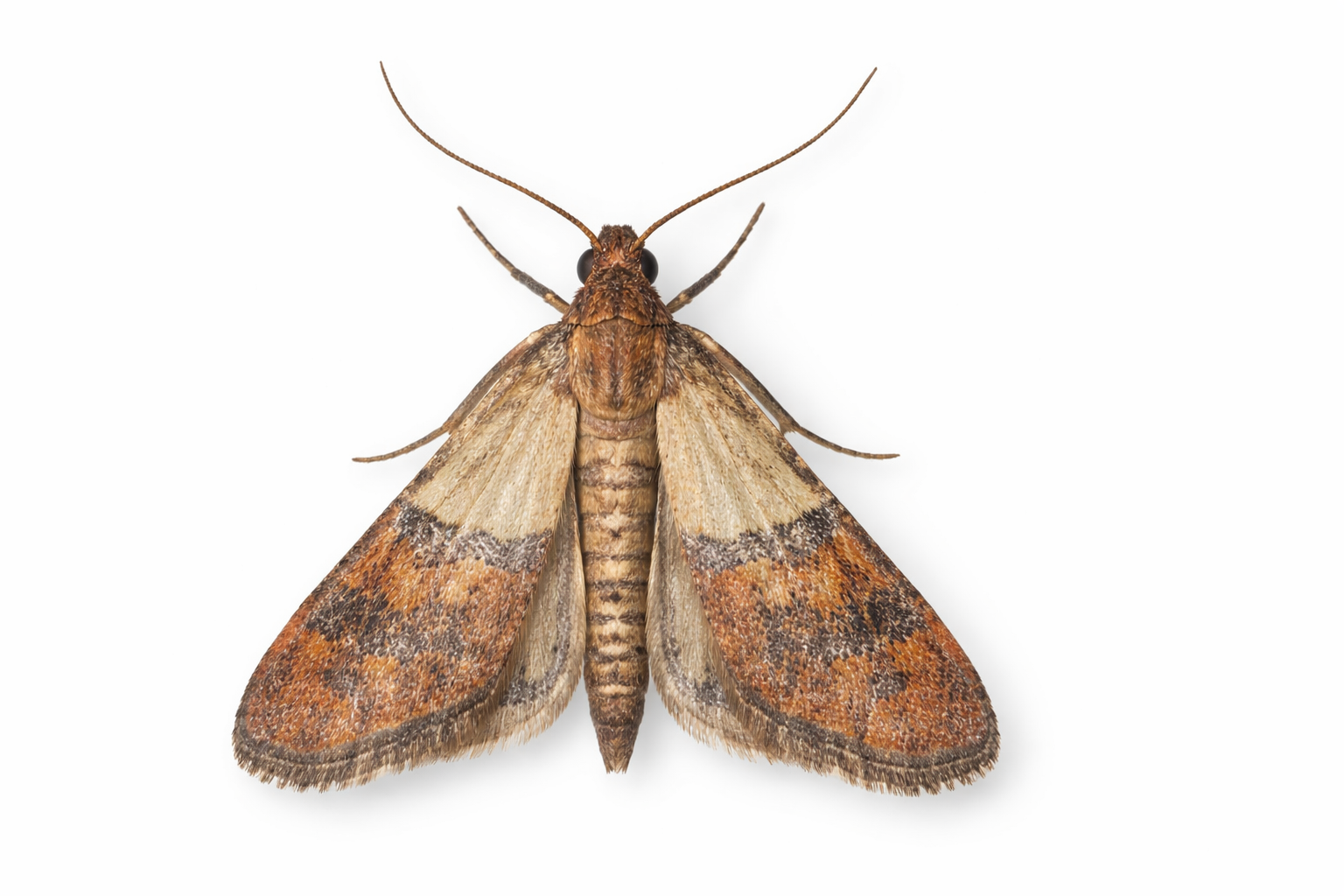
Indianmeal Moths
Indian meal moths are one of the most common stored product pests in commercial facilities. They are frequently introduced through incoming shipments of grains, flour, pet food, and packaged dry goods. In grocery stores, warehouses, and stockrooms, larvae leave webbing inside packaging and along shelving, contaminating inventory and spreading quickly through dry storage areas.
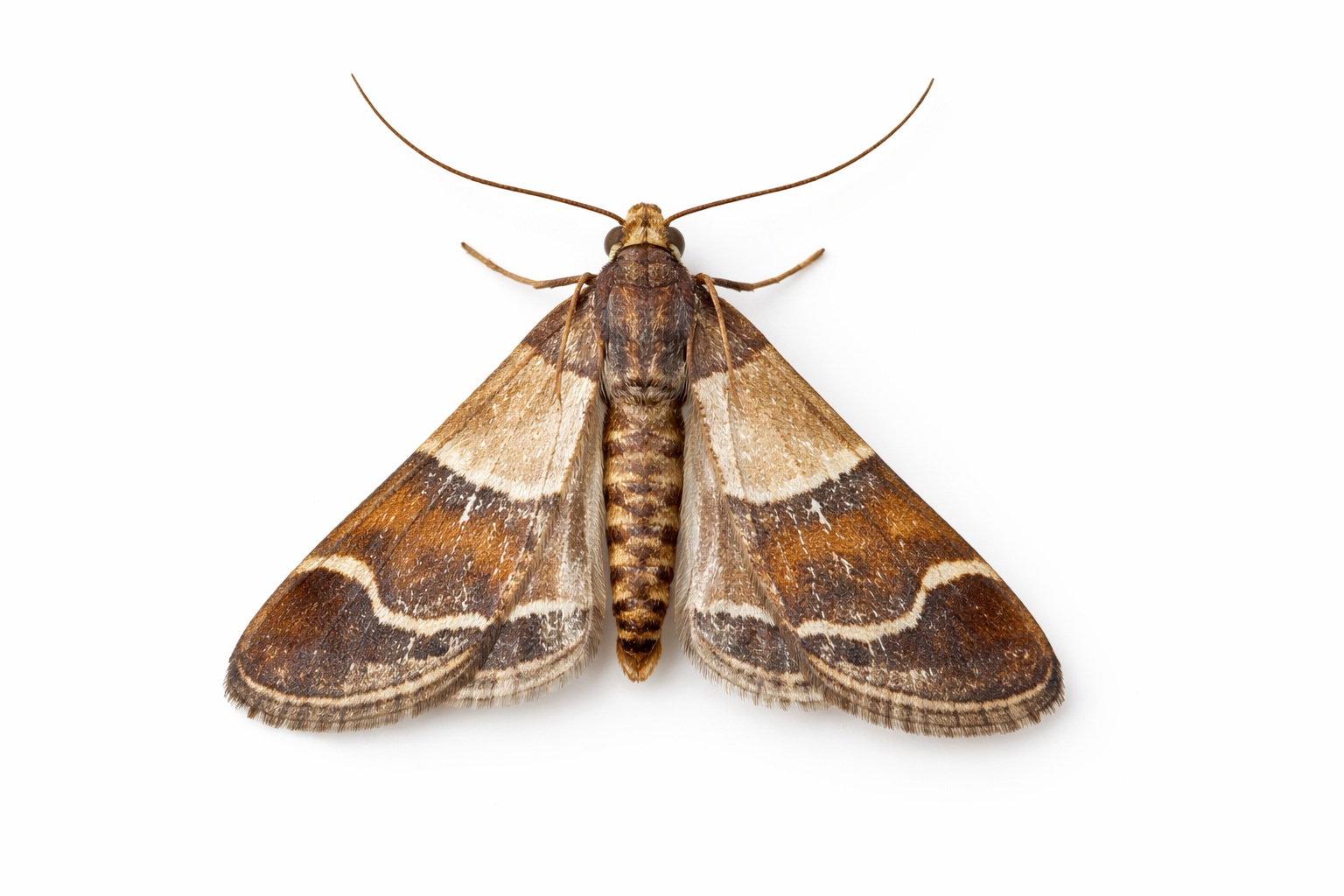
Meal Moths
Meal moths infest stored dry goods in commercial environments such as warehouses and retail storage rooms. They are often found in bulk grain products, cereals, and packaged pantry items. Adults are attracted to light, while larvae feed inside products, allowing infestations to go unnoticed until webbing or product damage appears.
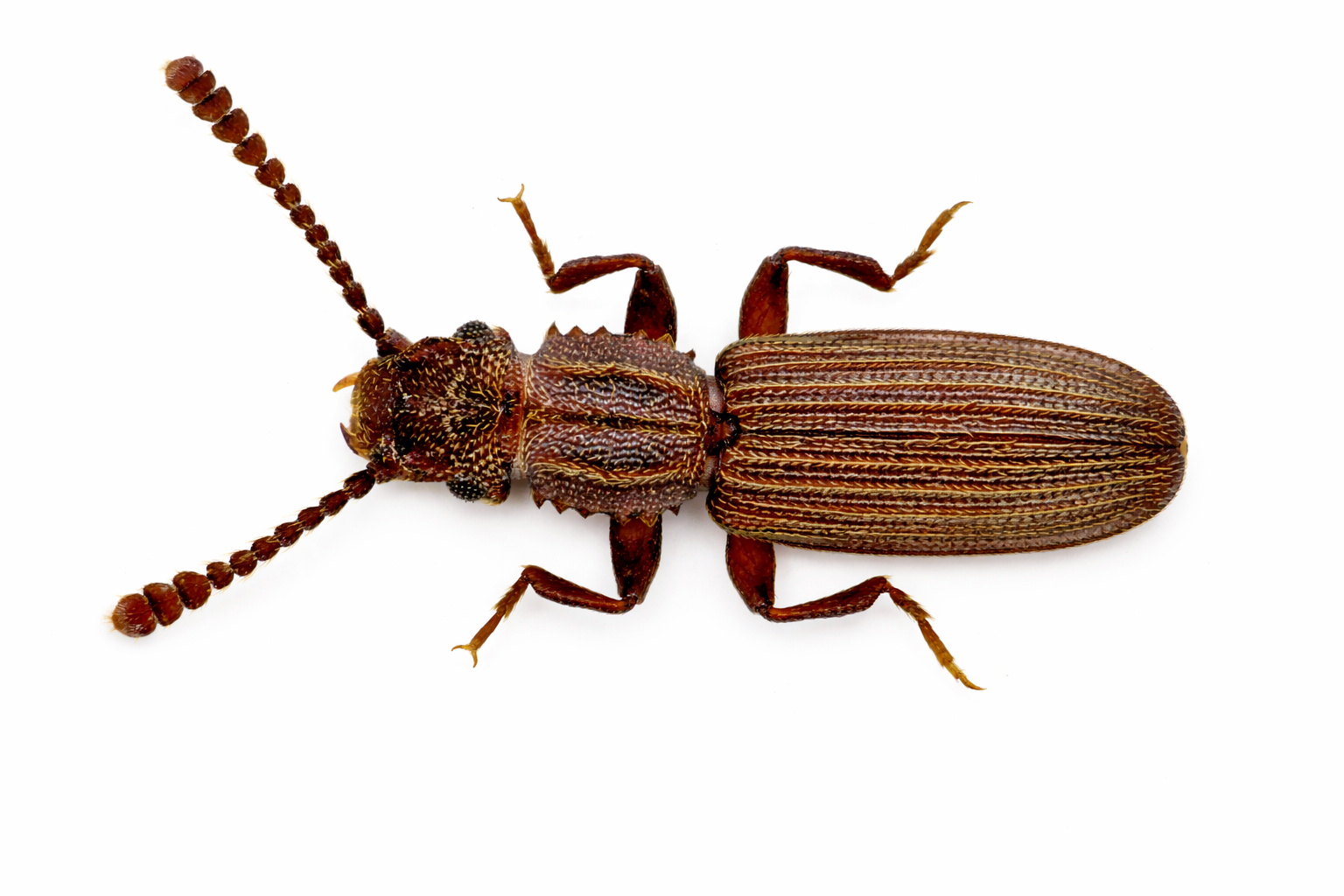
Sawtoothed Grain Beetles
Sawtoothed grain beetles are small, flat insects that easily penetrate packaged goods in grocery and convenience store environments. They commonly infest rice, pasta, cereal, flour, and boxed products stored on shelving. Their ability to spread rapidly through tightly packed inventory makes early detection critical in commercial storage areas.
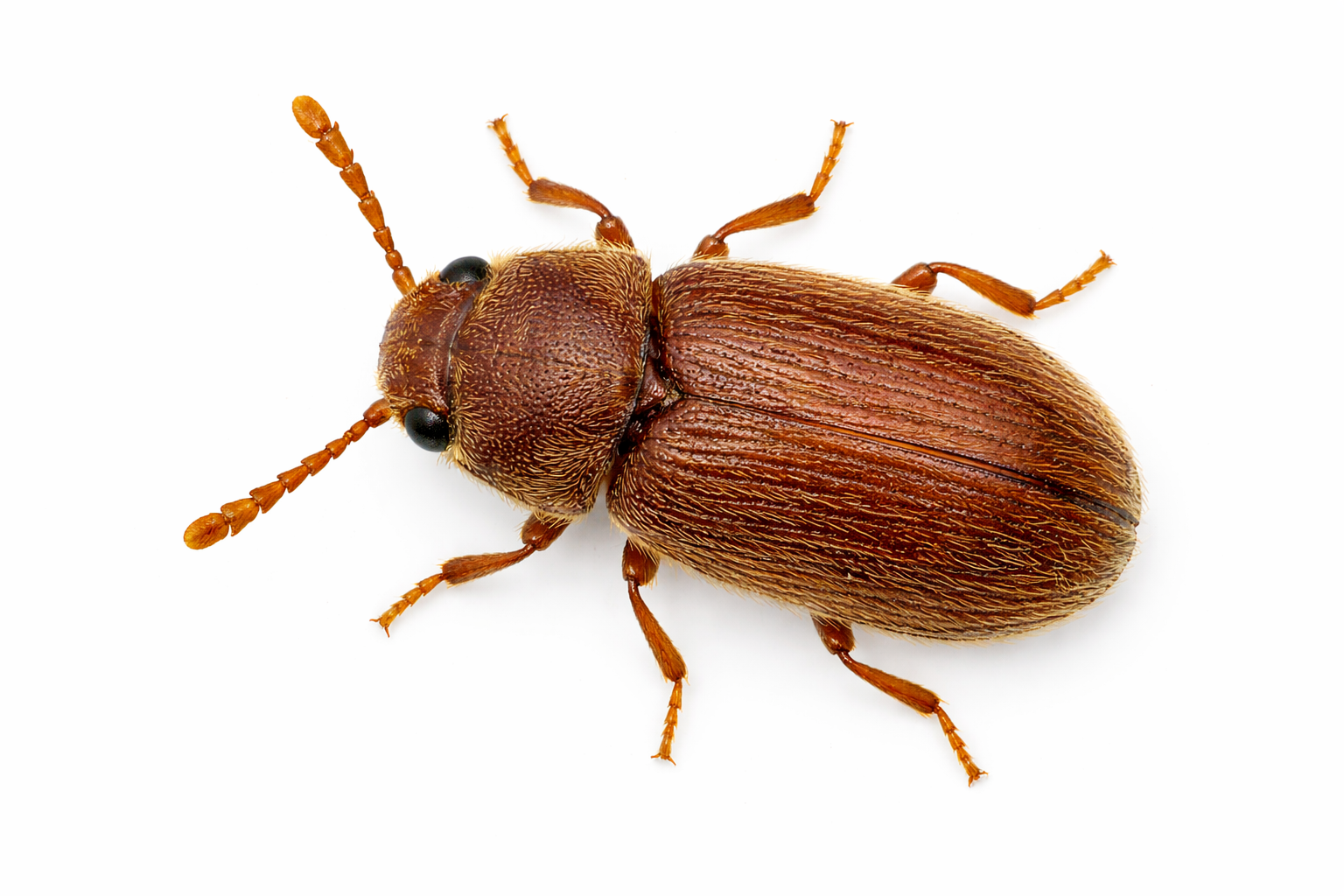
Drugstore Beetles
Drugstore beetles are commonly found in commercial retail settings, warehouses, and office breakroom storage. They infest spices, dry pet food, grains, packaged snacks, and even non-food items such as paper products. These beetles can chew through packaging and spread across stockrooms if not contained quickly.
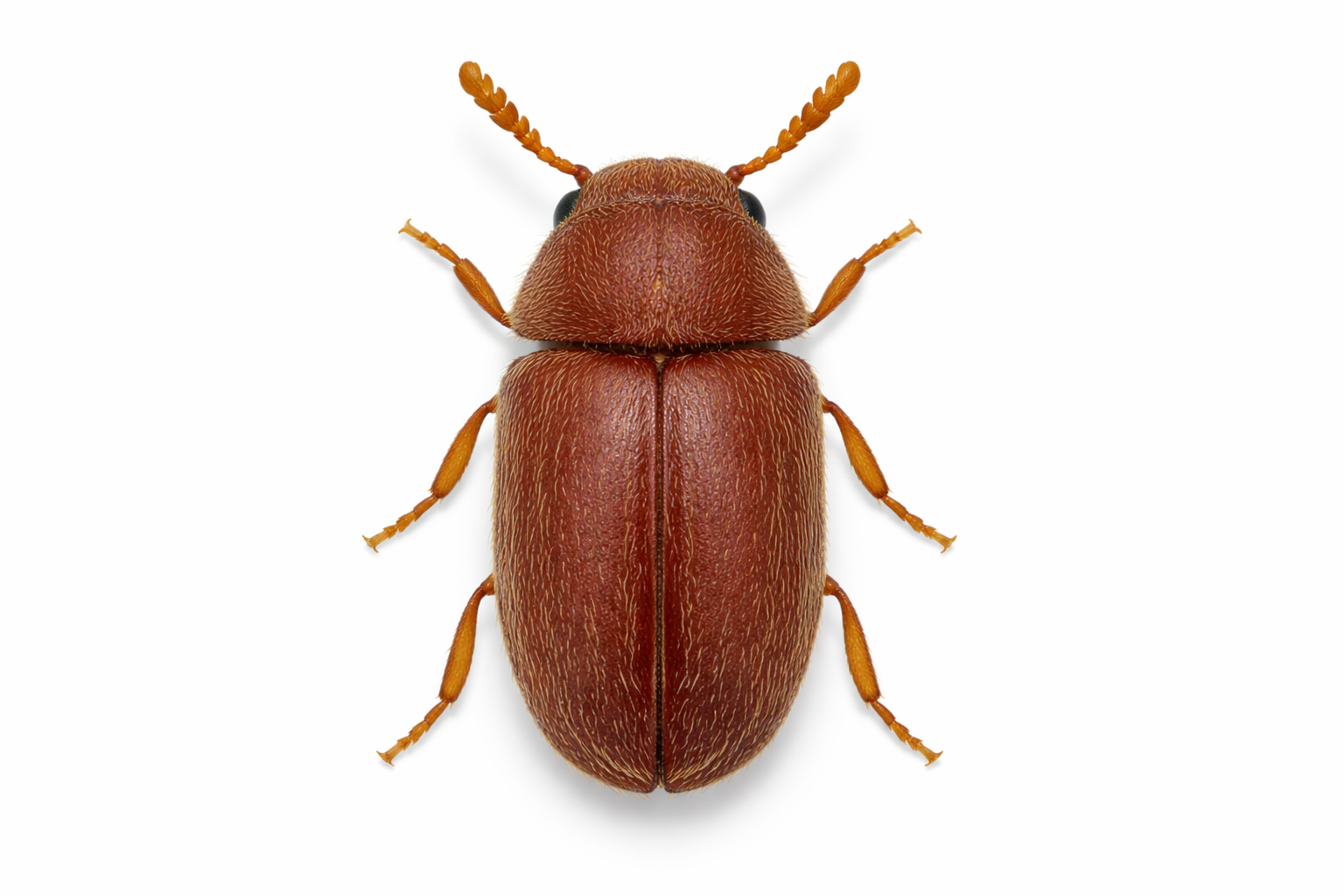
Cigarette Beetles
Cigarette beetles infest dry goods in commercial storage facilities, especially products stored long-term. They are attracted to grains, spices, dry food items, and packaged inventory. In warehouses and convenience stores, infestations often originate from contaminated shipments and can spread throughout shelving systems.
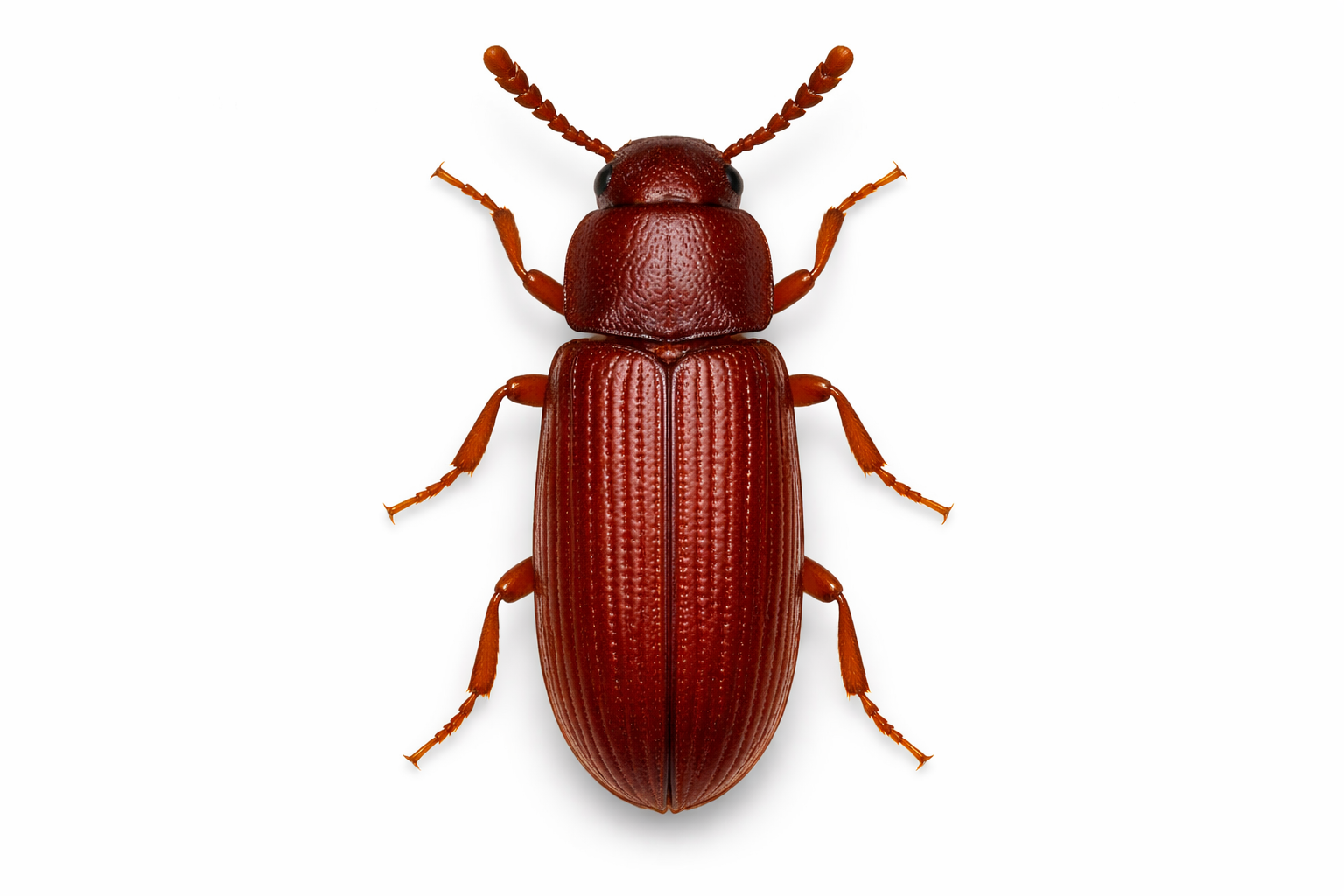
Red Flour Beetles
Red flour beetles are common in commercial dry storage areas and distribution centers. They infest flour, cake mixes, grain products, and bulk dry goods. Unlike moths, they do not create webbing, but they contaminate products with cast skins and waste, often causing odor and quality degradation in stored inventory.
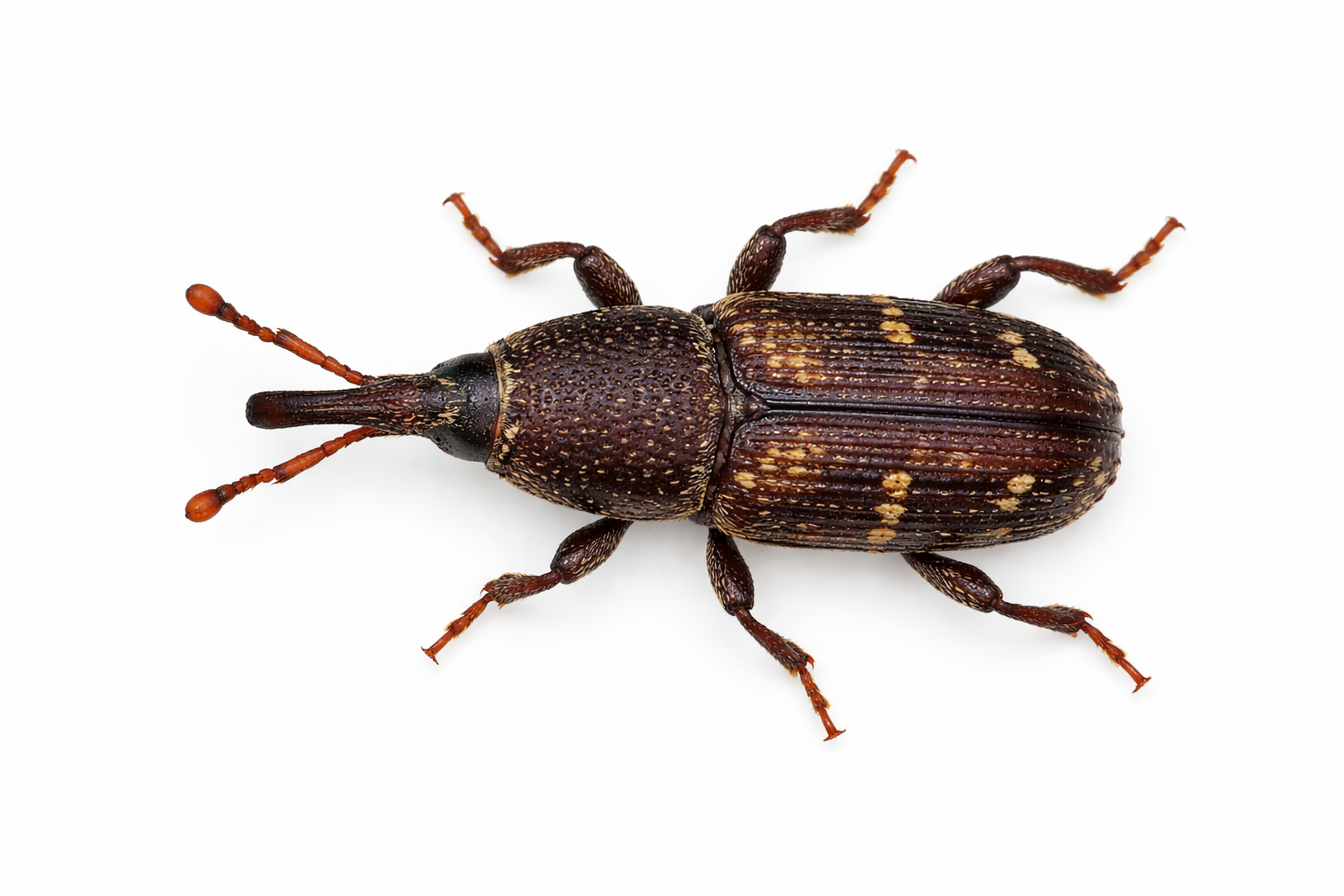
Rice Weevils
Rice weevils are internal feeders that bore into whole grains such as rice, corn, and similar products before packaging. In commercial warehouses and grocery stockrooms, infestations are often introduced through shipments and can remain hidden inside sealed products. Their ability to reproduce inside grain kernels makes structured monitoring essential.
Stored product pests are commonly found in commercial storage environments throughout South Florida. In Aventura, we routinely treat infestations in grocery stores, food warehouses, and bulk storage facilities.
OUR SERVICES
What Our Professional Commercial Pantry Pest Control Services Include
Commercial properties in Aventura require structured and discreet pest management to protect stored goods and maintain operational continuity. Our programs are designed for grocery operations, storage facilities, and distribution warehouses handling packaged food products.
Our commercial pantry pest control services include:
Detailed inspection of dry storage rooms, shelving systems, and incoming inventory
Identification of stored product pest species and infestation sources
Targeted crack, crevice, and void treatments in storage and stock areas
Inventory evaluation and contamination risk assessment
Ongoing monitoring and scheduled service to prevent reinfestation
Our goal is rapid control of active pantry pests followed by structured monitoring to protect inventory, maintain sanitation standards, and reduce operational risk.
BEFORE YOUR SERVICE
How to Prepare for Commercial Pantry Pest Control Service
Before your scheduled pantry pest control service in Aventura, it’s important to ensure access to storage areas and inventory zones. Proper preparation allows for a more thorough inspection and treatment process.
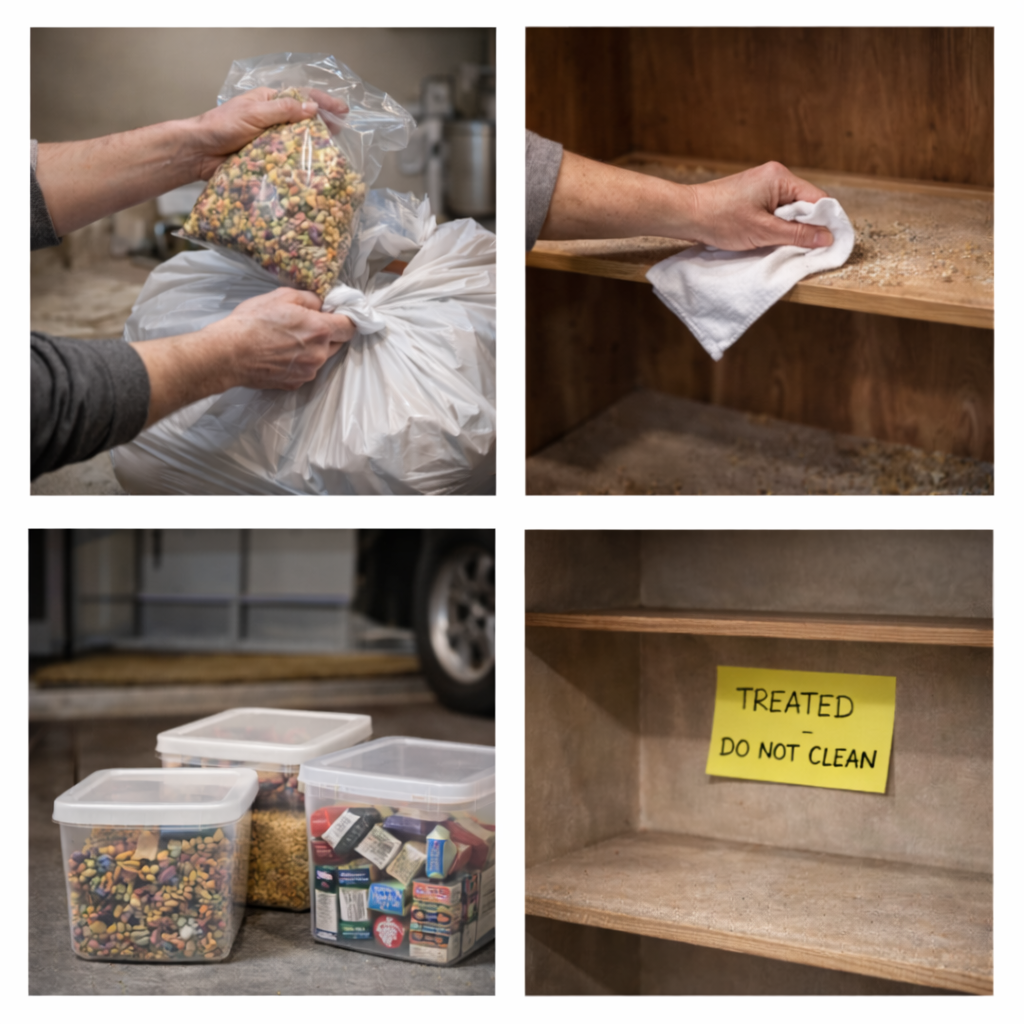
Provide Access to Dry Storage Areas
Allow technicians access to stock rooms, shelving units, pallet storage, and bulk dry goods areas. Clear pathways improve inspection accuracy and treatment coverage.
Isolate or Remove Infested Inventory
Set aside visibly contaminated products for evaluation and disposal. Sealing affected goods in bags or containers helps prevent further spread during service.
Clean Shelving & Remove Product Debris
Vacuum or wipe down loose grain, flour dust, crumbs, and spilled product from shelves and corners. Sanitation improves treatment effectiveness and reduces reinfestation risk.
Avoid Disturbing Treated Areas Immediately After Service
Do not wipe, wash, or reorganize treated shelving or storage zones during the recommended post-service window. Allowing materials to remain undisturbed ensures proper residual performance and ongoing protection.
DURING & AFTER SERVICE
What to Expect After Commercial Pantry Pest Control Service
After treatment, commercial properties in Aventura may continue to notice minor pest activity during the initial reduction phase. This is part of the population control process as monitoring systems and corrective treatments take effect.
Continued Activity During Initial Phase
Some stored product pests may remain visible shortly after treatment as larvae and hidden life stages emerge from cracks, shelving voids, or packaging. This short-term activity is expected and does not indicate service failure.
Noticeable Reduction Within Days
As treatments begin disrupting breeding cycles and neutralizing active pests, populations decline. In commercial storage environments, measurable improvement typically becomes apparent within several days.
Progressive Elimination Over Time
Commercial pantry pest control targets both visible insects and hidden life stages. Complete control occurs gradually as remaining eggs hatch and are addressed through residual materials and monitoring systems.
Long-Term Prevention & Protection
Ongoing service, monitoring devices, and sanitation guidance help reduce the risk of reinfestation. Our structured approach focuses on inventory protection, compliance support, and sustained population control.
Our team remains available to support facility managers and staff after service to ensure expectations are clear and long-term protection remains in place.
COMMON QUESTIONS ANSWERED
Commercial Pantry Pest Control Questions Aventura Businesses Ask Most
Businesses in Aventura often have questions about how stored product pest control works and what to expect from an ongoing program. Below are answers to common concerns from grocery stores, warehouses, and commercial storage properties.
How do I know if my commercial property needs professional pantry pest control?
Signs include live beetles or moths near shelving, larvae inside packaging, webbing in dry goods, small holes in packaging, product discoloration, or customer complaints. Even minor activity in a commercial setting should be addressed quickly, as infestations can spread rapidly through inventory.
How do pantry pests enter commercial facilities?
Most infestations originate from incoming shipments that are already contaminated at the source. Pantry pests can also enter through small packaging defects, bulk storage areas, or long-term stock rotation issues. In commercial environments, inventory turnover and storage density increase the risk of spread.
How long does commercial pantry pest treatment take to work?
Reduction typically begins within several days as active pests contact treated areas. However, complete elimination occurs gradually as hidden life stages hatch and are neutralized. In larger facilities or high-volume storage areas, resolution may take multiple service visits depending on infestation severity.
Is commercial pantry pest treatment safe around stored food and inventory?
Yes. Treatments are applied in targeted areas such as cracks, crevices, voids, and structural spaces—not directly onto food products. We follow label guidelines and industry standards to ensure treatments are applied safely within commercial environments.
Why do I still see pantry pests after treatment?
Short-term activity may continue as hidden larvae or eggs emerge after service. This does not indicate failure. It reflects the life cycle of stored product pests. Activity typically declines as breeding cycles are disrupted and remaining stages are addressed.
Will pantry pest control disrupt business operations?
In most cases, no. Treatments are performed strategically to minimize operational disruption. Access to storage areas is required, but closures are rarely necessary unless a severe infestation demands inventory disposal or sanitation intervention.
What happens if contaminated inventory is discovered?
Infested products should be discarded in sealed bags to prevent further spread. While we provide guidance on identifying affected goods, product disposal decisions remain the responsibility of facility management in accordance with company policy.
How important is sanitation in preventing reinfestation?
Sanitation is critical. Removing flour dust, grain residue, damaged packaging, and long-standing product debris significantly reduces conducive conditions. Even the most effective treatment will struggle if sanitation practices are not maintained.
Can store-bought sprays eliminate commercial pantry pest infestations?
Over-the-counter products rarely address the source of commercial infestations and may contaminate shelving or inventory if misapplied. Professional treatment focuses on hidden harborage areas and structural zones where pests breed and develop.
How is pricing determined for commercial pantry pest control?
Pricing depends on facility size, storage density, infestation severity, and frequency of service required. Larger warehouses or high-inventory retail environments require more extensive inspection and treatment time than small office storage areas.
Still have questions about commercial pantry pest control? Our team partners with property managers and business operators throughout South Florida to deliver targeted, effective pantry pest solutions designed to protect inventory and reduce operational risk. Contact us today to schedule a commercial pantry pest assessment.
Why South Florida Businesses Trust Us
Why Aventura
Businesses Trust Our Professional Commercial Pantry Pest Control Services
Choosing the right commercial pantry pest control provider in Aventura, FL is about more than eliminating visible insects. It’s about partnering with a licensed team that understands inventory protection, sanitation standards, and long-term risk reduction for commercial properties throughout Aventura and surrounding South Florida areas. Our structured pantry pest programs are designed specifically for grocery stores, convenience stores, warehouses, office buildings, and commercial storage facilities operating in Aventura.
Our team brings decades of experience addressing stored product pest infestations in high-volume commercial environments across Aventura. We focus on identifying infestation sources, treating structural harborage areas, disrupting breeding cycles, and reducing the conditions that allow pantry pests to spread through inventory.
Every commercial pantry pest control program in Aventura is customized to your facility’s storage layout, product density, and operational needs. The result is reliable population control that protects inventory, supports sanitation compliance, reduces liability exposure, and helps maintain a well-managed commercial property year-round.