5 Signs You Have a Roach Problem (And How to Fix It)
A roach problem in South Florida is characterized by visible signs such as pepper-like droppings, discarded egg cases, and a distinct musty odor. If you see cockroaches during the day, it typically indicates a significant infestation that requires professional cockroach control to eliminate effectively and prevent future recurrences in your home.
How do you know if you have a roach problem?

Cockroaches are excellent at hiding, which means infestations often go unnoticed until they become severe. However, they always leave behind clues. Recognizing these signs early can help you take action before the problem spreads throughout your home.
1. Droppings That Look Like Black Pepper
One of the most common signs of a roach problem is the presence of droppings. Smaller cockroaches leave behind speck-like droppings that resemble coffee grounds or black pepper, while larger species produce more cylindrical waste. These are often found in cabinets, along baseboards, and behind appliances.
2. Egg Casings (Oothecae)
Cockroach egg cases, known as oothecae, are small, capsule-shaped shells that can contain dozens of baby roaches. Finding even one is a strong indicator that roaches are actively breeding inside your home. These are typically hidden in dark, protected areas like behind furniture, inside cabinets, or near pantry items.
3. A Musty or Oily Odor
A strong, unpleasant odor is another warning sign of a roach infestation. Cockroaches release pheromones that help them communicate, and when populations grow, this smell becomes more noticeable. If your home has a lingering musty or greasy odor that doesn’t go away with cleaning, roaches may be the cause.
4. Seeing Roaches During the Day
Cockroaches are nocturnal, meaning they usually come out at night. If you start seeing them during the day, it often means the infestation has grown large enough that they are being forced out of their hiding spaces. This is a major red flag and usually indicates a more serious problem.
5. Live or Dead Roaches Around Your Home
Seeing even one cockroach should not be ignored. Roaches are rarely alone, and where there is one, there are usually many more hiding nearby. Finding dead roaches can also indicate that an infestation is active and possibly growing behind walls or inside hidden areas.
Identifying Common South Florida Roach Species
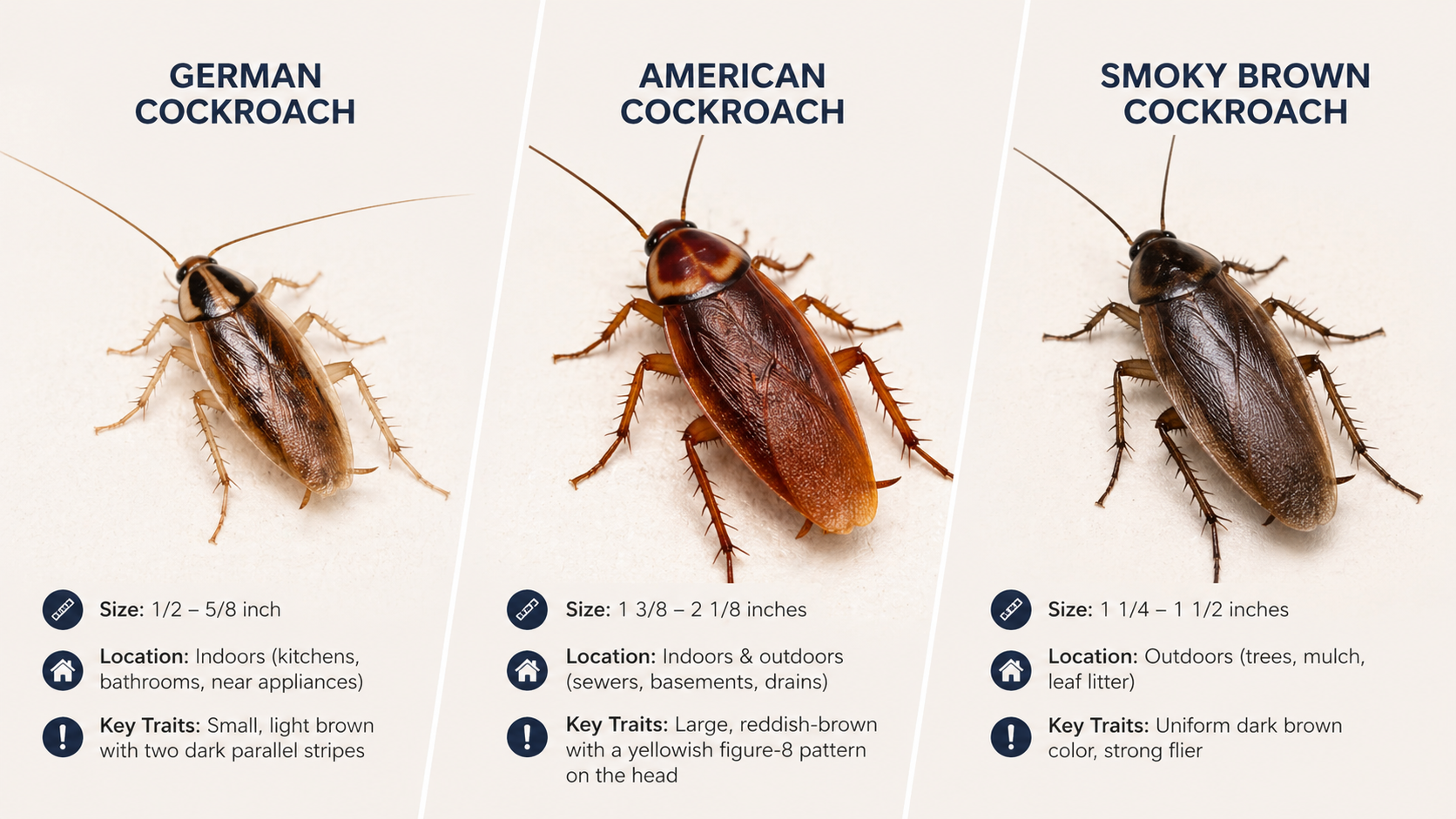
In South Florida, including Weston and Broward County, homeowners typically encounter a few common types of cockroacheseach with unique behaviors. Identifying the species is an important step in effective cockroach control, since treatment methods vary depending on how each type lives and spreads.
German Cockroaches (Indoor Infesters)
German cockroaches are one of the most common and fastest-spreading species found in homes. These small, light brown roaches are easily recognized by the two dark parallel stripes on their backs.
They prefer warm, humid environments like kitchens and bathrooms and reproduce extremely quickly. A single roach introduced into your home can lead to a large infestation in just a few months if not treated properly.
American Cockroaches (“Palmetto Bugs”)
American cockroaches are much larger and reddish-brown in color. In South Florida, they are often referred to as “palmetto bugs.”
While they typically live outdoors in mulch, trees, and landscaping, they frequently enter residential properties through plumbing, door gaps, or small openings while searching for food and water. They are also capable of flying, which can make them especially alarming indoors.
Other Common Outdoor Roaches
Other species commonly found in Broward County include smokybrown and Australian cockroaches. These roaches thrive in outdoor environments and are attracted to moisture and decaying organic material.
They often make their way inside during heavy rain or extreme heat, especially when conditions outside become less favorable.
Why does the South Florida climate attract cockroaches?
South Florida creates the perfect environment for cockroaches to thrive. With constant heat, high humidity, and plenty of moisture, roaches can stay active year-round without the natural slowdowns seen in colder climates.
Heavy rain and tropical conditions often push outdoor roaches indoors, especially when they are searching for dry shelter. Once inside, homes provide easy access to food, water, and hiding spots.
Common reasons roaches are attracted to South Florida homes include:
- High humidity levels that prevent dehydration
- Frequent rain that drives pests indoors
- Lush landscaping and organic debris
- Easy access through cracks, doors, and plumbing gaps
Because of these conditions, preventative pest control becomes essential for keeping infestations under control.
Health Risks Associated with Cockroach Infestations
A cockroach problem is more than just unpleasant—it can become a serious health concern for your household. As cockroaches move through sewers, trash, and decaying material, they pick up harmful bacteria and carry it into your home.
Once inside, they can contaminate surfaces like countertops, cutting boards, and stored food without you even realizing it.
Bacteria and Food Contamination
Cockroaches are known to spread bacteria such as Salmonella, E. coli, and Listeria. As they travel across your home, they transfer these contaminants onto dishes, utensils, and food preparation areas.
This can increase the risk of foodborne illness and create unsafe conditions in your kitchen.
Common contamination risks include:
- Food left exposed on counters
- Kitchen surfaces and cutting boards
- Clean dishes and utensils
- Pantry items and storage areas
Allergies and Respiratory Issues
Beyond bacteria, cockroaches are a major trigger for indoor allergies and asthma. They shed their skin and leave behind waste particles that contain powerful allergens.
These particles can become airborne and are easily inhaled, especially in enclosed, air-conditioned homes common in South Florida.
For children and individuals with sensitive respiratory systems, exposure can lead to ongoing health issues and discomfort.
Health symptoms may include:
- Chronic coughing or wheezing
- Skin irritation or rashes
- Allergy flare-ups
- Asthma attacks
Why Quick Action Matters
In South Florida’s warm, humid environment, roach populations can grow quickly. The longer an infestation is left untreated, the greater the risk to your home’s cleanliness and indoor air quality.
Addressing a cockroach problem early helps protect your family’s health and prevents the situation from becoming more severe.
Where do roaches hide in a South Florida home?
If you suspect a roach problem, knowing where to look is half the battle. Cockroaches prefer tight, dark spaces where they can stay hidden and close to food and moisture. Because of this, they often squeeze into the smallest cracks and crevices throughout your home.
In South Florida, the warm and humid environment makes it even easier for roaches to thrive indoors, especially in areas that provide heat, moisture, and limited disturbance.
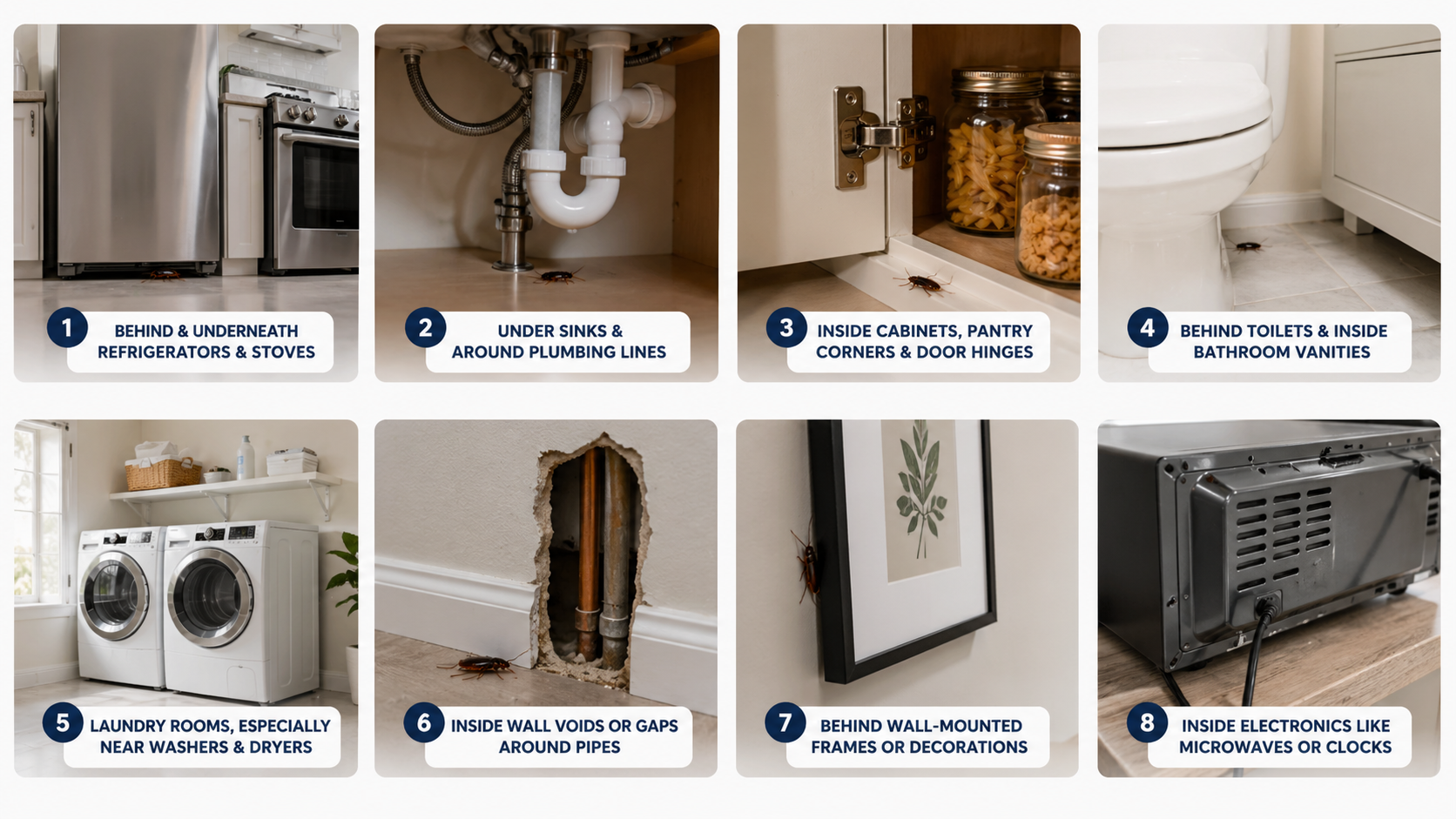
Common hiding spots to check include:
• Behind and underneath refrigerators and stoves
• Under sinks and around plumbing lines
• Inside cabinets, pantry corners, and door hinges
• Behind toilets and inside bathroom vanities
• Laundry rooms, especially near washers and dryers
• Inside wall voids or gaps around pipes
• Behind wall-mounted frames or decorations
• Inside electronics like microwaves or clocks
• Within stacked paper, cardboard, or stored items
• Garages and attics, especially if cluttered
Roaches are drawn to warmth and moisture, which is why kitchens, bathrooms, and laundry areas are some of their favorite hiding spots. Even small leaks or condensation can create the perfect environment for them to settle in. By regularly checking these areas, you can spot early signs of activity and better understand how widespread the problem may be.
Essential Steps to Take After Finding Roaches
Once you have confirmed a roach problem, immediate action is required to stop the spread. Start by eliminating their food and water sources. This means deep cleaning your kitchen, wiping down surfaces every night, and ensuring no dirty dishes are left in the sink. Store all dry goods—including pet food—in airtight glass or plastic containers. Fix any leaky faucets or sweating pipes immediately, as even a small drop of water can sustain a cockroach for weeks. Reducing clutter is also vital; get rid of old newspapers, magazines, and cardboard boxes, as these provide both food and shelter for various roach species.
- Clean behind and under all major appliances to remove grease and food debris.
- Seal cracks and crevices around baseboards and utility entries with caulk.
- Use a vacuum with a HEPA filter to remove roaches, egg cases, and allergens.
- Ensure all trash cans have tight-fitting lids and are emptied nightly.
- Consult the Cockroach Control Preparation Guide to get your home ready for professional treatment.
When should you call a professional exterminator?
While DIY baits and sprays may kill a few visible roaches, they rarely solve the root of the problem. Most over-the-counter products only target surface activity and don’t reach the hidden nesting areas where roaches reproduce.
If the infestation continues to grow, professional treatment becomes necessary to fully eliminate the source.
It may be time to call a professional if you notice:
- Roaches returning after using sprays or baits
- Activity during the daytime
- Droppings or egg casings in multiple areas
- A strong, musty odor that doesn’t go away
- Signs of German cockroaches (fast-spreading infestations)
Professional exterminators use advanced treatments that go beyond what’s available in stores. This includes growth regulators, targeted baiting systems, and strategic placement designed to eliminate entire colonies, including hidden nests and eggs.
At Professional Pestguard, we focus on long-term solutions tailored to South Florida homes. Our approach is designed to not only eliminate current infestations but also prevent future ones from returning.
Summary of Next Steps
Dealing with a roach problem in South Florida requires more than just quick fixes. With the region’s heat and humidity, infestations can grow quickly if they aren’t handled properly. By recognizing early signs like droppings, odors, and sightings, you can take action before the problem spreads. While reducing moisture and sealing entry points can help, ongoing activity usually requires professional treatment to fully eliminate the source.
If you’re still seeing roaches, it’s time to take the next step. A customized treatment plan can target hidden nests, stop reproduction, and protect your home long-term.
Contact Professional Pestguard Exterminating Services today to schedule your free estimate and take the first step toward a pest-free home.
About Professional Pestguard
Professional Pestguard provides professional pest control in Weston, FL and nearby communities including Davie, Sunrise, Pembroke Pines, and Plantation. With over 40 years of experience, our licensed technicians protect homes and businesses across Broward County and Miami-Dade County from ants, cockroaches, rodents, spiders, and other common South Florida pests using safe and effective treatments.