Why Do I Keep Getting Roaches in My South Florida Home?
Roaches keep returning to South Florida homes due to the region's intense humidity, consistent warmth, and high rainfall. These tropical conditions provide an ideal breeding ground. Even clean homes offer entry through plumbing gaps, vents, and cardboard, allowing pests to thrive in hidden wall voids and damp areas.
How does the Florida climate attract roaches?
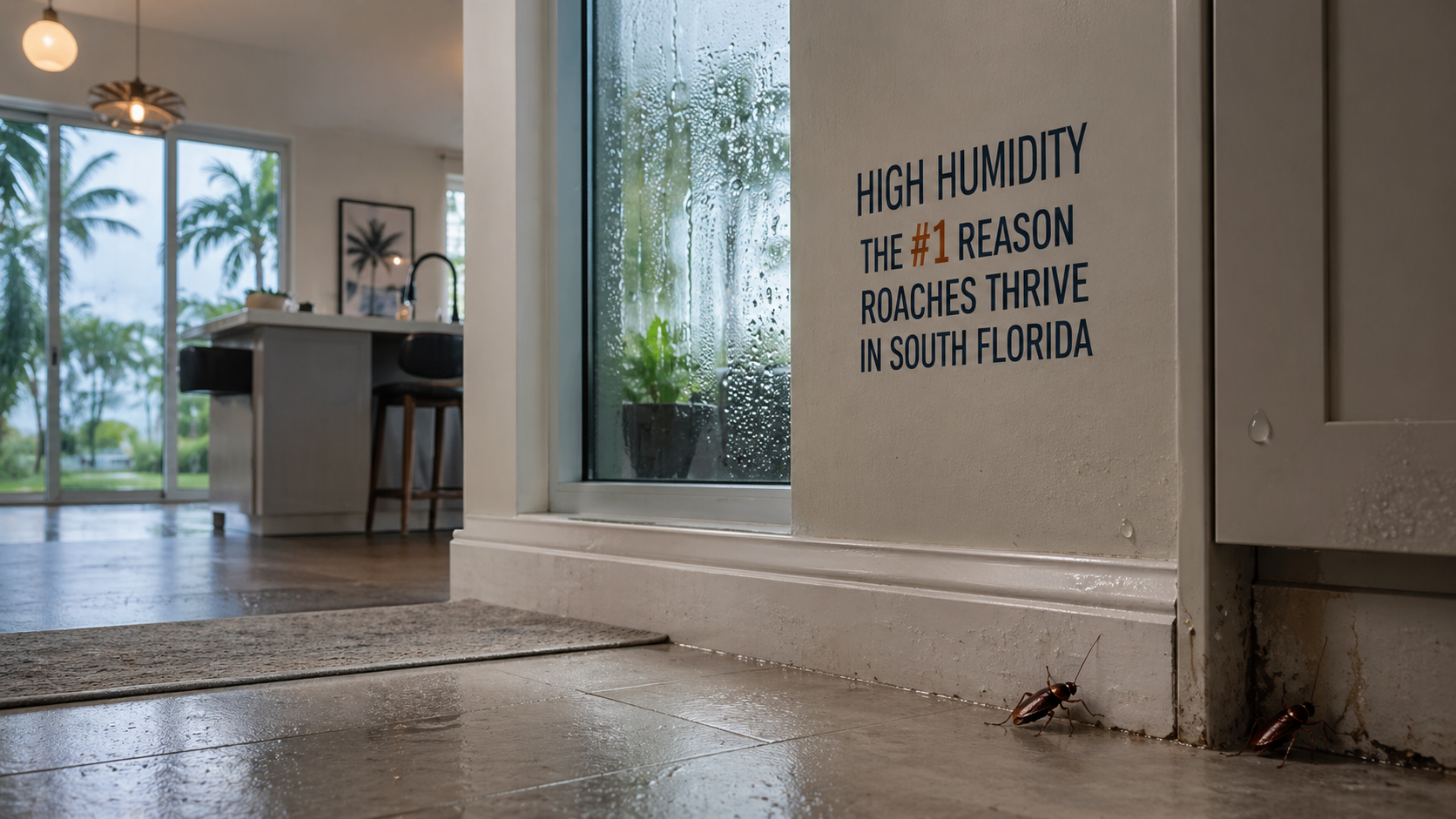
Living in South Florida means dealing with a climate that’s basically built for cockroaches to survive and multiply. The constant heat, high humidity, and frequent rainfall create the perfect environment for infestations year-round.
Unlike northern states where cold winters naturally reduce pest populations, South Florida has no real off-season for roaches. That means once they enter your home, they can continue breeding without interruption.
Humidity is the biggest factor. Roaches depend on moisture to survive, and Florida’s damp air keeps them hydrated while encouraging them to explore kitchens, bathrooms, and hidden spaces inside your home.
During heavy rains, the ground becomes saturated, forcing outdoor roaches to move indoors in search of dry shelter. This is why many homeowners suddenly notice increased activity after storms or long rainy periods.
Heat also speeds up their life cycle. In warm conditions, roaches:
- Grow faster
- Reproduce more often
- Reach infestation levels quicker
A single German cockroach can lead to hundreds (or more) within months under these conditions. If you’re already noticing increased activity, here are the key signs of a roach infestation in South Florida.
Common Species Found in South Florida Homes
Not all roaches are the same—and in South Florida, the type you’re dealing with determines how difficult the problem will be to eliminate.
Some species stay hidden and multiply indoors, while others enter from outside searching for moisture. Identifying the difference is key to choosing the right treatment strategy.
- German Cockroaches : Small, light brown, and known for staying indoors. They congregate in kitchens and bathrooms and reproduce at an alarming rate.
- American Cockroaches : Often called "Palmetto Bugs," these are large, reddish-brown, and can fly. They typically live outdoors but enter homes seeking water or shelter.
- Australian Cockroaches : Similar in appearance to the American variety but distinguished by yellow markings on their thorax and wing edges.
- Smokybrown Cockroaches : Darker in color and very thirsty, often found in attics or around eaves and gutters where moisture accumulates.
- Asian Cockroaches : These look almost identical to German roaches but are strong fliers and are attracted to bright lights at night.
Understanding these differences is crucial. For example, a treatment that works for an American roach wandering in from the garden may be completely ineffective against a German roach infestation nested deep inside your dishwasher's motor. This is why a one-size-fits-all spray from a hardware store often fails to solve the root of the problem.
Not sure which type you’re dealing with? See detailed images and treatment methods for each species on our cockroach control page.
Where do roaches hide in a South Florida home?
If you’re seeing even one roach, there are likely many more hiding out of sight. Roaches naturally squeeze into tight, dark spaces where they feel protected—especially in warm, humid areas of your home.
In South Florida homes, they tend to gather in places that provide moisture, heat, and easy access to food.
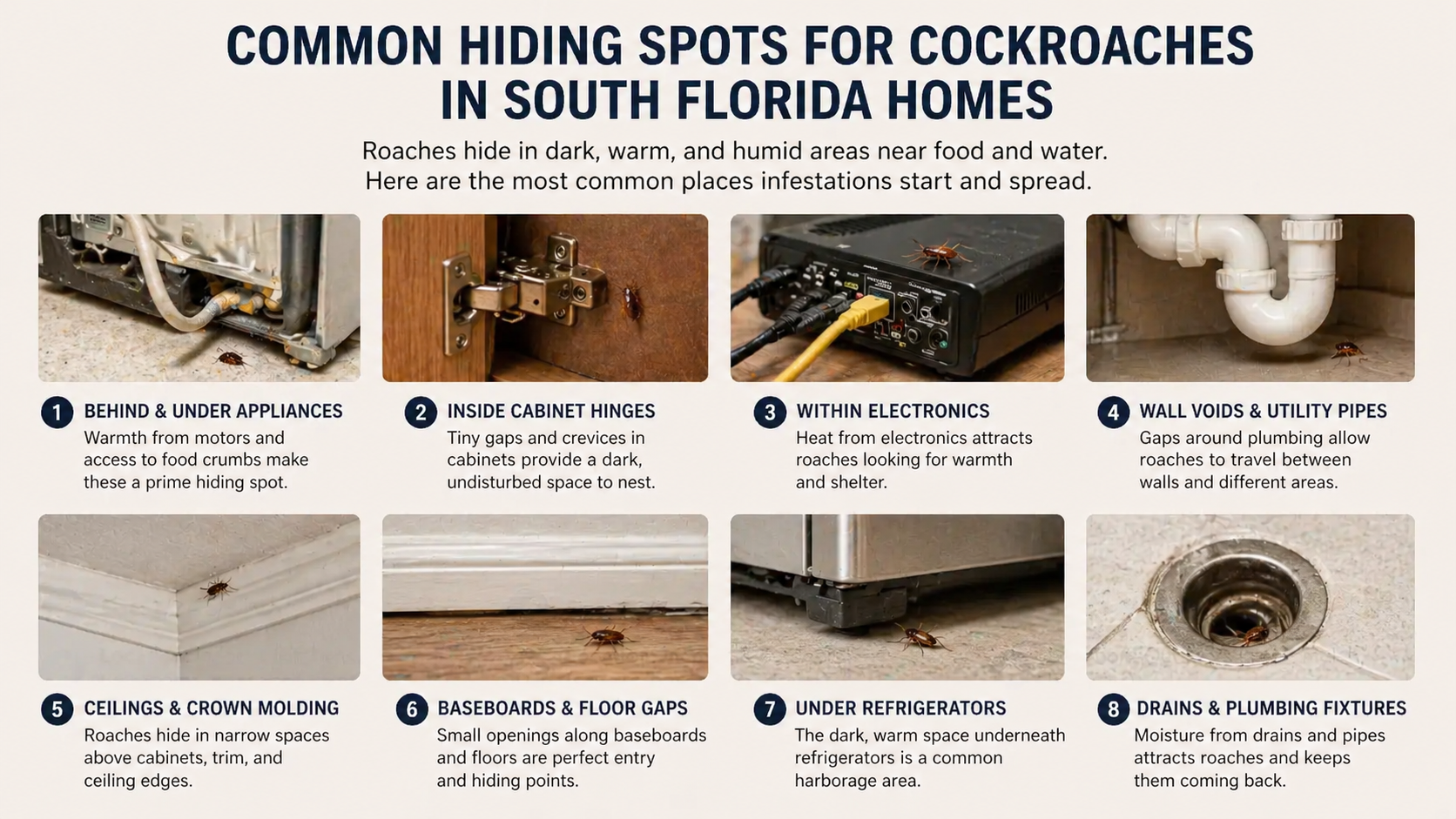
Common hiding spots include:
- Behind and Under Appliances: Refrigerators, ovens, and dishwashers create heat and trap food debris—making them one of the most common infestation areas.
- Inside Cabinets and Hinges: Small gaps in kitchen cabinets provide a dark, undisturbed space where roaches can nest and multiply quickly.
- Within Electronics: Cable boxes, routers, and gaming systems give off heat, which attracts roaches looking for shelter.
- Wall Voids and Plumbing Areas: Gaps around pipes under sinks allow roaches to travel between walls and move throughout the home unnoticed.
- Ceilings, Trim, and Hidden Structural Gaps: In many South Florida homes, decorative trim and ceiling spaces create hidden pathways for roaches to spread between rooms.
- Baseboards and Floor Gaps: Small openings along baseboards and flooring act as entry points and safe hiding areas close to food sources.
- Under Refrigerators and Heavy Appliances: The dark, warm space underneath large appliances provides the perfect environment for roaches to stay hidden.
- Drains and Plumbing Fixtures: Moisture from sinks, drains, and pipes attracts roaches and allows them to enter from sewer systems.
Because these areas are difficult to reach and rarely disturbed, infestations can grow rapidly without being noticed. By the time roaches become visible, the problem is often already well established behind walls, appliances, or cabinetry. Addressing these hidden zones early is key to preventing a small issue from turning into a recurring infestation.
Common Entry Points in Florida Architecture
Even well-maintained homes in South Florida have small openings that allow roaches to get inside. Because of the climate and construction style, these entry points are more common than most homeowners realize.
Roaches can enter through tiny gaps, especially when searching for moisture, food, or shelter from rain.
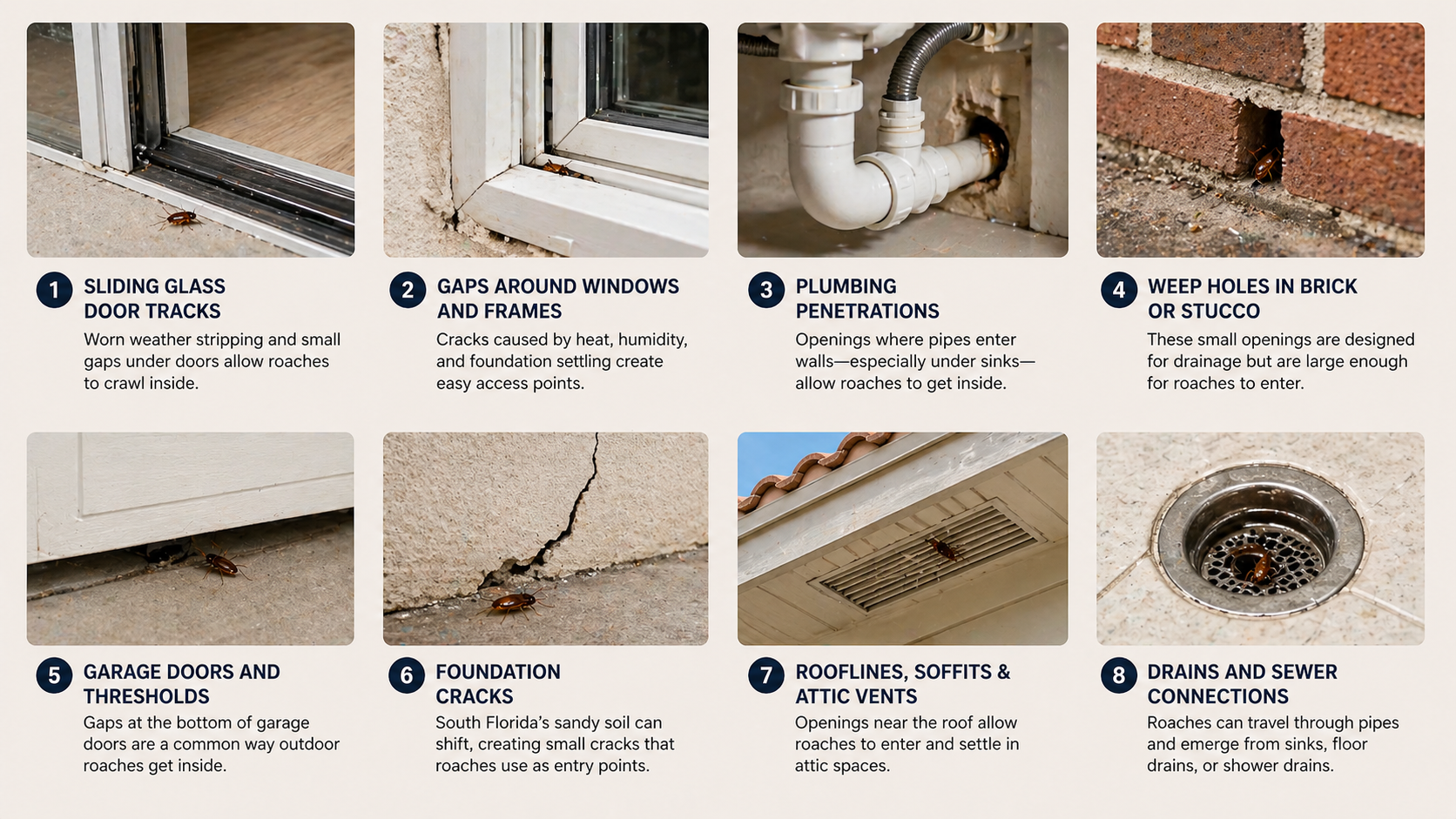
Common entry points include:
- Sliding Glass Door Tracks: Worn weather stripping and small gaps under sliding doors make it easy for roaches to crawl inside.
- Gaps Around Windows and Frames: Cracks caused by heat, humidity, and foundation settling create easy access points.
- Plumbing Penetrations: Openings where pipes enter walls—especially under sinks—allow roaches to travel between walls and into your home.
- Weep Holes in Brick or Stucco: These small openings are designed for drainage but are large enough for roaches to enter.
- Garage Doors and Thresholds: Gaps at the bottom of garage doors are one of the most common ways outdoor roaches get inside.
- Foundation Cracks: South Florida’s sandy soil can shift, creating small cracks that roaches use as entry points.
- Rooflines, Soffits, and Attic Vents: Openings near the roof allow roaches to enter and settle in attic spaces.
- Drains and Sewer Connections: Roaches can travel through pipes and emerge from sinks, floor drains, or shower drains.
Because these entry points are often small and overlooked, roaches can continue entering the home even after treatment.
Sealing these gaps is one of the most important steps in preventing recurring infestations.
Why isn't cleaning enough to stop them?
One of the most frustrating things homeowners experience is keeping a clean home and still seeing roaches. The reality is, cleanliness alone isn’t enough to eliminate an infestation.
Roaches are extremely resilient and can survive on microscopic food sources you don’t even notice, including:
- Grease buildup behind appliances
- Crumbs in hard-to-reach areas
- Residue inside cabinets and trash bins
Even a spotless kitchen can still provide enough food for roaches to survive.
Moisture matters more than food.
In South Florida, humidity alone can sustain a roach population.
Common moisture sources include:
- Leaks under sinks
- Condensation from AC units
- Damp bathrooms or poorly ventilated spaces
If moisture is present, roaches can survive and continue reproducing—regardless of how often you clean.
Why do roaches return after I've sprayed?
Many homeowners use over-the-counter sprays or “bug bombs,” only to see roaches return within a few weeks. The problem is that most DIY treatments only provide a temporary fix.
Most sprays are contact killers, meaning:
- They only kill the roaches you see
- They don’t reach hidden infestations inside walls or cabinets
👉 This leaves the majority of the colony untouched.
Over time, roaches can also develop resistance to common pesticides. This means you may be killing the weaker ones, while the stronger ones survive and continue reproducing.
The biggest issue: sprays don’t kill the eggs
Roaches protect their eggs inside a casing called an ootheca, which shields them from most chemical treatments.
- Eggs survive after spraying
- They hatch weeks later
- A new infestation begins
👉 This is why the problem seems to “come back” out of nowhere.
Because of this cycle, effective control requires more than a single treatment. It involves targeting the entire infestation—including hidden areas and future hatch cycles—not just the roaches you see.
This is why professional cockroach control preparation guides emphasize a comprehensive treatment strategy rather than a single application.
When should I call a professional for roach control?
You should consider calling a professional the moment you see more than one roach in your living space, or if you see a roach during the daytime hours. Roaches are nocturnal, so seeing one in the light usually means the infestation is already established.
A professional service provides several advantages that DIY methods simply can’t match:
- Precise Identification: Knowing exactly which species is present determines the most effective treatment approach.
- Access to Professional-Grade Baits: Designed to be carried back to the nest, helping eliminate the entire colony.
- Integrated Pest Management (IPM): Addresses entry points and environmental factors—not just the visible insects.
- Safe Application: Treatments are applied in a way that is safe for your family and pets.
- Long-Term Monitoring: Ongoing service helps prevent reinfestation after the initial problem is resolved.
If you own a business, the stakes are even higher. Commercial cockroach control is essential for maintaining health standards and protecting your reputation. Whether it's a office in Weston or a warehouse in Broward County, professional intervention is the most reliable way to maintain a pest-free environment.
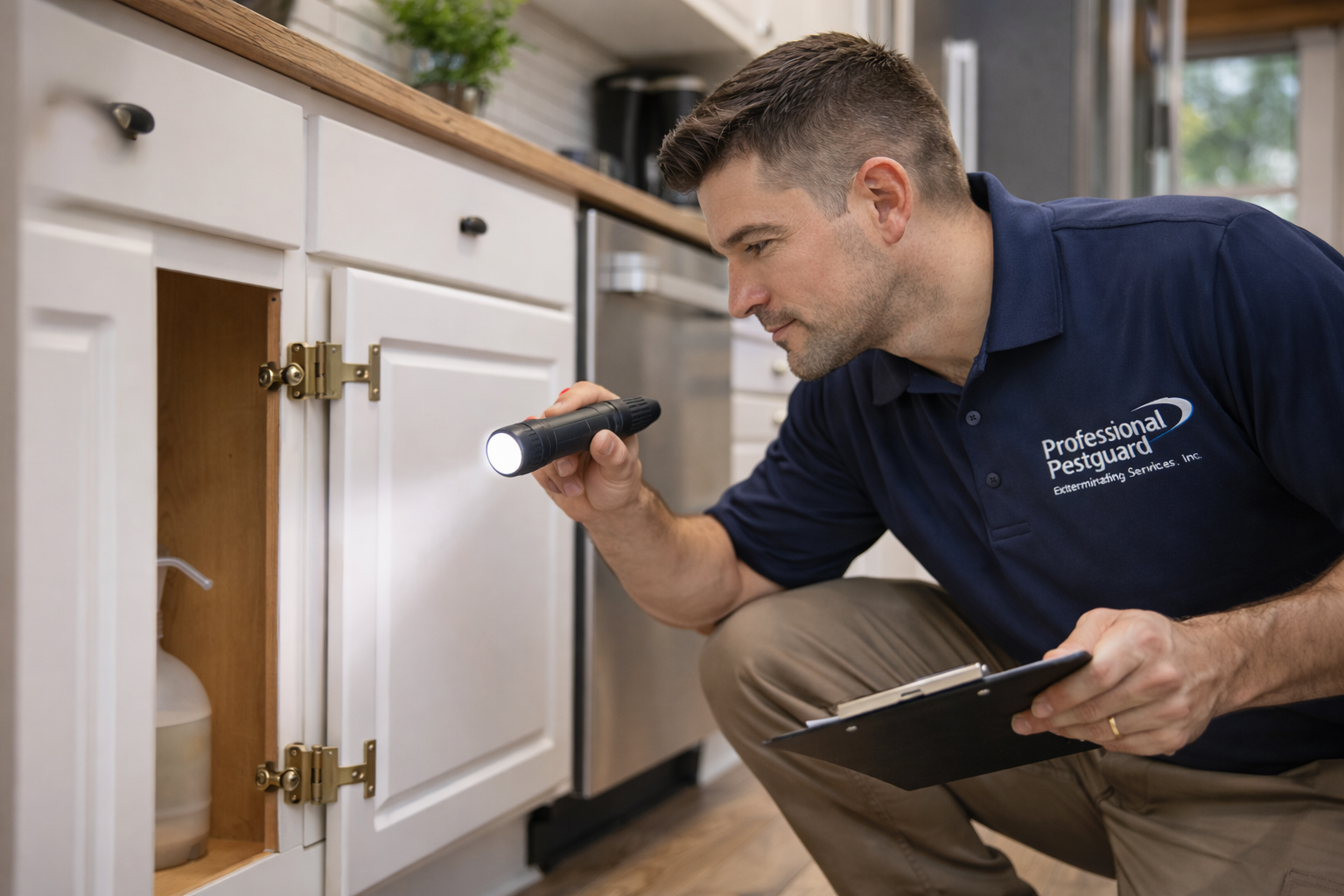
Professional Strategy for Long-Term Control
At Professional Pestguard, we know that roach control in South Florida requires more than a one-time treatment. Spraying baseboards alone is never enough to eliminate an infestation.
Our approach uses a multi-layered strategy to stop the problem at its source, including:
- Identifying and recommending sealing of key entry points
- Applying targeted baits based on the specific species
- Using growth regulators to interrupt reproduction cycles
We handle the treatment and product application, while also guiding you on simple property adjustments that help keep roaches out long-term. This collaborative approach ensures the results last—not just for weeks, but for the long run.
Our programs are built for South Florida conditions. We account for heavy rain, humidity, and heat that can weaken standard treatments, so your home stays protected month after month.
For recurring issues, we perform a detailed inspection to pinpoint hidden “hot spots” unique to your home’s layout and surroundings, allowing for a more precise and lasting solution.
Learn more about our professional cockroach control services and schedule your inspection today.
Summary of Key Takeaways
Roach problems in South Florida aren’t just about cleanliness—they’re driven by the environment. Heat, humidity, and hidden entry points create the perfect conditions for infestations to start and continue.
To get lasting results, the focus needs to shift from quick fixes to long-term prevention:
- Identify the species to choose the right treatment approach
- Control moisture by addressing leaks and humidity
- Seal entry points that allow roaches to continually re-enter
- Avoid relying on sprays alone, which only provide temporary relief
- Work with a professional to eliminate the infestation at its source
If roaches keep coming back, it’s usually a sign that something deeper is being missed—whether it’s hidden moisture, entry points, or an active breeding cycle inside the home.
Get Reliable Pest Control for Your South Florida Home Today
If you’re dealing with recurring roaches, taking action now can prevent the problem from getting worse. In South Florida, infestations don’t go away on their own—and waiting often allows them to spread further throughout your home.
At Professional Pestguard, we provide targeted cockroach control solutions designed specifically for South Florida homes. Our approach focuses on eliminating the source of the problem while helping prevent it from coming back.
Schedule your free estimate today and take the first step toward a roach-free home.
About Professional Pestguard
Professional Pestguard provides expert pest control in Weston, FL and nearby communities including Davie, Sunrise, Pembroke Pines, and Plantation. With over 40 years of experience, our licensed technicians protect homes and businesses across Broward County and Miami-Dade County from ants, cockroaches, rodents, spiders, and other common South Florida pests using safe and effective treatments.