Why Ants Get Worse After Rain in South Florida (And What to Do)
Ants suddenly showing up after a thunderstorm?
If you live in South Florida—especially in Weston—you’ve probably seen it happen. One minute everything is fine, and within hours, ants are marching across your kitchen like they own the place.
It’s not random. It’s a pattern—and once you understand why it happens, you can stop it before it turns into a full infestation.
Why do I see more ants after a thunderstorm?
After a heavy rain, ant colonies don’t disappear—they relocate.
Most ants in South Florida build their nests underground, in soil, mulch, or around plant roots. When a thunderstorm hits and the ground becomes saturated, those nests flood quickly. To survive, ants are forced to move to higher, drier ground—and your home becomes the perfect target.
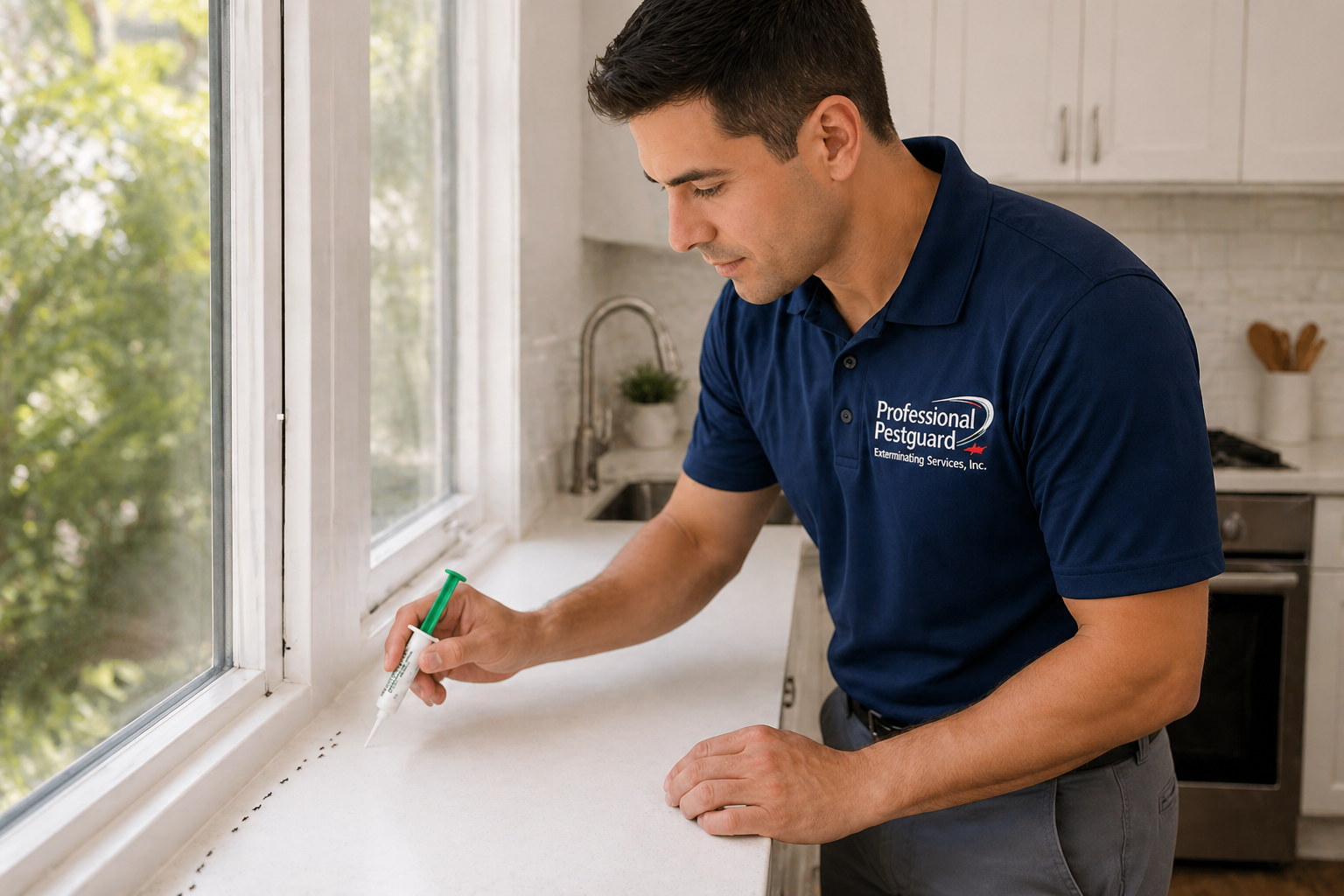
Think of your house like a dry island in the middle of a flooded landscape. Once ants find a way inside—through tiny cracks, sliding door tracks, or gaps in your foundation—they begin scouting for food and shelter.
Rain also disrupts their outdoor food sources. As moisture washes away things like honeydew and organic debris, ants are pushed to search elsewhere—often leading them straight to your kitchen, pantry, or trash areas.
On top of that, your air-conditioned home creates a more stable environment. After a storm, outdoor conditions become overly humid, making the controlled indoor climate more attractive for certain ant species.
That’s why infestations can seem so sudden—those ants were already living around your home. The storm just gave them a reason to come inside.
Common Florida ants that invade during the rainy season
Not all ants react to rain the same way. In South Florida, especially in Weston and throughout Broward County, certain species are known for moving indoors quickly after storms.
Identifying the type of ant you’re dealing with is the first step to effective ant control. Here are the most common offenders we see at Professional Pestguard:
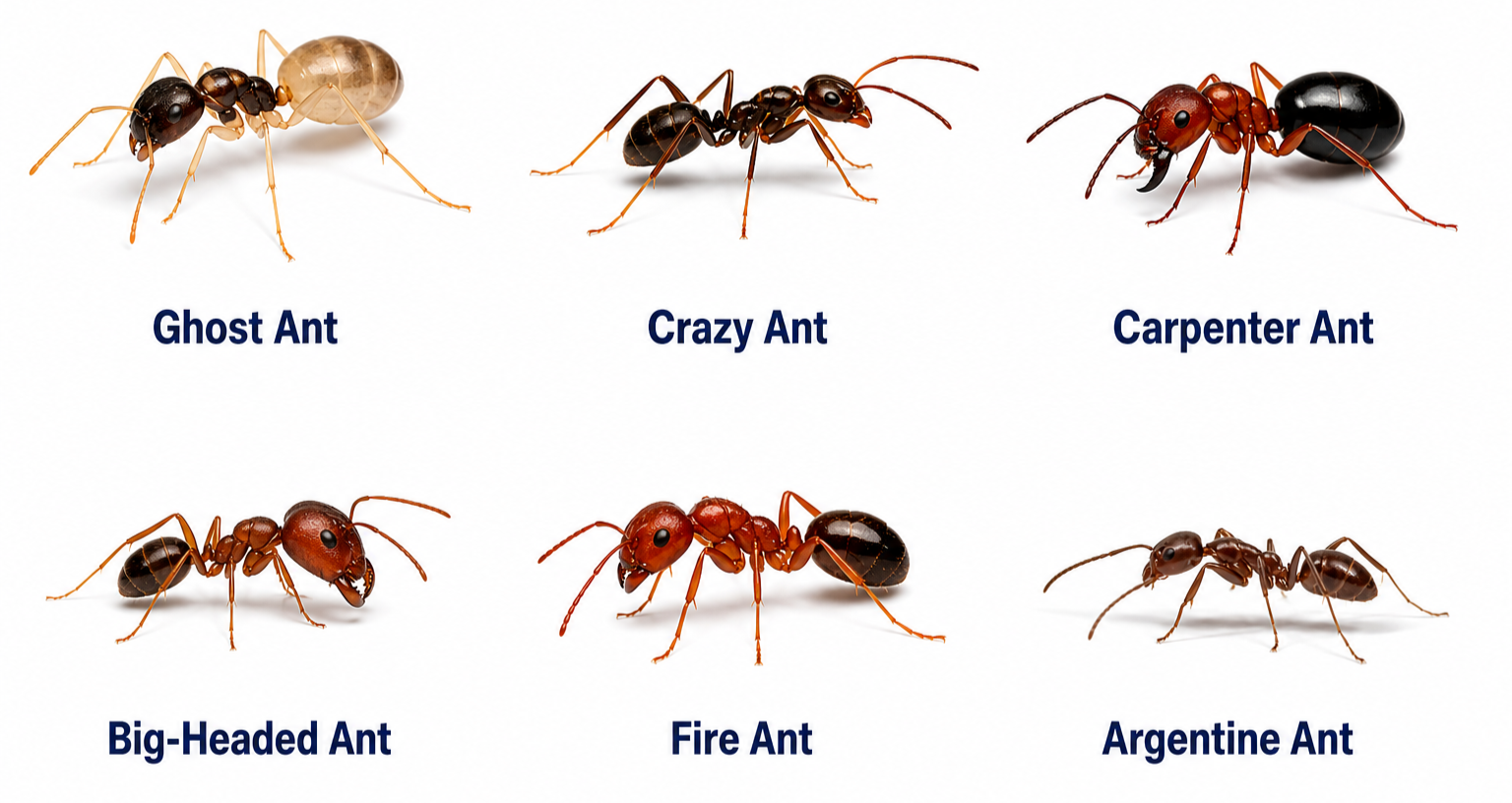
- Ghost Ants
These tiny, pale ants are often called “sugar ants” and are one of the most common indoor invaders after rain. They are highly attracted to moisture and are typically found in kitchens, bathrooms, and around sinks. Because of their small size, they can enter through extremely small cracks, making them difficult to control without professional treatment. - Caribbean Crazy Ants
Known for their erratic and fast movement, these ants don’t follow straight trails like other species. After heavy rain, their colonies can expand rapidly and spread throughout a property. They often enter homes in large numbers, making infestations feel overwhelming very quickly. - Carpenter Ants
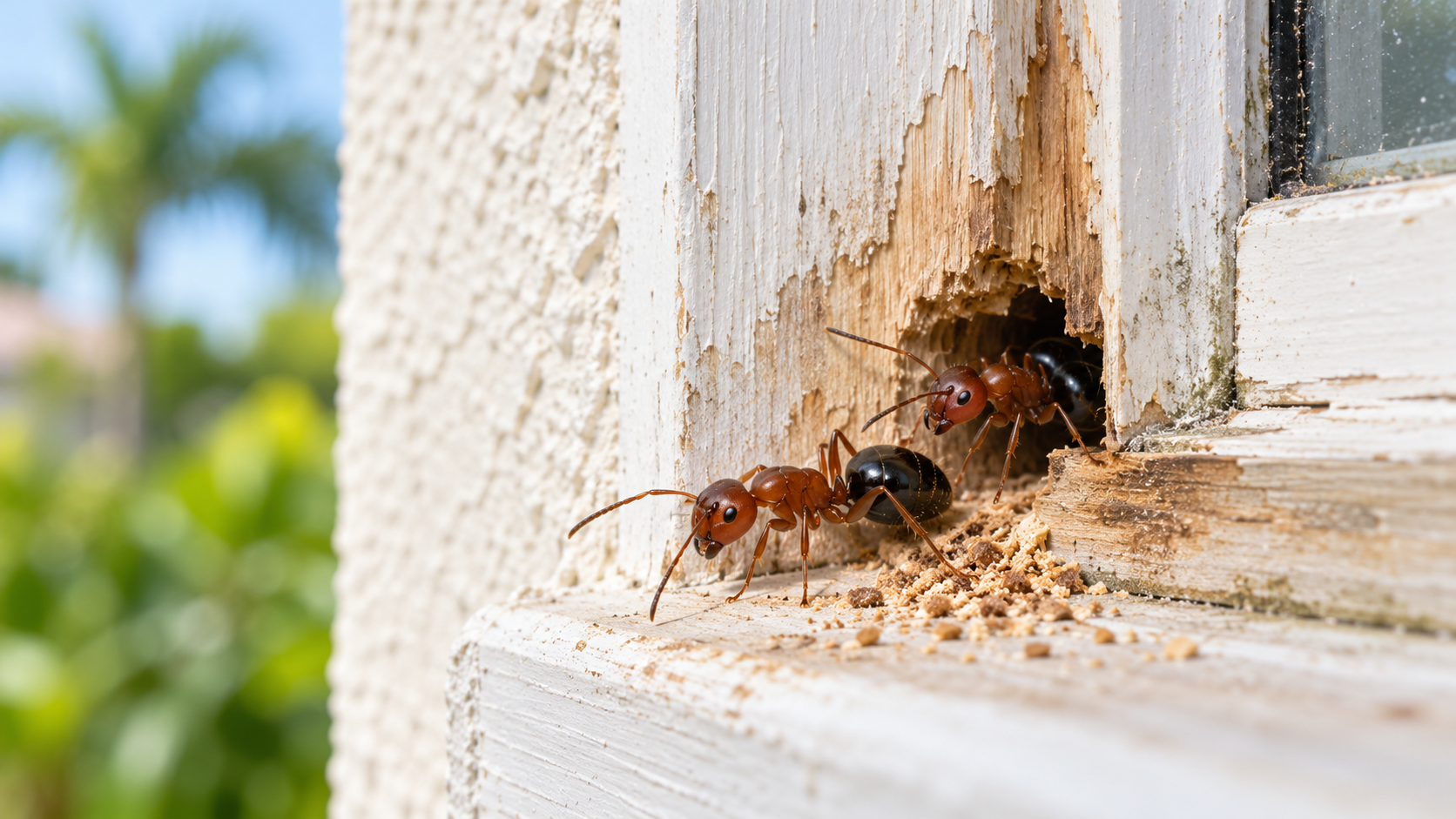
These larger ants prefer to nest in damp or decaying wood. After storms, moisture buildup in walls, window frames, or roofing structures can attract them indoors. While they don’t eat wood, their nesting habits can still lead to structural concerns if left untreated. - Big-Headed Ants
Common in Weston neighborhoods, these ants build nests in soil and along foundations. When rain washes away their outdoor mounds, they are forced to relocate, often into wall voids or under flooring. They are frequently mistaken for termites due to their activity near structures. - Fire Ants
Typically outdoor pests, fire ants become a bigger issue after flooding. They form floating colonies to survive rising water and eventually settle on dry surfaces like patios, driveways, and entry points. Their painful stings make them a serious concern for families and pets. - Argentine Ants
These highly invasive ants thrive in moist environments and are known for forming massive colonies. After rain, they often invade homes in search of food and stable conditions. Unlike other ants, they can establish multiple nesting sites, which makes them especially difficult to eliminate without a targeted approach.
How can I stop ants from entering my home after rain?
Prevention is always easier than elimination—especially in South Florida, where rain and humidity create the perfect conditions for ants to move indoors.
To protect your home, you need to focus on your perimeter. Ants are opportunistic. If there’s a dry path inside, they will find it.
If you’re looking for long-term protection beyond DIY fixes, professional residential pest control can help eliminate the source and prevent recurring infestations.
What you can do right now to keep ants out
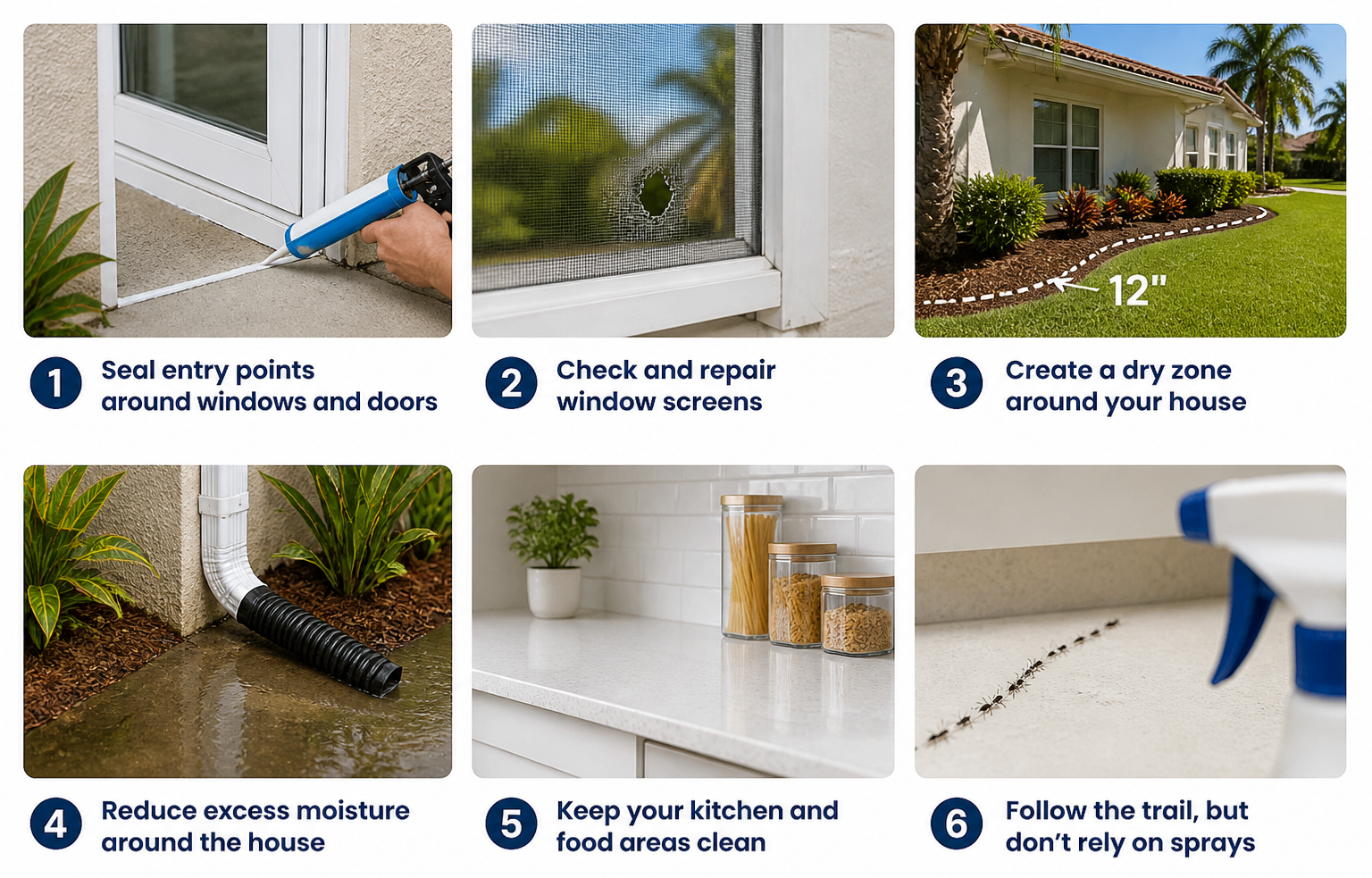
- Seal entry points around doors and windows
Small gaps in caulking may not be noticeable during dry weather, but after rain, they become easy access points. Use silicone-based caulk to seal cracks around frames, baseboards, and sliding door tracks. - Check and repair window screens
Even tiny tears in screens can allow ants and other pests inside, especially when colonies are actively relocating after a storm. - Create a “dry zone” around your home
Keep mulch, soil, and plant beds at least 12 inches away from your foundation. In Weston and throughout South Florida, mulch holds moisture and becomes a prime nesting area for ants. - Reduce excess moisture around the home
Fix leaky hoses, improve drainage, and avoid overwatering plants near the foundation. Standing water and damp soil attract ants looking for stable conditions. - Keep your kitchen and food areas clean
After rain, ants are actively searching for food. Wipe down counters, store food in sealed containers, and take out trash regularly to avoid attracting scouts. - Follow the trail—but don’t rely on sprays alone
Killing visible ants may seem effective, but it doesn’t eliminate the colony. Most over-the-counter sprays only address the surface problem, allowing the infestation to return.
When DIY isn’t enough
If you’re seeing ants after every storm, it’s usually a sign that colonies are already established around your home.
At that point, sealing cracks and cleaning surfaces will only go so far. The real solution is targeting the source—something that requires a more strategic, professional approach.
Immediate steps to take when you spot an indoor ant trail
Seeing a line of ants inside your home can feel overwhelming—but what you do next matters.
Many homeowners immediately reach for sprays, but that can actually make the problem worse. In South Florida, certain species like ghost ants can react by splitting into multiple colonies, causing the infestation to spread even faster.
Instead of spraying everything in sight, take these steps:
What to do right away
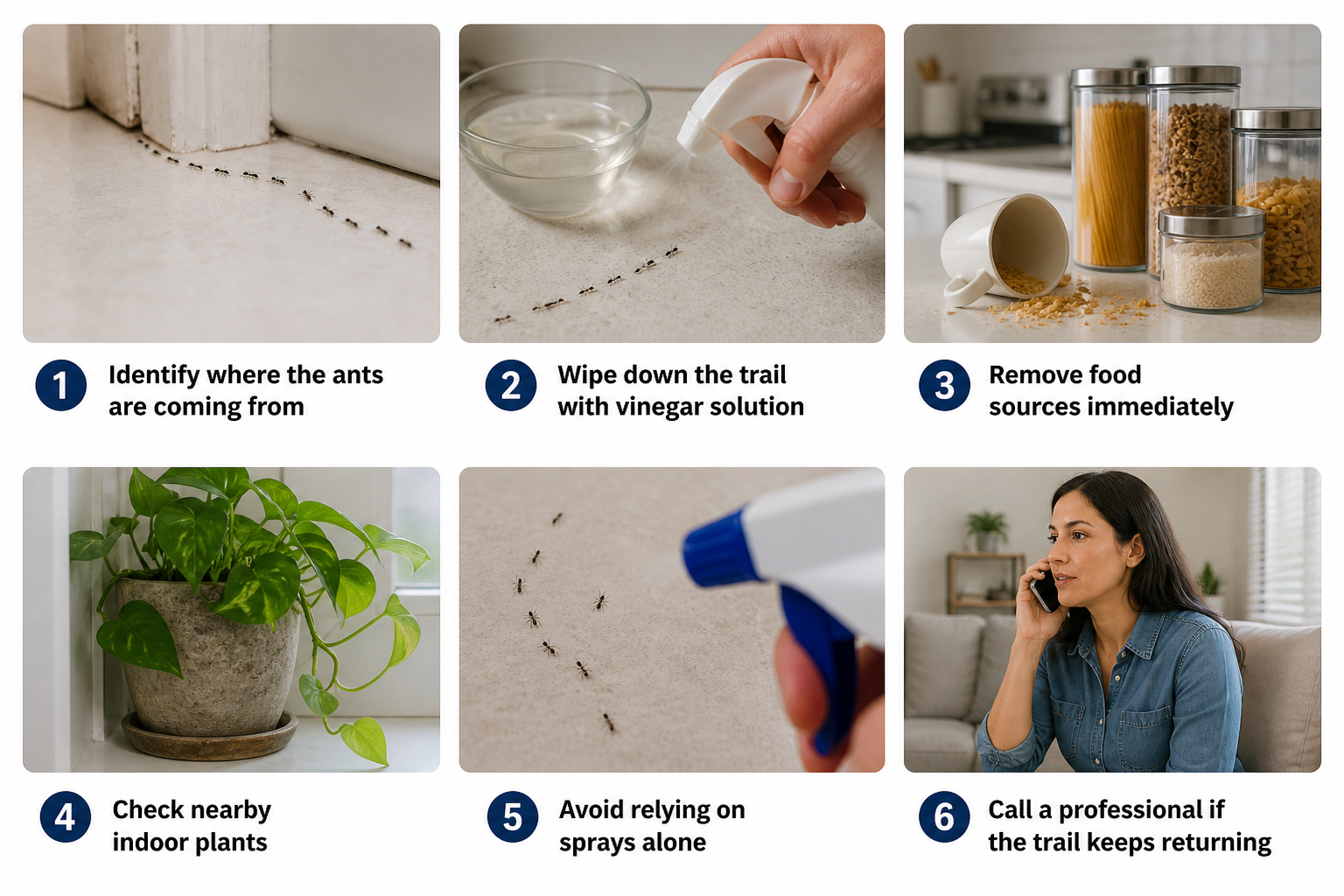
- Identify where the ants are coming from
Follow the trail to locate their entry point and what they’re targeting. This helps you understand whether they’re after food, moisture, or nesting space. - Wipe down the trail with vinegar solution
Use a mix of vinegar and water to clean the area. This removes the pheromone trail ants use to guide each other, helping break the cycle of reinforcements. - Remove food sources immediately
Seal open food, wipe down sticky surfaces, and take out trash. Even small crumbs or spills can keep the trail active. - Check nearby indoor plants
Ants may be nesting in the soil of potted plants, especially in humid South Florida conditions. If activity is concentrated nearby, this could be the source. - Avoid relying on sprays alone
Sprays only kill the ants you see and can trigger colony splitting in some species. This often leads to the infestation spreading rather than stopping. - Call a professional if the trail keeps returning
If ants reappear after cleaning or seem to be coming from inside walls or floors, the colony is likely established nearby. At that point, targeted residential pest control is the most effective way to eliminate the source.
Common mistakes to avoid when dealing with ants
Avoid these common missteps that can make an ant problem worse instead of better:
- Spraying visible ants only
This may seem effective in the moment, but it doesn’t eliminate the colony. In some cases, it can cause ants to split into multiple colonies, making the infestation spread. - Ignoring where the ants are coming from
If you don’t locate the entry point, ants will continue to return—no matter how often you clean or spray. - Leaving behind food or moisture sources
Even small crumbs, sticky residues, or excess moisture can keep attracting ants back into your home. - Sealing entry points too early
Closing off gaps before addressing the colony can trap ants inside walls, forcing them to find new exit points deeper inside your home. - Relying only on DIY solutions for recurring issues
If ants keep coming back after every rain, it’s usually a sign of an established colony nearby that requires a more targeted approach.
Professional Ant Control in Weston, FL
Dealing with ants after every rain isn’t just frustrating—it’s a sign of a larger problem happening beneath the surface.
In South Florida, and especially in Weston and throughout Broward County, ant colonies thrive in warm, moisture-rich environments. What you’re seeing inside your home is often just a small portion of a much larger colony hidden outside or within your walls.
At Professional Pestguard, we don’t just treat the ants you see—we target the entire colony at the source to stop the problem from coming back.
Why DIY solutions often fall short
Store-bought sprays and temporary fixes may provide short-term relief, but they rarely address the root of the infestation. In many cases, improper treatment can cause colonies to split and spread, making the issue worse over time.
That’s why effective ant control in Weston, FL requires a targeted, professional approach designed for South Florida’s climate.
What makes our ant control service effective
- Targeting the entire colony, not just surface activity
We identify nesting areas and treat the source, including hidden colonies in soil, mulch, and wall voids. - Customized treatment plans for your property
Every home and business is different. We tailor our approach based on your layout, landscaping, and level of infestation. - Products designed for South Florida conditions
We use treatments that hold up against rain and humidity, ensuring longer-lasting protection. - Barrier protection to prevent reinfestation
Our service creates a protective perimeter around your home to stop ants before they get inside. - Residential and commercial solutions available
Whether you’re dealing with ants in your home or business, our commercial ant control services are designed to keep your property pest-free year-round.
Local expertise you can trust
Working with a local pest control company matters. We understand how Weston’s soil conditions, rainfall patterns, and landscaping trends impact ant activity.
From single-family homes to large commercial properties, our team knows how to stop infestations quickly and prevent them from coming back—giving you long-term peace of mind.
Frequently Asked Questions About Ants After Rain in South Florida
If you’re dealing with ants after a storm, you’re not alone. Here are some of the most common questions homeowners in Weston and across South Florida ask—and what you need to know.
Why do ants come inside after it rains?
Heavy rain floods underground ant nests, forcing colonies to relocate to higher, drier ground. Homes provide the perfect shelter, offering protection, moisture balance, and access to food. In South Florida’s climate, this can cause sudden indoor infestations within hours of a storm.
Will ants go away on their own after the rain stops?
Not usually. Once ants find a reliable food source and safe environment inside your home, they tend to stay. Without proper treatment, the colony may continue sending ants indoors even after conditions outside improve.
What is the fastest way to get rid of ants inside the house?
The most effective immediate step is to clean the ant trail using a vinegar and water solution to remove pheromone scents. At the same time, eliminate food sources and seal entry points. However, for long-term results, the colony itself must be treated—not just the visible ants.
Does spraying ants make the problem worse?
In some cases, yes. Certain species in South Florida, like ghost ants, can respond to threats by splitting into multiple colonies. This process, known as “budding,” can cause the infestation to spread rather than stop when using over-the-counter sprays.
How do I find where ants are coming from?
Follow the visible trail to identify entry points such as gaps around doors, windows, or foundations. Ants often enter through very small openings. If the trail leads into walls, cabinets, or flooring, it may indicate a hidden colony nearby.
Are ants a sign of a bigger pest problem?
They can be. Recurring ant activity often indicates an established colony around your property or within structural areas. In some cases, conditions that attract ants—like moisture or food residue—can also attract other pests.
When should I call a professional for ant control?
If ants continue to return after cleaning, or if you’re seeing large numbers after every rain, it’s time to consider professional help. A targeted ant control in Weston, FL
service can identify the source of the infestation and provide long-term protection.
How often should I get pest control in South Florida?
Due to the warm, humid climate, pests remain active year-round. Most homes benefit from routine pest control services every 2–3 months to maintain consistent protection and prevent seasonal infestations.
Summary: Keeping your home dry and ant-free
Ant problems after rain aren’t random—they’re predictable.
In South Florida, heavy storms flood underground nests, forcing ants to search for higher, drier ground. That often leads them straight into your home, where they find shelter, moisture balance, and easy access to food.
The key to stopping ants is simple: block their entry, remove what attracts them, and address the problem at its source.
Key Takeaways:
- Rain forces ant colonies out of the ground and into homes
- Common species like ghost ants and big-headed ants are especially active after storms
- Sealing entry points and managing moisture around your home makes a big difference
- Cleaning trails properly helps stop ants from coming back
- Recurring infestations usually mean a nearby or hidden colony
Ready to stop ants for good?
If you’re dealing with ants after every rain, it’s a sign the problem goes deeper than what you can see. At that point, the most effective solution is a targeted, professional approach.
Contact us today for expert ant control in Weston, FL and get a customized treatment plan designed for South Florida conditions.
About Professional Pestguard
Professional Pestguard provides professional pest control in Weston, FL and nearby communities including Davie, Sunrise, Pembroke Pines, and Plantation. With over 40 years of experience, our licensed technicians protect homes and businesses across Broward County and Miami-Dade County from ants, cockroaches, rodents, spiders, and other common South Florida pests using safe and effective treatments.