Why Your Lawn Is Turning Brown in May (South Florida Fix Guide)
Seeing brown patches, weeds, or thinning grass this May? Here’s exactly what’s causing it—and how to fix it before summer makes it worse.
South Florida lawns don’t slowly decline… they flip almost overnight.
One week your grass looks lush, green, and perfectly healthy. Then May hits, and suddenly you’re dealing with brown patches, thinning areas, and a lawn that just looks off. If that sounds familiar, you’re not imagining it. This is one of the most common and frustrating transitions homeowners face this time of year—and it’s often a sign that your current lawn care routine isn’t keeping up with seasonal changes.
In South Florida, May is a turning point. Rising temperatures, heavy humidity, and the start of the rainy season create the perfect storm for lawn stress. Heat weakens your grass, excess moisture fuels disease, and underground pests like chinch bugs and sod webworms begin to thrive. At the same time, weeds take advantage of the conditions and spread faster than most homeowners can keep up with. Without the right lawn care strategy—including proper fertilization, weed control, insect treatment, and disease prevention—your lawn can go from healthy to struggling in just a few weeks.
Why Is My Lawn Turning Brown in May?
If your lawn is starting to show yellow or brown patches in May, you’re not alone. Homeowners across Weston and Broward County deal with this every year—and it usually feels like it happens out of nowhere. One week your grass looks healthy, and the next, it’s patchy, dull, and struggling to bounce back.
The truth is, your lawn isn’t dealing with just one problem. In May, several stress factors hit at the same time, and together they can quickly break down even a healthy lawn.
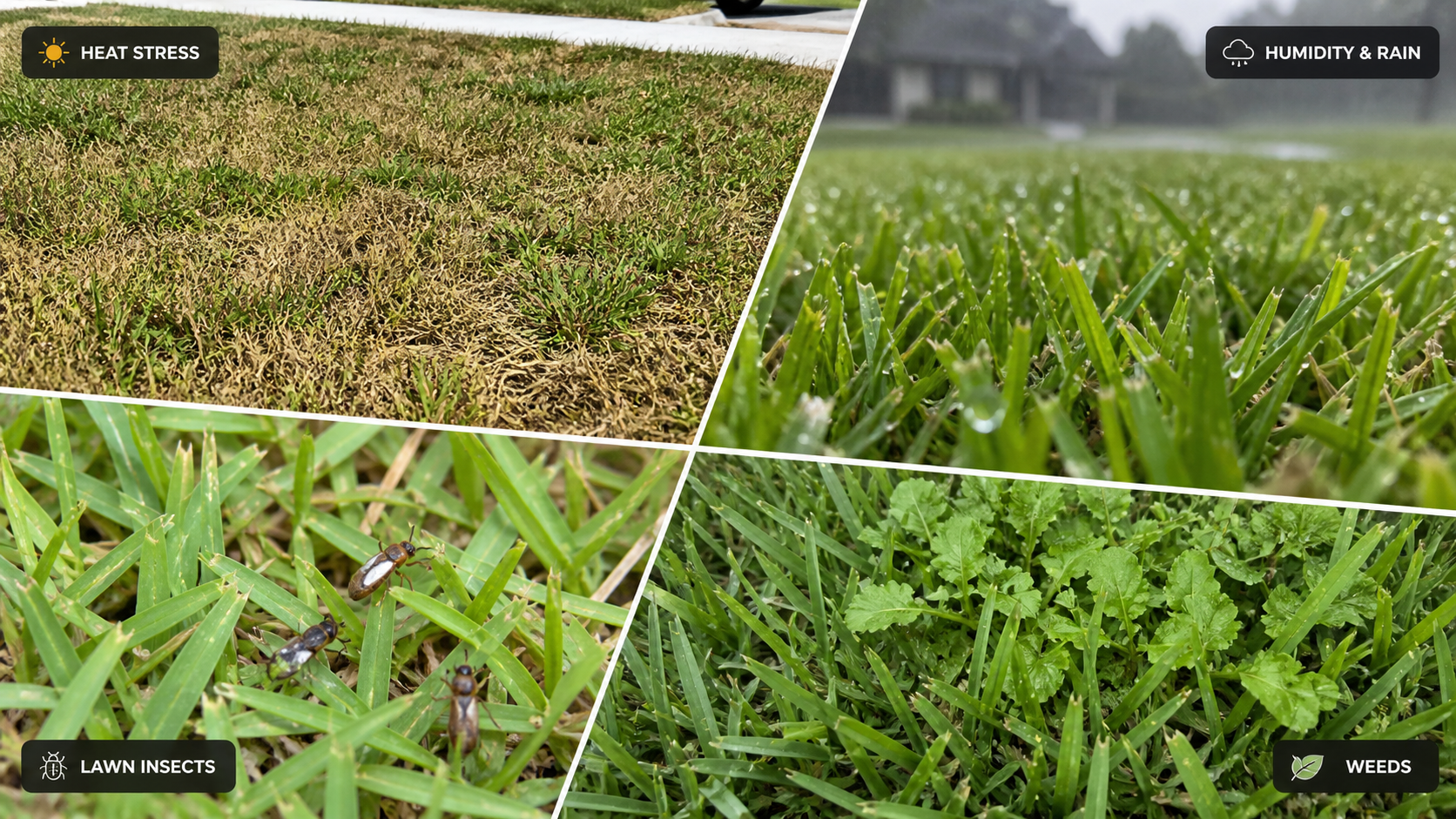
Heat Stress Starts to Weaken Your Grass
As temperatures climb into the upper 80s and 90s, your lawn has to work harder to stay healthy. Common South Florida grasses like St. Augustine and Zoysia begin using more energy to survive the heat, which makes them more vulnerable to damage. When grass is stressed, it can’t recover as easily—and that’s when discoloration starts to show.
Humidity + Rain Create the Perfect Environment for Disease
May marks the beginning of increased humidity and the early stages of the rainy season. While water is essential, too much moisture combined with heat creates a “greenhouse effect” at the soil level. This is when lawn diseases begin to develop, often showing up as irregular brown or yellow patches that continue to spread if left untreated.
Lawn Insects Become More Active
Warmer soil temperatures signal the return of lawn-damaging insects like chinch bugs and sod webworms. These pests feed on your grass at the root or blade level, cutting off nutrients and causing areas of your lawn to dry out—even if you’re watering consistently. If patches feel dry and brittle or spread quickly, insects are often the hidden cause.
Weeds Compete for Nutrients
As your lawn becomes stressed, weeds take advantage. They grow aggressively in May, stealing water and nutrients from your grass and making thin or damaged areas even worse. What starts as a small issue can quickly turn into widespread uneven growth.
The Key Takeaway
If your lawn looks like it’s drying out—even though you’re watering—it’s probably not a watering issue.
It’s a combination of heat, moisture, insects, and nutrient imbalance all happening at once. And unless all of those are addressed together, the problem tends to come back or continue spreading into the summer months.
What Are the Most Common Lawn Pests in South Florida?
In May, the “big four” lawn pests start becoming active across South Florida—and catching them early can be the difference between a simple treatment and major lawn damage. Many homeowners mistake pest damage for drought, which leads to overwatering and makes the problem worse.
Here are the most common lawn pests to watch for in Weston and Broward County:
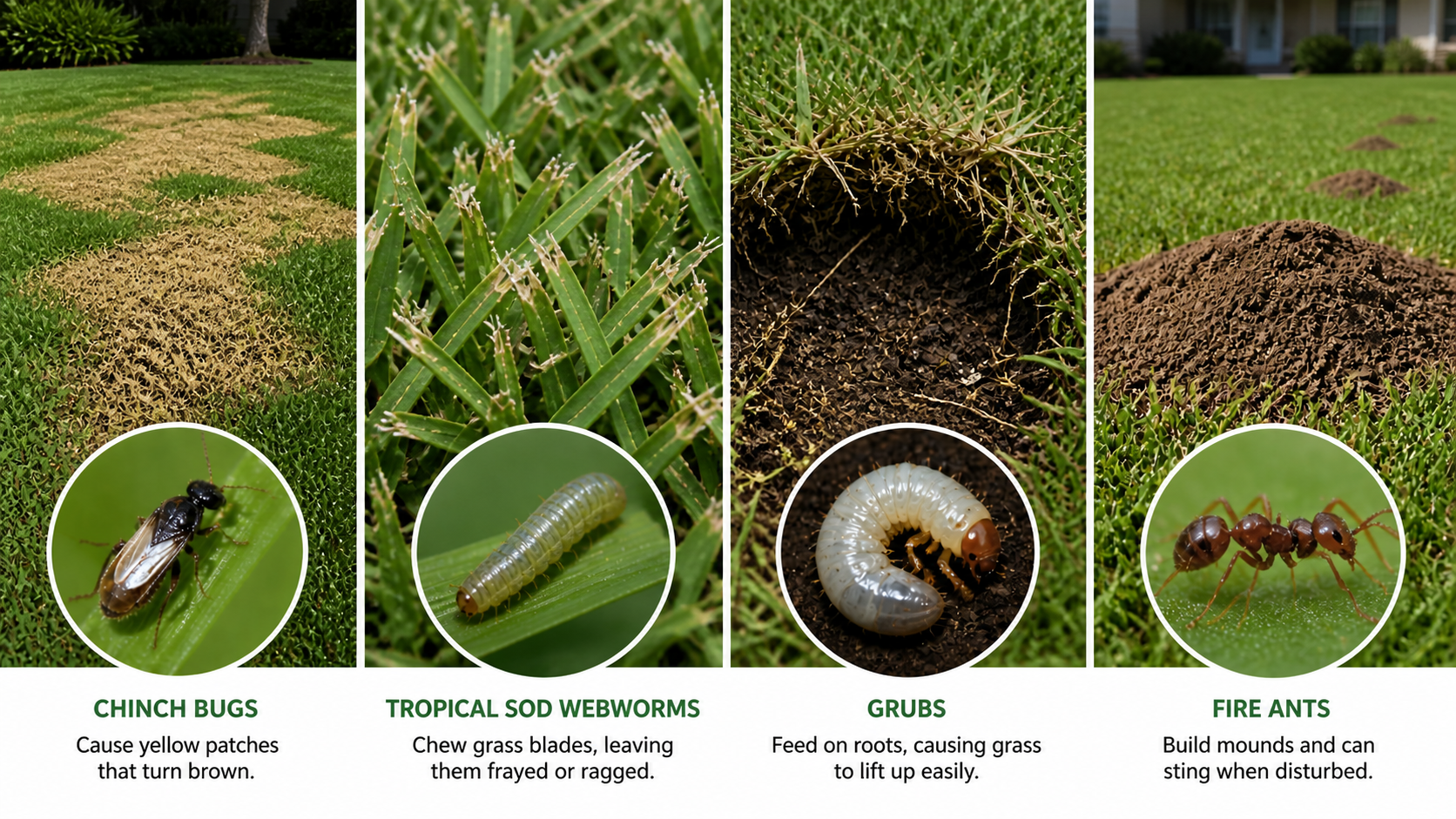
Chinch Bugs (One of the Top Causes of Brown Patches)
These are the most destructive pests for St. Augustine grass. They live in the thatch layer and feed by sucking the juices out of grass blades while injecting a toxin that kills the plant.
What to look for:
- Yellowing patches that quickly turn brown
- Damage starting near driveways or sidewalks
- Grass that doesn’t respond to watering
Tropical Sod Webworms (Night Feeders That “Scalp” Your Lawn)
These caterpillars emerge in late spring and feed at night, chewing through grass blades and leaving your lawn looking thin, ragged, or uneven.
What to look for:
- Grass that looks chewed or frayed
- Brown patches that appear almost overnight
- Small white moths flying up when you walk through the lawn
Grubs (Root Destroyers Beneath the Surface)
Grubs live underground and attack the root system of your grass, cutting off its ability to absorb water and nutrients.
What to look for:
- Grass that lifts easily like a piece of carpet
- Soft, spongy soil
- Irregular dead patches that continue spreading
Fire Ants (Aggressive and Dangerous Lawn Invaders)
Fire ants are extremely common in South Florida and build visible mounds throughout your lawn. Beyond damaging your yard, they pose a real risk to people and pets due to their painful stings.
What to look for:
- Small dirt mounds appearing suddenly
- Increased ant activity, especially after rain
- Painful stings when disturbed
Effective insect control isn’t just about killing the bugs you see—it’s about targeting the source, disrupting their life cycle, and preventing them from coming back stronger in the weeks ahead.
If you're already seeing these signs in your lawn, it may be time for a professional inspection before the damage spreads.
Common South Florida Lawn Weeds in Spring
While you’re dealing with lawn insects, weeds are taking advantage of weakened grass and spreading fast. May is one of the most aggressive growth periods for weeds in South Florida, especially with rising temperatures and consistent moisture.
Because South Florida doesn’t experience a true “killing frost,” weed seeds remain active year-round and begin germinating as soon as soil conditions are right.
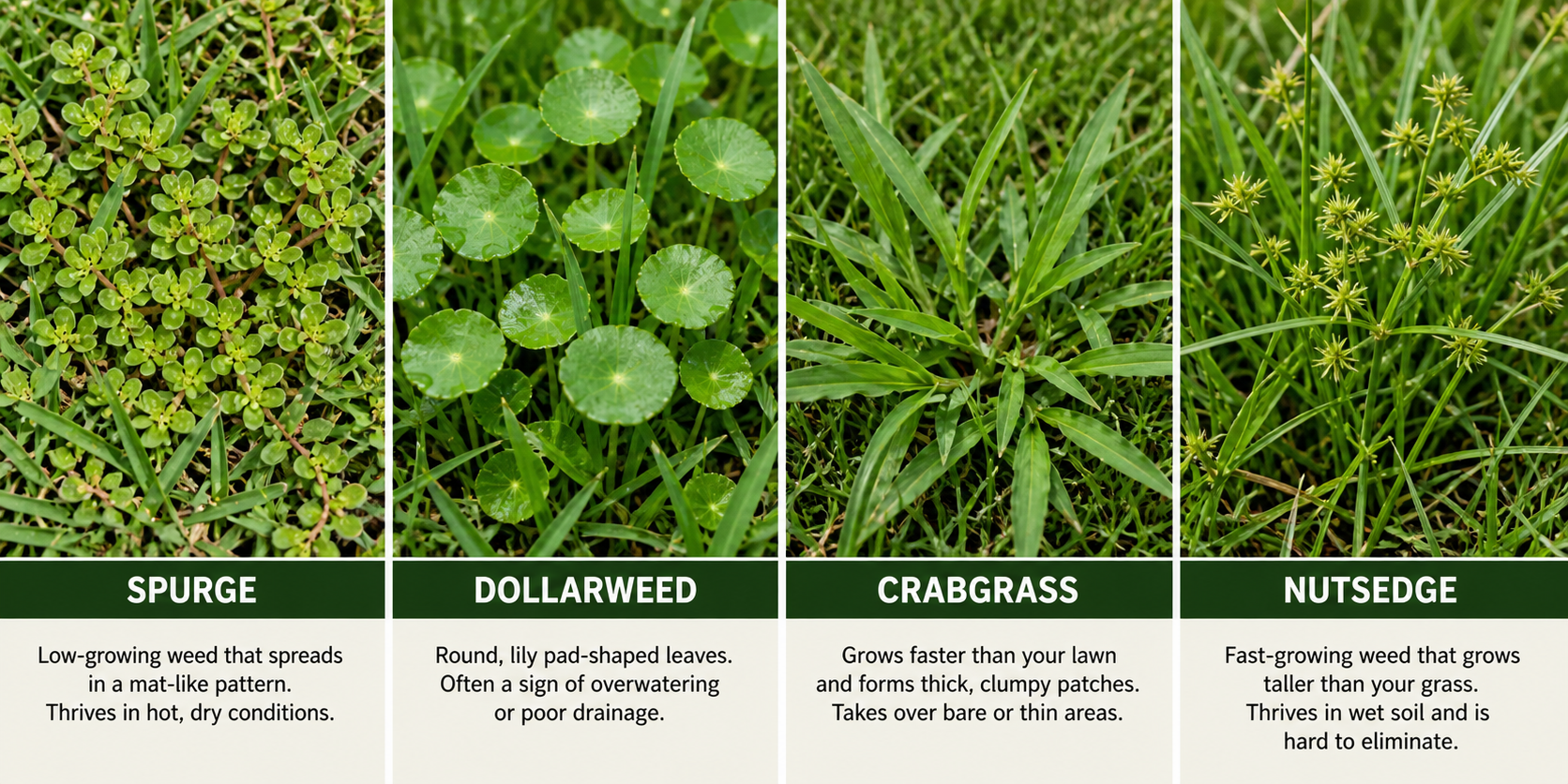
Most Common Lawn Weeds to Watch For
- Spurge:
Spurge grows low to the ground in a mat-like pattern and spreads quickly across stressed areas of your lawn. It thrives in hot, dry conditions and can take over thin or weakened grass faster than most homeowners expect. - Dollarweed:
Dollarweed is easy to recognize by its round, lily pad–shaped leaves. It usually signals overwatering or poor drainage, and it spreads aggressively in moist, humid environments common in South Florida. - Crabgrass:
Crabgrass grows much faster than your lawn and competes for nutrients, water, and space. It forms thick, clumpy patches that stand out from your turf and can quickly take over bare or damaged areas. - Nutsedge:
Nutsedge is a bright green, fast-growing weed that often grows taller than your grass. It thrives in wet soil and is commonly mistaken for regular grass, but it requires targeted treatment to fully eliminate.
Why Weed Control in May Is Tricky
Weed control in May requires careful timing. Many treatments can stress your lawn if applied during peak heat, especially when temperatures rise above 85 degrees. At the same time, waiting too long allows weeds to spread and establish deeper root systems, making them harder to control as the season progresses.
Effective weed control isn’t just about removing what you see—it’s about preventing regrowth and protecting your lawn during peak growing season.
How Often Should I Water My Lawn During the May Heat?
Watering your lawn in South Florida isn’t about doing more—it’s about doing it correctly. Many homeowners assume that hotter weather means watering every day, but that actually does more harm than good.
Overwatering leads to shallow roots and increases the risk of fungal growth, while underwatering during the May transition can stress your grass and cause it to turn brown. The goal is to find the balance that keeps your lawn strong and resilient as temperatures rise.
Recommended Watering Guidelines for South Florida Lawns
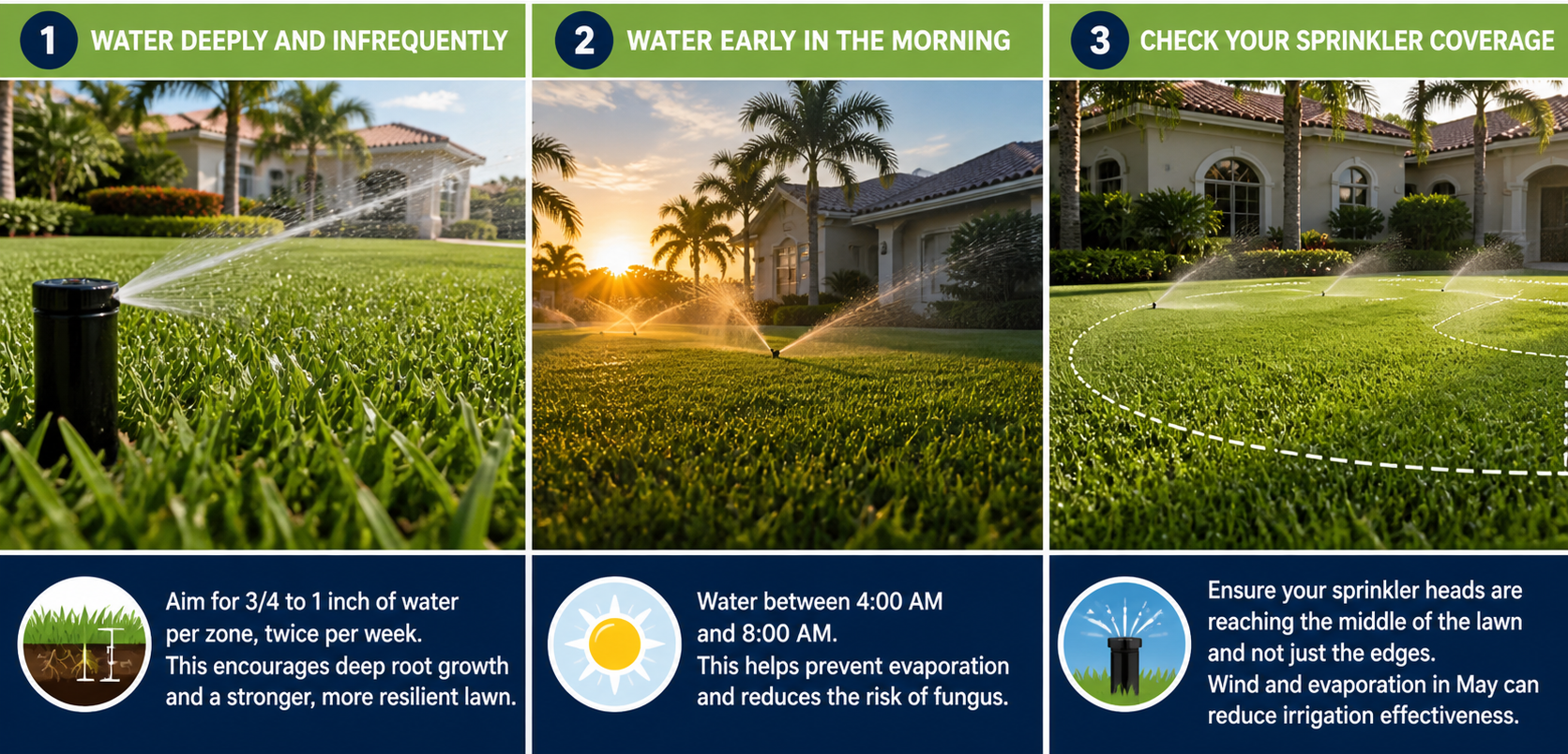
- Water deeply and infrequently:
Aim for about ¾ to 1 inch of water per zone, twice per week. This encourages deeper root growth, making your lawn more drought-resistant and better able to handle heat stress. - Water early in the morning:
The best time to water is between 4:00 AM and 8:00 AM. This allows moisture to soak into the soil before the sun evaporates it, while also preventing excess moisture from sitting overnight. - Check your sprinkler coverage:
Make sure your irrigation system is reaching all areas of your lawn evenly. Inconsistent coverage can lead to dry patches in some areas and overwatering in others, especially with wind and heat in May.
Common Watering Mistakes to Avoid
- Watering every day “just because it’s hot”
- Watering at night (increases risk of fungus)
- Light, frequent watering that never reaches the roots
- Ignoring signs of overwatering like soggy soil or weed growth
Key Takeaway
If your lawn is turning brown in May, it’s not always because it needs more water—it might actually be getting too much, or not getting it in the right way.
Essential Disease Control for St. Augustine Grass
Fungal diseases are one of the most common reasons lawns decline in South Florida—especially in May. With rising humidity, frequent rain, and warm temperatures, your lawn becomes the perfect environment for fungus to develop and spread quickly.
The two most common diseases affecting St. Augustine grass this time of year are Large Patch and Grey Leaf Spot, and both can cause visible damage in just a matter of days if left untreated.
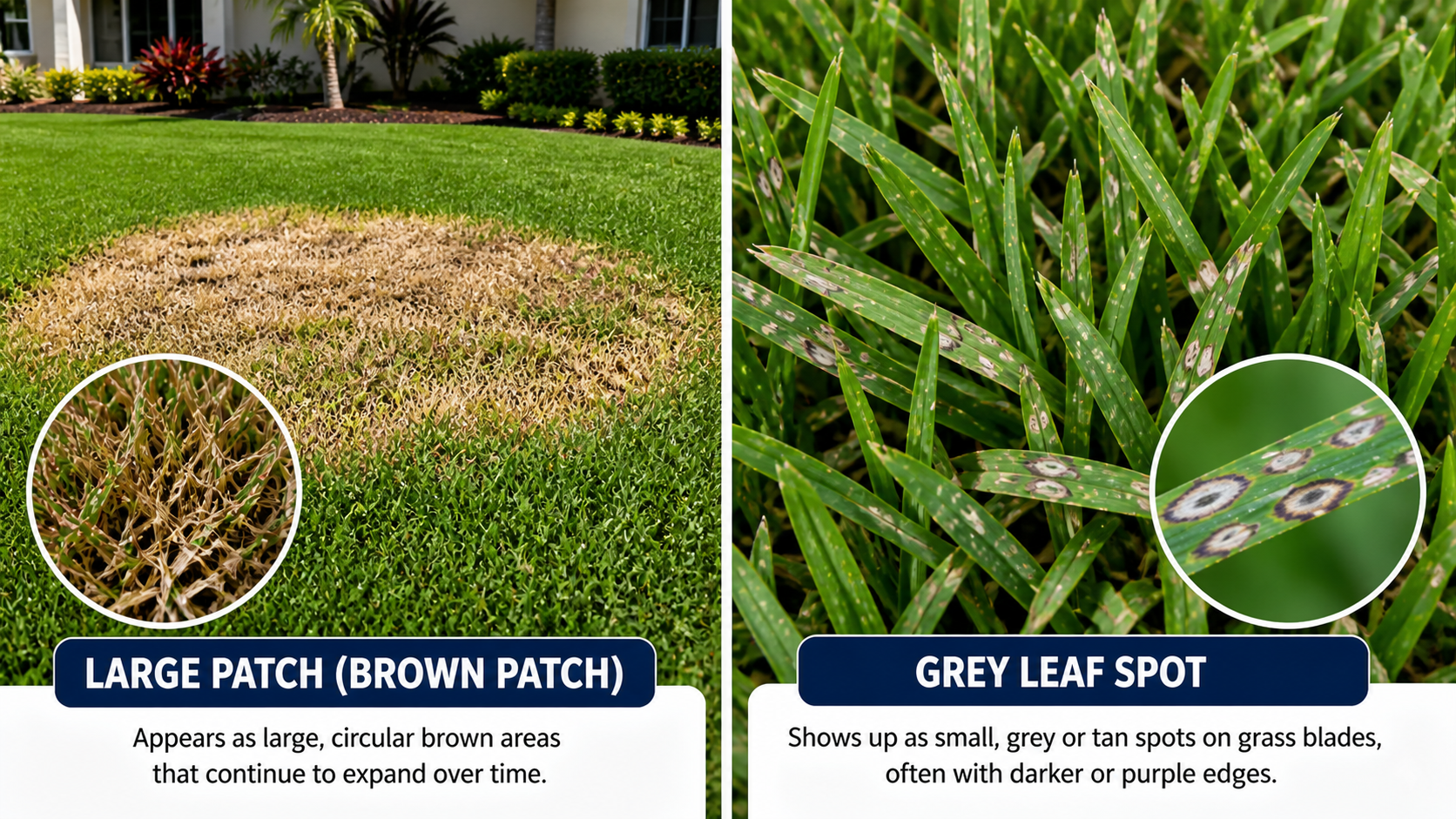
Common Lawn Diseases to Watch For
- Large Patch (Brown Patch):
Appears as large, circular brown areas that continue to expand over time. This disease thrives in moist conditions and often shows up after periods of consistent rain or overwatering. - Grey Leaf Spot:
Shows up as small, grey or tan spots on grass blades, often with darker or purple edges. It spreads rapidly during high humidity and typically affects newer growth first.
Why Disease Spreads So Fast in May
Warm temperatures combined with moisture create ideal conditions for fungal growth. Lawns that stay wet for extended periods—especially overnight—are at a much higher risk.
Excess nitrogen from fertilization can also make the problem worse, as it encourages soft, new growth that fungus feeds on.
Key Takeaway
Once you see signs of fungus, the damage to those areas is already done. The goal is to stop it from spreading and protect the rest of your lawn before it becomes a larger issue.
Effective disease control requires early detection, proper treatment, and preventing the conditions that allow fungus to thrive.
💡 Important for South Florida homeowners:
If you’re in Miami-Dade County, there is a fertilizer restriction in place. Nitrogen fertilizers cannot be applied between May 15 and October 31 due to environmental regulations. This rule does not apply to Broward County, including Weston—but it’s important to know if you’re near county lines or managing properties in multiple areas.
When Is the Best Time for Lawn Fertilization?
If your lawn is healthy, May can be a great time for lawn fertilization. However, using the right product is key. South Florida soils are often sandy and lack the nutrients required for heavy-feeding grasses like St. Augustine. A slow-release granular fertilizer is usually the best choice, as it provides a steady stream of nutrients over several weeks rather than a quick spike that can burn your lawn in the May heat.
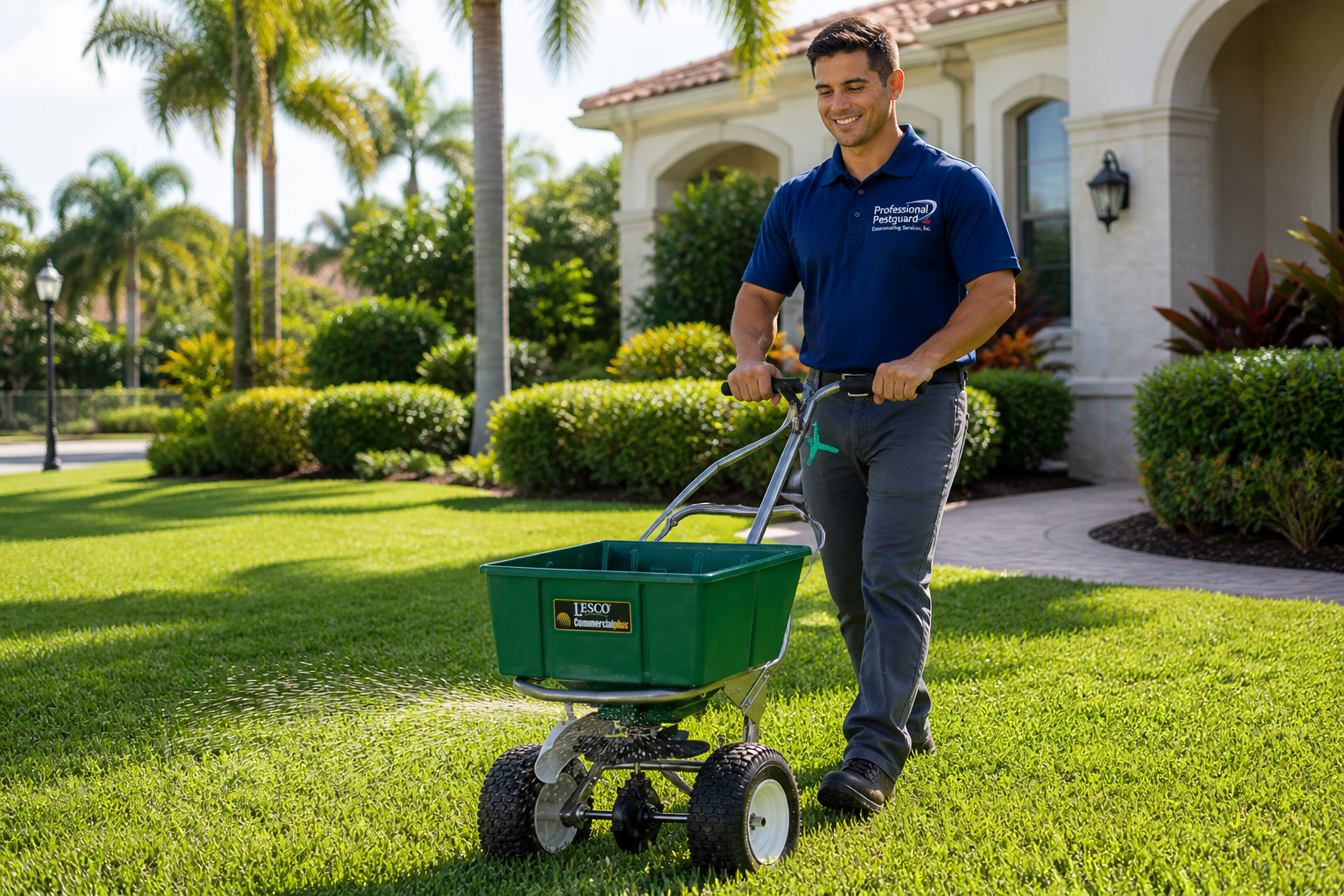
Before you apply fertilizer, make sure you’ve addressed any pest or weed issues. Adding fertilizer to a lawn with chinch bugs or active weeds can actually make the problem worse. A balanced approach that includes potassium is especially important, as it supports root strength and helps your lawn handle heat stress.
Frequently Asked Questions About Lawn Care in South Florida
Get quick answers to the most common lawn care questions homeowners have during South Florida’s toughest growing season.
Why is my lawn turning brown in May in South Florida?
Brown patches in May are usually caused by a combination of heat stress, lawn insects like chinch bugs, fungal diseases, and improper watering. Many homeowners assume it’s a watering issue, but in South Florida, it’s often a biological problem that needs targeted treatment.
How often should I water my lawn in South Florida during May?
Most lawns should be watered about 2 times per week, applying ¾ to 1 inch of water per zone. It’s best to water early in the morning between 4:00 AM and 8:00 AM to reduce evaporation and prevent fungal growth.
What are the most common lawn pests in Weston and Broward County?
The most common lawn pests in this area include chinch bugs, tropical sod webworms, grubs, and fire ants. These pests can damage grass quickly, especially during the warmer months when they are most active.
When is the best time to fertilize my lawn in South Florida?
Fertilization in South Florida should be done carefully, especially in May. Slow-release fertilizers are recommended. In Miami-Dade County, nitrogen fertilizers are restricted between May 15 and October 31, but this does not apply in Broward County.
Why do weeds keep coming back in my lawn?
Weeds often return because the root cause—such as poor soil conditions, overwatering, or weak turf—has not been addressed. Effective weed control requires both removing existing weeds and preventing new growth.
Do I really need professional lawn care services?
If your lawn continues to struggle despite regular watering and maintenance, professional services can identify underlying issues like pests, disease, or nutrient imbalances. Addressing these early can prevent more costly damage later.
Professional Solutions for a Greener Lawn
Maintaining a healthy, green lawn in South Florida isn’t as simple as watering and fertilizing. Between identifying hidden pest activity, managing aggressive weeds, and timing treatments around heat and humidity, it’s easy for small issues to turn into expensive problems.
Many homeowners find themselves stuck in a cycle—trying different products, watering more, fertilizing more—only to see their lawn continue to decline. That’s because most lawn issues aren’t caused by just one factor. It’s usually a combination of insects, disease, soil conditions, and timing.

That’s where Professional Pestguard comes in. Our team specializes in complete lawn care solutions designed specifically for South Florida conditions. From targeted insect control to effective weed control, lawn fertilization, and disease control, we focus on treating the root cause—not just the symptoms.
Professional lawn care takes the guesswork out of the process. Instead of reacting to visible damage, trained technicians can identify early warning signs, treat issues before they spread, and keep your lawn consistently healthy. By the time a brown patch appears, the underlying problem has often been developing for weeks.
What Professional Pestguard Helps Solve
- Hidden insect activity before it spreads
- Lawn diseases before they damage large areas
- Weeds that keep coming back
- Improper fertilization and nutrient imbalance
The Real Difference
With Professional Pestguard, it’s not about doing more—it’s about doing the right things at the right time. Our treatments are designed around South Florida’s climate, helping your lawn stay strong through heat, humidity, and seasonal changes.
Ready for a Healthier Lawn?
If your lawn is showing signs of stress—brown patches, weeds, or thinning grass—it may be time for a professional approach.
Contact Professional Pestguard for a free estimate. Or explore our full lawn care services to see how we can help protect and restore your lawn
🌱 Key May Lawn Care Takeaways
To keep your lawn green and healthy through the transition into summer, keep these core tips in mind:
- Identify before you act: Brown grass isn’t always a watering issue—check for pests or disease first.
- Water early, not more: Early morning irrigation helps prevent evaporation and reduces fungal risk.
- Mow at the right height: Keep St. Augustine grass at 3.5 to 4 inches to protect roots and retain moisture.
- Stay ahead of pests: Chinch bugs and webworms spread quickly—early treatment is key.
- Timing matters for fertilization: Use slow-release products and avoid fertilizing during peak heat or active infestations.
May is a challenging month for South Florida homeowners, but with the right strategy, your lawn can thrive. By focusing on deep watering, pest identification, and professional-grade nutrients, you can ensure your yard remains the envy of the neighborhood all summer long.
About Professional Pestguard
Professional Pestguard provides professional pest control in Weston, FL and nearby communities including Davie, Sunrise, Pembroke Pines, and Plantation. With over 40 years of experience, our licensed technicians protect homes and businesses across Broward County and Miami-Dade County from ants, cockroaches, rodents, spiders, and other common South Florida pests using safe and effective treatments.