Rodent Control Near Me in South Florida: Get Rid of Rats & Mice Fast
Rats and mice don’t just “show up” in South Florida homes — they’re actively looking for a way in.
With year-round warmth, heavy rain, and easy access to food and shelter, our homes become the perfect target. What starts as a small problem can turn into a full infestation fast if it’s not handled the right way.
Here’s why rodent problems are so common here — and what you can do to stop them.

Need Help With Rodents in South Florida?
Protect your home from rats and mice with local rodent control services designed for South Florida homes.
Family-Owned Since 2003
40+ Years of Experience
Serving Weston & Broward County
Fast Response Times
Why South Florida Is a Hotspot for Rodent Activity
South Florida creates the perfect environment for rats and mice to thrive year-round. With warm temperatures, frequent rain, and dense landscaping, rodents always have access to food, water, and shelter.
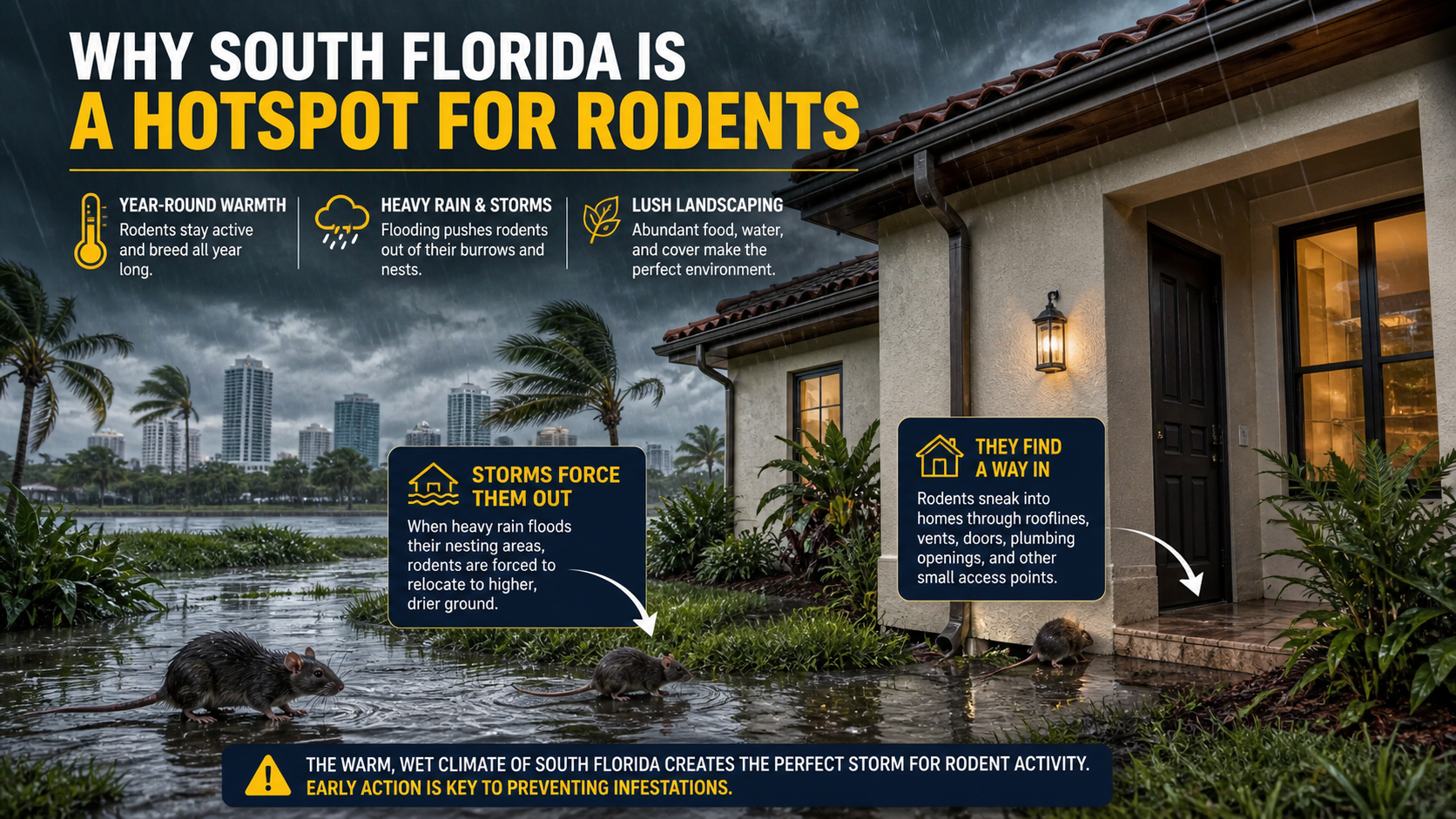
Unlike colder regions, rodents here don’t slow down in the winter—they stay active and continue breeding, which means infestations can grow quickly if left untreated.
Heavy rain is one of the biggest triggers for rodent activity. When storms flood their nesting areas, rats and mice are forced to relocate to higher, drier ground—often inside homes through rooflines, vents, and small openings.
This is the same reason pest activity spikes after storms—read more here: Why Ants Get Worse After Rain in South Florida (And What to Do)
In many Broward County homes, features like tile roofs, attic vents, and overhanging trees make it easy for rodents—especially roof rats—to find their way inside. Once they enter, they can nest in attics, walls, and crawlspaces, often going unnoticed until the problem becomes severe.
Because of how fast rodents reproduce, what starts as a small issue can turn into a full infestation in just a few weeks.
Common Types of Rats and Mice in Weston
Understanding which rodent has entered your home is one of the most important steps in solving the problem correctly. In South Florida, different species behave in completely different ways — which means the treatment approach has to be targeted, not generic.
In areas like Weston, Davie, and throughout Broward County, we most commonly see two types of rats and several types of mice. Each one has unique nesting habits, entry points, and activity patterns that directly impact how infestations should be handled.
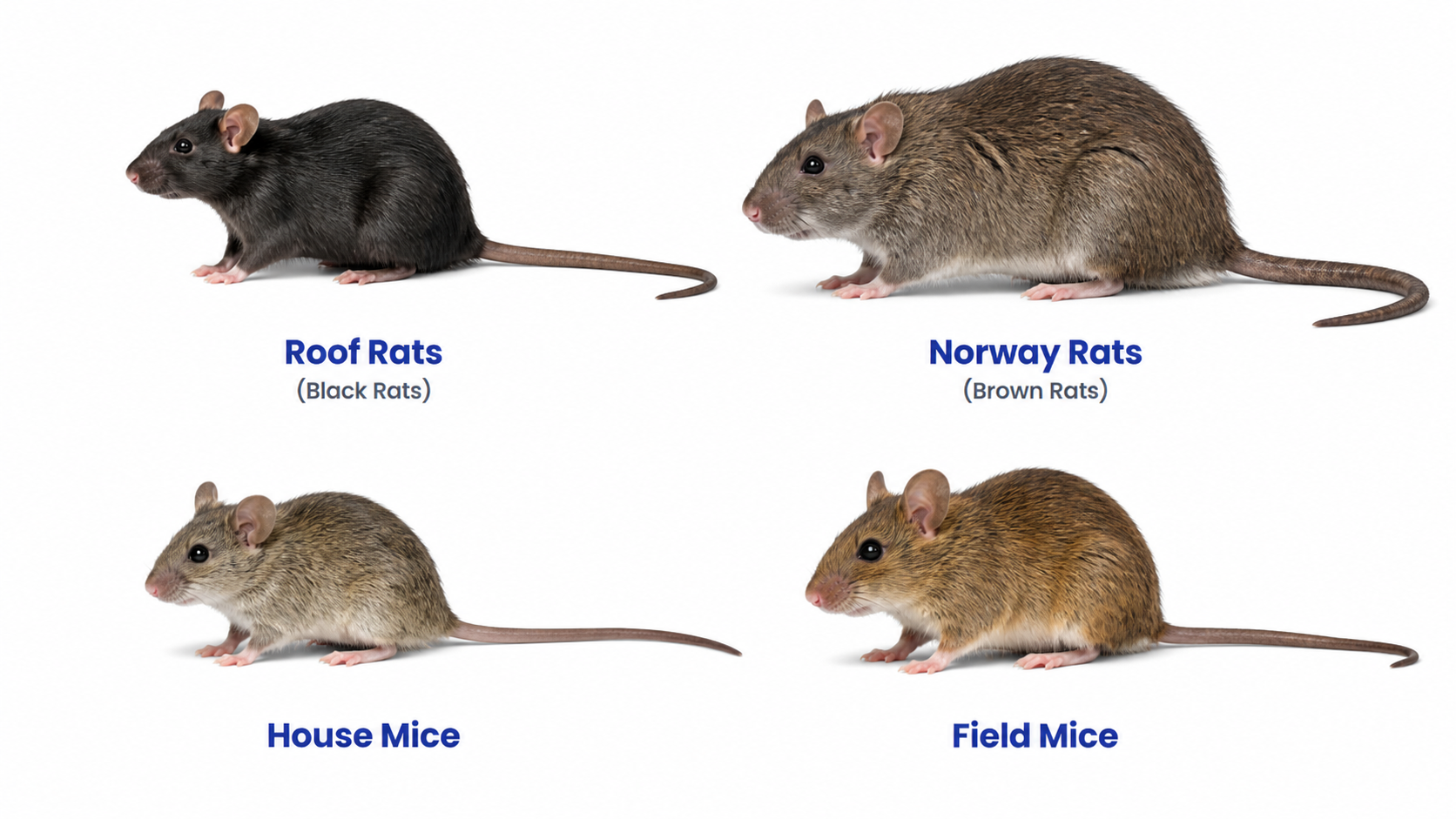
- Roof Rats (Rattus rattus): The most common rodent in South Florida homes. These rats are excellent climbers and typically enter through rooflines, attic vents, or tree branches touching the home. They prefer nesting in attics, ceilings, and upper cabinets, which is why scratching sounds are often heard at night.
- Norway Rats (Rattus norvegicus): Also known as sewer rats, these are larger, heavier rodents that stay closer to the ground. They typically burrow around foundations, slab edges, and landscaping, entering homes through lower-level openings, garages, or plumbing access points.
- House Mice: Smaller than rats but much more agile, mice can squeeze through openings as small as a dime. They reproduce rapidly — a single female can produce multiple litters per year — making infestations escalate quickly if not addressed early.
- Field Mice: More common in heavily landscaped or semi-rural areas of Weston, these mice are often pushed indoors during extreme heat or heavy rain in search of food, water, and shelter.
Knowing the species is critical because it determines where to inspect, where to place traps, and how to properly seal entry points. For example, roof rat infestations require a strong focus on the roofline and trees, while Norway rat issues demand a more ground-level strategy.
How Can I Tell If I Have a Rodent Infestation?
Rodents are nocturnal and highly secretive, which means you may not see them until the infestation has already grown. But even if you don’t spot a rat or mouse, they leave behind clear warning signs that shouldn’t be ignored.
If you notice any of the following, it may be time to look into professional rodent control services in South Florida and have your home inspected before the problem gets worse.
- Droppings: Commonly found in pantries, under sinks, inside cabinets, or along baseboards. Rat droppings are larger (about the size of an olive pit), while mouse droppings resemble small grains of black rice.
- Gnaw Marks: Rodents constantly chew to keep their teeth from overgrowing. Look for damage on baseboards, food packaging, plastic pipes, and even electrical wiring.
- Rub Marks: Rats have oily fur and tend to follow the same travel paths. Over time, they leave dark, greasy streaks along walls and edges where they move frequently.
- Strange Noises: Scratching, scurrying, or squeaking sounds coming from walls, ceilings, or attics—especially at night when rodents are most active.
- Nesting Materials: Shredded paper, insulation, fabric, or dried plant matter tucked away in hidden areas like attics, garages, or behind appliances.
- Unusual Odors: A strong, musty smell can build up in enclosed areas due to rodent urine and droppings. In more severe cases, a foul odor may indicate a dead rodent hidden inside walls or ceilings.
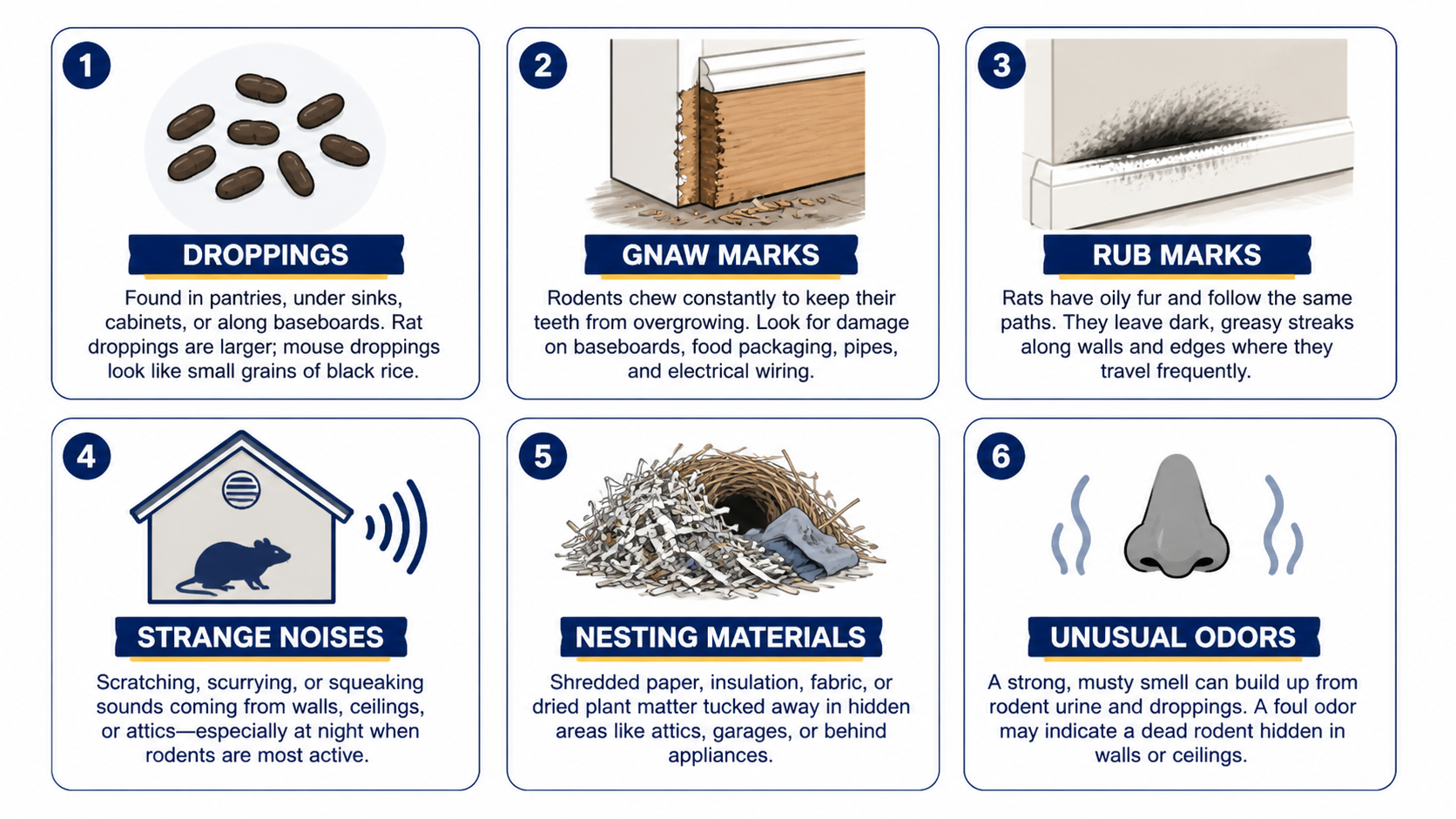
Catching these signs early can save you thousands in repairs. Rodents can chew through electrical wiring, increasing the risk of fire, and they contaminate surfaces as they move throughout your home.
If you’re noticing more than one of these signs, it’s best to act quickly—rodent populations grow fast, and what starts as a small issue can escalate in just a few weeks.
Signs You Need Professional Rodent Control Right Away
Rodents can multiply quickly inside South Florida homes, especially when food, moisture, and hidden entry points are available. While seeing one rat or mouse may not seem serious at first, many infestations grow behind walls, inside attics, garages, kitchens, and crawl spaces long before homeowners realize how active the problem has become.
If you notice any of these warning signs, it may be time to contact a professional rodent exterminator in Weston or Broward County:
- Scratching or Movement Inside Walls
Hearing scratching, chewing, or movement at night is one of the most common signs of rats or mice nesting inside walls, ceilings, attics, or crawl spaces. - Rodent Droppings Around the Home
Small dark droppings near food storage areas, garages, cabinets, laundry rooms, or baseboards often indicate active rodent activity nearby. - Chewed Wires, Boxes, or Food Packaging
Rodents constantly chew to wear down their teeth, which can damage electrical wiring, cardboard boxes, insulation, and stored food containers. - Strong Musty or Urine Odors
A persistent odor near walls, cabinets, garages, or hidden areas may signal rodent nesting activity or contamination from droppings and urine. - Rodents Seen During the Day
Rats and mice are usually more active at night. Seeing rodents during daytime hours can sometimes indicate a larger infestation competing for food and shelter. - Pets Suddenly Acting Alert Near Walls or Appliances
Dogs and cats often notice rodent activity before homeowners do. Scratching, barking, or staring near appliances, cabinets, or walls may indicate hidden movement.
Rodent infestations in South Florida can worsen quickly if the source of the problem is not addressed early. Professional treatment helps identify active areas, reduce rodent activity, and prevent infestations from continuing to spread throughout the home.
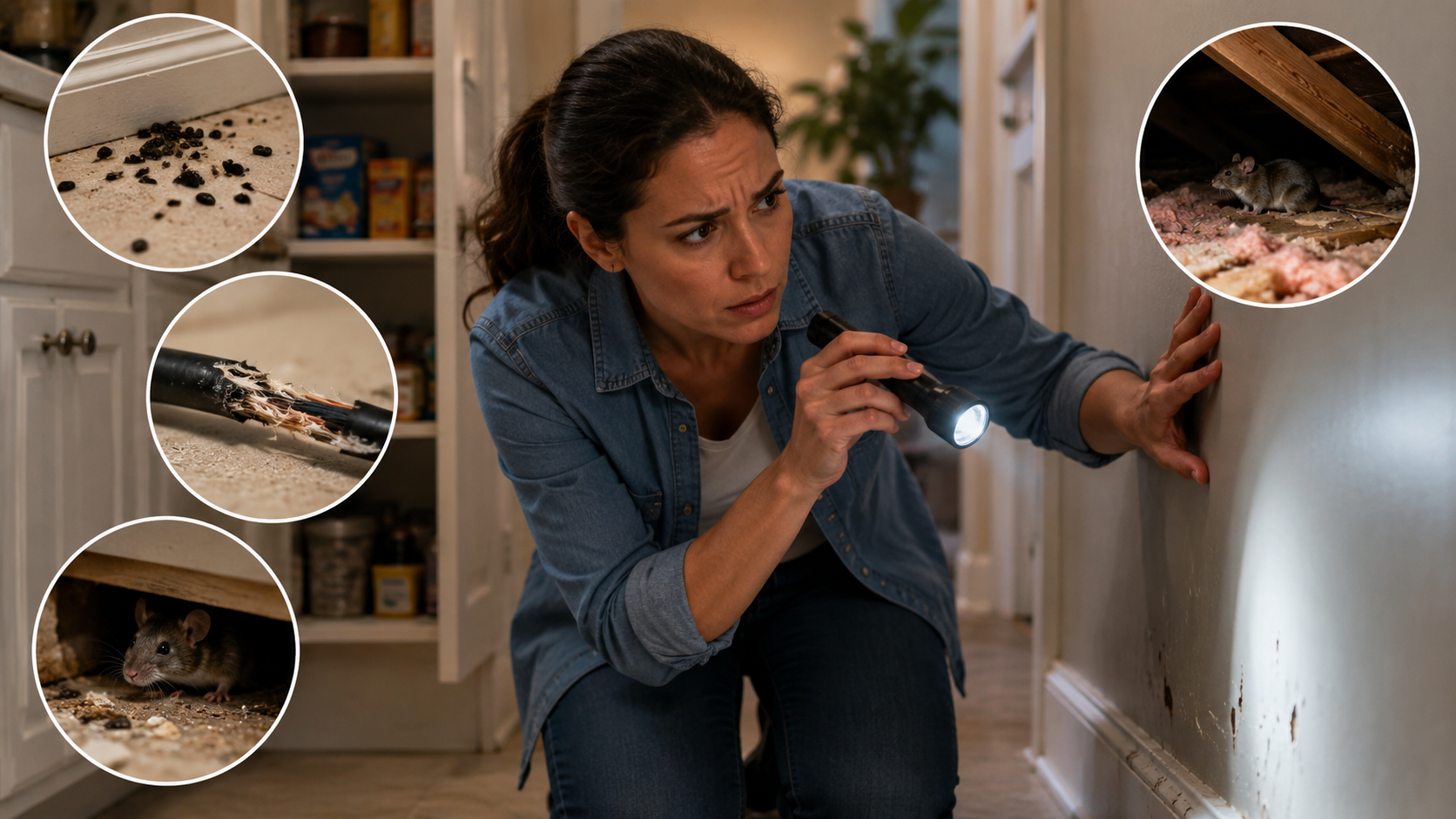
The Hidden Dangers of DIY Rodent Removal
Trying to handle a rodent problem on your own might seem like a quick fix—but in most cases, it only treats the symptoms, not the source.
Store-bought traps and home remedies may catch one or two rodents, but infestations grow fast. By the time you notice activity, there are usually more hiding out of sight.
Here’s where DIY methods often go wrong:
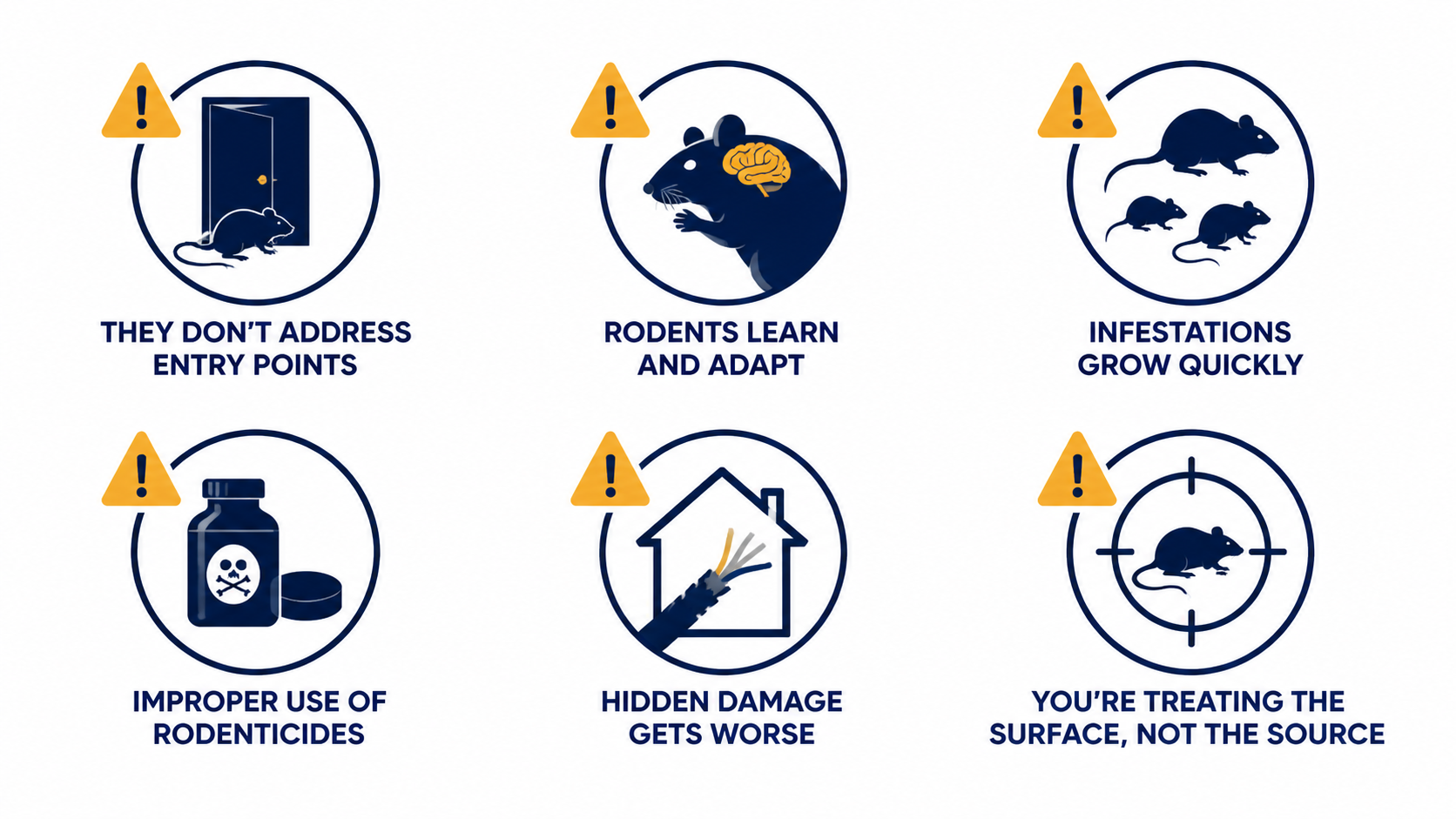
- They Don’t Address Entry Points: You can trap rodents all day, but if the openings they’re using to get inside aren’t sealed, new ones will keep coming in.
- Rodents Learn and Adapt: Rats are extremely intelligent and cautious. If a trap smells like humans or feels unfamiliar, they’ll avoid it altogether.
- Infestations Grow Quickly: A single pair of rodents can turn into dozens in a short period of time, making DIY efforts ineffective.
- Improper Use of Rodenticides: Over-the-counter products can be dangerous if misused—especially around pets, children, and local wildlife.
- Hidden Damage Gets Worse: While you’re trying to manage the problem, rodents may be chewing through wiring, insulation, and structural materials behind the scenes.
- You’re Treating the Surface, Not the Source: Without a full inspection, nesting areas and travel paths often go undetected.
DIY methods can sometimes delay the problem—but they rarely solve it.
For long-term protection, professional rodent control services in South Florida focus on identifying entry points, eliminating active infestations, and preventing future ones from returning.
What Is the Fastest Way to Get Rid of Rats in South Florida?
The fastest way to get rid of rats isn’t just trapping what you see—it’s addressing how they’re getting in, where they’re nesting, and why they’re staying.
In South Florida, effective rodent control typically follows a multi-step approach that focuses on eliminating current activity while reducing the chances of it coming back.
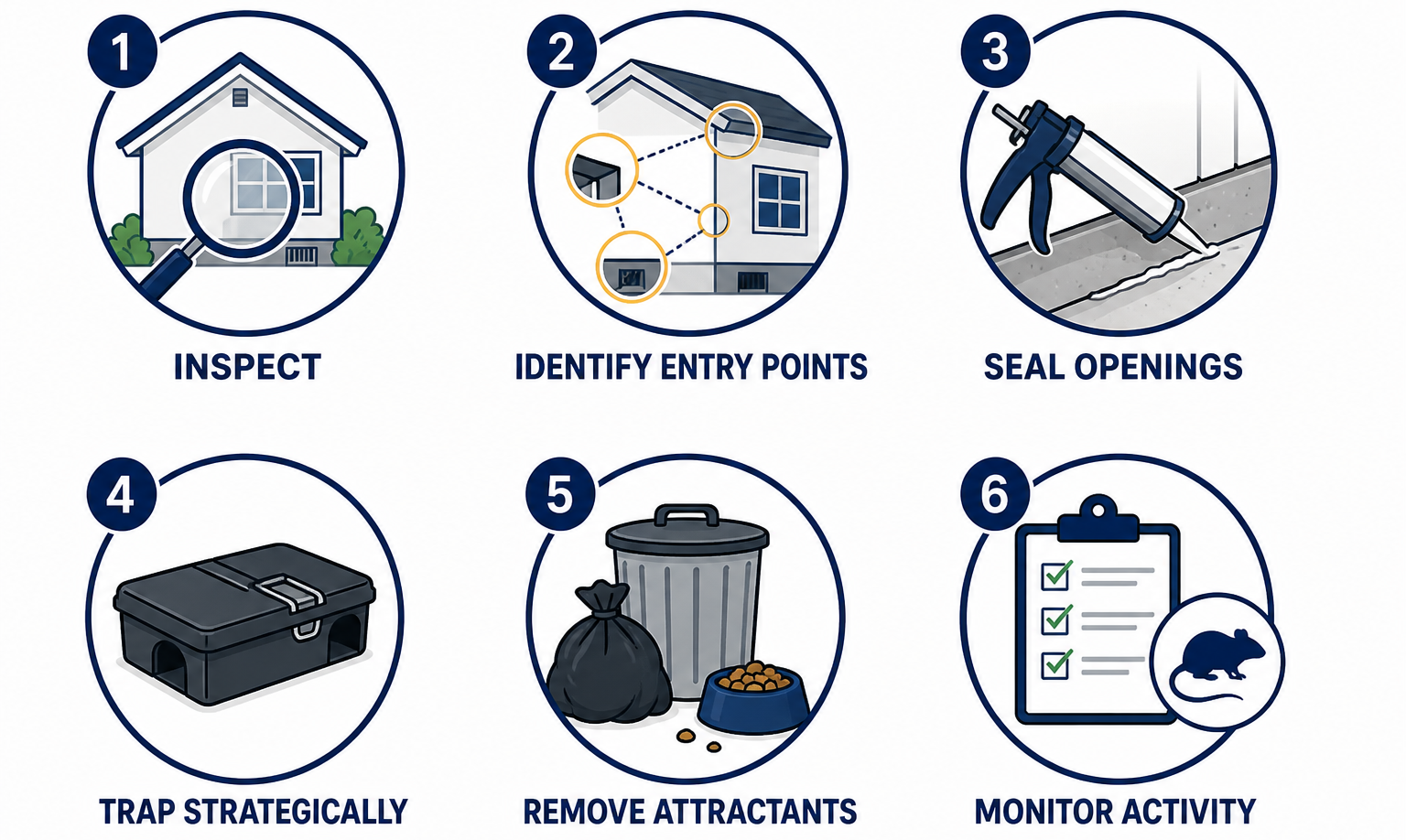
- Inspect: Start by checking the home for signs of rodent activity, including droppings, gnaw marks, rub marks, noises, nesting materials, and odors.
- Identify Entry Points: Look for gaps along rooflines, vents, foundation openings, garage doors, plumbing access points, and areas where utilities enter the home.
- Seal Openings: Closing off entry points with durable, rodent-resistant materials can help reduce the chances of new rodents getting inside.
- Trap Strategically: Place traps in high-activity areas where rodents are traveling, nesting, or feeding instead of setting them randomly.
- Remove Attractants: Reduce food, water, and shelter sources by securing trash, storing pet food properly, cleaning up crumbs, and trimming overgrown landscaping.
- Monitor Activity: Continue checking for new signs of rodents after treatment so the problem does not return or spread unnoticed.
This type of approach focuses on solving the root cause of the problem—not just managing it temporarily.
If you’re dealing with ongoing activity or want a more thorough solution, professional rodent control services in South Florida can help identify problem areas and guide next steps.
Professional Rodent Control vs. Trapping: What’s the Difference?
Not all rodent problems are the same—and neither are the solutions.
Trapping is a reactive fix. It deals with the rodents you can see.
Rodent control is a
proactive strategy. It focuses on stopping the problem at its source so it doesn’t keep coming back.
Many homeowners rely on traps, only to find that the activity continues. That’s because trapping alone doesn’t address how rodents are entering or where they’re nesting.
Here’s the real difference:
✅ Trapping removes individual rodents
✅ Rodent control focuses on the entire infestation
✅ Traps don't prevent new rodents from entering
✅ A proper approach targets entry points, nesting areas, and activity patterns
Rodents are highly adaptable. A mouse can squeeze through an opening the size of a dime, and a rat can fit through a gap no larger than a quarter. Without identifying these access points, the problem often repeats itself.
That’s why a more complete approach is typically needed—one that combines inspection, strategic placement, and long-term prevention methods to reduce ongoing activity.
If you’re dealing with recurring issues, professional rodent control services in South Florida can help identify where rodents are getting in and what’s allowing them to stay.
How Do I Prevent Rodents From Coming Back?
Getting rid of rodents is only half the battle—the real goal is making sure they don’t come back.
In South Florida, prevention isn’t a one-time fix. With year-round warmth and fast-growing vegetation, rodents are constantly looking for new ways to access food, water, and shelter. Without ongoing maintenance, it’s easy for the problem to return.
Here are the most effective ways to keep your home protected:
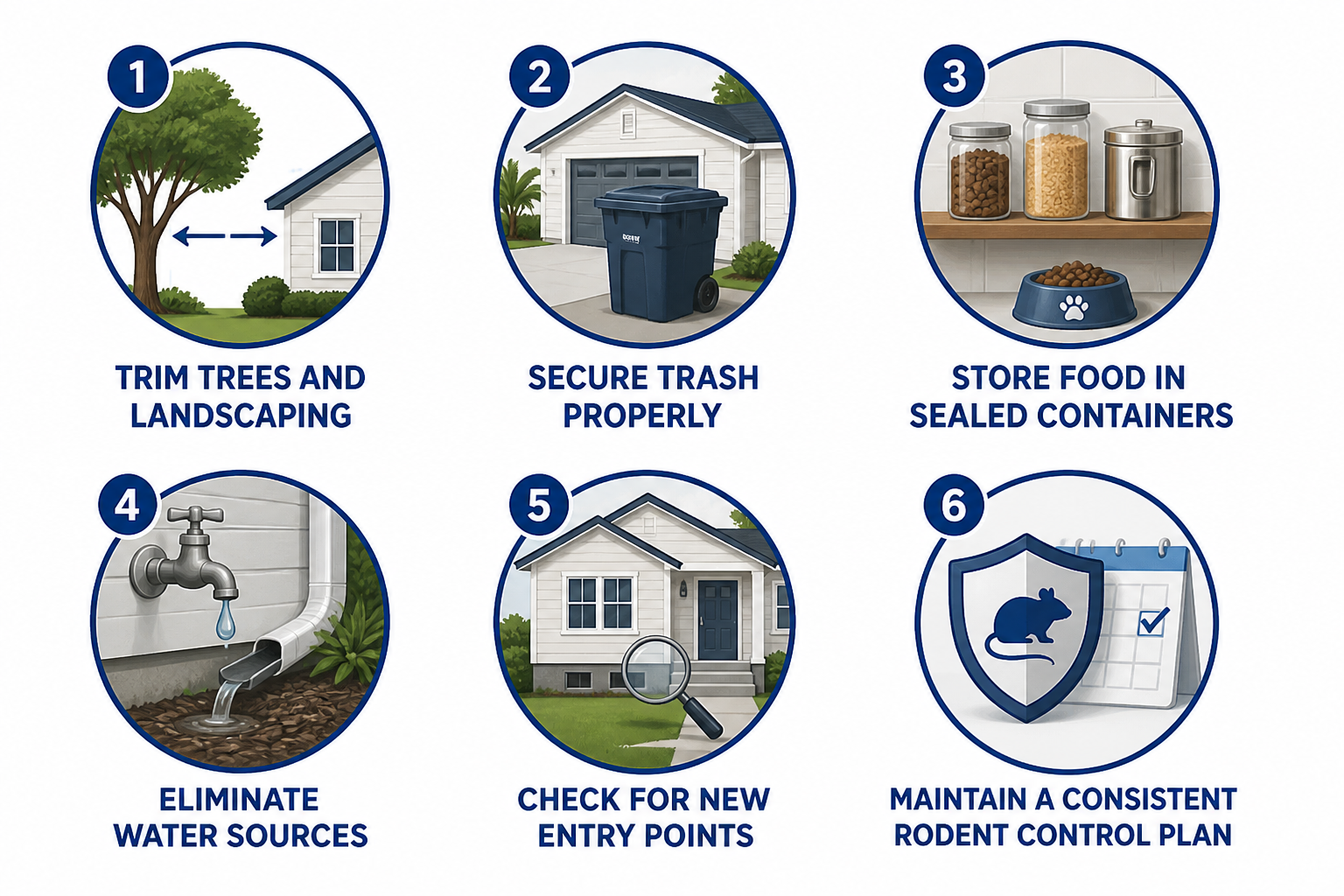
- Trim Trees and Landscaping: Keep branches at least 6–10 feet away from your roof. Overhanging trees act as direct bridges for roof rats to access your home.
- Secure Trash Properly: Use heavy-duty trash cans with tight-fitting lids. Rodents are highly attracted to easily accessible food sources.
- Store Food in Sealed Containers: Keep pet food, birdseed, and pantry items in airtight glass or metal containers to eliminate attractants.
- Eliminate Water Sources: Fix leaky outdoor faucets, improve drainage, and make sure gutters are directing water away from your home.
- Check for New Entry Points: Regularly inspect your home’s exterior for small gaps, cracks, or openings that could allow rodents to re-enter.
- Maintain a Consistent Rodent Control Plan: Ongoing monitoring and preventative measures help ensure that new activity is caught early before it turns into another infestation.
Rodents are persistent, and even small changes around your home can make a big difference in whether they stay away or return.
If you’ve dealt with rodents before or want to stay ahead of the problem, professional rodent control services in South Florida can help identify risk areas and provide guidance on long-term prevention.
Frequently Asked Questions About Rodent Control in South Florida
Rodent problems can escalate quickly, especially in South Florida’s warm and humid climate. Below are answers to some of the most common questions homeowners have when dealing with rats and mice.
How do I know if I have a rodent problem?
Common signs include droppings, gnaw marks, scratching noises in walls or ceilings, nesting materials, and unusual odors. Because rodents are nocturnal, you may not see them right away—but these warning signs usually indicate active activity inside the home.
What attracts rats and mice to my home?
Rodents are drawn to three things: food, water, and shelter. Open trash, pet food, fruit trees, standing water, and overgrown landscaping all make your home more appealing. Even small entry points can give them access.
Can rodents spread disease?
Rodents in South Florida homes can contaminate food, insulation, and storage areas while spreading bacteria through droppings and urine.
How quickly do rodents multiply?
Very quickly. A single pair of mice can produce dozens of offspring in just a few months. Rats also reproduce rapidly, which is why small problems can turn into full infestations if not addressed early.
Are store-bought traps effective?
Traps can help reduce the number of rodents you see, but they typically don’t solve the root of the problem. Without addressing entry points and nesting areas, new rodents can continue to enter and replace the ones that are removed.
Is it dangerous to have rodents in my home?
Yes. Rodents can spread bacteria, contaminate food, and damage property. They are known to chew through electrical wiring, insulation, and structural materials, which can increase the risk of fire and costly repairs.
What is the fastest way to get rid of rats and mice?
The most effective approach combines inspection, identifying entry points, targeted trapping, and reducing the conditions that attract rodents. Addressing both the activity and the underlying causes is key to long-term results.
How can I prevent rodents from coming back?
Prevention involves sealing entry points, maintaining landscaping, securing food sources, and eliminating standing water. Regular inspections and early action help reduce the chances of future infestations.
Should I search for “rodent control near me” or try to handle it myself?
If you’re seeing multiple signs of activity or dealing with recurring issues, it’s usually best to explore professional rodent control near me options. A thorough approach can help identify hidden problem areas and prevent the issue from returning.
Why Homeowners Across Broward County Choose Professional Pestguard
When searching for rodent control near me, it’s important to choose a company that understands the unique rodent pressures affecting South Florida homes.
At Professional Pestguard, we combine local experience, personalized service, and proven rodent control strategies designed specifically for Broward County properties. From roof rats in attics to rodents entering through garages, utility lines, and crawl spaces, we understand what it takes to help protect homes in Weston and surrounding communities.
What Sets Professional Pestguard Apart:
- ✅
Family-Owned Since 2003
Providing trusted pest control services with over 40 years of industry experience. - ✅
Local South Florida Knowledge
We understand how rodents behave in Broward County’s warm, humid environment and the common areas where infestations begin. - ✅
Personalized Rodent Treatment Plans
Every home is different. We evaluate activity levels, access points, and risk factors to recommend the right solution for your situation. - ✅
Fast Response Times
Rodent problems can escalate quickly, which is why we focus on responsive, reliable service for South Florida homeowners. - ✅
Serving Weston & Broward County
Proudly helping families throughout Weston, Davie, Plantation, Sunrise, Pembroke Pines, and nearby communities.
Need Help With Rodent Control in South Florida?
If rodents are getting into your home, fast action matters.
Professional Pestguard provides trusted rodent control services for homeowners across Weston and Broward County. From rats in attics to mice inside kitchens, garages, and walls, our team understands how to handle rodent problems common in South Florida homes.
✅ Family-Owned Since 2003
✅ 40+ Years of Experience
✅ Serving Weston & Broward County
✅ Fast Response Times
Summary of Rodent Control Strategies
Getting rid of rats and mice in South Florida requires more than a quick fix. The most effective approach combines immediate action with long-term prevention to stop the problem from returning.
Rodents are persistent, and without addressing how they enter and what attracts them, infestations can quickly come back. A well-rounded strategy focuses on reducing current activity while making your home less inviting in the future.
Key Takeaways for Homeowners:
- Identify the rodent species to better understand where they nest and how they move throughout your home
- Watch for early warning signs like droppings, gnaw marks, and unusual noises before the problem escalates
- Focus on prevention, not just removal to reduce the chances of repeat infestations
- Maintain landscaping and sanitation to eliminate food, water, and shelter sources
- Stay proactive with regular checks to catch new activity early
Rodent problems don’t resolve on their own—and waiting too long can lead to costly damage and health risks.
If you’re dealing with ongoing activity or want peace of mind, professional rodent control services in South Florida can help you stay ahead of the problem with a plan tailored to your home.
About Professional Pestguard
Professional Pestguard provides professional pest control in Weston, FL and nearby communities including Davie, Sunrise, Pembroke Pines, and Plantation. With over 40 years of experience, our licensed technicians protect homes and businesses across Broward County and Miami-Dade County from ants, cockroaches, rodents, spiders, and other common South Florida pests using safe and effective treatments.