Why Do German Roaches Spread So Fast in Apartments?
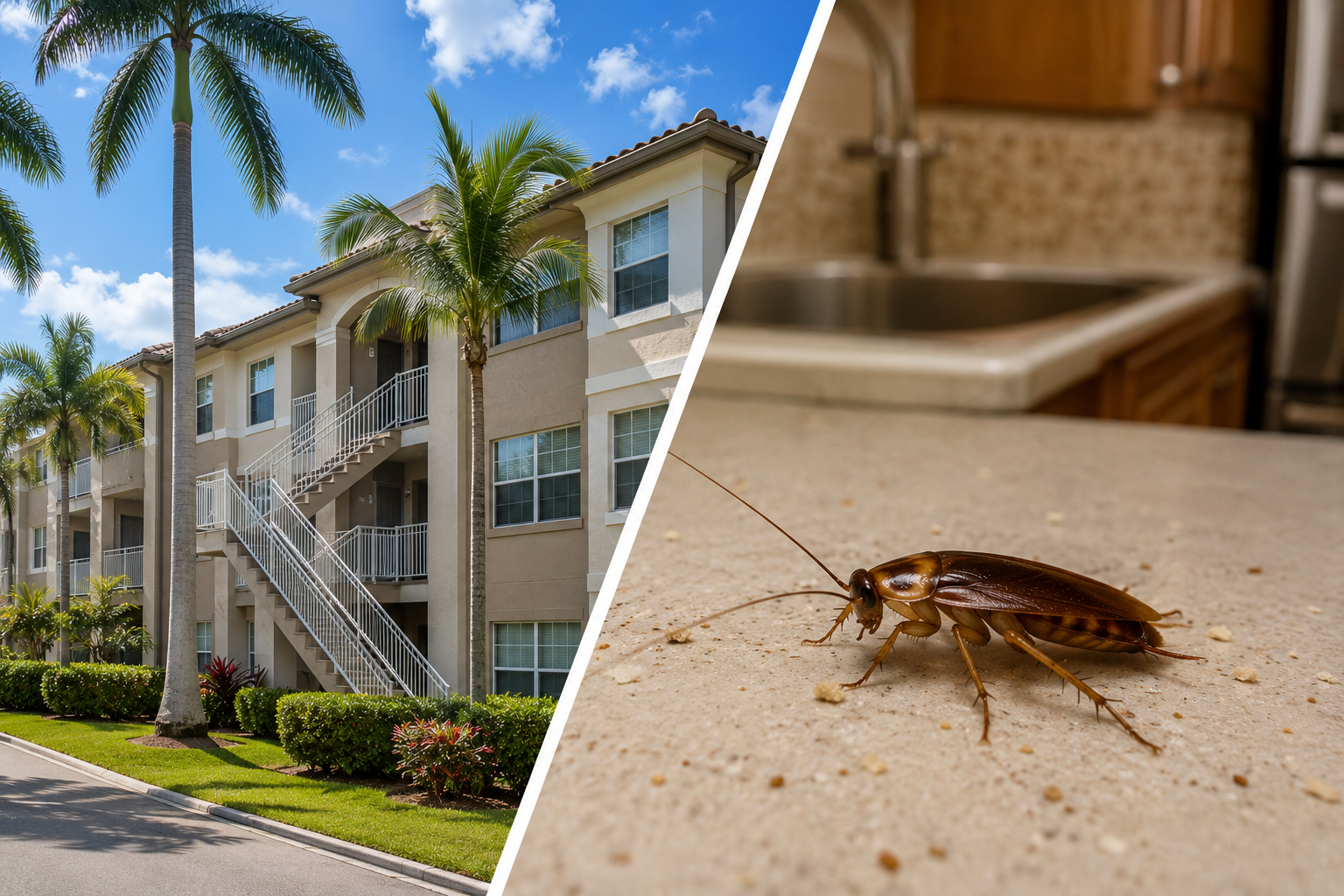
German roaches spread quickly in apartments because they reproduce rapidly and can move between units through plumbing lines, wall voids, shared utility spaces, and other connected areas.In Weston and throughout Broward County, warm temperatures, moisture, and tightly connected living spaces create the perfect environment for infestations to grow quickly, making professional cockroach control essential for long-term elimination.
How German Roaches Move Between Apartments
If you have ever seen a small, light-brown roach run across your kitchen counter late at night, chances are you were looking at a German cockroach. In apartment buildings throughout Broward County and nearby Weston communities, these pests spread rapidly because units are closely connected through plumbing lines, shared walls, electrical outlets, and ventilation systems. Once German roaches establish themselves in one apartment, they can quickly move into neighboring units in search of food, moisture, and shelter.
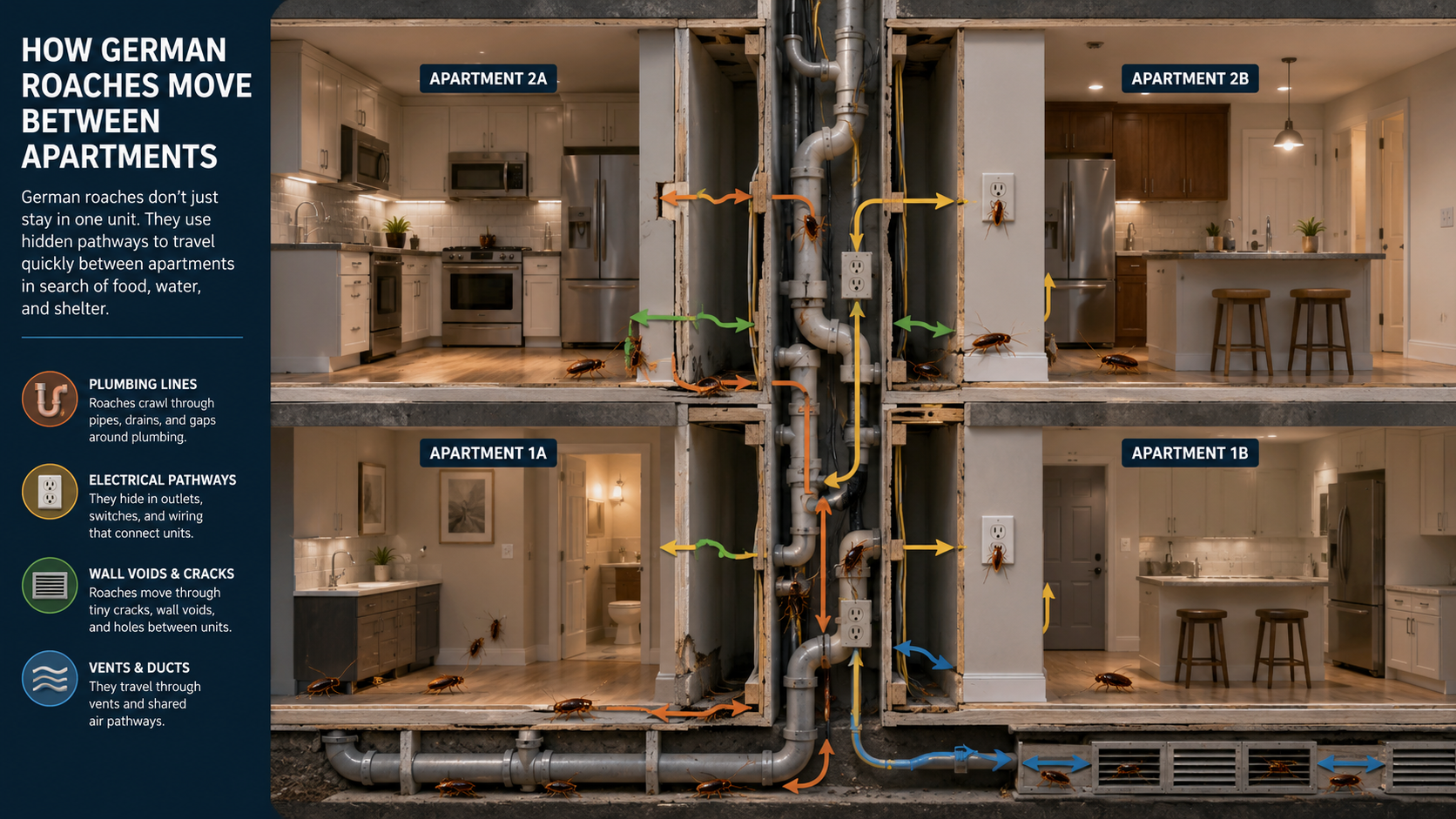
Unlike larger outdoor roaches that occasionally wander inside, German cockroaches are indoor infesters that thrive in kitchens, bathrooms, laundry rooms, and hidden cracks behind appliances. Their fast reproduction cycle makes infestations especially difficult to control in multi-unit buildings, where untreated neighboring apartments can allow the problem to continuously return. This is why many property managers and residents rely on professional cockroach control in Weston and throughout South Florida to fully eliminate infestations and prevent reinfestation.
Why DIY Roach Treatments Usually Fail in Apartments
Many apartment residents try to handle German roach infestations using store-bought sprays, traps, or bug bombs, only to find the problem returning days or weeks later. While these products may kill a few visible roaches, they rarely eliminate the hidden infestation living behind walls, underneath appliances, inside cabinets, and around plumbing lines. In apartment buildings throughout Broward County and nearby Weston communities, German cockroaches can easily move between neighboring units, making isolated DIY treatments ineffective in the long run.
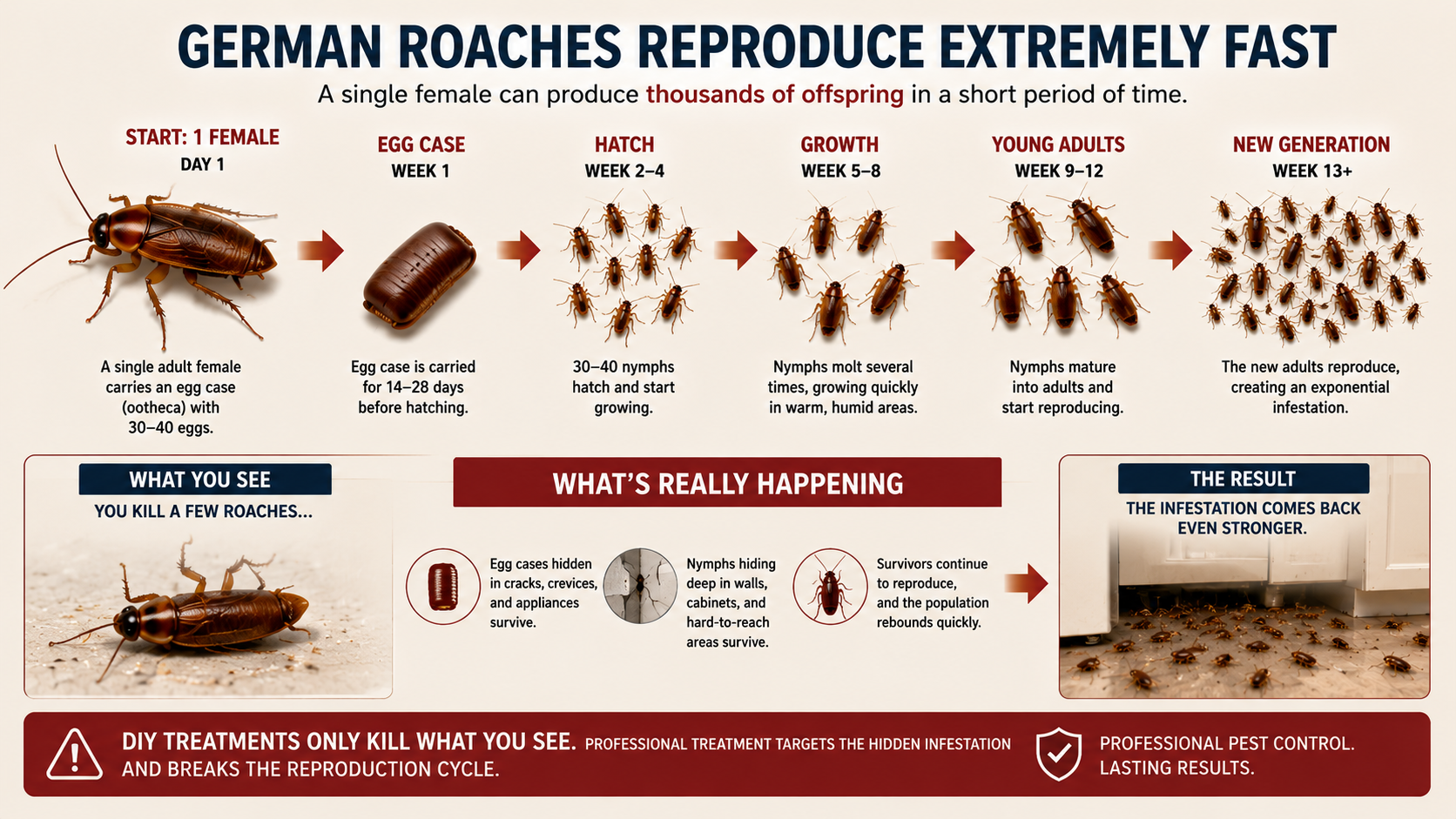
German roaches also reproduce extremely quickly, with a single female capable of producing dozens of offspring in a short period of time. Even if part of the infestation is eliminated, surviving egg cases and hidden nesting areas can allow the population to rebound rapidly. In some cases, over-the-counter sprays can actually scatter roaches deeper into walls and harder-to-reach areas, making professional treatment more difficult later on.
Because of how persistent these infestations can become, many residents turn to a professional German roach exterminator for targeted treatment plans designed to eliminate active infestations at the source while helping prevent reinfestation throughout the property.
What Attracts German Roaches in Apartment Buildings?
German cockroaches are constantly searching for food, moisture, warmth, and shelter. Apartment buildings throughout Broward County and nearby Weston communities provide countless hidden areas where infestations can grow quickly, especially in kitchens, bathrooms, laundry rooms, and utility spaces. Even clean apartments can experience infestations when neighboring units create conditions that allow roaches to spread through shared walls, plumbing systems, and hidden structural gaps.
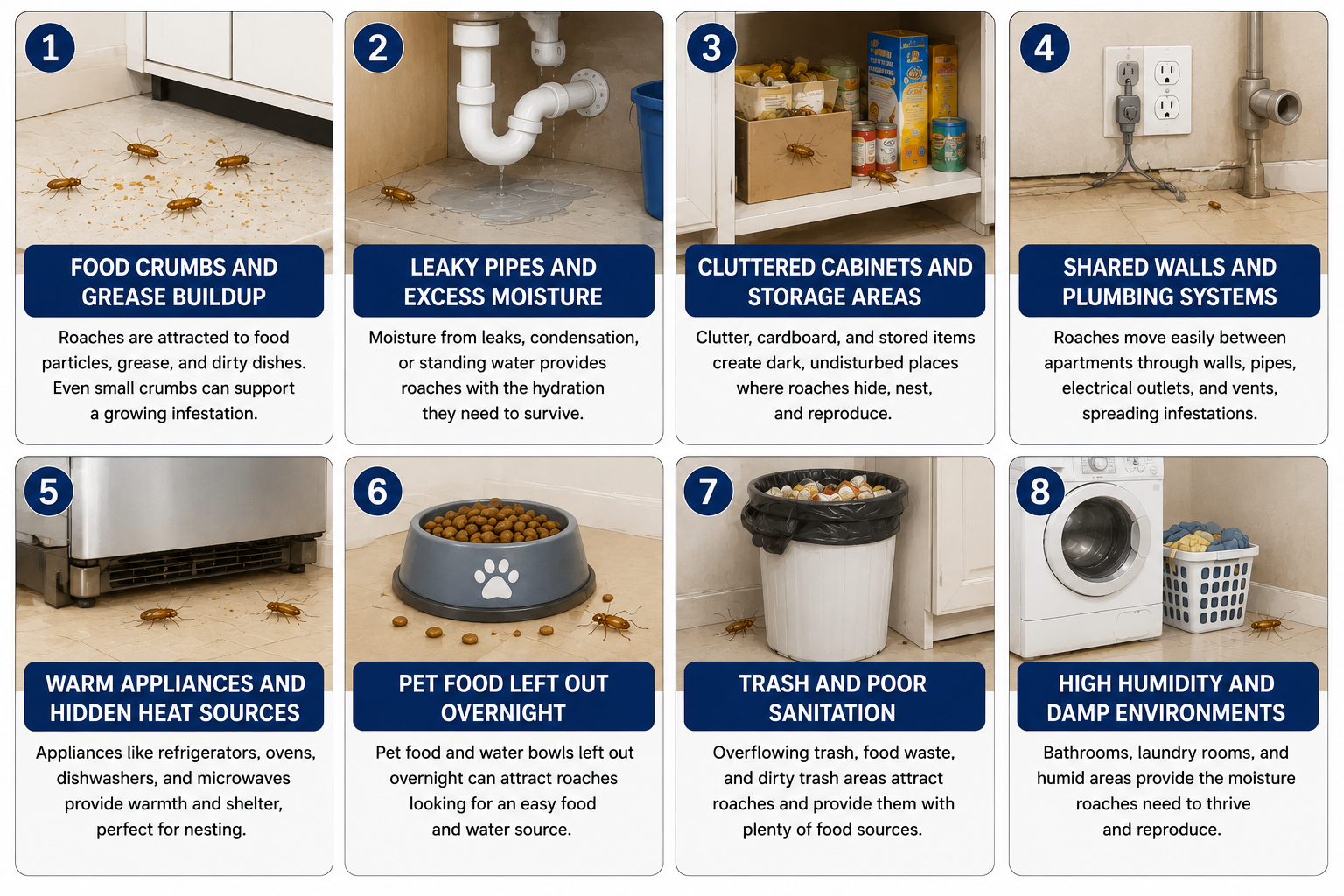
- Food Crumbs and Grease Buildup: German roaches can survive on extremely small food sources, including crumbs underneath appliances, grease behind stoves, dirty drains, and leftover residue on countertops. In apartment kitchens, even small amounts of food buildup can support a growing infestation over time.
- Leaky Pipes and Excess Moisture: German cockroaches thrive in humid environments and are heavily attracted to moisture. Leaking pipes underneath sinks, condensation near appliances, standing water around dishwashers, and damp cabinets create ideal nesting conditions inside apartment kitchens and bathrooms.
- Shared Walls and Plumbing Systems: Unlike single-family homes, apartment buildings allow German roaches to travel between units through plumbing lines, wall voids, electrical outlets, and vents. This is one of the main reasons infestations can spread rapidly throughout multi-unit properties, even when one resident keeps their apartment clean.
- Cluttered Cabinets and Storage Areas: Cardboard boxes, paper products, overcrowded pantries, and cluttered cabinets provide dark, protected spaces where German roaches can hide and reproduce unnoticed. These hidden harborages often allow infestations to continue growing long before residents realize how severe the problem has become.
- Warm Appliances and Hidden Heat Sources: German roaches are commonly found underneath refrigerators, behind stoves, inside dishwashers, and near microwaves because these areas provide warmth, darkness, and easy access to food particles. In apartment kitchens, appliances often create the perfect environment for long-term nesting.
Because German cockroaches can survive in extremely small hidden spaces and spread rapidly between connected apartment units, infestations often become much larger than what residents initially see. Eliminating the conditions that attract roaches is an important part of long-term prevention, but severe infestations typically require professional treatment that targets hidden nesting areas, egg cases, and neighboring activity throughout the building.
How to Help Prevent German Roaches in Apartments
German cockroach prevention requires more than simply spraying visible pests. Because these infestations often spread between connected apartment units, long-term control usually involves sanitation, moisture reduction, sealing entry points, and ongoing monitoring. Taking proactive steps early can help reduce the risk of a small problem turning into a larger infestation.
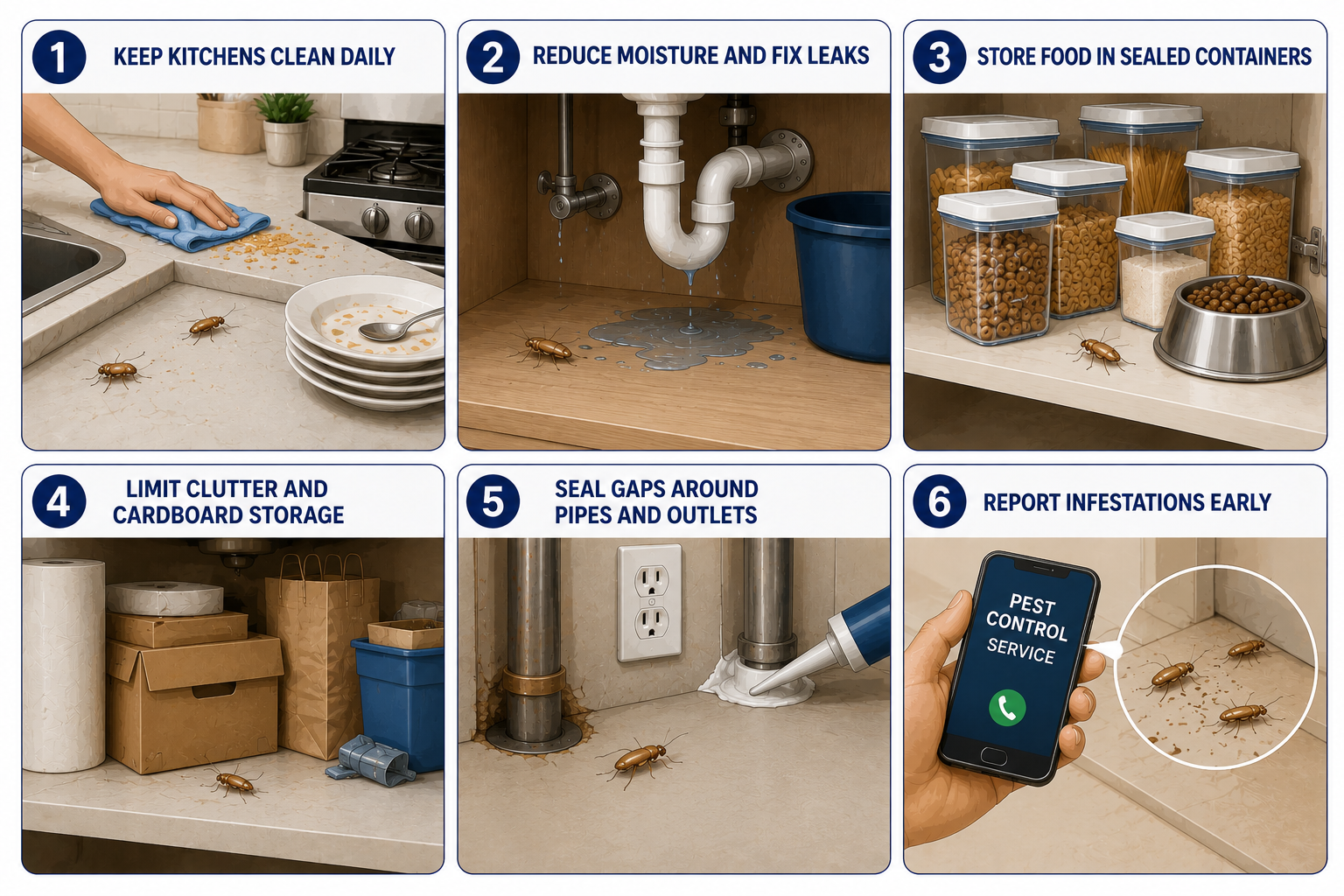
- Keep Kitchens Clean Daily: Wipe down counters, clean grease buildup, vacuum crumbs, and avoid leaving dirty dishes overnight. German roaches are highly attracted to even small food particles left behind in kitchens.
- Reduce Moisture and Fix Leaks: Repair leaking pipes, avoid standing water under sinks, and keep bathrooms and kitchens as dry as possible. Moisture is one of the biggest factors that supports German cockroach survival.
- Store Food in Sealed Containers: Pantry foods, pet food, and snacks should be stored in airtight containers whenever possible. Roaches can easily invade cardboard packaging and loosely sealed food boxes.
- Limit Clutter and Cardboard Storage: Cluttered cabinets, paper products, and cardboard boxes create hidden harborages where German cockroaches can hide and reproduce unnoticed.
- Seal Gaps Around Pipes and Outlets: Small gaps around plumbing lines, utility penetrations, and electrical outlets can allow roaches to travel between apartments. Sealing these openings may help reduce movement between units.
- Report Infestations Early: One of the biggest mistakes residents make is waiting too long before reporting activity. German cockroaches reproduce quickly, so early intervention is important for preventing larger infestations.
While prevention can significantly reduce the risk of German cockroach activity, apartment infestations are often difficult to fully control without professional treatment. Because these pests hide deep inside walls, appliances, plumbing voids, and neighboring units, effective control usually requires targeted products, monitoring, and treatment plans designed specifically for apartment environments throughout Broward County and nearby Weston communities.
How Professional German Roach Treatment Works
Professional German roach treatment involves much more than simply spraying visible insects. Because German cockroaches hide deep inside walls, behind appliances, underneath cabinets, and around plumbing penetrations, effective treatment requires a targeted approach designed to eliminate both active infestations and hidden nesting areas throughout the apartment.
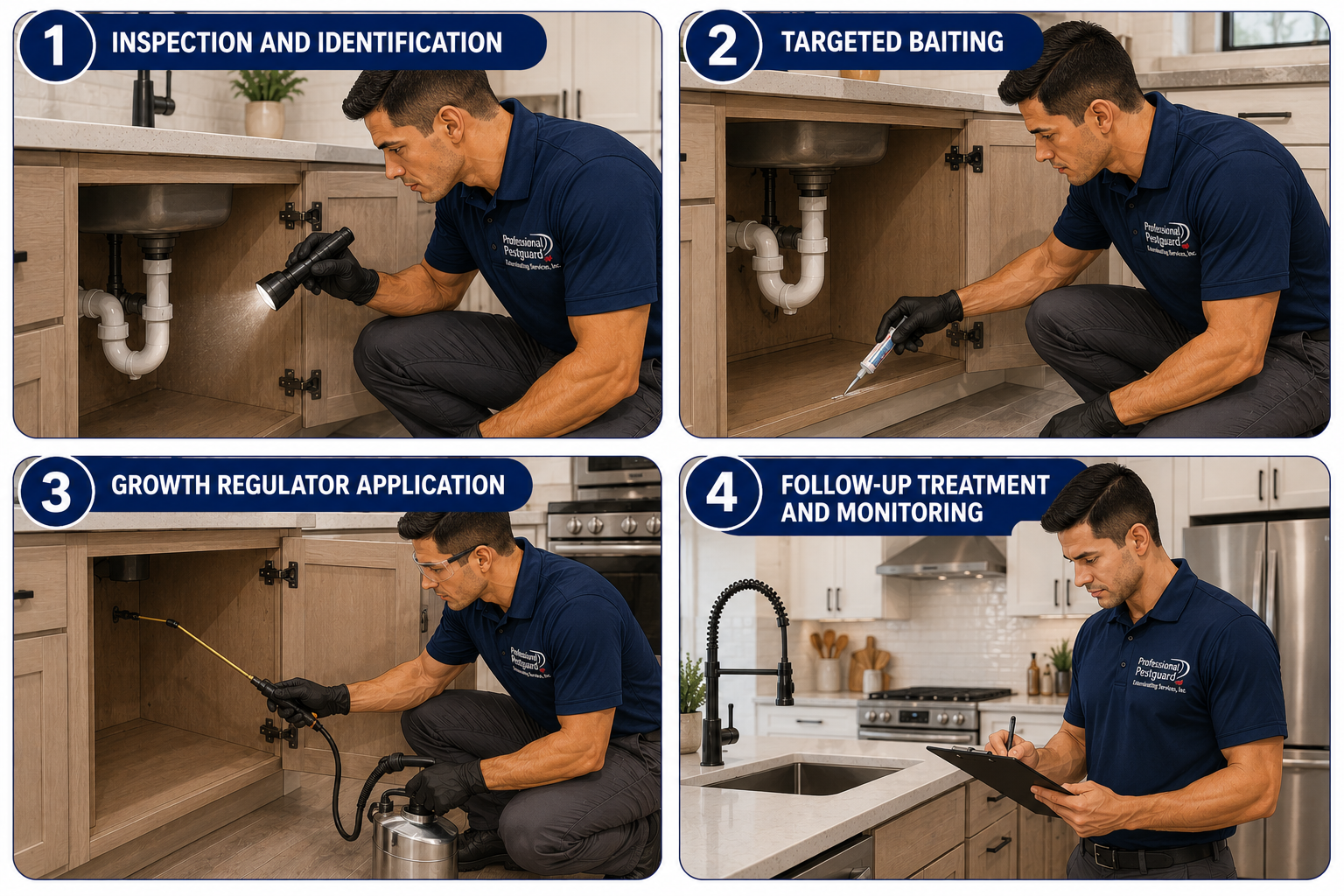
- Inspection and Identification: Professional treatment starts with identifying where German roaches are hiding and what conditions are allowing the infestation to grow. Kitchens, bathrooms, cabinet voids, and plumbing areas are some of the most common nesting locations.
- Targeted Baiting Systems: Professional-grade baiting products are strategically placed in areas where German cockroaches feed and travel. Unlike many store-bought sprays, these treatments are designed to reach hidden populations inside walls, cabinets, and appliances.
- Growth Regulators and Reproduction Control: German cockroaches reproduce extremely quickly, which is why professional treatments often include products designed to interrupt their reproductive cycle and reduce future infestations.
- Follow-Up Treatments and Monitoring: Apartment infestations may require multiple visits because German cockroaches can spread between neighboring units through walls, vents, plumbing lines, and electrical openings.
Because German cockroaches spread rapidly and hide in difficult-to-reach areas, long-term control often requires more than temporary DIY solutions. Professional treatment helps target hidden infestations, reduce reproduction cycles, and prevent infestations from continuously returning throughout apartment buildings.
Frequently Asked Questions About German Roaches in Apartment Buildings
German cockroaches are one of the most common and difficult apartment pests throughout Broward County and nearby Weston communities. Below are answers to some of the most common questions residents have about German roach infestations, treatment options, prevention, and why these pests spread so quickly in apartment buildings.
Why do German roaches spread so fast in apartments?
German roaches spread quickly because they reproduce rapidly and can move between connected apartment units through plumbing, wall voids, shared utility areas, cabinets, and other small openings. An infestation in one unit can sometimes affect neighboring units, especially in multifamily buildings.
Can German roaches spread between apartments?
Yes. German cockroaches commonly travel between apartment units through plumbing penetrations, wall voids, electrical outlets, vents, and shared utility lines. This is one of the main reasons apartment infestations can become difficult to control without building-wide treatment and monitoring.
Can a clean apartment still get German roaches?
Yes. Even extremely clean apartments can experience infestations if neighboring units have active German cockroach activity. While sanitation helps reduce attractants, shared walls and connected plumbing systems can still allow roaches to spread between units.
Why do German roaches keep coming back after spraying?
Many store-bought sprays only kill visible roaches and do not eliminate hidden nesting areas, egg cases, or neighboring infestations. German cockroaches reproduce quickly and often hide deep inside walls, cabinets, and appliances, which allows infestations to rebound if treatment is incomplete.
How long does German roach treatment take?
The timeline depends on the severity of the infestation and whether neighboring units are affected. Smaller infestations may improve quickly, while severe apartment infestations often require multiple treatments, monitoring, and sanitation improvements for long-term control.
What attracts German roaches the most?
German cockroaches are mainly attracted to food, moisture, warmth, and clutter. Kitchens, bathrooms, leaky plumbing areas, dirty dishes, grease buildup, and cardboard storage commonly create ideal conditions for infestations.
When should you call a professional exterminator?
If German roaches are repeatedly appearing during the daytime, spreading into multiple rooms, or continuing after DIY treatments, professional german roach treatment is usually recommended. Early intervention can help prevent infestations from becoming significantly larger and more difficult to control.
Professional German Roach Control in Weston and Broward County
German cockroaches are one of the fastest-spreading and most difficult pests to eliminate in apartment buildings throughout South Florida. Because they reproduce quickly, hide in hard-to-reach areas, and spread between connected units, infestations can rapidly grow from a small issue into a much larger problem if left untreated. While sanitation and prevention are important, many apartment infestations require professional treatment to fully eliminate hidden nesting areas and recurring activity.

- Detailed Apartment Inspections: Professional PestGuard performs detailed inspections to identify where German cockroaches are hiding, what conditions are contributing to the infestation, and how activity may be spreading throughout connected apartment units.
- Targeted Baiting and Treatment Plans: Professional treatments are designed to target active nesting areas using professional-grade baiting systems, growth regulators, and crack-and-crevice applications that reach hidden infestations inside kitchens, bathrooms, cabinets, and plumbing voids.
Long-Term Prevention Recommendations: In addition to treatment, Professional PestGuard helps residents identify conditions that attract German cockroaches, including excess moisture, food residue, clutter, and entry points around plumbing and utility lines. - Apartment and Multi-Unit Pest Control: Because German cockroaches commonly spread between neighboring apartments, long-term control often requires ongoing monitoring and treatment strategies specifically designed for apartment buildings and multi-unit properties throughout Broward County.
If you are dealing with recurring German roach activity in your apartment, condo, kitchen, or shared living space, early treatment can help prevent infestations from spreading further throughout the building. Professional Pestguard provides professional German roach and cockroach treatment solutions for homes, apartments, and multi-unit properties throughout Weston and Broward County.
Contact us today to get your free estimate and customized treatment plan for your property.
About Professional Pestguard
Professional Pestguard provides professional pest control in Weston, FL and nearby communities including Davie, Sunrise, Pembroke Pines, and Plantation. With over 40 years of experience, our licensed technicians protect homes and businesses across Broward County and Miami-Dade County from ants, cockroaches, rodents, spiders, and other common South Florida pests using safe and effective treatments.