How Often Should Apartment Communities Schedule Pest Control in South Florida?
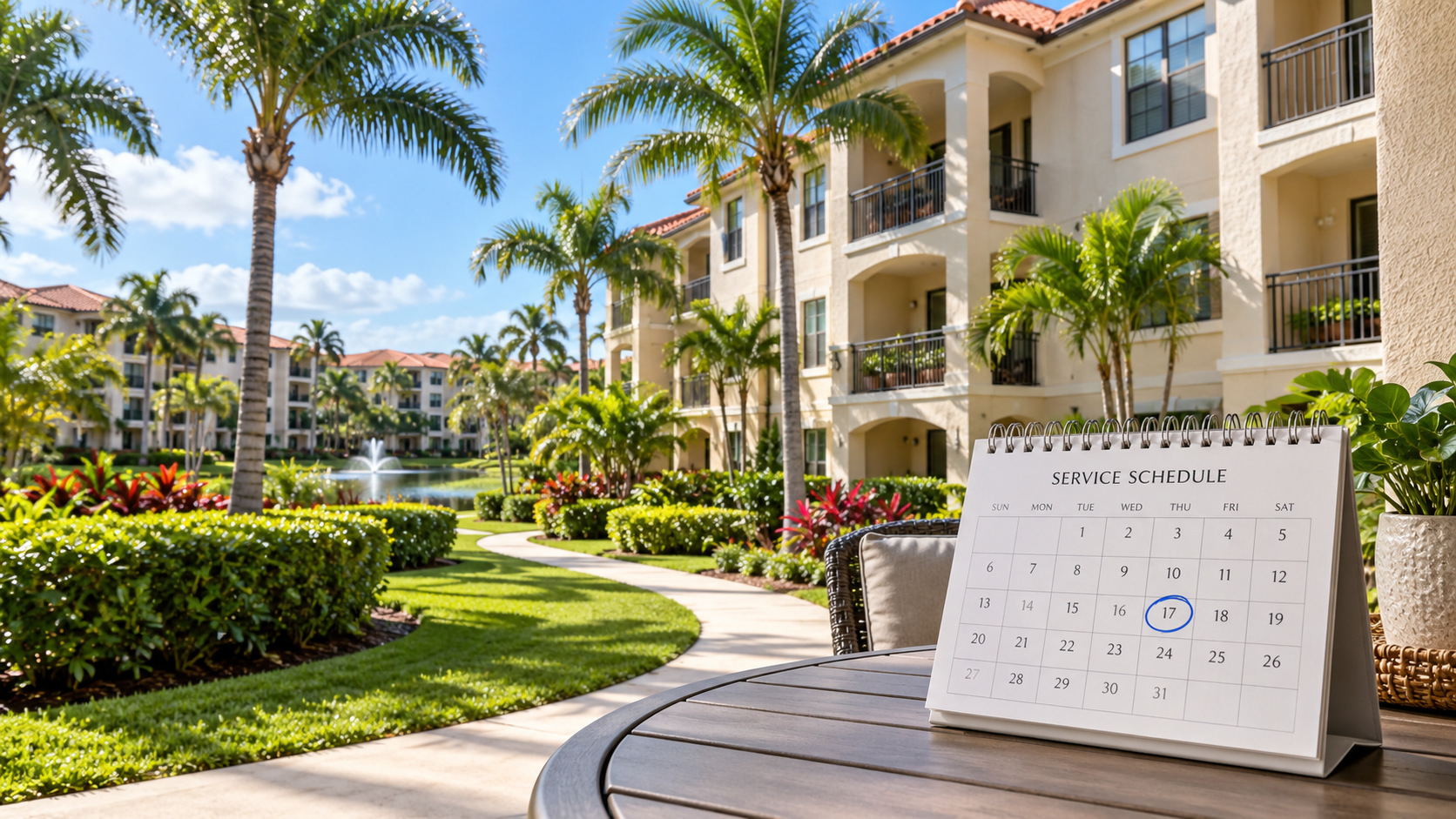
Apartment communities in South Florida should schedule recurring pest inspections and monitoring, with treatment based on the pests and conditions found. Monthly service is a practical starting point to discuss after an initial inspection. Some lower-pressure properties may be suitable for every-other-month visits, while active infestations can require additional follow-up between regular appointments.
The right apartment pest control schedule depends on property size, pest pressure, sanitation, resident turnover, recurring complaints, common-area conditions, and moisture or plumbing problems. A useful plan tells management which areas will be checked, how resident requests will be handled, and what findings would trigger a change in frequency.
How often should apartment buildings have pest control?
Apartment buildings should have a documented, recurring pest management schedule rather than relying only on complaint-driven visits. For budgeting discussions, managers can start by asking about monthly inspections and monitoring, then have the provider explain whether the property needs a different interval. This is a planning starting point, not a fixed requirement for every South Florida community.
The schedule should distinguish routine maintenance from treatment of an existing infestation. A stable building, a building with repeated cockroach complaints, and an apartment undergoing turnover may need different types of visits. Professional Pestguard’s commercial pest control services provide a starting point for discussing coverage and frequency for managed properties.
| Property situation | Schedule to discuss | What should guide the decision |
|---|---|---|
| Routine program being established | Monthly inspection and monitoring as an initial planning option | Baseline findings, unit access, shared spaces, and pest history |
| Stable property with low documented activity | Every-other-month service may be considered | Monitoring results, completed repairs, reliable reporting, and provider assessment |
| Active infestation or repeated complaints | Additional targeted follow-up between routine visits | Pest species, severity, treatment method, and evidence of improvement |
| Vacant apartment or resident turnover | Inspection during turnover and follow-up when indicated | Prior complaints, appliance areas, plumbing conditions, and findings before occupancy |
Does a scheduled visit mean every apartment gets sprayed?
No. The number of provider visits is not the same as the number of pesticide applications or the number of apartments entered. An inspection may lead to monitoring, a maintenance recommendation, targeted treatment, or a combination of these actions.
- Define which common areas are inspected at each routine visit.
- Identify apartments scheduled for inspection, treatment, or follow-up.
- Specify how occupied units are accessed and how missed access is rescheduled.
- Record any treatment separately from inspection and monitoring work.
This distinction makes the service agreement easier to evaluate. It also allows managers to match the schedule to the conditions that actually influence pest activity.
What determines pest control frequency in an apartment community?
Frequency should reflect the property’s current conditions and recent history. Apartment count is useful for planning the workload, but it does not show whether pests are present, how easily they can move through the building, or whether maintenance issues are being resolved.
Review the factors below with the provider during the initial inspection and whenever activity changes. The goal is to explain why a particular schedule fits the community, not simply select the same interval used at another property.
Property size, building layout, and resident turnover
A larger community may need more service time or several visits to complete its inspection route. Connected apartments, multiple buildings, and frequent move-outs also affect access and how much work can be completed at each appointment.
- Property size: Consider the number of apartments, buildings, floors, and shared facilities.
- Building layout: Identify adjoining units, utility spaces, and other connections relevant to the pests found.
- Resident turnover: Add inspections to the make-ready process, particularly where previous complaints were recorded.
A weekly visit to a large property might serve different buildings each week; it does not automatically mean every unit receives weekly treatment. Define both visit frequency and the rotation through covered areas before reviewing pest pressure.
Pest pressure and recurring resident complaints
Pest pressure describes the level and persistence of pest activity affecting the community. A few isolated sightings require a different investigation from repeated reports involving the same pest in neighboring apartments. Keep complaints tied to locations and dates so patterns can be assessed.
- Identify the pest: Ants, German cockroaches, and rodents require different inspection and control approaches.
- Map repeat reports: Flag the same apartment, building, floor, or shared facility when activity returns.
- Compare findings: Ask whether inspections and monitoring support the complaint pattern or reveal activity elsewhere.
Our guide to why German roaches spread in apartments explains why a complaint in one unit can justify evaluating connected spaces. Recurrence should prompt a review of the source and access, as well as the visit interval.
Sanitation, common areas, and moisture problems
Food residue, persistent dampness, and poorly maintained shared spaces can keep pest problems active between visits. More frequent treatment alone may not resolve an overflowing waste area or an unrepaired leak.
- Sanitation: Review waste pickup, spill cleanup, recycling containers, and food-storage practices.
- Common-area conditions: Check trash rooms, laundry facilities, storage areas, and sheltered building entrances.
- Moisture or plumbing issues: Track leaks, condensation, damp cabinets, and recurring drainage concerns.
- Maintenance completion: Assign each correction to a responsible person and document when it is finished.
These findings help explain why activity persists and which conditions management can change. They also show why prevention belongs in the regular program, even when complaint volume is low.
Should apartment pest control be preventative?
Yes. Preventative apartment pest control should include regular inspection, monitoring, early reporting, and correction of conditions that support pests. Waiting until multiple residents complain can make it harder to understand where activity began and which areas need attention.
Integrated pest management, or IPM, combines these preventive measures with pest identification and appropriate control when warranted. It does not mean applying pesticides everywhere on a calendar. Decisions should reflect the pest, the location, the level of activity, and the results of previous work.
What can property staff do between service visits?
Property staff can support prevention by noticing changes during normal work and keeping the provider informed. Establish a manageable routine that connects resident reports with maintenance and cleaning tasks.
- Give residents one clear way to report sightings, with the apartment or location and date.
- Ask staff to flag pest evidence, waste problems, and leaks during routine rounds.
- Keep a shared list of open repairs and pest follow-up items.
- Tell the provider when repairs are completed or activity changes.
This ongoing communication gives scheduled visits a useful starting point. The next step is ensuring that the program covers the places where those reports and conditions occur.
What areas should be included in apartment pest control?
An apartment pest control plan should define coverage for relevant occupied units, vacant apartments, interior common areas, waste facilities, and exterior spaces. Not every location requires treatment, but each relevant area should have an inspection or response process appropriate to its risk.
Confirm coverage in writing. A program limited to exterior common areas is different from one that includes resident apartments and interior follow-up. Managers should know which requests are covered before promising service to residents.
Occupied apartments and vacant units
Inside apartments, inspection priorities depend on the pest and reported activity. Access to the affected space is essential; a visit to the property cannot resolve a unit-specific problem if the technician cannot inspect the relevant apartment.
- Kitchens and bathrooms: Accessible appliance areas, cabinets, plumbing penetrations, and moisture concerns.
- Reported activity locations: The exact room, cabinet, doorway, or other area identified by the resident.
- Connected apartments: Nearby units or shared routes when the pest and findings justify evaluation.
- Vacant units: Inspection during make-ready work, with treatment and follow-up if needed before occupancy.
For persistent roach activity, review commercial cockroach control with the provider. Unit-level work should then be considered alongside the shared spaces that may contribute to recurring problems.
ommon areas, waste facilities, and exterior spaces
Shared spaces need their own coverage plan because resident complaints may not reveal activity in seldom-used rooms or outdoor service areas. Include the locations that exist at your property rather than relying on a generic checklist.
- Interior common areas: Hallways, laundry rooms, leasing offices, community rooms, and accessible utility or storage rooms.
- Waste facilities: Trash rooms, chutes where present, dumpster enclosures, recycling areas, and adjacent access doors.
- Building exterior: Entryways, accessible perimeter areas, landscaping near buildings, and relevant drainage conditions.
- Amenities: Pet areas, outdoor gathering spaces, and other locations where findings indicate a need for inspection.
Our articles on ant problems spreading through apartment communities and pantry pests in shared storage provide examples of why coverage needs to extend beyond individual complaints. Once the areas are defined, management can organize access and follow-up more effectively.
When should managers request service between scheduled visits?
Contact the provider when new activity is persistent, reports involve several connected apartments, or a previously treated location is not improving as expected. Do not assume that every concern should wait until the next routine appointment. Describe the situation so the provider can assess urgency and recommend the next step.
A resident report should include the location, the suspected pest or a clear photo, when it was seen, and whether it has appeared repeatedly. Let the provider know about recent treatment and any unresolved access or maintenance issues. Confirm the response process and any additional charges in the agreement.
How should recurring complaints change the plan?
Recurring complaints should trigger a review, not simply another identical application. The underlying issue could involve an untreated source, missed access, new introductions, or conditions supporting activity.
- Compare the latest report with previous inspection and treatment records.
- Confirm whether affected and relevant connected spaces were accessible.
- Review monitoring results and whether the expected improvement has occurred.
- Agree on the next inspection or follow-up date and the findings that will guide further action.
An extra visit may be appropriate, but changing the approach or completing repairs can be equally important. For suspected rodent activity, discuss commercial rodent control and identify which building repairs management must arrange separately.
Should apartments be checked when residents move out?
Yes. Turnover provides an opportunity to inspect spaces that may be difficult to access while occupied. Include a pest review in the make-ready workflow rather than treating vacancy as proof that the apartment is clear.
- Review the unit’s pest history before cleaning and repair work begins.
- Inspect accessible appliance areas, cabinets, and plumbing locations during turnover.
- Address identified leaks, sanitation concerns, and damaged building components.
- Arrange treatment and a return inspection when the findings warrant them.
A turnover inspection does not automatically require pesticide application. It helps management identify unresolved issues and plan any necessary work before the next resident arrives.
What should managers ask before hiring an apartment exterminator?
Choose an apartment exterminator by comparing the proposed scope and follow-up process, not just the price per visit. Two estimates can list the same monthly frequency while covering very different numbers of apartments, common areas, or return visits.
For a broader overview, see our guide to what a property management pest control program should include. For multifamily properties, ask specifically how the provider handles occupied-unit access, turnover inspections, and complaints that recur between appointments.
What should a multifamily pest control estimate explain?
A clear estimate should connect the inspection findings to the proposed service. Ask the provider to explain what is included in the recurring fee and what would require separate authorization.
- Covered pests and areas: List included apartment interiors, common areas, exterior zones, and any exclusions.
- Visit schedule: Specify routine visits, unit rotations, and how frequency will be reassessed.
- Follow-up terms: Clarify complaint handling, return visits, turnover work, and any added costs.
- Documentation: Ask what service records, findings, and recommendations management will receive.
- Responsibilities: Identify resident preparation, access arrangements, cleaning, and repairs assigned to others.
This makes it easier to compare proposals on equivalent terms. Before approving service, management should be able to explain the program to residents and staff without guessing about coverage.
Frequently asked questions about apartment pest control frequency
Property managers often need to balance routine prevention, resident concerns, and access to individual apartments. The answers below explain how scheduling, coverage, and follow-up fit together in a South Florida multifamily pest control program.
How often should apartment buildings have pest control?
Monthly inspection and monitoring can be a useful starting point to discuss after an initial assessment. Some properties may be suitable for every-other-month service, while active infestations need additional follow-up. The schedule should reflect property conditions and inspection results, not apartment count alone.
Is monthly pest control necessary for every apartment community?
Not necessarily. The appropriate interval depends on pest activity, building layout, sanitation, maintenance, and reliable access. Ask the provider to explain why the recommended schedule fits the property and what evidence would justify increasing or reducing visits.
Should apartment pest control be preventative even without complaints?
Yes. Recurring inspection and monitoring can reveal activity before residents report it. Prevention also includes addressing food, moisture, and access conditions. A quiet complaint log is useful information, but it should be considered alongside inspection findings rather than used alone to stop the program.
What areas should be included in apartment pest control?
Coverage should address relevant occupied apartments, vacant units, interior common areas, waste facilities, and exterior spaces. Exact inclusions depend on the property and service agreement. Confirm which locations are inspected routinely and which are handled through resident requests or additional service.
Does every apartment need treatment at every visit?
No. Inspection, monitoring, and treatment are different activities. Some units may need targeted treatment or follow-up, while others may require inspection only. The provider should explain how unit selection reflects pest findings, property history, and the agreed scope.
Can a quarterly schedule work for an apartment building?
It should not be selected solely because it costs less. A three-month interval may be too long where activity recurs, access is inconsistent, or unresolved conditions support pests. Discuss whether inspection records and dependable monitoring between visits justify that interval for the specific property.
Should one roach complaint lead to treating the whole building?
Not automatically. First identify the pest and inspect the reported location. For pests such as German cockroaches, connected apartments and shared routes may need evaluation. The findings should determine how far inspection and treatment extend rather than assuming either one unit or the entire building is always the correct scope.
Can managers reduce service frequency after complaints stop?
Possibly, after reviewing monitoring results, inspection findings, access history, and completed maintenance. Fewer complaints alone do not confirm that activity has ended. Agree on how the community will continue reporting concerns and when the revised interval will be reviewed.
What information is needed for an apartment pest control estimate?
Provide the property address, building and unit counts, common areas, known pests, recent complaint history, current service frequency, and access requirements. Include turnover needs and known moisture or sanitation issues. An inspection can then help determine the scope and appropriate schedule.
Build an apartment pest control schedule around your community
Effective apartment pest control combines a clear recurring schedule with the flexibility to respond when conditions change. Monthly or every-other-month service may suit different properties, while active infestations, repeat complaints, or turnover inspections may require additional attention. The right interval depends on the community’s size, pest pressure, sanitation, resident turnover, shared spaces, and moisture or plumbing conditions.
Property management pest control works best when coverage and responsibilities are clear. Document what is inspected, coordinate access, track repairs, and review results with the provider. Those steps help management make informed scheduling decisions and address recurring issues throughout the community.
Request a free apartment pest control estimate in South Florida
Professional Pestguard provides commercial pest control for managed properties in South Florida. Tell us about your apartment community, recurring pest concerns, and current service schedule so we can discuss an appropriate program. Request a free apartment pest control estimate or call (954) 389-6107 to review your property’s needs and available service options.
About Professional Pestguard
Professional Pestguard provides professional pest control in Weston, FL and nearby communities including Davie, Sunrise, Pembroke Pines, and Plantation. With over 40 years of experience, our licensed technicians protect homes and businesses across Broward County and Miami-Dade County from ants, cockroaches, rodents, spiders, and other common South Florida pests using safe and effective treatments.