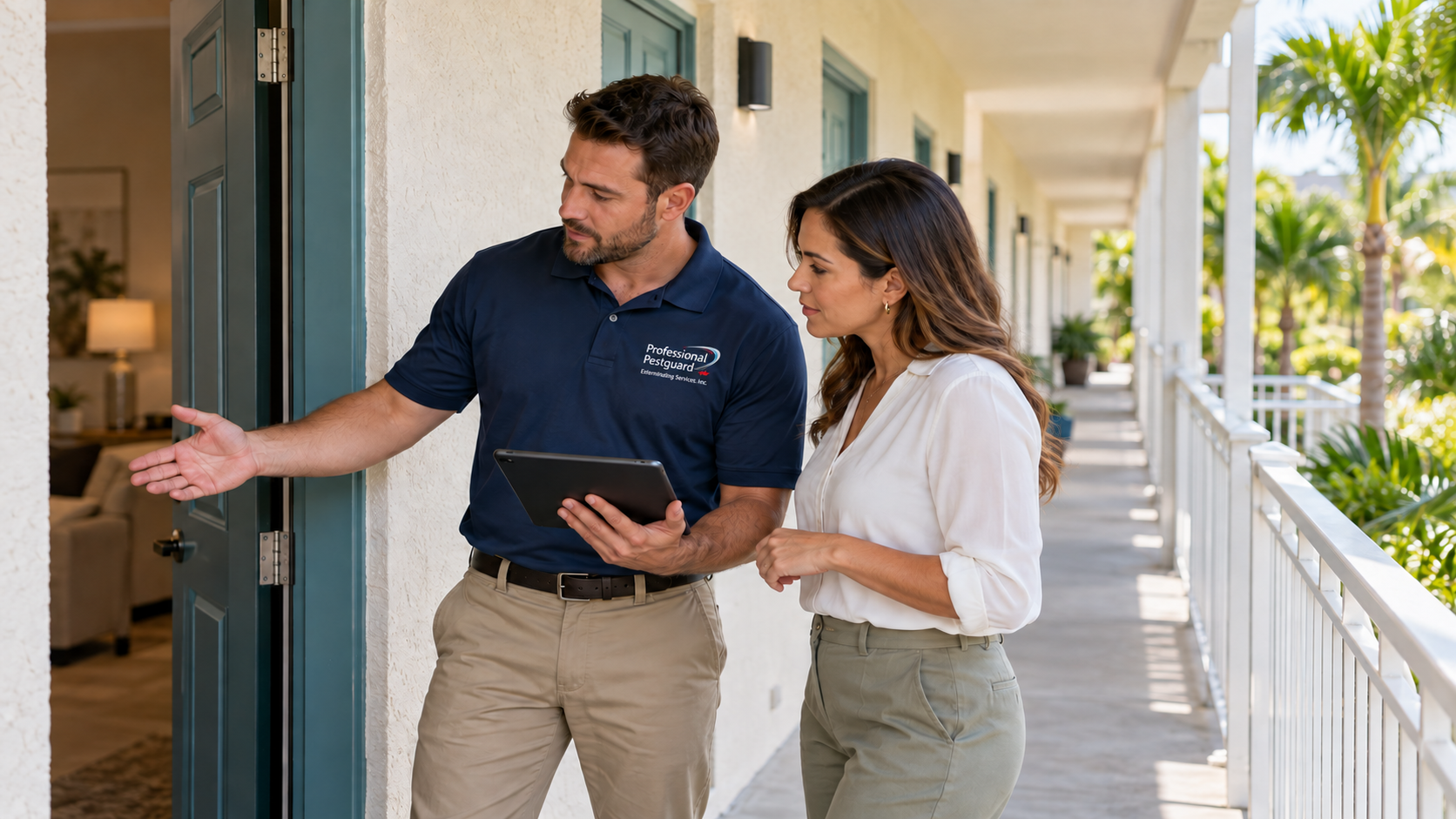
What Does Professional Rodent Control Include? Inspection, Trapping, Entry Points, and Follow-Up
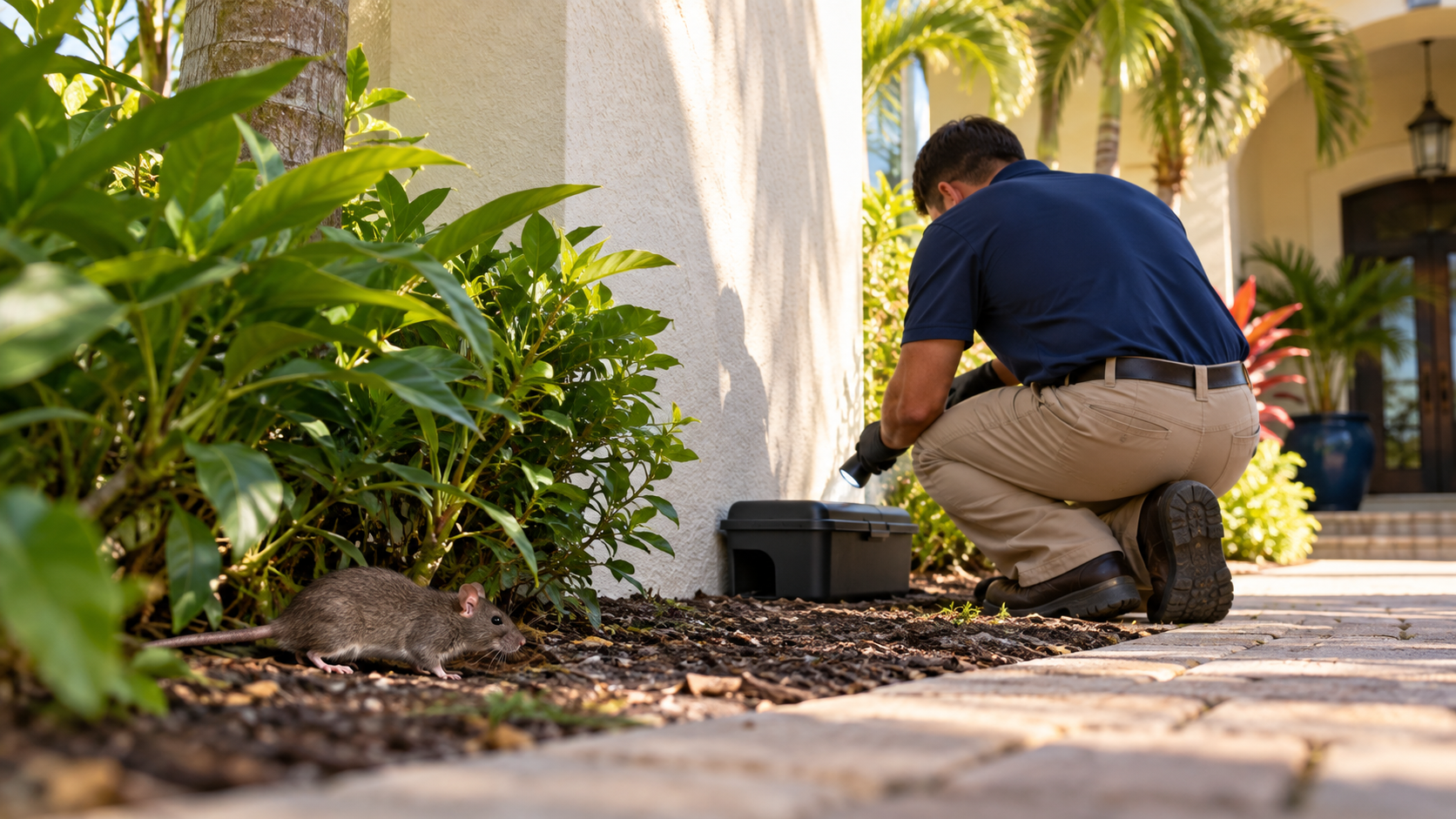
Professional rodent control typically includes inspecting the home, identifying rodent activity, selecting appropriate trapping or control methods, evaluating possible entry points, and checking progress through follow-up visits. Homeowners should also receive prevention recommendations and a clear explanation of the service scope. Professional Pestguard does not provide exclusion services, entry-point sealing, or structural repairs.
For homeowners comparing rodent control services in Weston and South Florida, understanding this process makes it easier to know what you are paying for. The first appointment establishes the problem and the plan; subsequent checks help determine whether that plan is working. Here is what to expect before, during, and after professional service.
What does a rodent control company actually do?
A rodent control company investigates where rats or mice are active, develops a treatment plan, and evaluates the results. The work should connect the evidence found at your home with specific actions and a follow-up process. Treatment decisions depend on the rodent involved, accessible areas, household conditions, and the extent of activity.
Professional Pestguard’s residential rodent control services focus on reducing active rodent populations and managing ongoing activity. Before authorizing service, ask what the proposed plan includes and which tasks remain your responsibility.
What should the service plan explain?
An understandable plan gives you more than an appointment date. It should explain the immediate work, how progress will be evaluated, and what happens if activity continues.
- Areas covered by inspection and treatment, including any access limitations.
- Proposed control methods and household precautions.
- Follow-up arrangements, monitoring, and any additional charges.
- Prevention recommendations and work outside the company’s scope.
These details make estimates easier to compare. They also provide a useful framework for the first stage of service: inspecting the property and identifying the activity.
What happens during a professional rodent inspection?
The inspection starts with your observations and an assessment of accessible areas. Tell the technician where you noticed activity, when it began, and whether it has changed. Mention previous treatments and any devices already present. This history helps the technician investigate the right locations without assuming that every noise has the same cause.
Identification matters because roof rats, Norway rats, and mice can use different parts of a property. Our guide to roof rats versus Norway rats in South Florida explains those differences. During service, the practical question is how the findings affect the inspection and treatment plan.
How does the technician evaluate current activity?
The technician considers evidence together, rather than using one observation to estimate the entire problem. Inspection findings establish a starting point that can be compared with later visits.
- Assess reported activity areas and accessible nearby spaces.
- Look for evidence of travel, feeding, or nesting.
- Evaluate food, water, storage, and landscape conditions that may support rodents.
- Note areas that could not be inspected and explain any next steps.
An inaccessible wall cavity or attic section can leave unanswered questions. Ask the technician to explain what was confirmed and what remains uncertain before moving into the control phase.
What trapping or control methods may be included?
Professional rodent control may involve trapping, monitoring devices, or other appropriate control methods selected after inspection. The technician should explain the purpose of the proposed approach and how it fits the property. A method suitable for one location may be unsuitable elsewhere, particularly where children, pets, or wildlife could encounter it.
The value of professional service includes choosing the method, managing its placement, checking results, and adjusting the approach when necessary. A device being present does not, by itself, demonstrate that the problem is resolved.
What should homeowners understand about the treatment?
Ask for clear instructions specific to the methods used in your home. This article explains service expectations; trap selection, placement, and servicing should remain with the technician.
- Know which areas need to remain accessible for service.
- Tell the technician about children, pets, and any household access concerns.
- Follow instructions about avoiding or restricting access to control devices.
- Do not move, open, or add products to professional placements.
If a device is disturbed or your household circumstances change, contact the provider. Alongside managing active rodents, the inspection should consider how rodents may be reaching the home.
Does rodent control include sealing entry points?
Entry-point evaluation and entry-point sealing are separate services. An evaluation looks for possible access routes and conditions that may contribute to recurring activity. Sealing, exclusion, and structural repairs involve physically changing the building. Professional Pestguard does not provide exclusion services or seal entry points.
Our role is to evaluate potential access concerns as part of rodent control and provide recommendations. If repairs are needed, the homeowner must arrange them separately with an appropriate contractor. Identifying a possible opening does not mean that repair work is included in the pest control estimate.
What should you ask about potential access points?
Ask the technician to distinguish a suspected access concern from a route supported by observed evidence. This helps you give a repair contractor useful information without treating an inspection as a complete building assessment.
- Which accessible areas showed possible rodent access?
- Which findings were confirmed, and which need further evaluation?
- Are roof, vent, garage, or utility-area concerns recommended for contractor review?
- How should planned repairs be coordinated with ongoing control and monitoring?
Discuss repair timing with both providers rather than assuming the work can happen in any order. Keeping responsibilities clear helps the follow-up process account for both treatment results and changing property conditions.
How long does professional rodent control take?
Professional rodent control is a process, not necessarily a single visit. Some homes show improvement within days, while others need several weeks of follow-up or longer. These are possible patterns, not a promised completion window. The technician can give a more useful expectation after assessing your home.
The initial appointment and the time needed to resolve activity are different questions. Ask how much time to allow for the visit, when the next check is expected, and what findings would prompt a change in the plan. Continuing or increasing activity should be reported rather than dismissed as something you must simply wait out.
What can affect the timeline?
The schedule depends on more than how many rodents you have seen. Hidden activity and conditions that support new arrivals can make progress harder to assess.
- The extent and distribution of activity throughout the property.
- Access to affected areas and availability for follow-up appointments.
- Rodent response to the selected control methods.
- Remaining food sources, shelter, and unresolved access concerns.
Agree on how progress will be reviewed instead of relying on a fixed deadline. That review is the purpose of follow-up monitoring.
What happens during follow-up monitoring?
Follow-up should assess whether activity is decreasing and whether the current approach needs adjustment. The technician can review devices, compare findings with the initial inspection, and discuss any new observations. A quiet night or one captured rodent is useful information, but neither alone establishes that the whole problem has ended.
Ask what monitoring is included in your agreement and how future service decisions will be made. Ongoing management may be appropriate for some properties, but it should be explained in relation to the home’s conditions and findings.
How can homeowners support the follow-up process?
You do not need to investigate concealed spaces or handle control equipment. Clear observations and reliable access are more useful ways to support the technician’s work.
- Record the date and location of new sightings or sounds.
- Report recurring activity in a previously treated area.
- Mention completed repairs, changed storage, or newly accessible spaces.
- Keep appointments and follow the preparation instructions provided.
This information helps the technician decide whether to continue, adjust, or investigate further. Prevention recommendations then address conditions that could undermine progress.
What prevention recommendations should you expect?
Recommendations should relate to your property, not simply repeat a generic checklist. They may address food storage, pet food, waste containers, clutter, moisture, or vegetation near the building. Structural concerns should be directed to a separate qualified contractor because Professional Pestguard does not perform exclusion or repairs.
For homeowners seeking rodent control in Weston, these recommendations should complement the treatment plan and follow-up findings. Ask which changes deserve attention first and how you should report completion. Keeping track of those changes gives later inspections useful context.
Frequently asked questions about professional rodent control
Homeowners often want to understand the scope, timing, and practical expectations before booking. These answers clarify common service questions so you can discuss your property’s needs with confidence.
What does a rodent control company actually do?
A company inspects accessible areas, identifies activity, selects suitable control methods, and checks results through follow-up. It should also explain prevention recommendations, household precautions, and service limitations. Confirm the exact scope in the estimate because inspection, treatment, and monitoring arrangements can differ.
Does Professional Pestguard seal holes or provide exclusion?
No. Professional Pestguard does not provide exclusion services, seal entry points, or perform structural repairs. Potential access concerns may be identified during evaluation, but homeowners must arrange any necessary repairs separately with an appropriate contractor.
How long does professional rodent control take to work?
Improvement may begin within days, while continued control and monitoring can take weeks or longer. The timeline depends on activity, access, treatment response, and property conditions. Ask for an inspection-based expectation and a follow-up date rather than a guaranteed completion time.
Is one rodent control visit enough?
One visit may establish the plan and begin control, but it does not always provide enough evidence to confirm resolution. Ask whether return checks are included and what happens if activity continues. The need for additional visits should be guided by findings.
Do I need to leave my house during service?
Do not assume that leaving is required or that all areas remain accessible. Ask for instructions based on the methods selected, and follow any temporary access restrictions. Tell the technician about pets and children before service so household precautions can be discussed.
Does rodent control include cleanup or damage repairs?
Do not assume that droppings cleanup, insulation replacement, odor treatment, or repairs are included. Ask which tasks are covered and which require another provider. Professional Pestguard does not provide exclusion or structural repairs; the written scope should make those boundaries clear.
What should I compare when searching for a rodent exterminator near me?
Compare inspection scope, proposed methods, follow-up arrangements, communication, and total service terms. Our guide to choosing a rodent control company in Weston offers additional questions. A useful estimate explains the work and its limits, not just the price.
Know what to expect from residential rodent control
Professional rodent control brings inspection, identification, appropriate control methods, entry-point evaluation, and follow-up into a coordinated process. Understanding each stage helps you ask useful questions and recognize how progress will be assessed. Prevention recommendations and separately arranged repairs may also influence the outcome.
Professional Pestguard focuses on rodent control and monitoring, with recommendations based on property conditions. Exclusion, entry-point sealing, and structural repairs are not part of our services. Clear expectations from the start help homeowners coordinate the work their home needs.
Request a free rodent control estimate in Weston
Contact Professional Pestguard to discuss your home’s rodent concerns, previous treatments, and available service options. Request a free rodent control estimate or call (954) 389-6107. Our team can help you understand the next steps for residential rodent control in Weston and surrounding South Florida communities.
About Professional Pestguard
Professional Pestguard provides professional pest control in Weston, FL and nearby communities including Davie, Sunrise, Pembroke Pines, and Plantation. With over 40 years of experience, our licensed technicians protect homes and businesses across Broward County and Miami-Dade County from ants, cockroaches, rodents, spiders, and other common South Florida pests using safe and effective treatments.