Roof Rats in South Florida: Signs, Dangers & Removal Tips

Roof rats are one of the most common rodent problems in South Florida, especially in areas like Weston, Davie, Plantation, and Pembroke Pines. These climbing rodents often enter homes through rooflines, palm trees, soffits, and attic openings, usually without homeowners noticing until the infestation becomes serious.
If you’ve been hearing scratching noises in the ceiling, finding droppings, or noticing chewing damage around your home or business, roof rats may already be inside. In this guide, we’ll break down the signs, dangers, and most effective ways to remove and prevent roof rats in South Florida.
Why Roof Rats Are So Common in South Florida
South Florida creates the perfect environment for roof rats to survive and multiply year-round. Unlike colder states where rodent activity slows during winter, roof rats remain active in every season due to the region’s warm temperatures, humidity, and constant food sources.
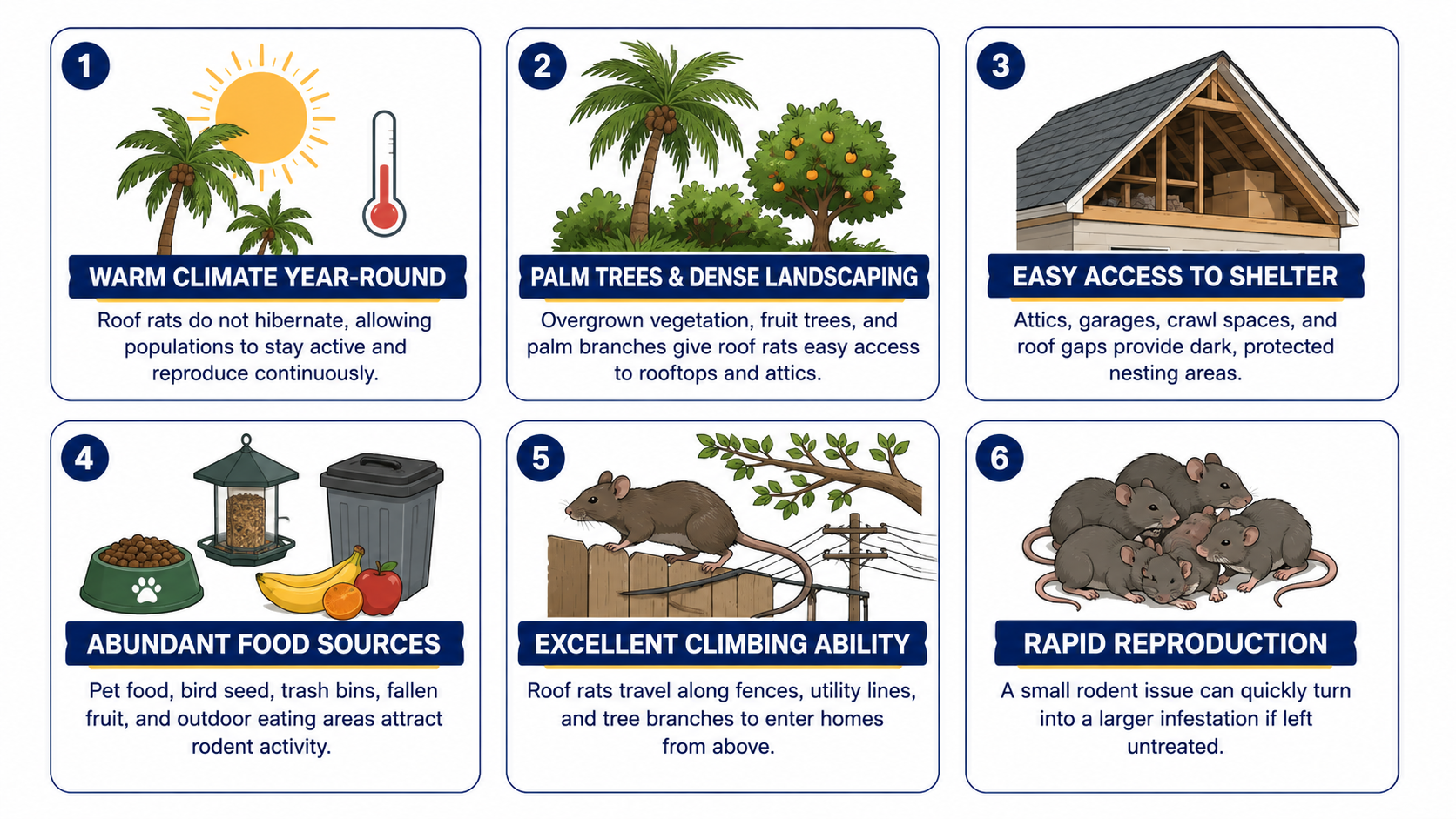
Here’s why roof rat activity is so common in South Florida:
- Warm Climate Year-Round
Roof rats do not hibernate, allowing populations to stay active and reproduce continuously. - Palm Trees & Dense Landscaping
Overgrown vegetation, fruit trees, and palm branches give roof rats easy access to rooftops and attics. - Easy Access to Shelter
Attics, garages, crawl spaces, and roof gaps provide dark, protected nesting areas. - Abundant Food Sources
Pet food, bird seed, trash bins, fallen fruit, and outdoor eating areas attract rodent activity. - Excellent Climbing Ability
Roof rats travel along fences, utility lines, and tree branches to enter homes from above. - Rapid Reproduction
A small rodent issue can quickly turn into a larger infestation if left untreated.
How to Tell If You Have Roof Rats
Roof rats are nocturnal and extremely good at staying hidden, which means many homeowners do not realize there’s an infestation until the damage becomes more serious. In South Florida, roof rats commonly nest inside attics, wall voids, garages, and rooflines where they can move around unnoticed at night.
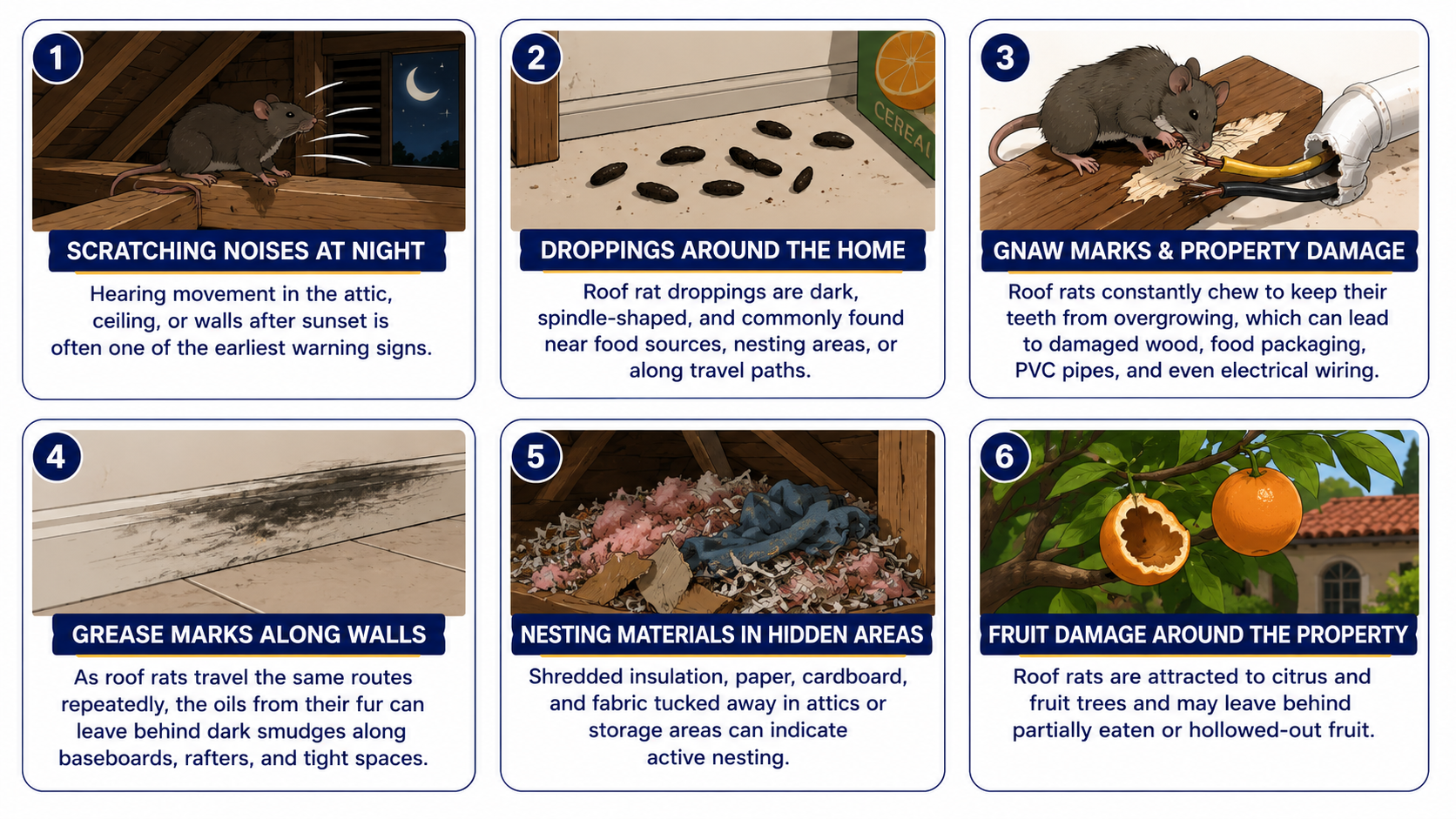
Some of the most common signs of roof rat activity include:
- Scratching Noises at Night
Hearing movement in the attic, ceiling, or walls after sunset is often one of the earliest warning signs. - Droppings Around the Home
Roof rat droppings are dark, spindle-shaped, and commonly found near food sources, nesting areas, or along travel paths. Learn more in our Rodent Control Near Me: Signs of a Rodent Infestation guide. - Gnaw Marks & Property Damage
Roof rats constantly chew to keep their teeth from overgrowing, which can lead to damaged wood, food packaging, PVC pipes, and even electrical wiring. - Grease Marks Along Walls
As roof rats travel the same routes repeatedly, the oils from their fur can leave behind dark smudges along baseboards, rafters, and tight spaces. - Nesting Materials in Hidden Areas
Shredded insulation, paper, cardboard, and fabric tucked away in attics or storage areas can indicate active nesting. - Fruit Damage Around the Property
Roof rats are attracted to citrus and fruit trees and may leave behind partially eaten or hollowed-out fruit.
If you notice even one of these warning signs, it’s important to act quickly. Roof rats reproduce rapidly, and a small infestation can turn into a much larger problem in a short amount of time. For professional help identifying and removing rodent activity, learn more about our Rodent Control Services in South Florida and how we help protect homes and businesses from recurring infestations.
Common Entry Points Around Homes
Roof rats can squeeze through surprisingly small openings and often enter homes from above. Because they are skilled climbers, they commonly use trees, fences, utility lines, and rooflines to access attics and hidden spaces without being noticed.
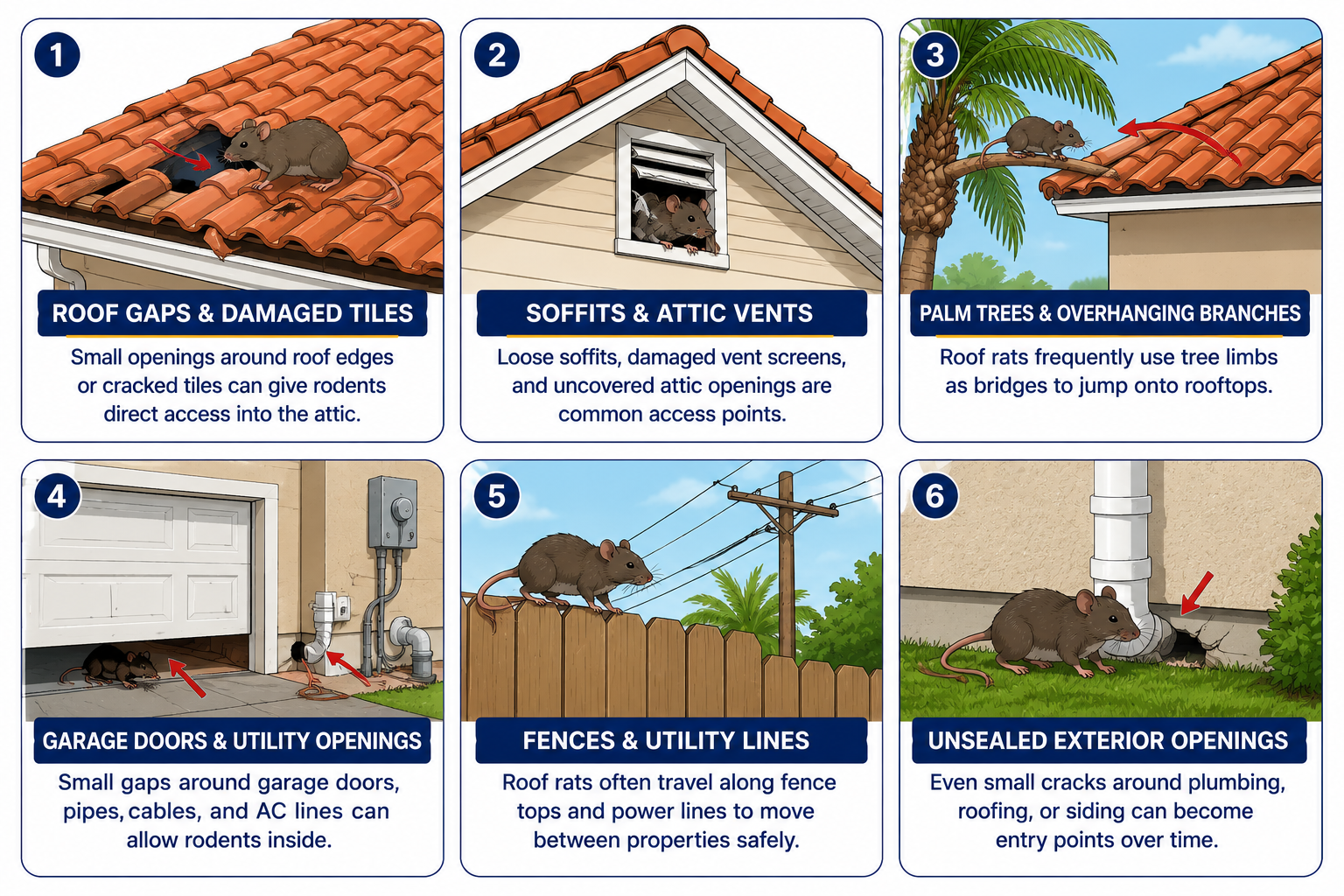
Some of the most common roof rat entry points include:
- Roof Gaps & Damaged Tiles
Small openings around roof edges or cracked tiles can give rodents direct access into the attic. - Soffits & Attic Vents
Loose soffits, damaged vent screens, and uncovered attic openings are common access points. - Palm Trees & Overhanging Branches
Roof rats frequently use tree limbs as bridges to jump onto rooftops. - Garage Doors & Utility Openings
Small gaps around garage doors, pipes, cables, and AC lines can allow rodents inside. - Fences & Utility Lines
Roof rats often travel along fence tops and power lines to move between properties safely. - Unsealed Exterior Openings
Even small cracks around plumbing, roofing, or siding can become entry points over time.
Preventing roof rats starts with identifying and sealing these access points before an infestation has the chance to grow.
Dangers of a Roof Rat Infestation
Roof rats are more than just a nuisance. Once inside a home or commercial property, they can create serious health risks, structural damage, and costly repairs if the infestation is left untreated.
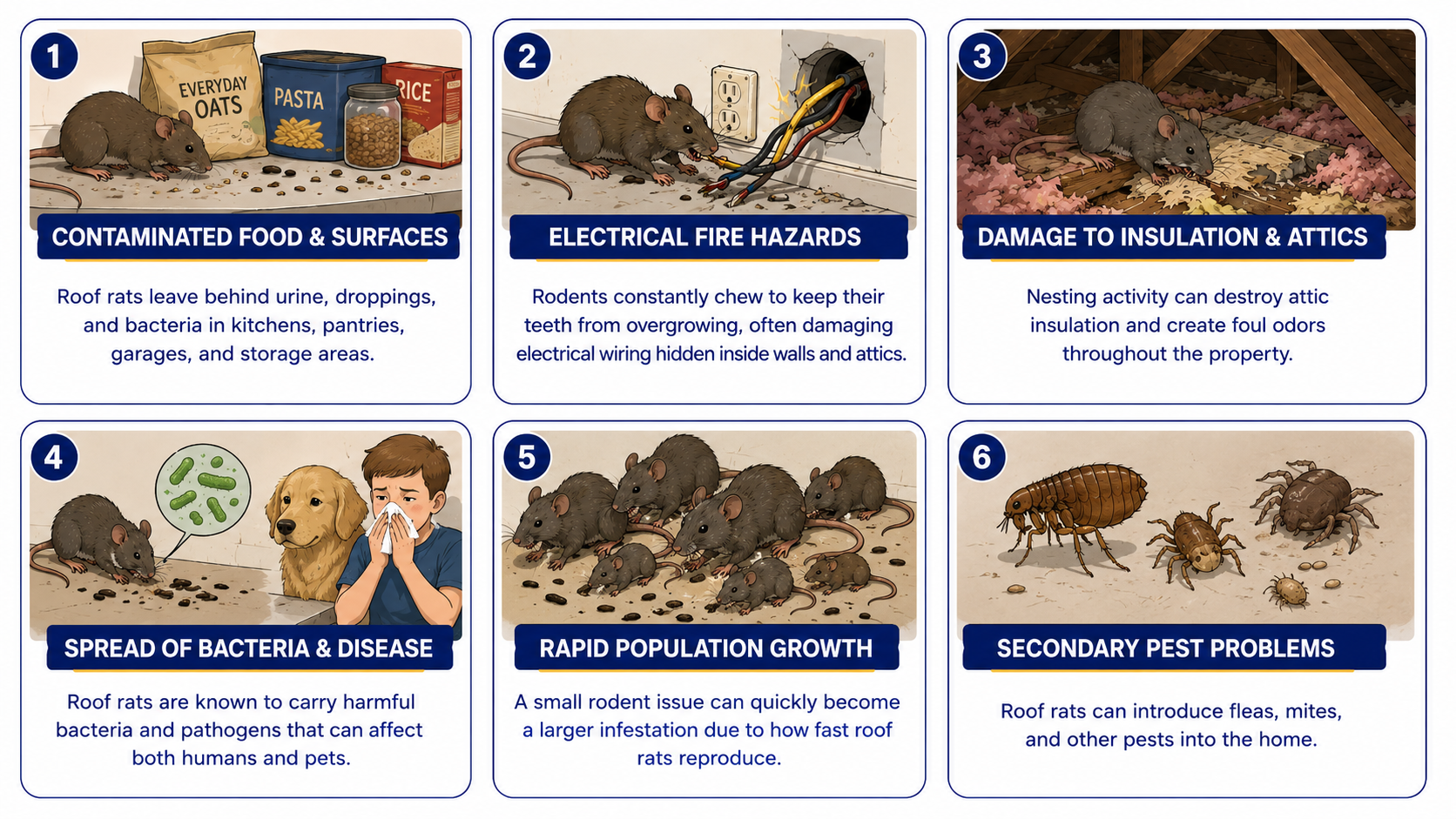
Some of the biggest dangers associated with roof rats include:
- Contaminated Food & Surfaces
Roof rats leave behind urine, droppings, and bacteria in kitchens, pantries, garages, and storage areas. - Electrical Fire Hazards
Rodents constantly chew to keep their teeth from overgrowing, often damaging electrical wiring hidden inside walls and attics. - Damage to Insulation & Attics
Nesting activity can destroy attic insulation and create foul odors throughout the property. - Spread of Bacteria & Disease
Roof rats are known to carry harmful bacteria and pathogens that can affect both humans and pets. - Rapid Population Growth
A small rodent issue can quickly become a larger infestation due to how fast roof rats reproduce. - Secondary Pest Problems
Roof rats can introduce fleas, mites, and other pests into the home.
If you’ve already noticed scratching noises, droppings, or chewing damage, it’s important to address the infestation before the damage becomes more severe. Learn more about the warning signs in our Rodent Control Near Me: Signs of a Rodent Infestation guide.
For homeowners preparing for treatment, our Rodent Control Preparation Guide can help you understand the steps to take before professional service begins.
What Attracts Roof Rats to Homes
Roof rats are constantly searching for food, water, shelter, and safe nesting areas. Once a property provides easy access to those resources, rodents are much more likely to stay nearby and eventually move inside.
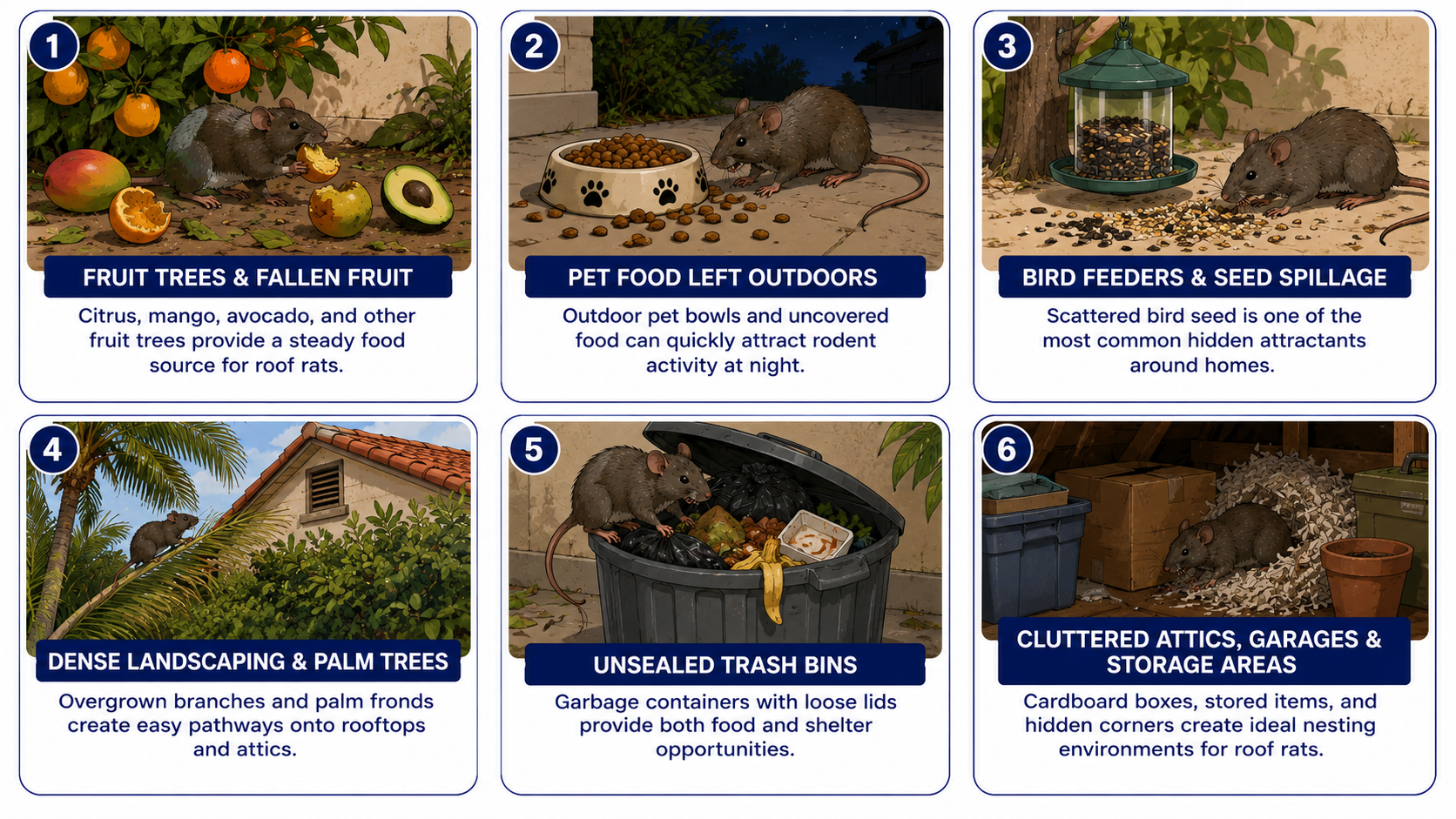
Some of the biggest things that attract roof rats to homes include:
- Fruit Trees & Fallen Fruit
Citrus, mango, avocado, and other fruit trees provide a steady food source for roof rats. - Pet Food Left Outdoors
Outdoor pet bowls and uncovered food can quickly attract rodent activity at night. - Bird Feeders & Seed Spillage
Scattered bird seed is one of the most common hidden attractants around homes. - Dense Landscaping & Palm Trees
Overgrown branches and palm fronds create easy pathways onto rooftops and attics. - Unsealed Trash Bins
Garbage containers with loose lids provide both food and shelter opportunities. - Cluttered Attics, Garages & Storage Areas
Cardboard boxes, stored items, and hidden corners create ideal nesting environments for roof rats.
You don’t want roof rats turning your home into a nesting area. Taking simple preventative steps like removing food sources, trimming overhanging branches, sealing trash bins, and reducing clutter can go a long way in helping keep rodents away from your property before a small issue becomes a much bigger problem.
How to Get Rid of Roof Rats Safely
Roof rat infestations are rarely solved with a few traps or store-bought products alone. Because roof rats nest in hidden areas like attics, wall voids, and rooflines, successful removal usually requires a combination of trapping, exclusion work, sanitation, and long-term prevention.
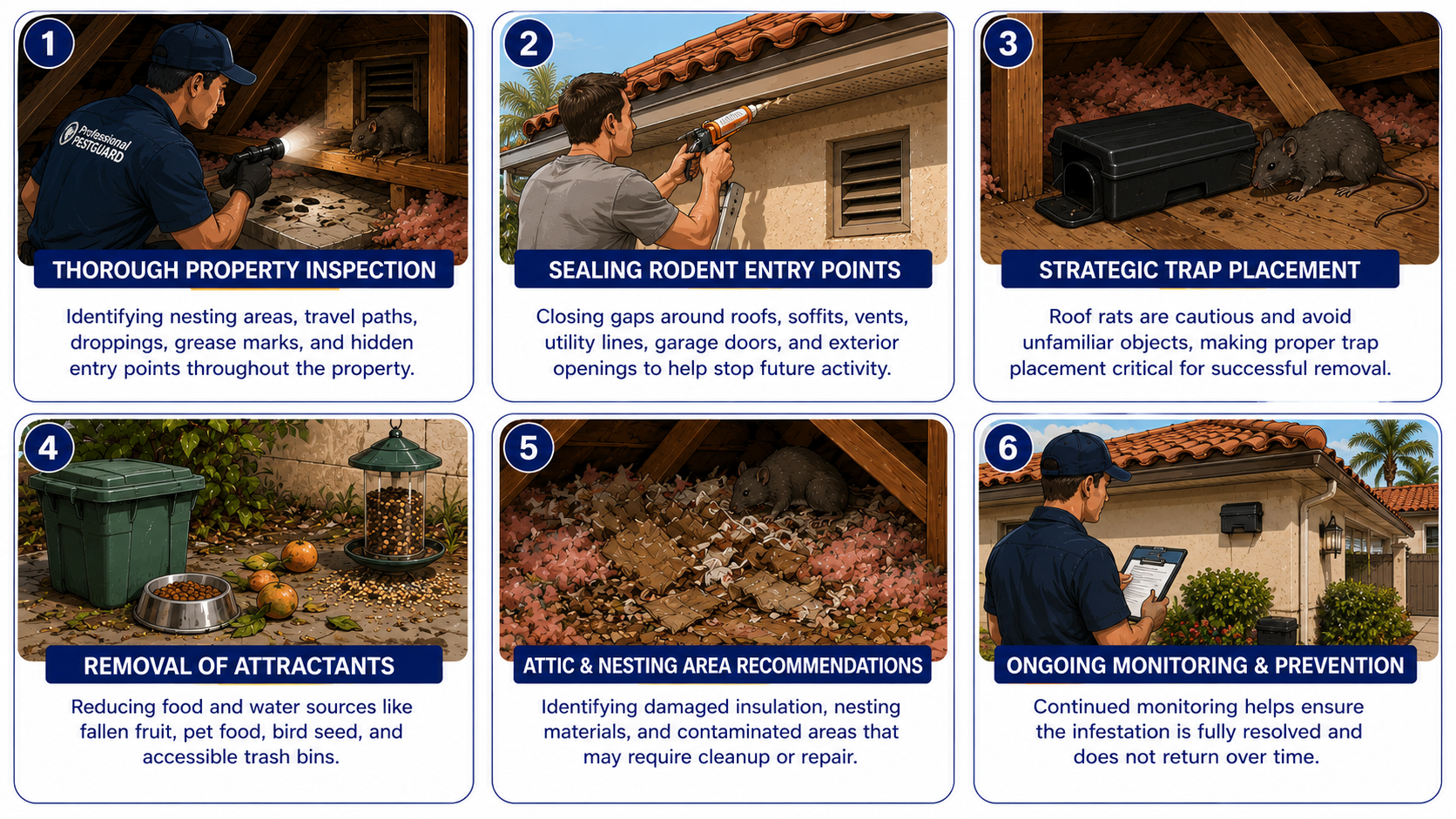
Professional roof rat control typically includes:
- Thorough Property Inspection
Identifying nesting areas, travel paths, droppings, grease marks, and hidden entry points throughout the property. - Sealing Rodent Entry Points
Closing gaps around roofs, soffits, vents, utility lines, garage doors, and exterior openings to help stop future activity. - Strategic Trap Placement
Roof rats are cautious and avoid unfamiliar objects, making proper trap placement critical for successful removal. - Removal of Attractants
Reducing food and water sources like fallen fruit, pet food, bird seed, and accessible trash bins. - Attic & Nesting Area Recommendations
Identifying damaged insulation, nesting materials, and contaminated areas that may require cleanup or repair. - Ongoing Monitoring & Prevention
Continued monitoring helps ensure the infestation is fully resolved and does not return over time.
DIY rodent control often falls short because roof rats are highly adaptive and excellent at staying hidden. In many cases, improper trapping or baiting can actually make the problem harder to control. Working with a professional rodent control company can help ensure the infestation is handled safely, effectively, and as quickly as possible.
How to Prevent Roof Rats from Coming Back
Removing roof rats is only part of the solution. Long-term prevention is what helps keep your home protected from future infestations. Because roof rats are excellent climbers and highly adaptable, even a small opening or food source can attract new activity over time.
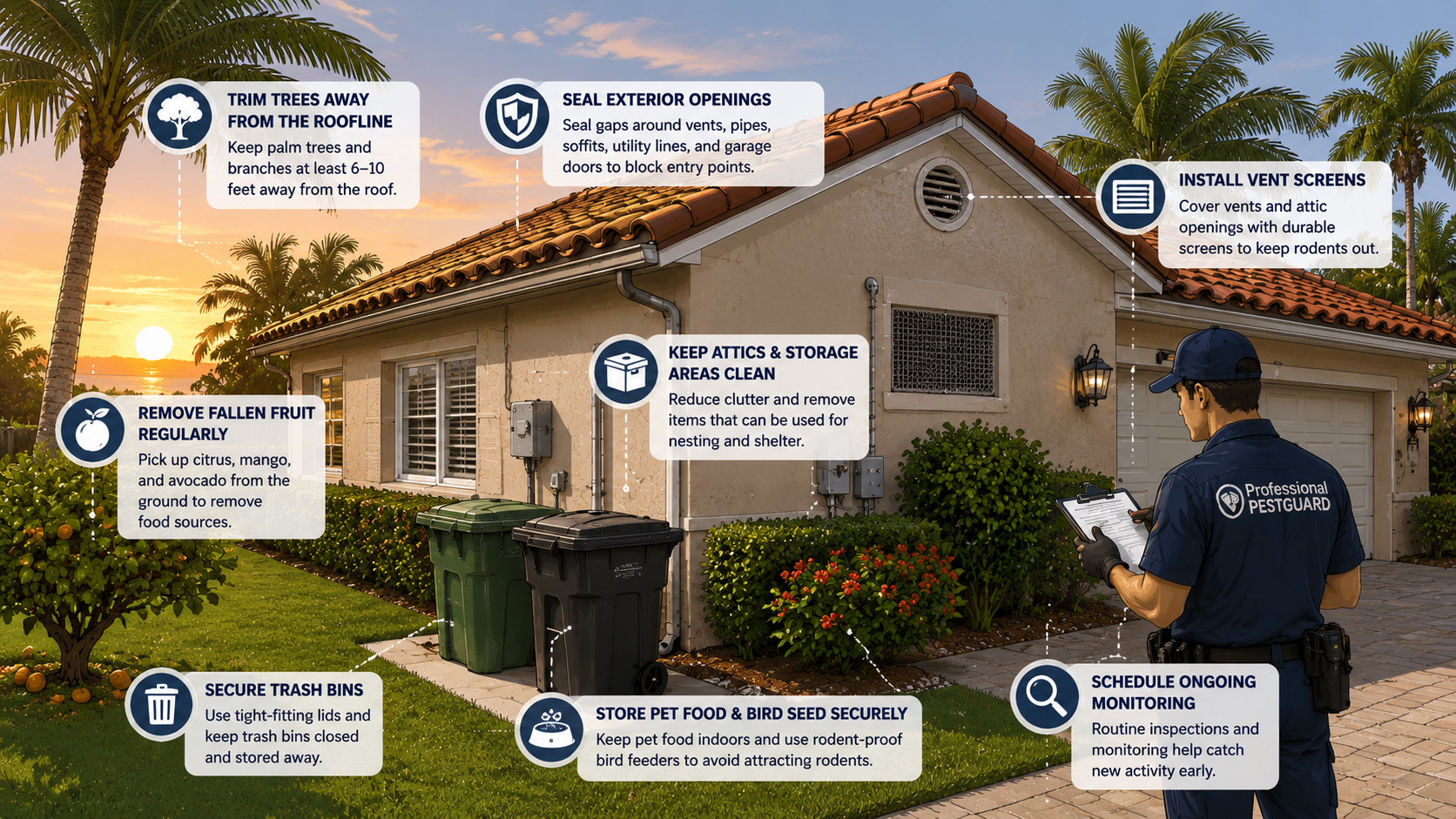
Here are some of the best ways to help prevent roof rats from returning:
- Trim tree branches away from the roofline
Roof rats commonly use palm trees, fences, and overhanging branches to access attics and rooftops. - Remove fallen fruit regularly
Citrus, mango, and avocado trees can quickly attract rodent activity if fruit is left on the ground. - Seal exterior openings
Small gaps around vents, pipes, soffits, utility lines, and garage doors should be properly sealed. - Store pet food and bird seed securely
Outdoor food sources are one of the most common reasons roof rats stay active around properties. - Keep attics and storage areas clean
Reducing clutter helps eliminate hidden nesting areas. - Schedule ongoing rodent monitoring
Routine inspections and monitoring can help catch new activity before it becomes a larger infestation.
Preventing roof rats is much easier than dealing with a full infestation after it spreads throughout the home. Working with a professional rodent control company can help provide long-term protection and peace of mind for your property.
Frequently Asked Questions About Roof Rats in South Florida
Roof rats are one of the most common rodent problems in South Florida homes and businesses. Below are answers to some of the most frequently searched questions about roof rat infestations, prevention, and professional rodent control.
What are the signs of roof rats in your attic?
Some of the most common signs of roof rats include scratching noises at night, droppings in attics or kitchens, grease marks along walls, gnaw marks on wires or wood, and shredded nesting materials hidden in insulation or storage areas. Many homeowners first notice activity after hearing movement in the ceiling or attic after sunset.
Are roof rats dangerous to humans?
Yes. Roof rats can spread bacteria and contaminate food, surfaces, insulation, and storage areas through their urine and droppings. They can also introduce fleas, mites, and other secondary pests into the home. In addition to health concerns, roof rats are known to damage electrical wiring, which can create fire hazards.
How do roof rats get into homes?
Roof rats are excellent climbers and commonly enter homes through roof gaps, attic vents, soffits, utility openings, garage gaps, and tree branches touching the roofline. Even very small openings around the exterior of a home can eventually become rodent entry points.
What attracts roof rats to a property?
Roof rats are attracted to easy access to food, water, and shelter. Common attractants include fallen fruit, bird seed, outdoor pet food, unsealed trash bins, cluttered storage areas, dense landscaping, and overhanging palm trees or branches.
Can roof rats damage electrical wiring?
Yes. Roof rats constantly chew to keep their teeth from overgrowing, which often leads to damaged electrical wiring, PVC pipes, insulation, drywall, and stored belongings. Chewed wiring inside attics and walls can increase the risk of electrical fires.
Do roof rats stay active year-round in South Florida?
Yes. South Florida’s warm climate allows roof rats to remain active throughout the year. Unlike colder regions where rodent activity may slow during winter, roof rats in Florida can continue nesting and reproducing year-round.
Is DIY roof rat control effective?
DIY rodent control may temporarily reduce activity, but it often does not fully eliminate the infestation. Roof rats are cautious, highly adaptive, and tend to avoid unfamiliar objects or poorly placed traps. Without identifying nesting areas and entry points, the problem can quickly return.
How long does it take to get rid of roof rats?
The timeline depends on the size of the infestation, nesting activity, and how many entry points exist around the property. Some infestations can be reduced within days, while larger or long-term infestations may require ongoing monitoring and exclusion work to fully resolve the issue.
How can I prevent roof rats from coming back?
Preventing roof rats typically involves trimming tree branches away from the roof, sealing exterior openings, removing fallen fruit, securing trash bins, reducing clutter, and monitoring for new activity. Long-term prevention is one of the most important parts of effective rodent control.
Should I hire a professional rodent control company?
In many cases, yes. Professional rodent control companies can identify hidden nesting areas, locate entry points, strategically place traps, and help prevent future infestations. Professional treatment is often faster, safer, and more effective than relying only on DIY methods.
Professional Roof Rat Control in Broward County
Roof rats are one of the most common rodent problems affecting homes and businesses throughout Broward County. From scratching noises in the attic to droppings, grease marks, damaged wiring, and contaminated insulation, a small rodent issue can quickly turn into a much larger infestation if left untreated.
Because roof rats are excellent climbers and remain active year-round in South Florida, effective rodent control requires more than just placing traps. Identifying nesting areas, sealing entry points, reducing attractants, and monitoring for continued activity are all important parts of long-term prevention.
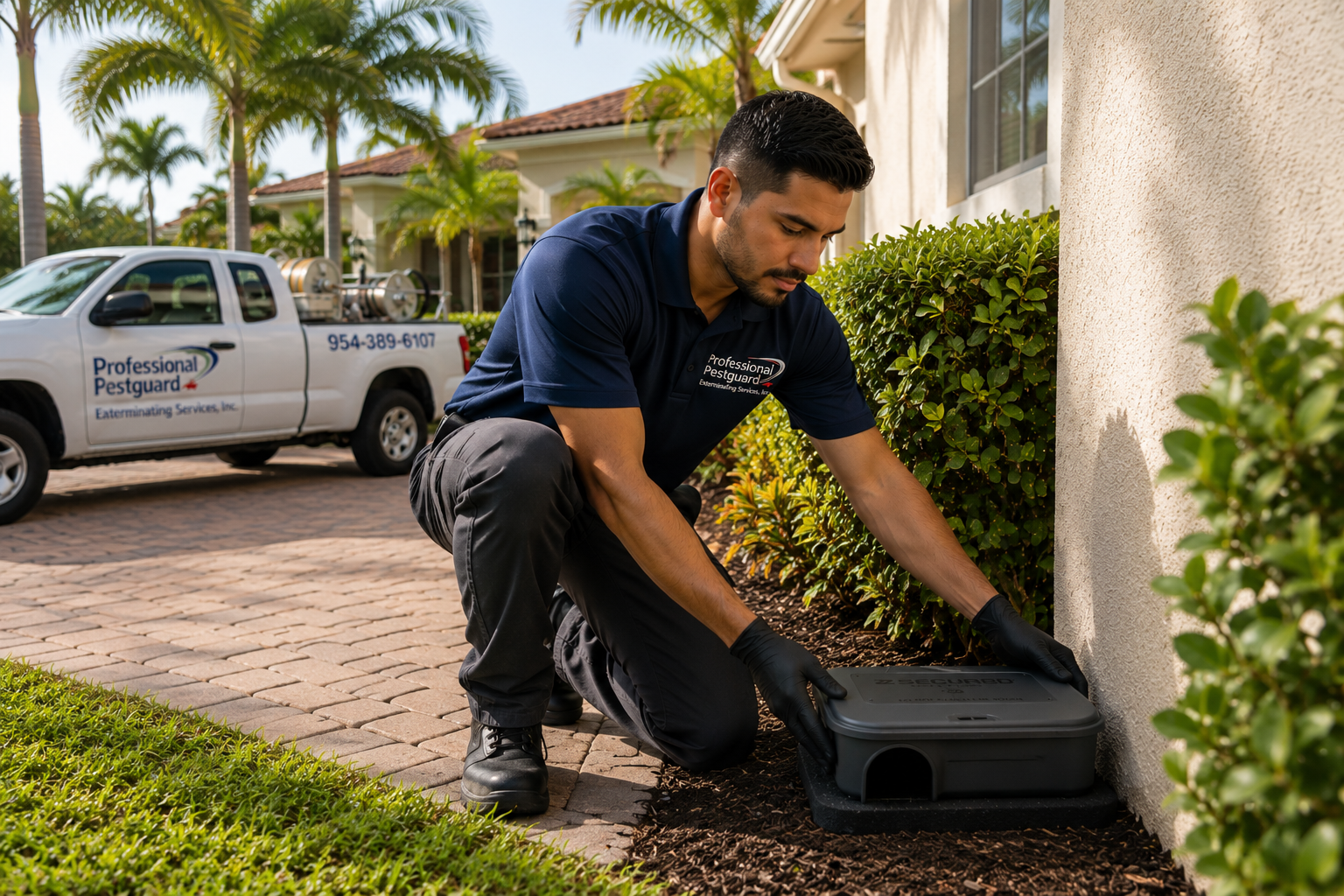
At Professional Pestguard, we help homeowners and businesses throughout Broward County identify and address roof rat activity with targeted rodent control solutions designed for South Florida properties. Whether you are hearing noises in the attic, finding droppings around the home, or dealing with recurring rodent activity, taking action early can help prevent costly damage and larger infestations down the road.
If you suspect roof rats on your property, contact us today to learn more about our professional rodent control services in Broward County and schedule an inspection.
About Professional Pestguard
Professional Pestguard provides professional pest control in Weston, FL and nearby communities including Davie, Sunrise, Pembroke Pines, and Plantation. With over 40 years of experience, our licensed technicians protect homes and businesses across Broward County and Miami-Dade County from ants, cockroaches, rodents, spiders, and other common South Florida pests using safe and effective treatments.