Why Millipedes Invade South Florida Homes After Heavy Rain
Millipedes often enter South Florida homes after heavy rain because saturated soil forces them out of the damp outdoor areas where they normally live and sends them searching for drier conditions.
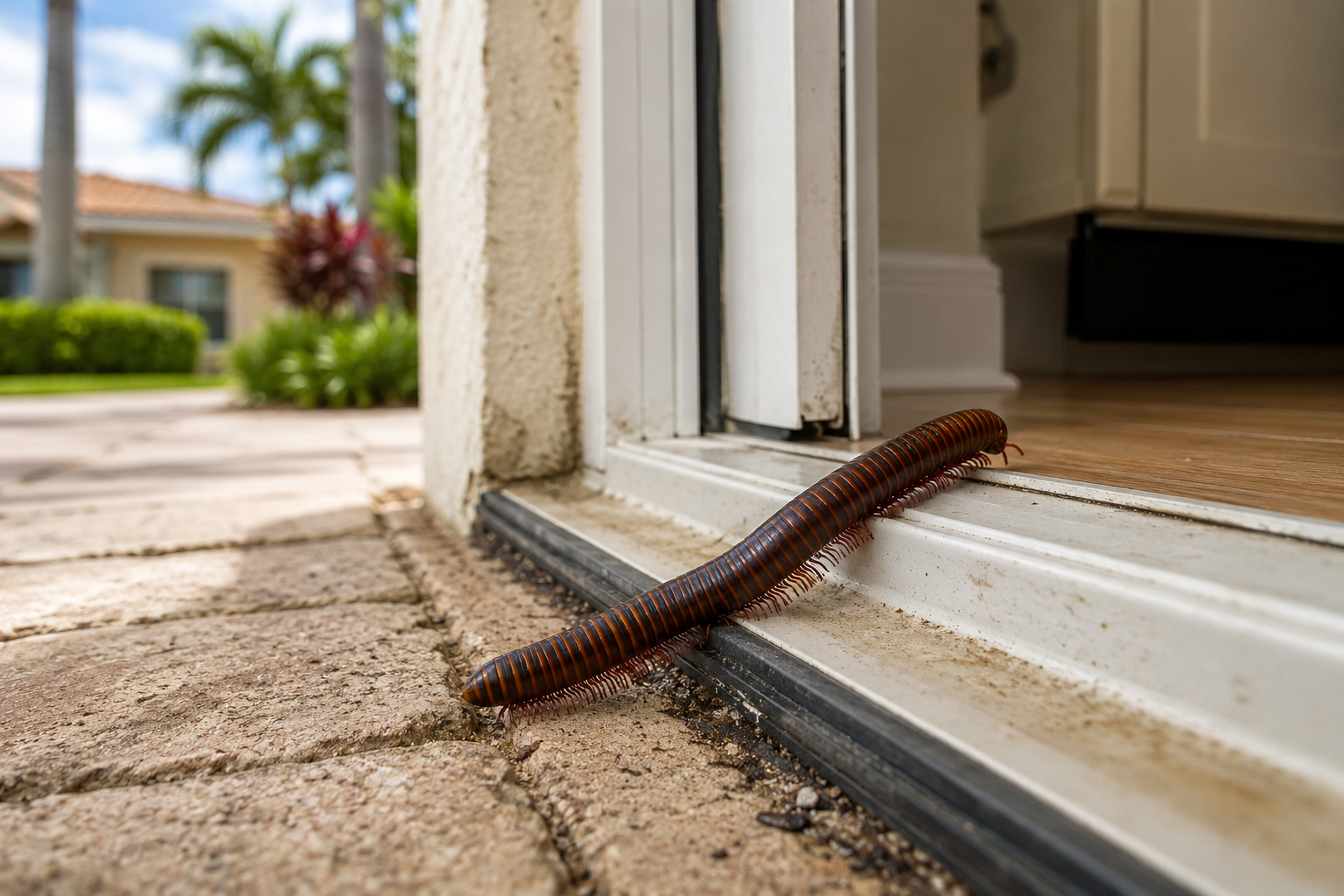
Have you ever walked outside after several days of heavy rain only to find dozens of millipedes crawling across your driveway, patio, garage, or even inside your home? While their sudden appearance can be unsettling, millipedes aren't invading because they want to be indoors. In most cases, they're simply escaping saturated soil and searching for drier conditions after periods of prolonged rainfall.
South Florida's rainy season creates the perfect environment for millipedes to thrive. Warm temperatures, frequent afternoon thunderstorms, and consistently high humidity provide the moisture these slow-moving arthropods need to survive. However, when heavy rain floods their natural habitat, millipedes often migrate onto sidewalks, patios, garages, and around foundations—sometimes accidentally finding their way inside homes through small cracks and gaps.
Understanding why millipedes become more noticeable after heavy rain can help homeowners identify the conditions attracting them, reduce moisture around the property, and prevent recurring invasions. Whether you live in Weston, Davie, Pembroke Pines, Plantation, Cooper City, Sunrise, Miramar, Southwest Ranches, or anywhere else in South Florida, learning why millipedes appear is the first step toward protecting your home.
Why Do Millipedes Invade South Florida Homes After Heavy Rain?
Heavy rainfall can saturate soil, mulch, leaf litter, and landscaping beds where millipedes normally live. When those areas become overly wet, millipedes may migrate toward foundations, patios, garages, doorways, and other drier areas around the home.
Millipedes spend nearly their entire lives outdoors, living in moist soil, mulch, leaf litter, and other areas rich in decaying organic matter. These environments provide the moisture they need to survive while protecting them from direct sunlight and dry conditions. During normal weather, homeowners rarely notice millipedes because they remain hidden beneath the surface.
After periods of heavy rainfall, however, the soil can quickly become saturated. As their natural habitat fills with water, millipedes are forced to migrate in search of higher, drier ground. This often leads them onto sidewalks, patios, driveways, garages, and around the foundations of homes. While millipedes do not intentionally invade homes, they may accidentally enter through small gaps beneath doors, foundation cracks, garage thresholds, or other exterior openings while searching for shelter.
Why Heavy Rain Increases Millipede Activity
- Saturated Soil Forces Them To Move
Heavy rain floods the damp environments where millipedes normally live. Rather than remaining in waterlogged soil, they migrate to drier areas where they can continue to survive. - South Florida's Climate Supports Large Populations
Frequent rainfall, high humidity, and warm temperatures create ideal conditions for millipedes throughout much of the year. Because these favorable conditions rarely disappear for long, millipede populations can remain active across South Florida for extended periods. - They Accidentally Wander Indoors
As millipedes travel across patios, walkways, garages, and foundations after rain, some eventually find their way inside through small openings around doors, windows, and utility penetrations. Indoor environments are generally too dry for millipedes to survive long-term, making their presence inside the home accidental rather than intentional. - Moist Landscaping Creates Ideal Habitat
Thick mulch, leaf litter, compost, landscape timbers, and dense vegetation retain moisture long after rainfall ends. These areas provide excellent shelter for millipedes and often serve as the starting point for increased activity around homes. - Rain Makes Existing Populations More Noticeable
Heavy rainfall doesn't create more millipedes overnight—it simply drives existing populations out into the open. Homeowners often see dozens of millipedes at once because many are displaced at the same time by saturated outdoor conditions.
While finding an occasional millipede indoors after heavy rain is fairly common in South Florida, repeated sightings may indicate that your property provides the moisture and harborage these pests prefer. Routine Residential Pest Control can help identify conducive conditions around your home and support a comprehensive approach to preventing recurring pest activity.
Where Do Millipedes Hide Around South Florida Homes?
Millipedes thrive in cool, damp environments where moisture is readily available. During the day, they remain hidden beneath natural debris and landscaping materials that protect them from sunlight and drying out. Because they spend most of their lives concealed outdoors, many homeowners don't realize millipedes are living around their property until heavy rain forces them into more visible areas.
Knowing where millipedes commonly hide can help homeowners identify conditions that support recurring activity. Reducing these moisture-rich harborage areas is one of the most effective ways to minimize millipede populations around your home, particularly during South Florida's rainy season.
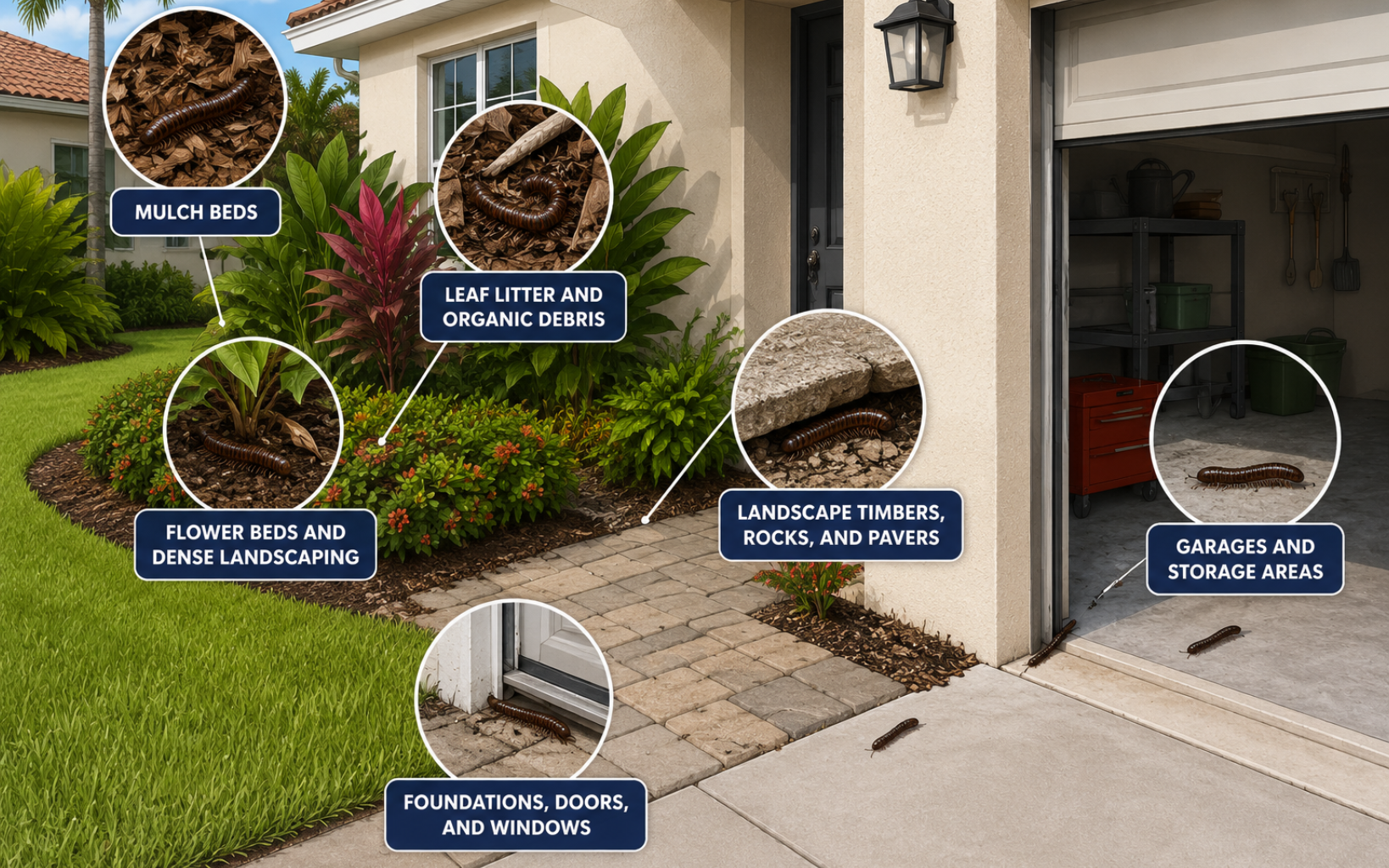
Common Millipede Hiding Places
- Mulch Beds
Mulch retains moisture long after rainfall, creating one of the most favorable environments for millipedes. Thick mulch also provides protection from sunlight, allowing them to remain hidden throughout the day. - Leaf Litter And Organic Debris
Fallen leaves, grass clippings, compost, and decaying plant material create damp conditions where millipedes can feed and shelter. Regular yard cleanup helps eliminate many of these preferred hiding places. - Flower Beds And Dense Landscaping
Shrubs, ornamental plants, ground cover, and heavily landscaped areas often trap moisture beneath the foliage. These cool, shaded environments provide ideal conditions for millipedes to remain active. - Landscape Timbers, Rocks, And Pavers
Millipedes frequently shelter beneath landscape borders, stepping stones, decorative rocks, and pavers where moisture remains trapped after rain. These protected spaces also help shield them from predators. - Garages And Storage Areas
Damp garages, sheds, utility rooms, and storage areas may temporarily attract millipedes after heavy rainfall. They often enter through gaps beneath garage doors or around the foundation while searching for drier conditions. - Foundations, Doors, And Windows
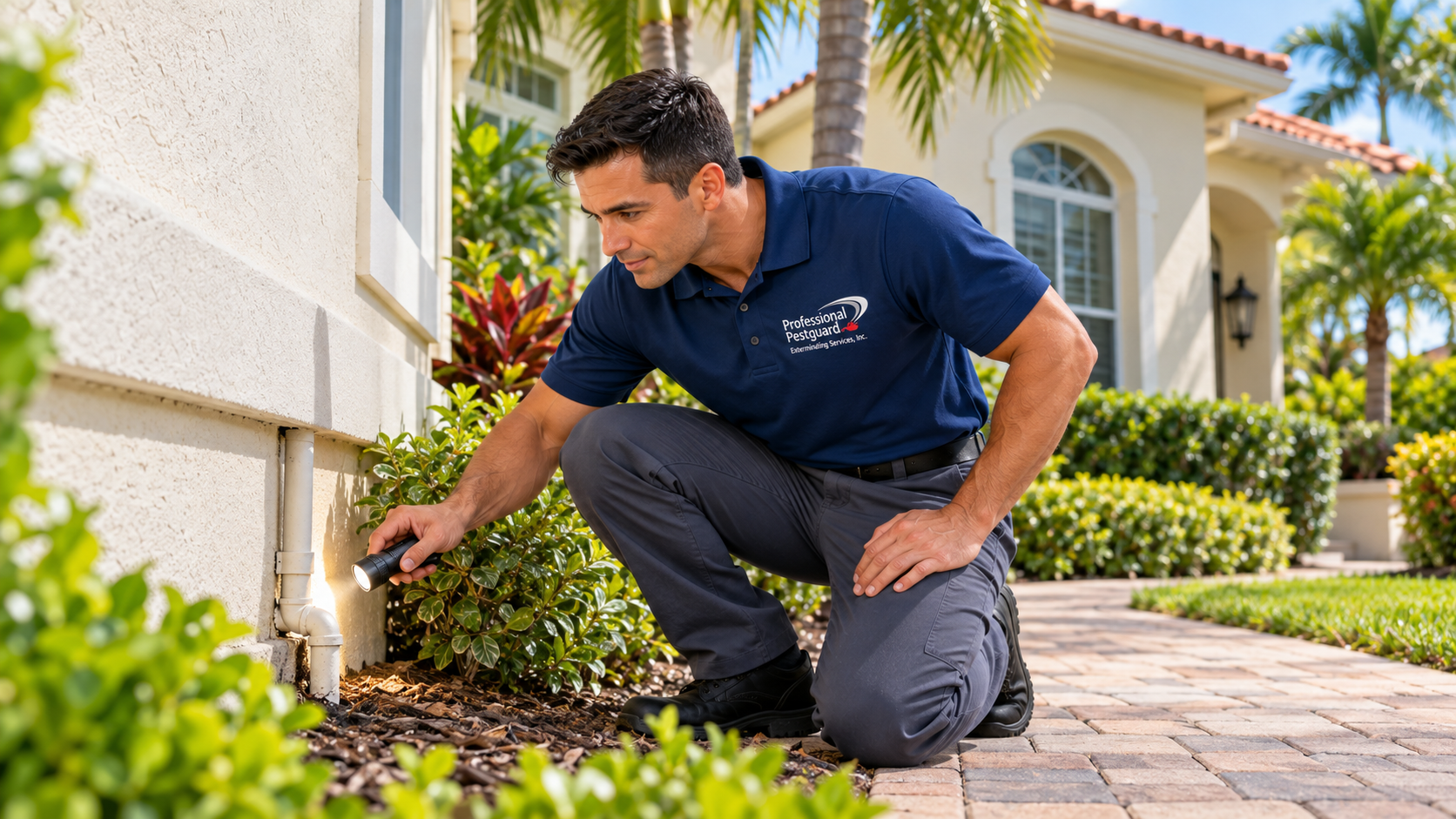
Millipedes commonly travel along the exterior foundation before accidentally entering through cracks, door thresholds, damaged weather stripping, or utility penetrations. Sealing these entry points can help reduce indoor sightings after periods of heavy rain.
While millipedes are primarily outdoor organisms, seeing them inside your home often indicates that the surrounding landscape is providing the moisture and shelter they need to survive. If you're also noticing ants, cockroaches, spiders, earwigs, or other nuisance pests after rain, routine Residential Pest Control can help identify conducive conditions and provide year-round protection for your South Florida home.
Are Millipedes Dangerous To People, Pets, Or Homes?
Although millipedes may look intimidating because of their long bodies and numerous legs, they're generally considered harmless nuisance pests. Unlike some household pests, millipedes don't bite, sting, damage structures, or reproduce indoors. In most cases, their presence inside a home is temporary, and they're simply passing through after being displaced by heavy rain.
While finding a single millipede isn't usually cause for concern, seeing large numbers around your home's exterior or repeatedly finding them indoors often indicates that outdoor conditions are favorable for their survival. Addressing those environmental conditions is typically more effective than focusing solely on the millipedes themselves.
Common Questions About Millipedes
- Do Millipedes Bite Or Sting?
No. Millipedes do not bite or sting people. When disturbed, their first instinct is to curl into a tight spiral to protect themselves rather than attack. - Are Millipedes Poisonous?
Millipedes are not poisonous, but some species can release a mild defensive fluid when threatened. This secretion may have an unpleasant odor and can occasionally cause minor skin irritation or temporary staining if handled directly. It's always best to avoid picking them up with bare hands. - Can Millipedes Damage My Home?
No. Millipedes do not chew wood, damage insulation, contaminate food, or destroy household materials. Unlike termites or carpenter ants, they do not cause structural damage to homes. - Are Millipedes Harmful To Pets?
Millipedes are generally not considered dangerous to dogs or cats. However, curious pets may experience mild mouth irritation if they chew on one because of the defensive chemicals some millipedes release. - Why Am I Seeing So Many At Once?
Millipedes often emerge in large numbers after prolonged periods of rain because many are displaced from the same outdoor habitat at the same time. This sudden movement can make it appear as though there's an infestation, even though they're simply migrating across the landscape in search of suitable conditions.
Finding a few millipedes after a storm is fairly common in South Florida. However, repeated indoor sightings often point to excess moisture or favorable outdoor conditions that may also support ants, cockroaches, earwigs, spiders, and other nuisance pests. Routine Residential Pest Control can help identify these conducive conditions and provide year-round protection for your home.
How To Reduce Millipede Activity Around Your Home
While it's impossible to eliminate every millipede from your property, homeowners can take several steps to make their landscape less attractive to these moisture-dependent arthropods. Most millipede problems begin outdoors, so reducing the conditions that support their survival is often the most effective long-term solution.
Rather than focusing only on the millipedes you see, it's important to address the environmental factors that encourage them to remain around your home. Improving drainage, reducing excess moisture, and limiting outdoor harborage areas can significantly reduce millipede activity, particularly during South Florida's rainy season.
Tips To Help Reduce Millipede Activity
- Reduce Excess Moisture Around Your Foundation
Repair leaking hose bibs, irrigation systems, outdoor faucets, and air conditioning condensate lines that keep the soil consistently damp. The drier the area surrounding your home's foundation, the less attractive it becomes to millipedes. - Avoid Thick Layers Of Mulch
While mulch benefits your landscaping, excessive amounts retain moisture and create ideal shelter for millipedes. Keeping mulch several inches away from your home's foundation and maintaining a moderate depth can help reduce favorable conditions. - Remove Yard Debris Regularly
Fallen leaves, grass clippings, stacked branches, and decaying organic material provide food and shelter for millipedes. Routine yard maintenance helps eliminate many of the environments where they thrive. - Improve Drainage In Low-Lying Areas
Standing water and persistently damp soil following heavy rain create ideal conditions for millipedes. Correcting drainage problems around the property can help reduce future activity. - Seal Exterior Entry Points
Inspect door sweeps, weather stripping, foundation cracks, utility penetrations, and gaps around windows. Sealing these openings helps reduce the chances of millipedes accidentally wandering indoors. - Keep Landscaping Trimmed
Dense shrubs, overgrown ground cover, and vegetation touching the home create shaded, humid conditions where millipedes can remain active. Regular trimming improves airflow and reduces moisture retention around the structure. - Maintain Routine Residential Pest Control
Although millipedes are primarily outdoor organisms, recurring activity may indicate favorable conditions that also support ants, cockroaches, spiders, earwigs, and other household pests. Routine Residential Pest Control helps identify these conducive conditions and supports a comprehensive approach to protecting your South Florida home.
Preventing millipede activity is less about eliminating every individual and more about creating an environment that's less favorable for them to survive. Small improvements to your landscaping and routine exterior maintenance can make a noticeable difference throughout South Florida's rainy season.
Frequently Asked Questions About Millipedes In South Florida
Millipedes are one of the most common nuisance pests homeowners notice after periods of heavy rain in South Florida. Although they're generally harmless, their sudden appearance often leaves homeowners wondering where they came from and why they're entering the home.
Below are answers to some of the most frequently asked questions about millipedes, what attracts them, and how to reduce recurring activity around your property.
Why do millipedes come inside after heavy rain?
Heavy rain can flood the soil, mulch, leaf litter, and landscaping where millipedes normally live. As those areas become saturated, millipedes may move toward foundations, garages, patios, and doorways in search of drier conditions. Small gaps around doors and other exterior openings can allow them to enter the home.
Where do millipedes usually hide?
Millipedes prefer cool, damp environments such as mulch beds, flower gardens, leaf litter, compost piles, landscape timbers, beneath rocks, and dense landscaping where moisture remains for extended periods.
Are millipedes dangerous to people?
No. Millipedes do not bite, sting, or spread diseases. They are considered nuisance pests and generally avoid human contact whenever possible.
Can millipedes damage my home?
No. Millipedes do not damage wood, drywall, insulation, furniture, or stored food. Unlike termites or carpenter ants, they do not cause structural damage.
Why am I seeing so many millipedes at once?
Millipedes often emerge in large numbers after prolonged periods of rainfall because many are displaced from the same outdoor habitat at the same time. Their sudden appearance can make it seem like an infestation when they're simply responding to changing environmental conditions.
Do millipedes reproduce inside homes?
No. Millipedes require moist soil and organic matter to survive and reproduce. Indoor environments are generally too dry to support long-term millipede populations.
What attracts millipedes to my property?
Millipedes are attracted to properties with consistently moist soil, thick mulch, leaf litter, heavy landscaping, poor drainage, and abundant decaying organic matter. These conditions provide both shelter and food.
How can I keep millipedes out of my house?
Reducing excess moisture, improving drainage, removing organic debris, sealing exterior entry points, and maintaining your landscaping can all help reduce millipede activity around your home.
When should I contact a pest control professional?
If millipedes continue appearing inside your home after heavy rain or you're also noticing ants, cockroaches, earwigs, spiders, or other nuisance pests, professional Residential Pest Control can help identify conducive conditions and recommend long-term solutions.
Are millipedes common in South Florida?
Yes. Millipedes are commonly found throughout Weston, Davie, Pembroke Pines, Plantation, Cooper City, Sunrise, Miramar, Southwest Ranches, and other South Florida communities, particularly during the rainy season when warm temperatures and abundant moisture create ideal outdoor conditions.
Residential Pest Control In Weston And South Florida
Finding a few millipedes after heavy rain is common throughout South Florida, but recurring activity around your home often indicates that your property provides the moisture, shelter, and environmental conditions these nuisance pests prefer. While millipedes themselves are generally harmless, frequent indoor sightings may also suggest favorable conditions that attract other household pests. Addressing these conditions early can help reduce recurring pest activity and make your home less inviting throughout the rainy season.
At Professional Pestguard, we proudly provide Residential Pest Control services for homeowners in Weston, Davie, Pembroke Pines, Plantation, Cooper City, Sunrise, Miramar, Southwest Ranches, and surrounding South Florida communities. Our experienced team works with homeowners to identify conducive conditions around the property and provide customized treatment plans designed to help protect against ants, cockroaches, spiders, rodents, pantry pests, millipedes, and many other common household pests.
If you're searching for dependable South Florida pest control or trusted pest control in Weston, FL, Professional Pestguard is here to help. Contact us today to request a free estimate online and learn how our residential pest control services can help protect your home year-round.
About Professional Pestguard
Professional Pestguard provides professional pest control in Weston, FL and nearby communities including Davie, Sunrise, Pembroke Pines, and Plantation. With over 40 years of experience, our licensed technicians protect homes and businesses across Broward County and Miami-Dade County from ants, cockroaches, rodents, spiders, and other common South Florida pests using safe and effective treatments.