Are Mulch Beds Attracting Pests to Your Home?

Fresh mulch can instantly improve your home's curb appeal, but it may also be creating the perfect hiding place for unwanted pests. While mulch itself doesn't attract insects, the cool, shaded, moisture-rich environment it creates provides ideal shelter for many of South Florida's most common household pests. As pest populations build up around your landscaping, it's much easier for ants, cockroaches, spiders, millipedes, earwigs, rodents, and other nuisance pests to eventually find their way inside your home.
Mulch beds are an important part of many South Florida landscapes, helping plants retain moisture while protecting roots from the heat. However, when mulch is installed too thick, stays consistently damp, or sits directly against your home's foundation, it can become one of the most attractive harborage areas on your property. Combined with South Florida's warm temperatures and frequent rainfall, these conditions create an ideal environment for pest activity throughout much of the year.
Understanding whether mulch is attracting bugs around your home can help you identify conducive conditions before they lead to larger pest problems. In this guide, we'll explain why pests are drawn to mulch, which insects commonly hide there, and simple landscaping pest control tips that can help make your property less inviting while still keeping your landscape healthy and beautiful.
Does Mulch Attract Bugs Around Your Home?
Fresh mulch doesn't automatically attract pests, but it does create many of the environmental conditions they prefer. Throughout South Florida, mulch beds provide shade, retain moisture, and offer protection from predators and extreme heat. These conditions make mulch an ideal place for many insects and other nuisance pests to hide during the day before becoming active around your property.
As mulch continues to break down, it supports microorganisms and small insects that become part of the local ecosystem. While this process is beneficial for your plants, it can also encourage larger pests to remain nearby. When mulch is installed too deeply or placed directly against your home's foundation, pests have a much shorter distance to travel before reaching doors, windows, garages, and other potential entry points.
Why Mulch Creates Favorable Conditions For Pests
- Retains Moisture
Mulch holds moisture long after rain or irrigation, creating damp conditions that attract moisture-loving pests such as millipedes, sowbugs, earwigs, and certain species of ants. - Provides Cool, Shaded Shelter
South Florida's intense heat drives many pests toward protected areas during the day. Mulch helps regulate temperature, making it an ideal place for insects to hide until nighttime. - Creates Excellent Hiding Places
The loose layers of wood chips, pine bark, or other organic mulch give pests countless places to shelter from predators and weather while remaining close to your home. - Supports The Food Chain
As organic mulch decomposes, it encourages fungi, microorganisms, and small insects that become food sources for larger pests, increasing overall pest activity within landscaped areas. - Brings Pests Closer To Your Home
When mulch is piled against the foundation, around utility penetrations, or beneath entryways, pests can move directly from the landscape to your home's exterior before finding opportunities to enter indoors.
Attracting bugs isn't necessarily caused by the mulch itself—it's usually the combination of excess moisture, thick landscaping, and favorable hiding places surrounding the home. Practicing good landscaping pest control and maintaining routine Residential Pest Control can help reduce these conducive conditions before they lead to recurring pest problems.
Common Pests Found In Mulch Beds
Mulch beds provide shelter for a wide variety of insects and other nuisance pests throughout South Florida. While some species simply use mulch as a temporary hiding place, others may establish themselves nearby before eventually moving closer to your home. Knowing which pests commonly live in mulch can help homeowners recognize early warning signs and take steps to reduce pest activity before it becomes a larger problem.
Common Pests That Live In Mulch
- Ants
Many ant species, including ghost ants, bigheaded ants, carpenter ants, and fire ants, commonly build colonies beneath mulch where the soil stays cool and moist. Once established outdoors, worker ants often forage into nearby homes searching for food and water. - Cockroaches
American cockroaches, smokybrown cockroaches, and other outdoor roaches frequently hide beneath mulch during the day before becoming active at night. Mulch beds located against the foundation can make it easier for cockroaches to move indoors. - Millipedes
Millipedes thrive in damp mulch because it provides the moisture and decaying organic matter they need to survive. After periods of heavy rain, they're often forced out of mulch beds and may accidentally wander inside while searching for drier conditions. - Earwigs And Sowbugs
These moisture-loving pests commonly shelter beneath mulch, landscape timbers, decorative rocks, and other organic debris. Large numbers often indicate that the area is retaining excess moisture. - Spiders
Mulch attracts many of the insects that spiders feed on, making flower beds and landscaped areas ideal hunting grounds. While most spiders are harmless, reducing insect activity around the home often helps reduce spider activity as well. - Crickets
Crickets prefer cool, damp environments where they can remain hidden during the day. Mulch beds provide excellent shelter before they become active after sunset. - Rodents
Dense landscaping, thick mulch, and ground cover can provide protected travel routes for roof rats and mice as they move around your property. Keeping mulch away from the foundation and trimming vegetation can help reduce harborage areas.
Finding a few pests in mulch is completely normal and doesn't necessarily indicate an infestation. However, if you're regularly seeing insects around flower beds, patios, garages, or inside your home, your landscaping may be creating favorable conditions for recurring pest activity. Routine Residential Pest Control can help identify these conducive conditions and provide year-round protection for your South Florida home.
Signs Your Mulch May Be Contributing To Pest Problems
Not every mulch bed leads to a pest problem, but certain landscaping conditions make it much easier for insects and other nuisance pests to establish themselves around your home. If you're noticing recurring pest activity, your mulch may be one of several contributing factors. Identifying these conditions early can help prevent pests from moving closer to your home's foundation and eventually finding their way indoors.
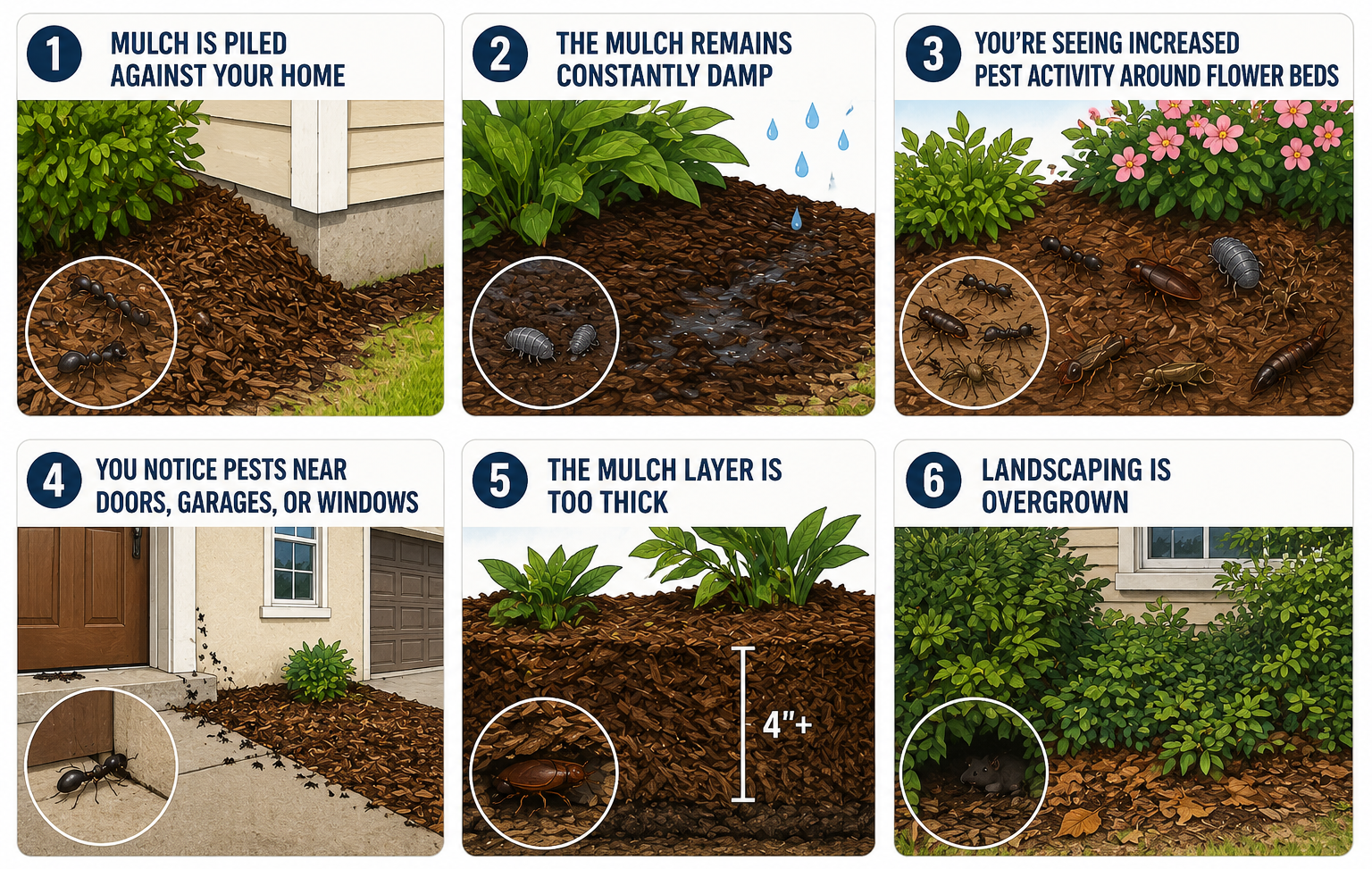
Common Warning Signs
- Mulch Is Piled Against Your Home
Mulch should never be stacked directly against your foundation, siding, or exterior walls. Keeping a small gap between the mulch and your home helps reduce moisture buildup while making it more difficult for pests to travel directly to the structure. - The Mulch Remains Constantly Damp
If your mulch never seems to dry out because of heavy rainfall, overwatering, poor drainage, or excessive shade, it may provide ideal conditions for moisture-loving pests to remain active. - You're Seeing Increased Pest Activity Around Flower Beds
Frequent sightings of ants, cockroaches, millipedes, spiders, earwigs, crickets, or sowbugs around landscaped areas often indicate that pests are using the mulch as shelter. - You Notice Pests Near Doors, Garages, Or Windows
Many outdoor pests travel from mulch beds along foundations before entering through small gaps around doors, garage thresholds, utility penetrations, and windows. - The Mulch Layer Is Too Thick
Applying several inches of mulch may improve appearance, but excessive depth traps more moisture and creates additional hiding places for pests. A moderate layer is typically more effective for both plant health and pest prevention. - Landscaping Is Overgrown
Dense shrubs, ground cover, leaf litter, and overgrown vegetation surrounding mulch beds create cool, humid conditions where pests can remain hidden throughout the day.
If you're noticing several of these warning signs, small changes to your landscaping can often make a significant difference. Combined with routine Residential Pest Control, reducing excess moisture and eliminating favorable harborage areas can help keep pest populations under control before they become a larger problem.
How To Enjoy Mulch Without Attracting Pests
Mulch is an important part of a healthy landscape and doesn't need to be avoided altogether. When properly installed and maintained, mulch helps retain soil moisture, suppress weeds, and protect plant roots without significantly increasing pest activity. The key is minimizing the conditions that pests find attractive while keeping your landscaping healthy and attractive.
Tips To Help Reduce Pest Activity Around Mulch Beds
- Keep Mulch Away From Your Foundation
Leave a 6- to 12-inch gap between mulch and your home's foundation whenever possible. This helps reduce moisture buildup and creates a visible barrier that makes it more difficult for pests to travel directly to your home. - Avoid Applying Mulch Too Deeply
A mulch layer of approximately 2 to 3 inches is generally sufficient for most landscaped areas. Excessively thick mulch retains more moisture and creates additional hiding places for insects and other nuisance pests. - Improve Drainage Around Your Property
Standing water and constantly damp soil create ideal conditions for many outdoor pests. Correcting drainage problems and avoiding overwatering can help keep mulch beds from remaining excessively wet. - Remove Organic Debris Regularly
Leaves, grass clippings, fallen branches, and decaying plant material provide additional shelter for pests. Keeping landscaped areas clean helps reduce harborage sites around your home. - Trim Shrubs And Plants Away From Your Home
Overgrown vegetation creates cool, shaded conditions that allow pests to remain active throughout the day. Maintaining proper clearance around your home's exterior improves airflow and reduces hiding places. - Inspect Your Landscaping Regularly
Check mulch beds for increased insect activity, excessive moisture, or signs of rodent burrows. Catching conducive conditions early can help prevent larger pest problems later. - Maintain Routine Residential Pest Control
Even well-maintained landscapes can support pest activity in South Florida's warm, humid climate. Routine Residential Pest Control helps identify conducive conditions and provides ongoing protection against ants, cockroaches, spiders, rodents, millipedes, and many other common household pests.
Taking a proactive approach to your landscaping can significantly reduce the likelihood of pests establishing themselves around your home. Small changes to how mulch is installed and maintained can make your property less inviting while preserving the beauty and health of your landscape.
Frequently Asked Questions About Mulch And Pest Control
Mulch is one of the most common landscaping materials used around South Florida homes, but many homeowners have questions about whether it contributes to pest problems. Below are answers to some of the most frequently asked questions about mulch, insects, and landscaping pest control.
Does mulch attract bugs?
Mulch itself doesn't attract pests the way food does, but it creates cool, moist, and shaded conditions that many insects prefer. Ants, cockroaches, millipedes, earwigs, sowbugs, spiders, and other outdoor pests often use mulch beds for shelter before moving around the property.
What type of mulch attracts the fewest pests?
No mulch is completely pest-proof, but inorganic materials like rock or rubber mulch generally provide fewer hiding places than organic mulch. Organic mulches such as pine bark, wood chips, and shredded hardwood can retain more moisture, making them more attractive to certain pests if they're not properly maintained.
How far should mulch be kept from my home's foundation?
It's generally recommended to leave a 6- to 12-inch gap between mulch and your home's foundation. This helps reduce moisture buildup and makes it more difficult for pests to travel directly from landscaped areas to your home.
Can mulch cause cockroach problems?
Mulch doesn't cause cockroach infestations, but it can provide shelter for outdoor cockroach species such as American and smokybrown cockroaches. Keeping mulch properly maintained and away from your foundation can help reduce the likelihood of cockroaches entering your home.
Does replacing old mulch get rid of pests?
Replacing old mulch may temporarily reduce pest activity, but it won't eliminate the conditions that attract them. Proper mulch depth, good drainage, regular yard maintenance, and routine pest control are all important for long-term prevention.
Is cedar mulch better for pest control?
Cedar mulch contains natural oils that may deter certain insects for a limited time, but it shouldn't be relied upon as a pest control solution. As the mulch ages, those natural oils diminish, and it can still provide moisture and shelter for many outdoor pests.
Should I remove mulch if I have a pest problem?
Not necessarily. In many cases, improving how mulch is installed and maintained is more effective than removing it altogether. Keeping mulch at the proper depth, maintaining a gap around the foundation, and reducing excess moisture often help minimize pest activity.
When should I call a pest control professional?
If you're repeatedly seeing ants, cockroaches, spiders, rodents, millipedes, or other pests around your landscaping or inside your home, it may indicate that conducive conditions exist around your property. A professional inspection can help identify those conditions and recommend the most effective treatment plan.
Residential Pest Control In Weston And South Florida
Mulch is an excellent addition to any landscape, but when it's installed or maintained improperly, it can create favorable conditions for many of South Florida's most common household pests. While it's impossible to eliminate every insect living outdoors, reducing excess moisture, maintaining proper mulch depth, and practicing good landscaping pest control can go a long way toward keeping pest activity away from your home. If you're repeatedly noticing ants, cockroaches, millipedes, spiders, rodents, or other pests around your mulch beds, it may be time to address the conditions attracting them before they become a larger problem.
At Professional Pestguard, we proudly provide Residential Pest Control services for homeowners in Weston, Davie, Pembroke Pines, Plantation, Cooper City, Sunrise, Miramar, Southwest Ranches, and surrounding South Florida communities. Our experienced team works with homeowners to identify conducive conditions around the property and provide customized treatment plans designed to help protect against ants, cockroaches, spiders, rodents, pantry pests, millipedes, earwigs, crickets, and many other common household pests.
If you're searching for dependable South Florida pest control or trusted pest control in Weston, FL, Professional Pestguard is here to help. Contact us today to request a free estimate online and learn how our residential pest control services can help protect your home year-round.
About Professional Pestguard
Professional Pestguard provides professional pest control in Weston, FL and nearby communities including Davie, Sunrise, Pembroke Pines, and Plantation. With over 40 years of experience, our licensed technicians protect homes and businesses across Broward County and Miami-Dade County from ants, cockroaches, rodents, spiders, and other common South Florida pests using safe and effective treatments.