Why Wasps Build Nests Around Homes During Summer In South Florida
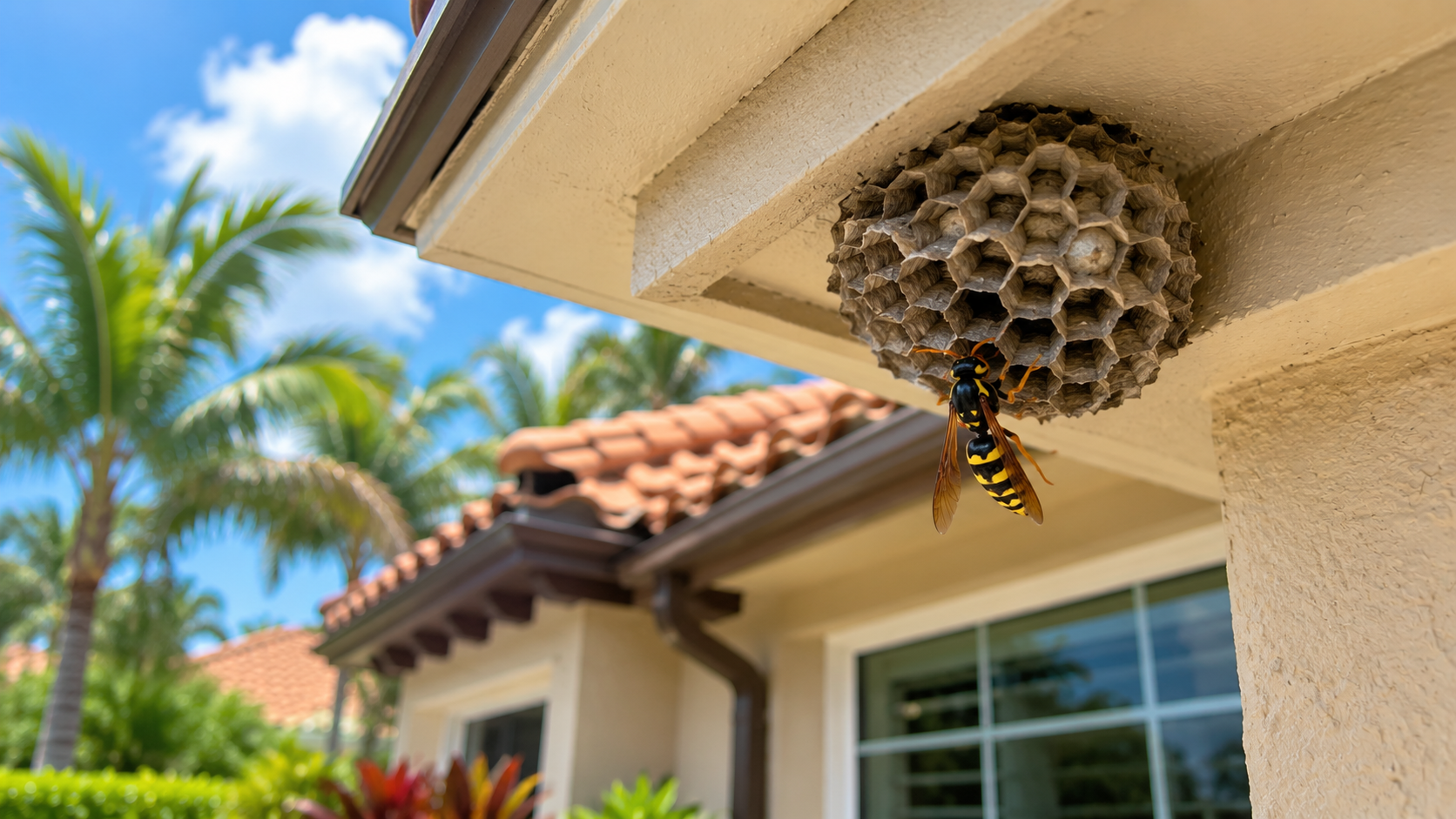
Have you noticed more wasps flying around your porch, patio, roofline, or garage as the weather heats up? Summer is the busiest time of year for wasp activity in South Florida, and it's often when homeowners first discover nests attached to eaves, fences, sheds, mailboxes, and other protected areas around their property.
As temperatures rise and food becomes more abundant, wasp colonies rapidly expand. Worker wasps spend the summer searching for insects, sugary foods, water, and safe places to build and protect their nests. Because many residential properties provide everything wasps need to survive, homes often become ideal nesting locations during the warmer months.
Understanding why wasps choose certain areas around your home can help you identify nesting activity early, reduce conditions that attract wasps, and better protect your family from painful stings. Whether you've noticed increased wasp activity around your backyard or recently found a nest under your roofline, knowing why they're there is the first step toward preventing larger infestations.
Why Do Wasps Build Nests Around Homes During Summer?
Summer provides nearly everything wasps need to survive and expand their colonies. Warmer temperatures, longer days, abundant food sources, and ideal nesting locations allow wasp populations to grow rapidly throughout South Florida. While you may only notice a few wasps early in the season, those individuals are often workers from a colony that continues growing throughout the summer.
South Florida's subtropical climate allows wasps to remain active for much of the year, but summer is when nest construction and colony growth reach their peak. As colonies become larger, worker wasps spend more time searching for insects, water, and sugary foods, making their presence around homes much more noticeable.
Why Summer Is Peak Wasp Season
- Warm Temperatures Speed Up Colony Growth
Higher temperatures allow wasp colonies to grow more quickly by accelerating larval development and increasing the number of worker wasps available to gather food and expand the nest. - Food Is More Abundant
Summer brings an increase in insects, nectar-producing flowers, ripe fruit, outdoor dining, and sugary beverages. These readily available food sources help support growing wasp colonies and encourage workers to forage around residential properties. - Homes Offer Protected Nesting Sites
Roof overhangs, soffits, eaves, garages, sheds, fences, mailboxes, utility boxes, and covered patios provide excellent protection from rain, wind, and predators. These sheltered areas are some of the most common places where homeowners discover wasp nests. - Water Is Readily Available
Bird baths, swimming pools, irrigation systems, air conditioning condensate, pet water bowls, and outdoor faucets provide reliable water sources that help wasps survive during South Florida's hottest months. - Colonies Continue Growing Throughout Summer
Unlike early spring when colonies are just beginning, summer nests may contain dozens—or even hundreds—of worker wasps. As the colony expands, homeowners often notice significantly more wasps flying around their property each day.
Understanding why wasps become more active during the summer helps explain why nests often seem to appear so quickly. In reality, colonies develop gradually over several weeks, and many homeowners don't notice them until worker activity increases around the property.
For a broader look at how seasonal weather influences pest activity, read our guide on What Time Of Year Are Pests Worst In South Florida?
Where Do Wasps Commonly Build Nests Around Homes?
Wasps look for locations that provide protection from the weather while allowing easy access to food and water. Many of the most common nesting sites are found on the exterior of residential homes where the nest remains sheltered from rain, direct sunlight, and predators. Because these locations are often above eye level or tucked into corners, nests can go unnoticed until wasp activity increases.
Regularly inspecting these areas during the spring and summer can help homeowners detect new nests before colonies become larger and more defensive. The earlier a nest is discovered, the easier it is to determine the safest course of action.
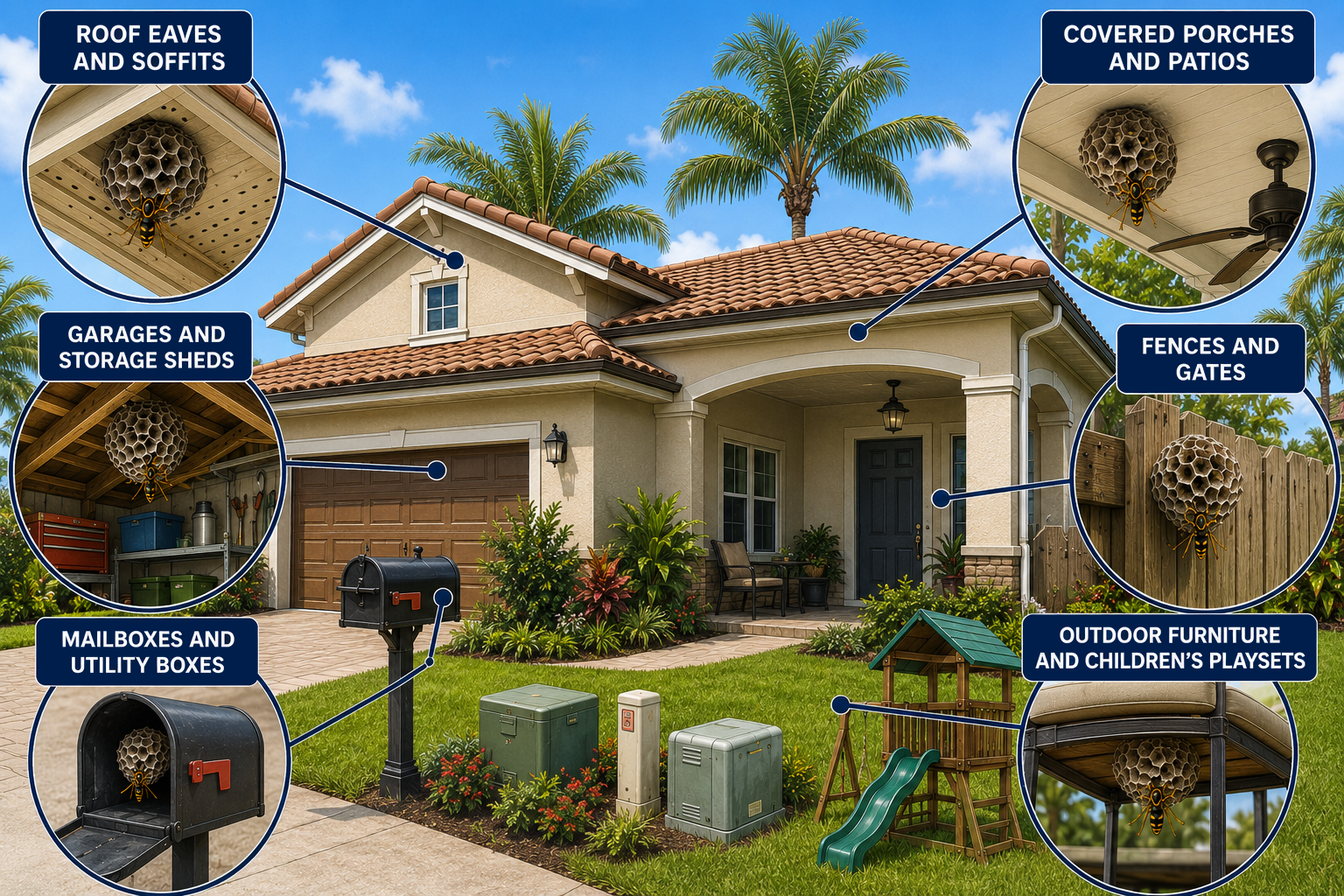
Common Wasp Nesting Locations
- Roof Eaves And Soffits
Roof overhangs and soffits are among the most common places for wasps to build nests. These sheltered areas protect developing colonies from rain while allowing workers to easily fly in and out throughout the day. - Covered Porches And Patios
Porch ceilings, covered lanais, pergolas, and patio overhangs provide ideal nesting locations because they're protected from the elements and often experience minimal disturbance. - Garages And Storage Sheds
Open garages, sheds, and workshops frequently become nesting sites when doors are left open or structures have quiet corners with limited activity. Wasps may attach nests to rafters, shelving, or ceiling joists. - Fences And Gates
Fence posts, privacy fences, and wooden gates can provide protected spaces where smaller paper wasp nests begin developing. Homeowners may accidentally disturb these nests while performing routine yard work. - Mailboxes And Utility Boxes
Decorative mailboxes, electrical boxes, irrigation control boxes, and other outdoor enclosures offer enclosed, sheltered spaces that are attractive to nesting wasps. It's always a good idea to inspect these areas before opening them during the summer months. - Outdoor Furniture And Children's Playsets
Patio furniture, umbrellas, grills, swing sets, and playhouses that remain unused for extended periods may become attractive nesting locations. Before using outdoor equipment after several weeks, it's worth checking underneath seats, tables, and overhead structures for signs of wasp activity.
Not every wasp flying around your home indicates there's a nest on your property. However, if you consistently notice wasps entering and exiting the same location or repeatedly circling a specific area, there may be an active nest nearby. Identifying nests early helps reduce the likelihood of unexpected encounters and can make professional wasp nest removal safer if treatment becomes necessary.
Are Wasps Dangerous Around Your Home?
Finding a single wasp flying through your yard isn't usually a cause for concern. However, an active wasp nest attached to your home can present a greater risk, especially as the colony grows throughout the summer. The more worker wasps a nest contains, the more protective they become when they perceive a threat near their colony.
While most wasps aren't naturally aggressive, they will defend their nest if it's disturbed. Homeowners are often stung accidentally while mowing the lawn, trimming shrubs, cleaning gutters, painting, or simply walking too close to a hidden nest. Understanding when wasps become defensive can help reduce the risk of painful and potentially dangerous encounters.
Why Active Wasp Nests Can Be A Concern
- Wasps Can Sting Multiple Times
Unlike honey bees, many wasp species can sting repeatedly because they do not lose their stinger after an attack. Multiple stings can be painful and may occur if several wasps defend the nest at the same time. - Colonies Become More Defensive As They Grow
Early in the season, a nest may contain only a few wasps. By mid-to-late summer, colonies can expand significantly, increasing the number of workers protecting the nest and making accidental encounters more hazardous. - Hidden Nests Increase The Risk Of Surprise Encounters
Nests tucked beneath roof eaves, inside shrubs, behind shutters, under patio furniture, or inside utility boxes may go unnoticed until someone unknowingly gets too close. This is one of the most common reasons homeowners are stung. - Children And Pets Are More Vulnerable
Curious children and pets may accidentally disturb a nest while playing outdoors. Because they may not recognize the warning signs of wasp activity, they're more likely to approach areas where nests are hidden. - Stings Can Trigger Allergic Reactions
For most people, a wasp sting causes temporary pain, redness, and swelling. However, individuals with a wasp venom allergy can experience a serious allergic reaction that requires immediate medical attention. If someone develops difficulty breathing, swelling of the face or throat, dizziness, or other signs of an allergic reaction after being stung, seek emergency medical care immediately.
Although not every wasp sighting requires professional attention, an active nest attached to your home should never be ignored. If you're noticing frequent wasp activity around entryways, patios, garages, or other outdoor living areas, it's important to avoid disturbing the nest yourself. Professional Residential Pest Control can help evaluate the situation, identify the conditions attracting wasps, and recommend the safest course of action.
How To Help Prevent Wasps From Nesting Around Your Home
While it's impossible to eliminate every wasp from your property, homeowners can take several proactive steps to make their home less attractive for nesting. Wasps look for safe, sheltered locations that provide easy access to food and water, so reducing these conditions can help discourage new colonies from becoming established.
Routine exterior maintenance is one of the most effective ways to reduce wasp activity during the summer months. By regularly inspecting your home and addressing potential nesting sites early, you can help minimize the likelihood of discovering a fully established nest later in the season.
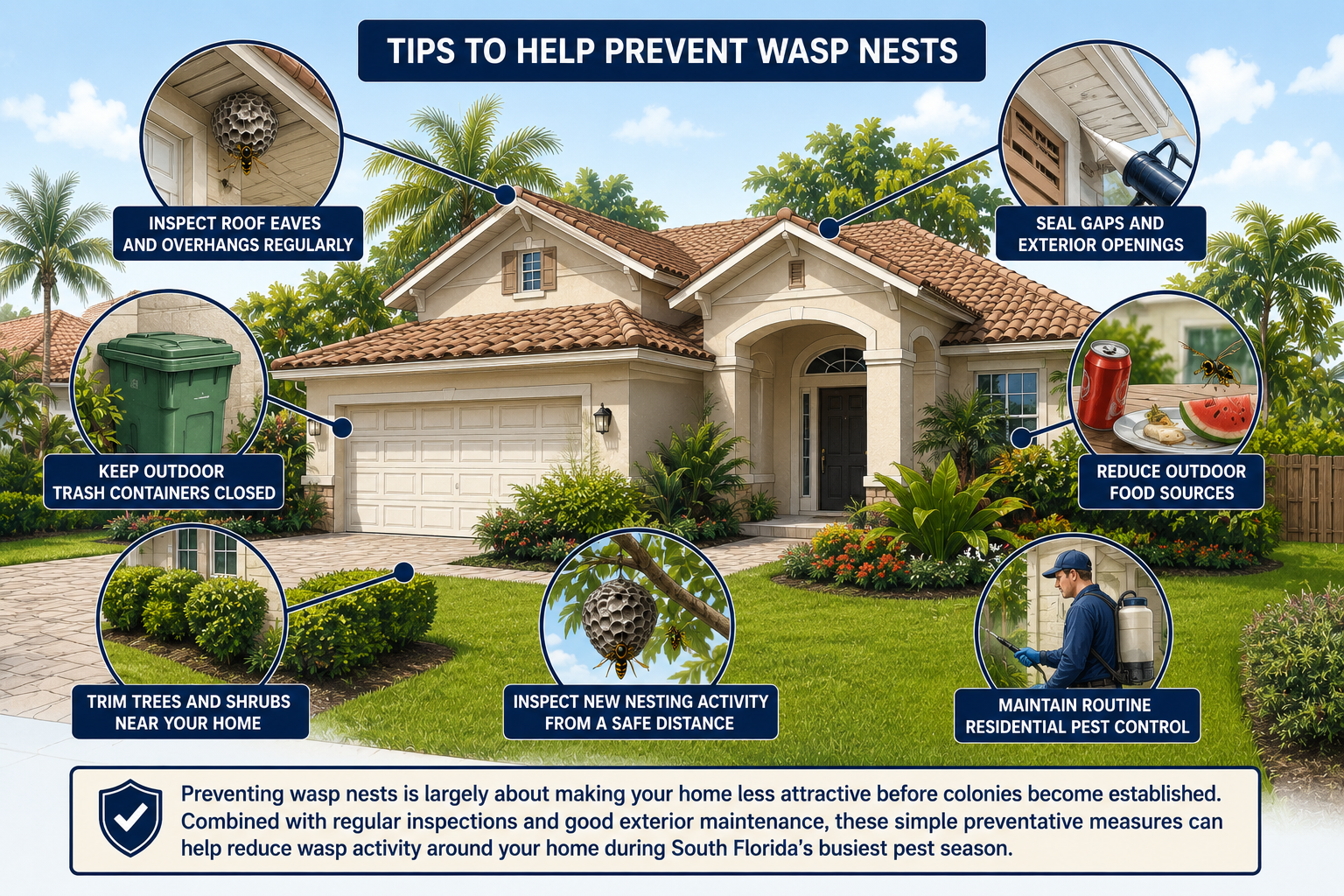
Tips To Help Prevent Wasp Nests
- Inspect Roof Eaves And Overhangs Regularly
Check roof eaves, soffits, porch ceilings, pergolas, and other protected areas every few weeks during spring and summer. Discovering a small nest early is much easier than dealing with a large, established colony later in the season. - Seal Gaps And Exterior Openings
Repair damaged soffits, loose siding, vents, and other exterior openings that may provide sheltered areas for nesting. Keeping your home's exterior in good condition helps reduce potential nesting opportunities. - Keep Outdoor Trash Containers Closed
Garbage bins containing food scraps, sugary beverages, and other organic waste can attract foraging wasps. Always keep trash can lids tightly closed and clean up spills that may attract insects. - Reduce Outdoor Food Sources
Fallen fruit, pet food, sugary drinks, and outdoor dining areas can all attract wasps searching for food. Cleaning outdoor eating areas promptly and removing fallen fruit from the yard can help make your property less appealing. - Trim Trees And Shrubs Near Your Home
Overgrown landscaping creates sheltered areas where wasps may begin building nests. Keeping vegetation trimmed away from the home also makes it easier to spot new nesting activity during routine inspections. - Inspect New Nesting Activity From A Safe Distance
If you discover an active nest, avoid disturbing it. Even relatively small colonies can become defensive if they perceive a threat. - Maintain Routine Residential Pest Control
While no pest control service can guarantee that wasps will never visit your property, routine Residential Pest Control helps identify conducive conditions around the home and supports a comprehensive approach to managing common household pests throughout the year.
Preventing wasp nests is largely about making your home less attractive before colonies become established. Combined with regular inspections and good exterior maintenance, these simple preventative measures can help reduce wasp activity around your home during South Florida's busiest pest season.
Frequently Asked Questions About Wasps In South Florida
Wasps are a common sight around South Florida homes during the warmer months, especially as colonies grow throughout the summer. Below are answers to some of the most frequently asked questions homeowners have about wasps, nesting activity, and protecting their property.
Why are wasps more active during the summer?
Summer provides ideal conditions for wasps to build nests and expand their colonies. Warm temperatures, abundant food sources, and longer daylight hours allow worker wasps to forage more frequently, making them much more noticeable around homes.
Where do wasps usually build their nests?
Wasps commonly build nests beneath roof eaves, soffits, porch ceilings, patios, garages, sheds, fences, mailboxes, utility boxes, and other protected outdoor structures. They prefer locations that offer shelter from rain, direct sunlight, and predators.
Do wasps return to the same nest every year?
Most paper wasps and many other common wasp species do not reuse old nests from previous years. Instead, queens typically build a new nest each spring. However, if favorable nesting conditions remain, new nests may be built in the same general area year after year.
Are all wasps aggressive?
No. Wasps generally focus on gathering food and caring for their colony. They usually become defensive only when they believe their nest is being threatened or disturbed.
Can wasps sting more than once?
Yes. Unlike honey bees, wasps can sting multiple times because they do not lose their stinger. This is one reason it's important to avoid disturbing an active nest.
Should I remove a wasp nest myself?
Attempting to remove an active wasp nest can be dangerous, particularly if the colony has grown large or the nest is located in a difficult-to-reach area. Disturbing a nest may cause multiple wasps to defend it at the same time. If you discover an active nest, it's safest to avoid the area and seek professional guidance.
What attracts wasps to my home?
Wasps are attracted to properties that provide sheltered nesting locations, insects to hunt, flowering plants, water sources, and food such as sugary drinks, fallen fruit, pet food, or uncovered trash containers.
When should I contact a pest control professional?
If you're consistently seeing wasps around your home, discover an active nest near entryways or outdoor living areas, or are concerned about the safety of your family or pets, professional Residential Pest Control can help evaluate the situation and recommend the most appropriate solution.
Are wasps beneficial?
Yes. Wasps help control many insect populations by feeding on caterpillars, flies, and other pests. They also contribute to pollination. However, nests located on or around homes can create safety concerns and should be monitored carefully.
Do wasps remain active year-round in South Florida?
South Florida's warm climate allows wasps to remain active for much of the year, but nesting activity and colony growth are typically at their highest during the spring and summer months.
Wasp Control In Weston And South Florida
Seeing a few wasps around your yard during the summer is normal, but discovering an active nest attached to your home is a situation that shouldn't be ignored. As colonies continue to grow throughout the season, wasps become more protective of their nests, increasing the likelihood of accidental encounters around entryways, patios, garages, and other outdoor living spaces. Identifying nesting activity early and taking preventative steps can help reduce future problems and keep your property safer for your family and pets.
At Professional Pestguard, we proudly provide Residential Pest Control services for homeowners throughout Weston, Davie, Pembroke Pines, Plantation, Cooper City, Sunrise, Miramar, Southwest Ranches, and surrounding South Florida communities. While no property can be completely free of occasional wasp activity, our experienced team can help identify conducive conditions around your home and recommend practical solutions to support long-term pest prevention.
If you're searching for dependable wasp control in Weston, Florida or trusted wasp control throughout South Florida, Professional Pestguard is here to help. Contact us today to request a free estimate online and learn how our residential pest control services can help protect your home year-round.
About Professional Pestguard
Professional Pestguard provides professional pest control in Weston, FL and nearby communities including Davie, Sunrise, Pembroke Pines, and Plantation. With over 40 years of experience, our licensed technicians protect homes and businesses across Broward County and Miami-Dade County from ants, cockroaches, rodents, spiders, and other common South Florida pests using safe and effective treatments.