Why Ant Colonies Keep Returning After Do-It-Yourself Treatments
Many South Florida homeowners become frustrated when ants seem to disappear for a few days after treatment, only to suddenly return again. What starts as a small trail near the kitchen sink or bathroom often turns into a recurring problem that never fully goes away.
In Weston and throughout Broward County, ant activity stays active year-round due to the region’s warm temperatures, humidity, tropical landscaping, and frequent rainstorms. While store-bought sprays and DIY ant traps may temporarily reduce visible activity, they often fail to eliminate the actual colony hidden behind walls, under flooring, outdoors, or beneath the home’s foundation.
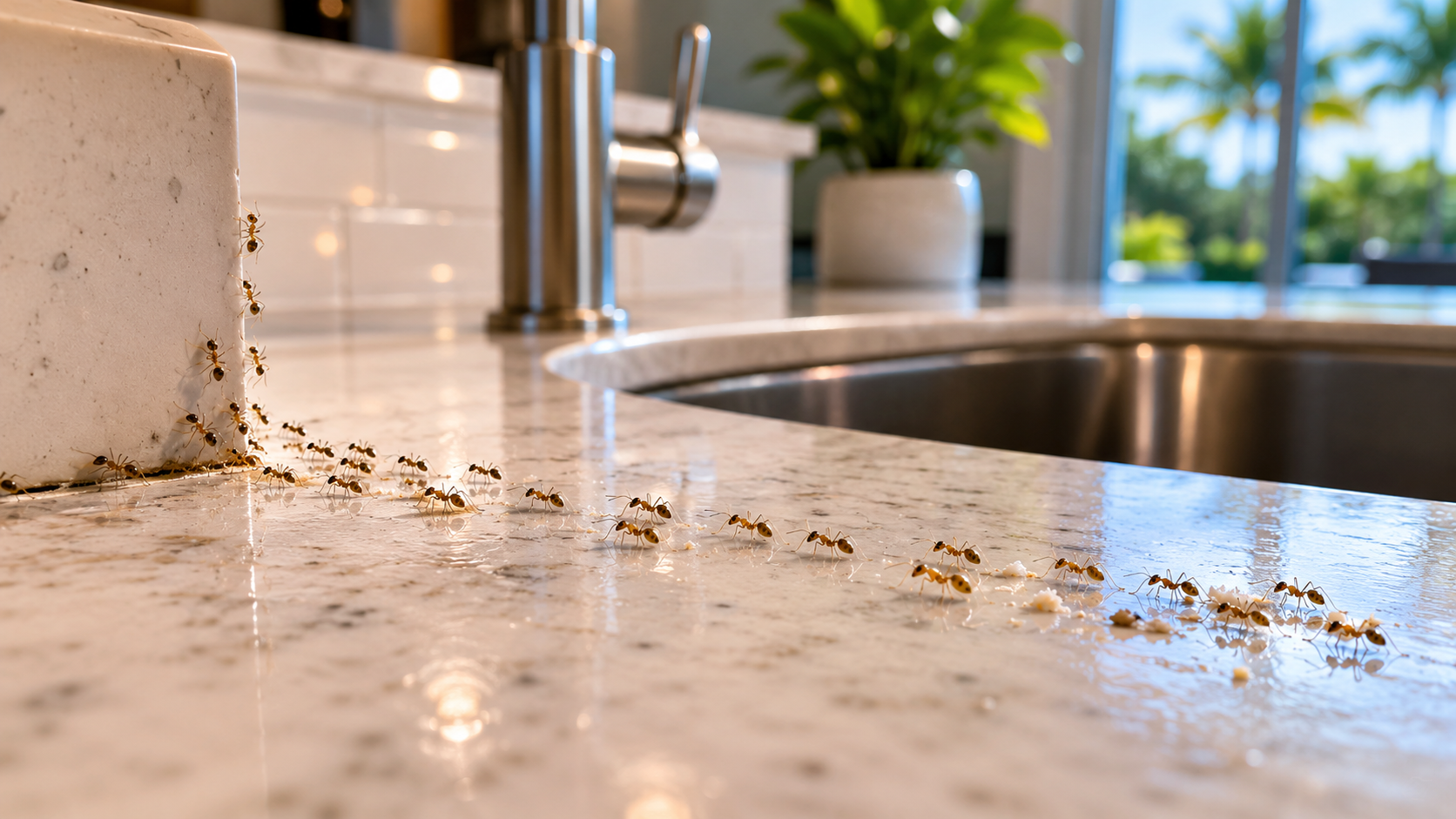
Understanding why ants keep coming back is one of the most important steps toward solving the problem permanently. In many cases, recurring infestations are a sign that the colony itself was never fully treated.
For homeowners searching for professional ant exterminator Weston services or long-term ant colony treatment Florida solutions, knowing how ants operate can help explain why DIY treatments often lead to temporary results instead of complete elimination.
Why DIY Ant Treatments Usually Only Eliminate Visible Ants
Most over-the-counter ant sprays are designed to kill ants on contact. While this may seem effective initially, the ants that homeowners see trailing across countertops or floors are usually only a small portion of the colony.
The majority of the infestation often remains hidden deep inside wall voids, mulch beds, attic spaces, behind cabinets, under pavers, or underground outdoors.
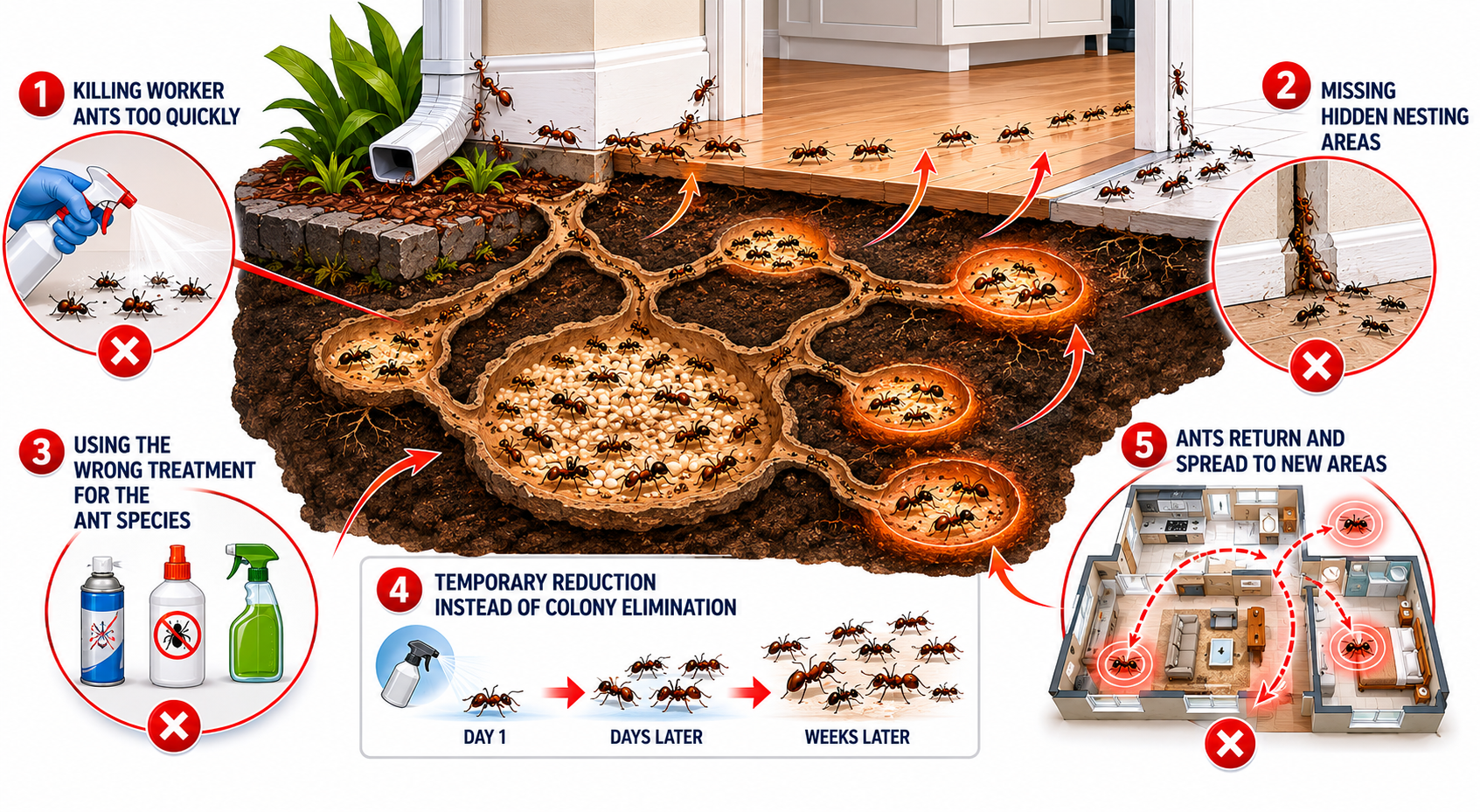
Common reasons DIY ant products fail include:
- Killing Worker Ants Too Quickly
Many spray products immediately kill foraging ants before they can carry treatment material back to the colony. This prevents the queen and remaining ants from being affected. - Missing Hidden Nesting Areas
Ant colonies in South Florida frequently nest behind walls, beneath landscaping stones, under driveways, and inside moisture-prone areas around the home. Surface sprays rarely reach these locations. - Using the Wrong Treatment for the Ant Species
Different ant species behave differently. Ghost ants, big-headed ants, carpenter ants, and fire ants all require different treatment methods. A product that works for one species may fail entirely against another. - Temporary Reduction Instead of Colony Elimination
DIY products often create the illusion that the infestation is gone because activity slows temporarily. In reality, the colony simply redirects activity elsewhere before returning days or weeks later.
Many homeowners dealing with recurring infestations eventually discover that repeated DIY treatments become expensive, time-consuming, and frustrating without solving the underlying issue.
This is especially common with ghost ant infestations, where tiny colonies split and relocate easily when disturbed improperly.
The Ant Colony Usually Survives the Treatment
One of the biggest misconceptions homeowners have is assuming that killing visible ants means the infestation is gone. In reality, the colony itself often remains fully active.
Most ant colonies are built around a queen whose job is to continuously reproduce worker ants. As long as the queen survives, the colony can continue rebuilding activity inside and around the home.
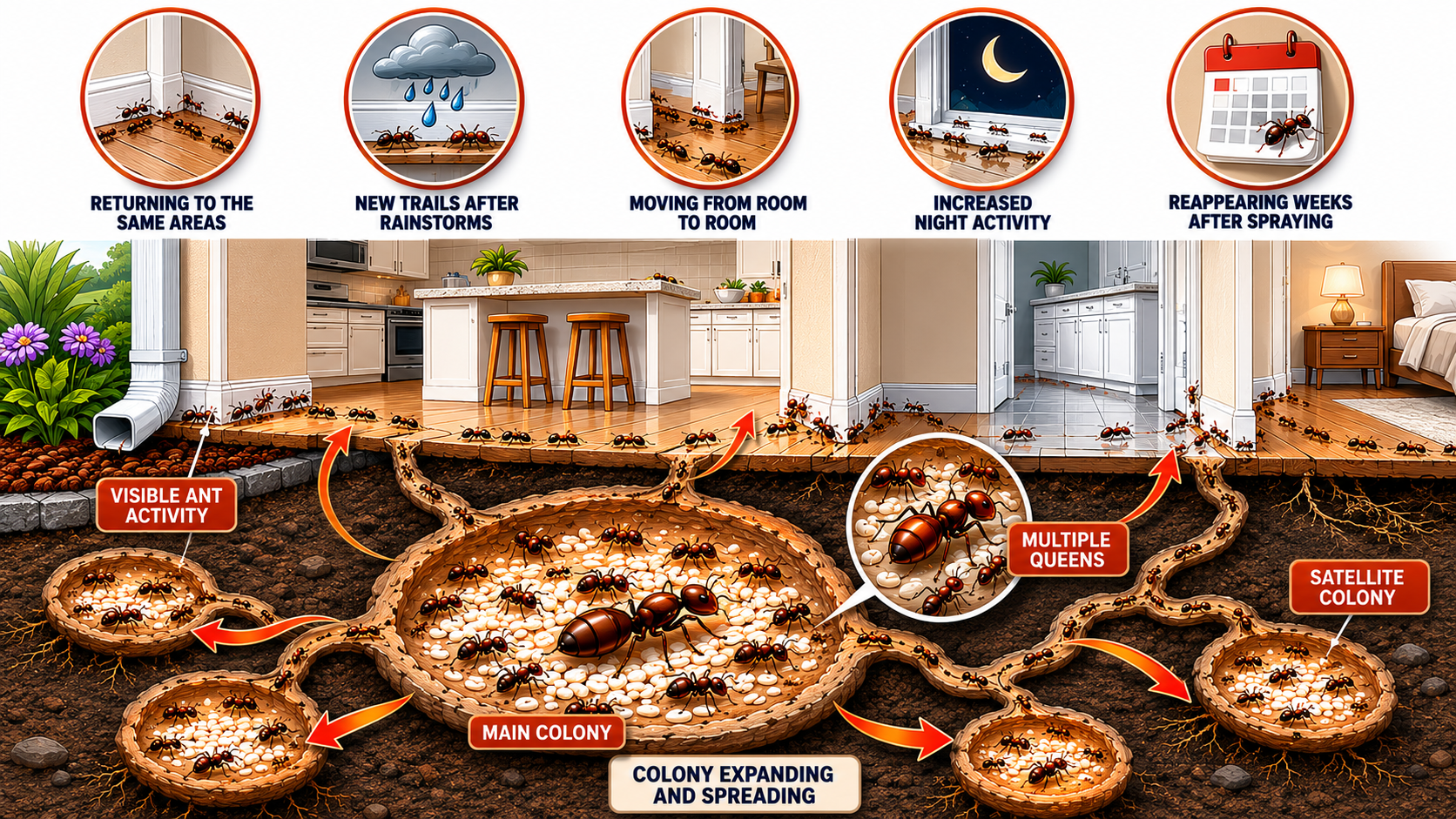
Signs the colony likely survived include:
- Ants returning to the exact same areas repeatedly
- New trails forming after rainstorms
- Activity moving from one room to another
- Increased sightings at night
- Ants reappearing weeks after spraying
Certain species common in South Florida can even create multiple queens and satellite colonies. This means improper treatment can actually worsen the infestation by causing colonies to split apart and spread into additional areas of the property.
Professional ant infestation treatment focuses on targeting the entire colony rather than simply reducing visible ant activity temporarily.
This is one reason many homeowners searching for "how to get rid of ants permanently" eventually turn to professional treatment solutions after DIY methods stop working.
Why Ant Problems Are So Persistent in South Florida
South Florida’s environment creates nearly perfect conditions for ants to survive year-round. Unlike colder states where winter slows pest activity, ants remain active in Broward County during every season.
Moisture, heat, irrigation systems, dense landscaping, and frequent storms all contribute to increased ant pressure around homes.
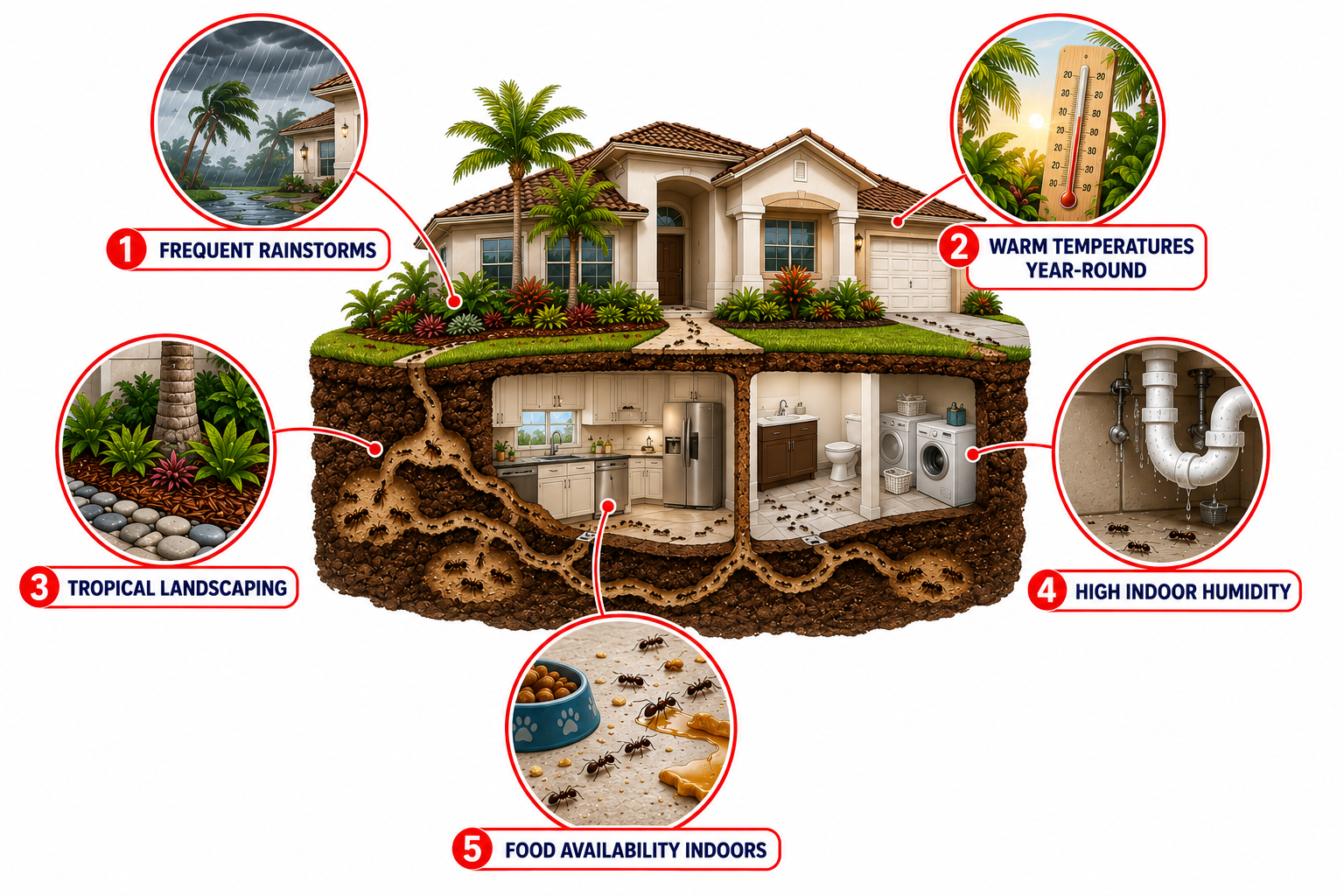
Several local conditions make ant infestations worse:
- Frequent Rainstorms
Heavy rain forces ant colonies out of saturated soil and into homes searching for dry shelter. - Warm Temperatures Year-Round
Ant colonies continue reproducing throughout the year instead of becoming dormant. - Tropical Landscaping
Mulch beds, palm trees, dense shrubs, and decorative stone areas create ideal nesting locations near structures. - High Indoor Humidity
Kitchens, bathrooms, laundry rooms, and plumbing voids attract moisture-seeking ants indoors. - Food Availability Indoors
Even tiny crumbs, pet food residue, sugary spills, and grease buildup can support recurring ant trails.
Many homeowners notice ant activity increases significantly during South Florida’s rainy season. This is especially common in Weston communities with lush landscaping and irrigation systems surrounding homes.
Because of this, long-term South Florida ant control often requires both indoor and outdoor treatment strategies working together.
Why Some Ant Colonies Keep Reappearing After Baits
Ant bait products can sometimes help reduce infestations, but they are not always effective when used incorrectly.
One common issue is homeowners mixing sprays and bait products together. Sprays may repel or kill ants before they consume enough bait to affect the colony.
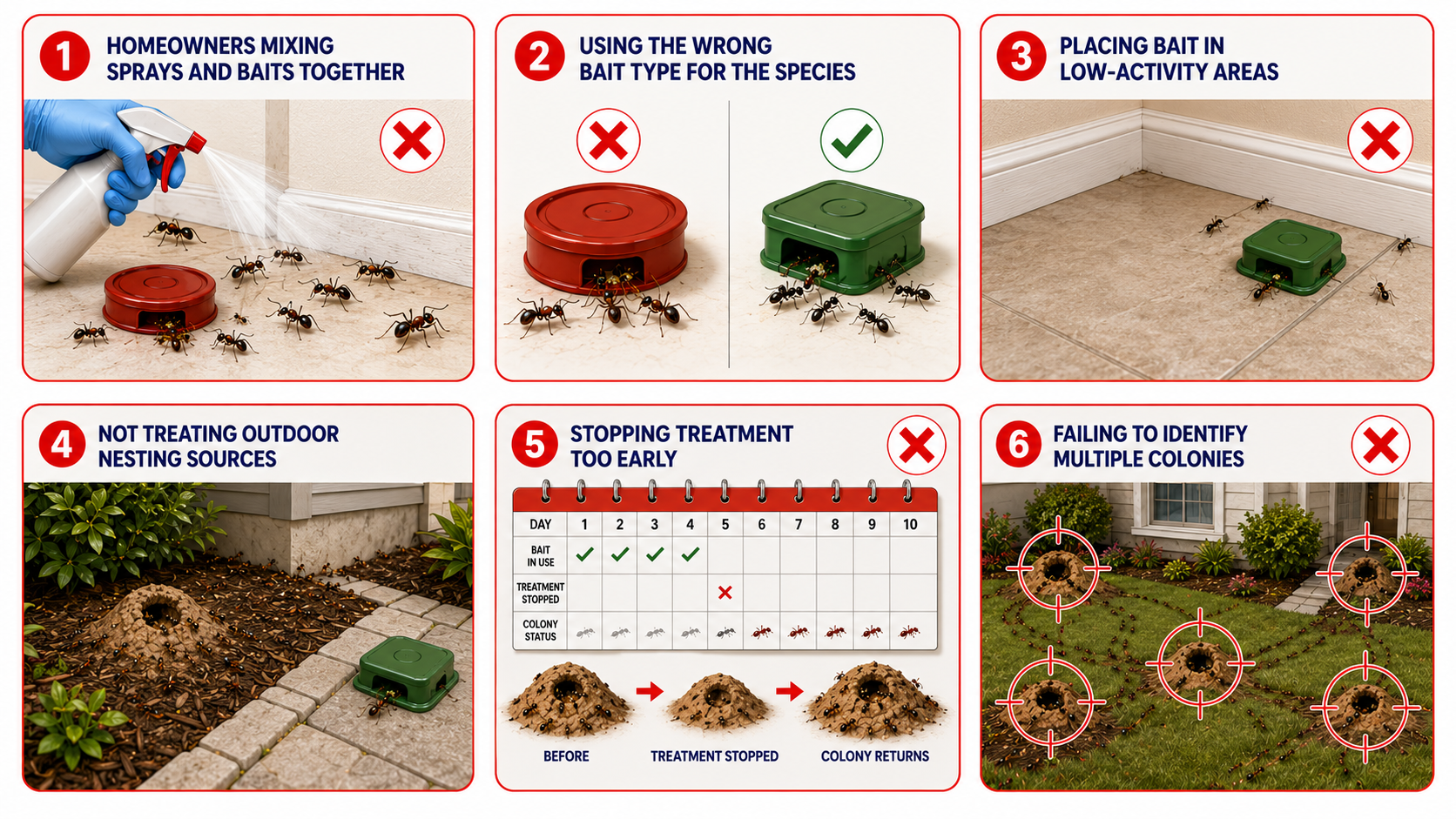
Other common bait problems include:
- Using the wrong bait type for the species
- Placing bait in low-activity areas
- Not treating outdoor nesting sources
- Stopping treatment too early
- Failing to identify multiple colonies
Some ant species also change food preferences depending on the season. At times they seek sugars, while other periods they prefer proteins or grease-based food sources. Without properly identifying the species and nesting behavior, DIY bait programs often become inconsistent.
This is particularly true for recurring ant colony treatment cases where multiple colonies may exist throughout the property. Proper identification plays a major role in successful treatment outcomes.
How Professional Ant Control Targets the Source of the Problem
Professional ant treatment focuses on identifying where the colony is nesting, how ants are entering the structure, and what environmental conditions are contributing to the infestation.
Rather than only treating visible trails, comprehensive ant control strategies often include both interior and exterior treatment zones.
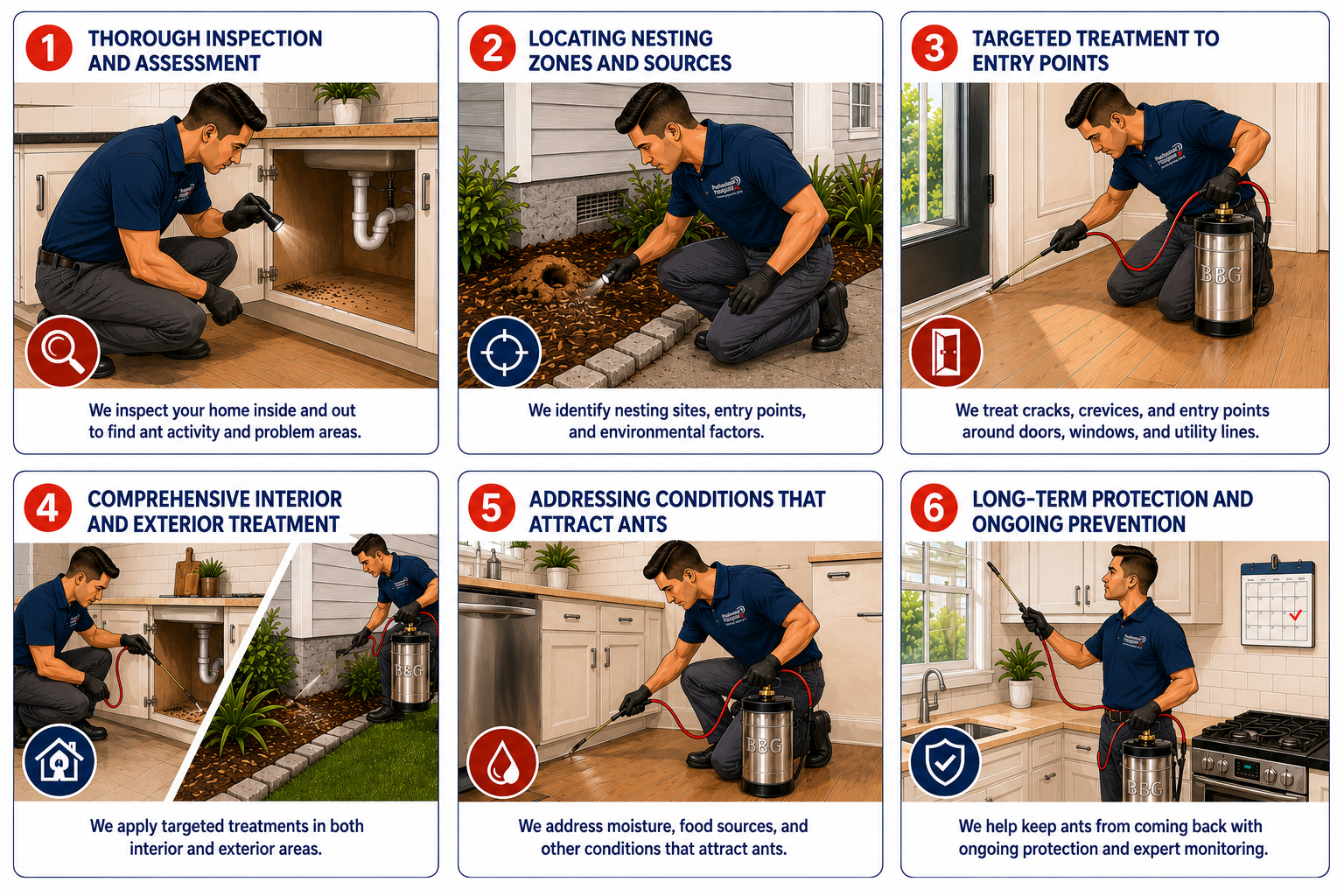
Professional treatment may involve:
- Identifying the exact ant species
- Locating nesting zones around the property
- Applying targeted products designed for colony elimination
- Treating entry points around doors, windows, and utility lines
- Addressing moisture and conducive conditions
- Creating long-term exterior protective barriers
For severe or recurring infestations, ongoing maintenance treatments may also help prevent reinfestation during peak ant seasons.
Many homeowners searching for ant control Weston FL services are often dealing with infestations that have already survived multiple DIY attempts.
By targeting the source rather than surface activity alone, professional treatment can provide more reliable long-term control.
Signs It May Be Time to Call a Professional Ant Exterminator
While occasional ants may not always indicate a major infestation, recurring activity usually suggests a larger hidden colony nearby.
Homeowners should consider professional inspection if they notice:
- Ants returning repeatedly after treatment
- Multiple trails throughout the home
- Activity inside bathrooms or kitchens
- Outdoor ant mounds near the structure
- Swarming ants indoors
- Ants appearing in electrical outlets or wall voids
- Increased activity after rainfall
The earlier the colony is identified and treated properly, the easier it typically is to prevent larger infestations from developing. For many South Florida homeowners, recurring ant activity becomes an ongoing cycle until the root colony is eliminated completely.
Frequently Asked Questions About Ant Control in South Florida
Ant infestations are one of the most common pest problems homeowners experience in Weston and throughout South Florida. Because ants stay active year-round in Florida’s warm climate, many homeowners have questions about why infestations keep returning, how professional treatment works, and what can be done to prevent colonies from coming back.
Below are some of the most commonly searched questions related to ant control, ant extermination, and recurring ant infestations in Broward County.
Why do ants keep coming back after treatment in Florida?
In many cases, ants return because the original colony was never fully eliminated. Most DIY sprays only kill visible worker ants while the queen and remaining colony stay hidden behind walls, underground, or outdoors near the home.
South Florida’s warm temperatures and humidity also allow ant colonies to remain active year-round, making reinfestation more common if the nesting source is not properly treated.
Professional ant colony treatment focuses on identifying and eliminating the source of the infestation instead of temporarily reducing visible activity.
What types of ants are most common in Weston and South Florida?
Several ant species are commonly found throughout Weston and Broward County homes, including:
- Ghost ants
- Big-headed ants
- Fire ants
- Carpenter ants
- Sugar ants
- White-footed ants
Each species behaves differently and may require a different treatment strategy. Some ants nest indoors, while others build large outdoor colonies that eventually spread inside structures.
Proper species identification is one of the most important parts of effective ant control.
How do professional ant exterminators treat ant infestations?
Professional ant exterminators typically inspect both the inside and outside of the property to locate nesting areas, entry points, moisture sources, and active trails.
Treatment may include:
- Exterior perimeter applications
- Colony-targeted baiting
- Crack and crevice treatments
- Nest elimination
- Entry point sealing recommendations
- Moisture reduction recommendations
The goal is to target the colony itself rather than simply killing visible ants.
Why are ants worse during rainy season in South Florida?
Heavy rain often floods underground nesting areas, forcing ants to relocate into homes searching for dry shelter and food sources.
Many homeowners notice sudden ant activity around kitchens, bathrooms, windows, and sliding glass doors after storms or periods of excessive humidity.
This is one reason ant infestations become especially common during South Florida’s rainy season.
Can ant infestations spread through walls?
Yes. Many ant species commonly nest inside wall voids, behind cabinets, beneath flooring, or around plumbing and electrical openings.
In some cases, homeowners may only see a small number of ants while a much larger colony remains hidden behind the scenes.
This is why recurring infestations often continue despite repeated DIY treatment attempts.
How long does professional ant treatment take to work?
Treatment results can vary depending on the species, colony size, and severity of the infestation.
Some ant activity may initially increase after treatment as colonies interact with bait products and treatment zones. In many cases, noticeable reduction begins within several days, while full colony elimination may take longer depending on the infestation.
Recurring infestations or multi-colony infestations may require ongoing monitoring and maintenance.
What attracts ants into homes in Weston?
Ants are usually attracted indoors by:
- Food crumbs
- Sugary spills
- Pet food
- Moisture
- Grease buildup
- Plumbing leaks
- Trash areas
- Easy access through cracks and gaps
South Florida homes with tropical landscaping, irrigation systems, and high humidity may also experience increased outdoor colony pressure near the structure.
Is professional ant control worth it compared to DIY treatments?
Many homeowners attempt DIY ant treatments first because store-bought products seem convenient. However, recurring infestations often continue because the colony itself survives.
Professional ant control is designed to identify the source of the infestation, select the correct treatment for the species involved, and provide longer-lasting control solutions.
For homeowners dealing with recurring infestations, professional treatment can often save time, frustration, and repeated spending on ineffective products.
How can I prevent ants from coming back after treatment?
Reducing future infestations often involves a combination of sanitation, moisture control, and ongoing pest prevention.
Helpful prevention steps include:
- Keeping counters clean
- Storing food in sealed containers
- Fixing plumbing leaks
- Reducing excess outdoor moisture
- Trimming vegetation away from the home
- Cleaning up pet food areas
- Sealing entry points around doors and windows
Routine pest control maintenance can also help reduce future colony activity around the property.
Who provides ant exterminator services in Weston and Broward County?
Professional Pestguard provides professional ant control and pest control services for homeowners throughout Weston and surrounding Broward County areas.
Our team helps identify recurring ant problems, locate hidden colony activity, and provide targeted treatment solutions designed for long-term control in South Florida homes.
Professional Ant Control in Weston & Broward County
Recurring ant infestations are extremely common throughout South Florida, especially when colonies survive incomplete DIY treatments.
At Professional Pestguard, we help homeowners identify the source of recurring ant problems and provide targeted treatment solutions designed for long-term control.
Whether you are dealing with ghost ants, fire ants, sugar ants, or persistent indoor trails, professional treatment can help address the infestation at its source instead of temporarily masking the problem.
If you are searching for an experienced ant exterminator Weston homeowners trust, our team proudly serves Weston and surrounding Broward County communities.
About Professional Pestguard
Professional Pestguard provides professional pest control in Weston, FL and nearby communities including Davie, Sunrise, Pembroke Pines, and Plantation. With over 40 years of experience, our licensed technicians protect homes and businesses across Broward County and Miami-Dade County from ants, cockroaches, rodents, spiders, and other common South Florida pests using safe and effective treatments.