Commercial Pest Control in Broward County: What Should a Property Management Program Include?
What Should a Commercial Pest Control Program Include?
A commercial pest control program should include property inspections, pest identification, targeted treatment, routine monitoring, prevention recommendations, and clear communication with management. It should define which pests and areas are covered, how often service occurs, and what follow-up is available when activity continues between scheduled visits.
For property managers seeking commercial pest control in Broward County, the program should reflect the building’s use, layout, occupancy, and pest history. Office buildings, retail centers, warehouses, medical offices, and managed communities have different needs. Shared break rooms, storage spaces, restrooms, waste areas, landscaping, and entrances should receive attention based on the conditions found during inspection.
Property managers should monitor for ants, cockroaches, spiders, pantry pests, fleas, ticks, wasps, hornets, and occasional invaders such as silverfish, earwigs, centipedes, and millipedes. Confirm which of these pests are included in the proposed service and whether particular infestations require separate treatment.
Commercial properties should receive service on a schedule based on pest activity, property conditions, and inspection findings. Monthly or every-other-month visits may be appropriate for some properties, while active infestations may require closer follow-up. The provider should explain the recommended frequency and reassess it when conditions change.
Professional Pestguard’s commercial pest control services in Broward County help property managers address current pest concerns and plan ongoing prevention. This guide explains what to include in a property management pest control program, which questions to ask, and how to coordinate service across your property.
What Should a Commercial Property Pest Inspection Cover?
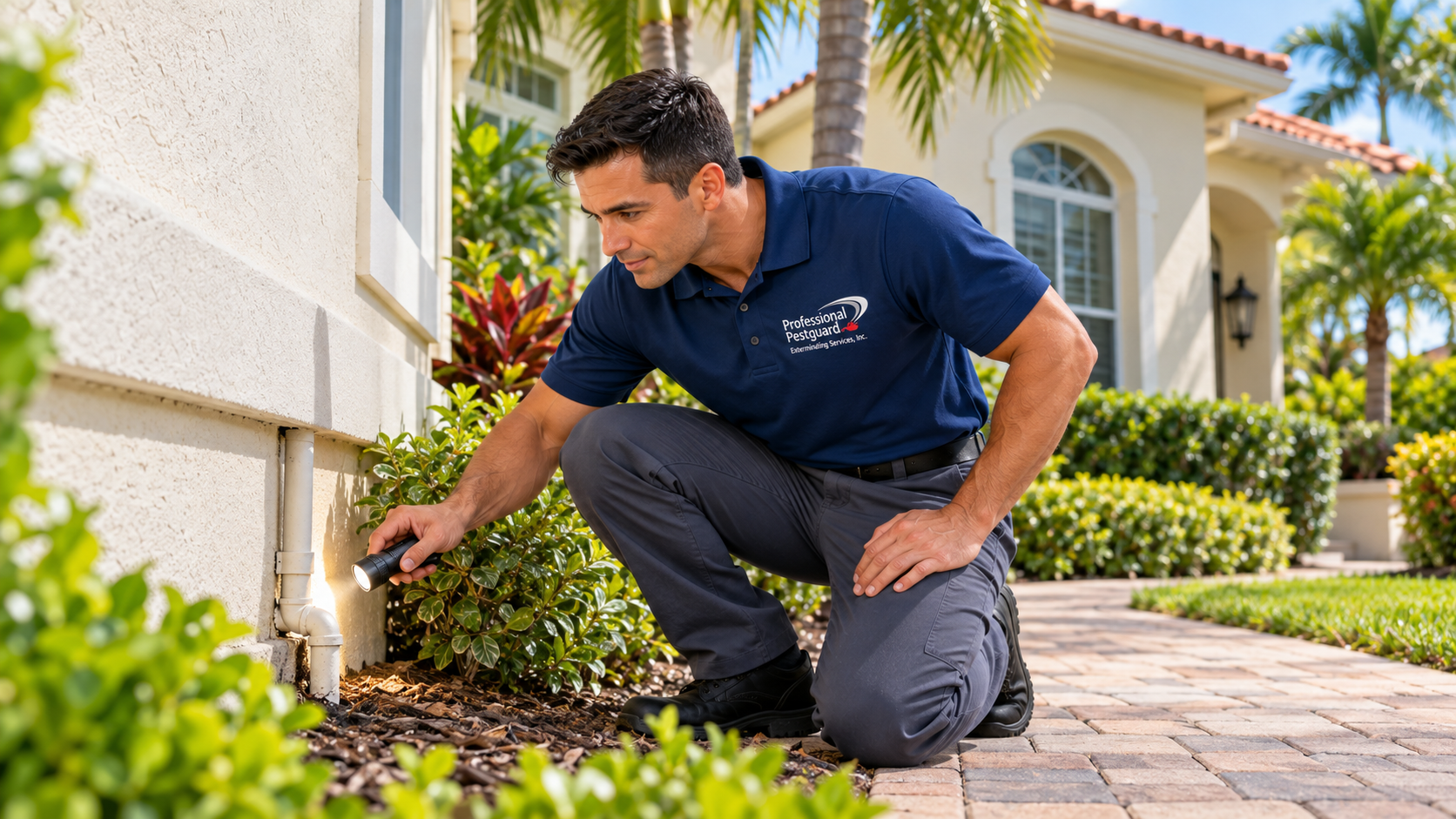
A commercial property pest inspection should evaluate reported activity, accessible interior and exterior areas, and conditions that provide pests with food, water, shelter, or access. The findings should guide which areas receive treatment, which pests require attention, and what maintenance changes could help reduce recurring problems.
For property management pest control, the inspection should consider how tenants and employees use the building. Shared spaces, deliveries, stored supplies, and waste collection can create different concerns across the same property. Managers should identify known problem areas and arrange access to the spaces included in the service.
Areas That Deserve Attention During an Inspection
- Entrances and delivery areas: Check door gaps, damaged weather stripping, and areas where incoming packages are stored.
- Break rooms and kitchenettes: Look for pest activity around food storage, cabinets, appliances, and waste containers.
- Restrooms and janitorial spaces: Evaluate leaks, damp areas, plumbing openings, and stored cleaning materials.
- Storage and supply rooms: Inspect accessible shelving, cardboard accumulation, stored food products, and undisturbed corners.
- Common areas and tenant spaces: Review reported sightings and clarify which suites or shared areas are covered.
- Exterior walls and landscaping: Look for ant activity, spider webs, moisture accumulation, and vegetation touching the building.
- Waste collection areas: Check for spilled materials, overflowing containers, and sanitation concerns.
- Covered outdoor spaces: Look for wasp or hornet nesting activity around eaves, overhangs, and other sheltered locations.
What Should Property Managers Ask Before the Inspection?
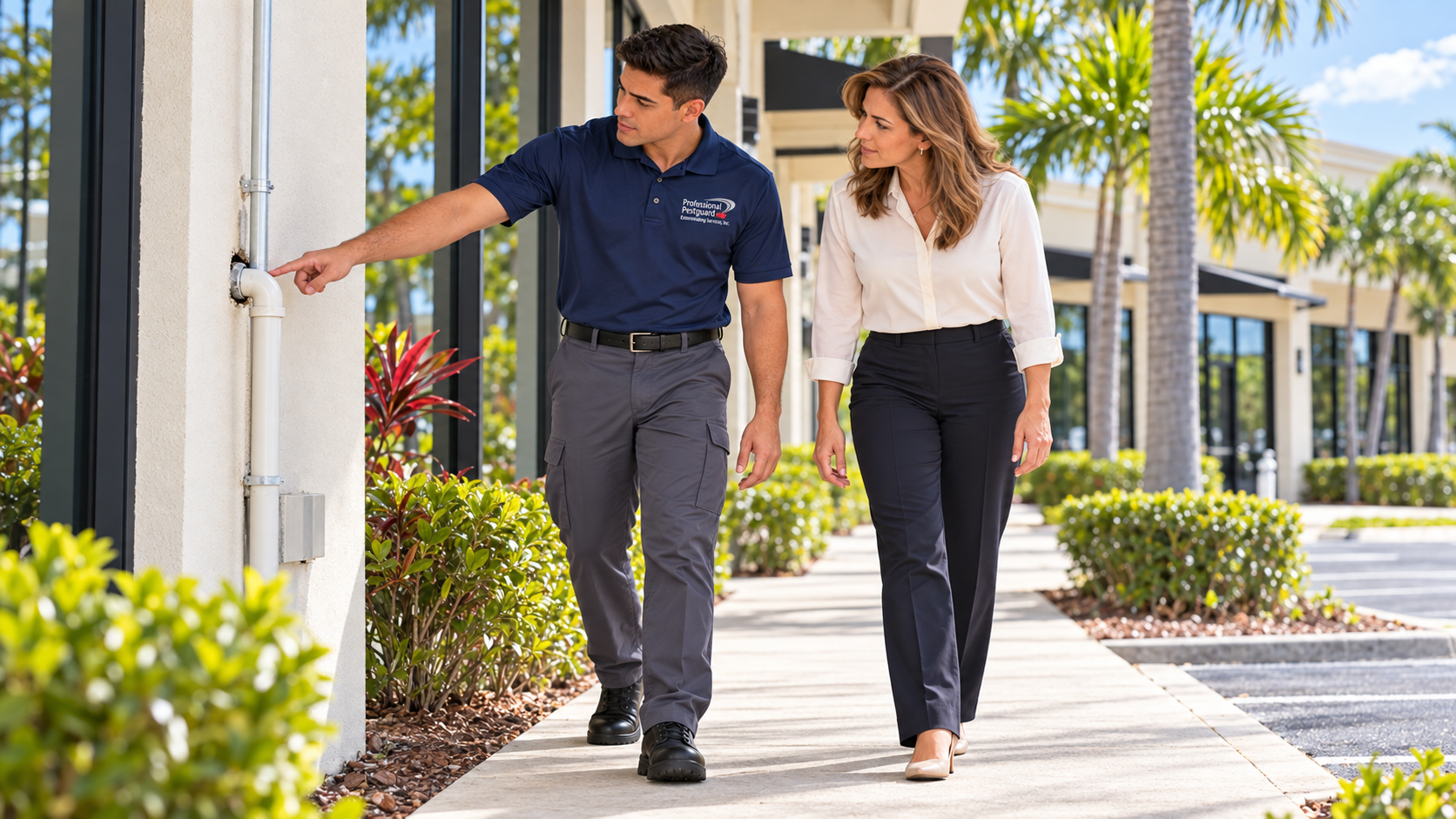
Ask which areas the technician will inspect, whether tenant access is needed, and how findings will be explained. Share recurring complaints, recent leaks, construction work, or changes in waste collection that may help the technician understand the property’s conditions.
A useful inspection gives management clear priorities for treatment and maintenance. It also helps establish a commercial pest control program that fits the property’s actual needs.
What Pests Should Property Managers Monitor in Broward County?
Property managers should monitor for ants, cockroaches, spiders, pantry pests, fleas, ticks, wasps, hornets, and occasional invaders such as silverfish, earwigs, centipedes, and millipedes. The pests that require the most attention depend on the property’s use, storage practices, moisture conditions, landscaping, and history of activity.
A property management pest control program should identify which pests are covered and when a specific infestation requires additional treatment. Encourage tenants and maintenance staff to report where they notice activity, how frequently it occurs, and whether it appears in multiple areas.
Ants
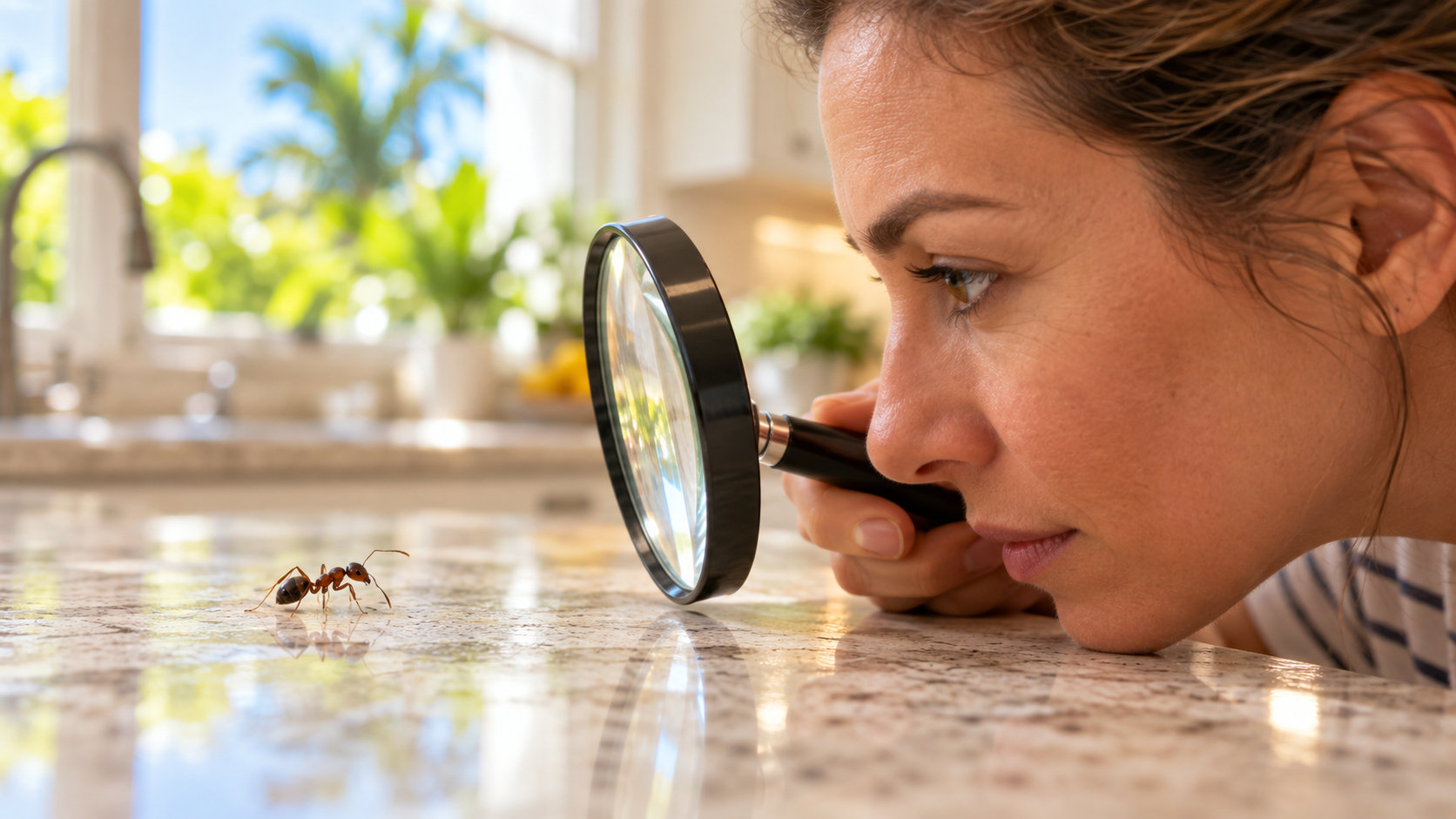
Watch for recurring ant trails around break rooms, restrooms, windows, entrances, and landscaped areas. Identifying the ant species helps determine the appropriate treatment. Professional Pestguard’s commercial ant control services address active infestations and help reduce recurring activity around commercial properties.
Cockroaches
Monitor cabinets, appliances, plumbing areas, storage rooms, and shared waste spaces for cockroach sightings or other evidence of activity. Repeated sightings should prompt an inspection to determine the species and affected areas. Our commercial cockroach control services provide targeted treatment for these concerns.
Spiders
Look for webs and recurring spider activity around entrances, exterior lighting, storage areas, and undisturbed corners. Nearby insect activity and sheltered conditions may contribute to the problem. Our commercial spider control services address spider activity in and around commercial buildings.
Pantry Pests
Check stored snacks, dry goods, pet food, and food-containing deliveries for small beetles, moths, webbing, or damaged packaging. Identifying affected products is an important part of addressing the source. Property managers can explore our commercial pantry pest control services when activity affects shared food storage or inventory.
Fleas and Ticks
Include pet-friendly common areas, landscaped spaces, and locations used by visiting animals in monitoring efforts. Report suspected activity so the technician can evaluate the affected areas. Our commercial flea and tick control services address these pest concerns in commercial and shared environments.
Wasps and Hornets
Watch for repeated flying activity or visible nests around eaves, overhangs, covered walkways, and outdoor equipment. Keep employees and tenants away from suspected nests and arrange a professional evaluation. Ask whether treatment for the location and activity found is included in your service plan.
Occasional Invaders
Silverfish, earwigs, centipedes, millipedes, and similar pests may appear in damp, sheltered spaces or near exterior doors. Recurring sightings warrant a closer look at moisture, clutter, and accessible openings.
For wasps, hornets, and occasional invaders, review our commercial pest control services and discuss the specific concern with our team. Confirming coverage helps ensure your program addresses the pests present at your property.
How Often Should Commercial Properties Receive Pest Control?
Commercial properties may need monthly or every-other-month pest control, depending on the building’s use, pest history, and conditions found during inspection. Active infestations may require additional visits between routine appointments. The service schedule should reflect the property’s needs and be adjusted when activity or conditions change.
For property managers in Broward County, choosing a schedule involves more than the size of the building. A quiet office with limited storage may have different needs from a busy multi-tenant property with frequent deliveries, shared break rooms, and multiple waste collection areas.
What Should Determine Your Service Schedule?
- Current pest activity: Recurring sightings or an active infestation may require closer follow-up.
- Property use and occupancy: Employee areas, tenant spaces, and shared facilities create different inspection and treatment needs.
- Deliveries and stored materials: Frequent shipments and extended storage can introduce pests or make activity harder to notice.
- Moisture and sanitation conditions: Leaks, food residue, and waste-management concerns may contribute to recurring problems.
- Exterior conditions: Landscaping, sheltered entryways, and nearby pest activity can influence the level of attention needed.
- Previous treatment results: Continued activity should prompt a review of the approach and visit frequency.
When Should Managers Request an Additional Visit?
Contact your provider when pests appear repeatedly, activity spreads to new areas, or a concern develops near occupied spaces. Report suspected wasp or hornet nests near entrances and walkways promptly so the company can assess the next steps.
Before accepting a commercial pest control plan, confirm the routine visit schedule, how to request service between appointments, and whether additional visits are included. Clear expectations help management respond to new concerns while maintaining consistent preventive care.
How Should Property Managers Coordinate Pest Control With Tenants and Maintenance Teams?
Property managers should designate a primary contact, establish a simple process for reporting pest sightings, and coordinate access before service visits. Tenants should know whom to notify, maintenance teams should understand which property conditions need attention, and the pest-control provider should receive updates about recurring activity.
In multi-tenant buildings, a concern reported in one suite may involve nearby shared spaces. Clear communication helps the technician evaluate the affected areas and allows management to coordinate treatment, cleaning, or maintenance without unnecessary delays.
Give Tenants a Simple Way to Report Pest Activity
Ask tenants to share the location, approximate time, and frequency of sightings. A photo can help when one can be taken safely, but tenants do not need to identify the pest themselves. Reports should go to the designated management contact so concerns reach the service provider consistently.
Arrange Access and Share Preparation Instructions
Before the appointment, confirm access to affected suites, storage rooms, utility areas, and other spaces included in the service. Share the provider’s preparation instructions with the appropriate occupants, including any requirements for securing food, moving belongings, or temporarily avoiding treated areas.
Assign Maintenance and Sanitation Tasks
Coordinate recommended corrections with the people responsible for them. Maintenance teams may need to address leaks or damaged door sweeps, while cleaning crews may need to focus on food residue, waste containers, or neglected spaces beneath appliances. Landscaping and waste providers may also need to address exterior conditions.
Keep Communication Open After Service
Ask the technician what management should expect after treatment and which signs warrant another call. Encourage tenants to report continued or new activity, and let the provider know when recommended maintenance has been completed.
Coordinated property management pest control helps each party understand its responsibilities and supports consistent follow-up across the building.
What Should Property Managers Confirm Before Approving a Commercial Pest Control Program?
Before approving a commercial pest control program, confirm the pests covered, treatment areas, service frequency, follow-up terms, and total cost. The proposal should clearly explain the provider’s responsibilities and any preparation or maintenance tasks assigned to property management.
When comparing commercial pest control in Broward County, make sure each estimate covers a similar scope. A program for exterior common areas may differ substantially from one that includes tenant suites, storage rooms, and shared interior spaces.
Questions to Ask Before Starting Service
- Which pests are included? Confirm coverage for the pests relevant to your property and ask which infestations require separate treatment.
- Which areas will receive service? Clarify whether coverage includes individual suites, common areas, exterior spaces, or a combination.
- How often will visits occur? Ask how the proposed schedule reflects the property’s conditions and pest history.
- What happens between scheduled visits? Confirm how to request additional service, how scheduling is handled, and whether extra charges apply.
- What preparation is required? Understand access requirements and any instructions tenants or staff must follow.
- What does the guarantee cover? Review any limits, conditions, and steps for requesting follow-up.
- What are the payment and cancellation terms? Confirm recurring charges, agreement length, and notice requirements before accepting.
How Should You Compare Program Costs?
Compare the services included over the same period, rather than looking only at the price per visit. Consider the areas covered, visit frequency, treatment scope, and included follow-up. Ask the provider to explain any charge that could change when pest activity increases or additional areas need attention.
Professional Pestguard offers commercial pest control services for businesses and managed properties throughout Broward County. Discussing your building’s layout and pest concerns helps our team recommend an appropriate program and provide a free estimate.
Frequently Asked Questions About Commercial Pest Control in Broward County
Property managers often have questions about service coverage, scheduling, and responding to tenant concerns. These answers explain what to consider when arranging pest control for commercial properties.
What should commercial pest control include?
Commercial pest control should include inspection, pest identification, targeted treatment, monitoring, prevention recommendations, and communication with management. The program should clearly define covered pests, service areas, visit frequency, and follow-up terms.
How often should commercial properties receive pest control?
Monthly or every-other-month service may be appropriate, depending on the property’s use, pest history, and inspection findings. Active infestations may require additional visits. Ask the provider to explain its recommended schedule and when it should be reassessed.
What pests should property managers monitor?
Property managers should monitor for ants, cockroaches, spiders, pantry pests, fleas, ticks, wasps, hornets, and occasional invaders such as silverfish, earwigs, centipedes, and millipedes. Priorities should reflect the conditions and activity at each property.
Does commercial pest control cover individual tenant spaces?
Coverage depends on the service agreement. Some programs cover common areas and exterior spaces, while others include designated tenant suites. Confirm the covered areas and access arrangements before service begins.
Are all pest treatments included in a commercial program?
Not necessarily. Certain infestations or treatment areas may require a separate service. Ask which pests are included, what additional treatments may cost, and how new concerns will be evaluated.
Can pest control be coordinated around business hours?
Scheduling depends on provider availability, treatment requirements, and access to the affected areas. Discuss operating hours when arranging service, and share any preparation or access restrictions with tenants and employees.
What should managers do if tenants report pests between visits?
Contact the service provider with the location, type of activity, and frequency of sightings. The company can assess whether an additional visit is appropriate. Confirm beforehand whether visits between scheduled appointments are included in the plan.
Does a clean commercial property still need pest monitoring?
Yes. Cleanliness helps reduce pest attraction, but pests may still enter through deliveries, exterior openings, or neighboring spaces. Monitoring helps identify activity and determine whether treatment or maintenance changes are needed.
How can maintenance teams support commercial pest control?
Maintenance teams can address leaks, damaged door sweeps, clutter, drainage concerns, and other conditions identified during service. Cleaning crews, landscapers, and waste providers can also help by correcting conditions within their responsibilities.
Does Professional Pestguard provide commercial pest control in Broward County?
Yes. Professional Pestguard provides commercial pest control in Broward County for offices, retail spaces, warehouses, managed communities, and other commercial properties. Call (954) 389-6107 to discuss your property’s needs and request a free estimate.
Build a Pest Control Program That Fits Your Commercial Property
An effective commercial pest control program brings together inspections, targeted treatments, monitoring, and practical prevention measures. Clearly defined coverage and a service schedule suited to your property help management address current concerns and respond when new activity appears.
For property managers in Broward County, consistent communication with tenants, maintenance teams, and the pest-control provider supports that work between visits. Understanding each party’s responsibilities helps keep preparation, maintenance, and follow-up on track.
Request a Free Commercial Pest Control Estimate in Broward County
Professional Pestguard provides commercial pest control services for offices, retail spaces, warehouses, managed communities, and other commercial properties throughout Broward County. Call (954) 389-6107 or contact us to request a free estimate and discuss a program tailored to your property’s pest concerns.
About Professional Pestguard
Professional Pestguard provides professional pest control in Weston, FL and nearby communities including Davie, Sunrise, Pembroke Pines, and Plantation. With over 40 years of experience, our licensed technicians protect homes and businesses across Broward County and Miami-Dade County from ants, cockroaches, rodents, spiders, and other common South Florida pests using safe and effective treatments.