Rodents in Office Ceilings: Warning Signs and What Property Managers Should Do
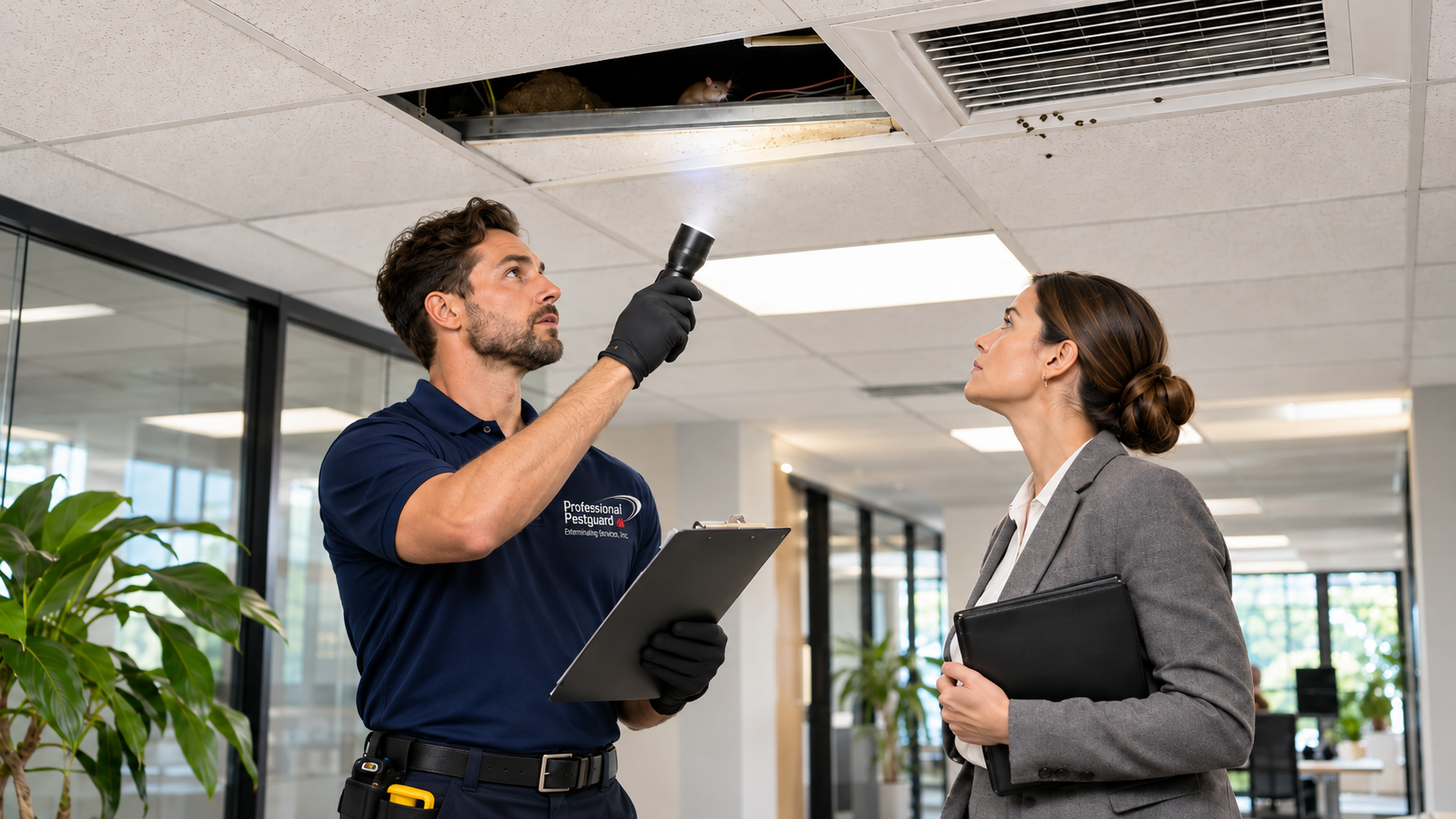
Hearing scratching above ceiling tiles can be unsettling, especially when staff report it after hours or find droppings near an office storage area. Rodents sometimes move through concealed ceiling spaces long before anyone sees one. For property managers in Weston, Broward County, and Miami-Dade County, the immediate goal is not to guess how many animals are present. It is to document the evidence, protect affected areas, and arrange an appropriate inspection.
This guide focuses on a specific commercial building problem: possible rats or mice in suspended ceilings, upper wall voids, and connected utility spaces. It explains what to look for, what building staff should avoid doing, and how pest control and building maintenance can coordinate a practical response.
What Are the Warning Signs of Rodents Above an Office Ceiling?
Scratching alone does not confirm a rodent infestation. Building sounds can also come from mechanical equipment, settling materials, or other wildlife. Several consistent signs, especially when they occur near the same ceiling area, make a professional investigation more appropriate.
- Scratching, scurrying, or light gnawing sounds that recur above ceiling tiles, often when the building becomes quiet.
- Droppings found on accessible shelves, inside utility closets, or near ceiling access locations.
- Chewed packaging, insulation, or other materials discovered by authorized maintenance personnel.
- Dark rub marks around repeated travel paths or openings near pipes and conduits.
- Unusual odors or new staining that warrants checking for hidden activity or a building maintenance issue.
Record when each sign appeared and where it was noticed. Photographs of accessible evidence, without disturbing it, may help a technician determine which areas to inspect first. Avoid lifting ceiling tiles simply to look for animals, particularly where electrical equipment, insulation, or contaminated debris may be present.
Why Can Rodents Move Through Commercial Ceiling Spaces?
Drop ceilings and overhead utility spaces are attractive routes because they connect rooms while offering shelter from normal daytime activity. A rat may move above a corridor and leave evidence in an office several rooms away. That does not mean it entered the building directly above the spot where someone heard it.
Rooflines, utility penetrations, and connected voids
South Florida buildings may have roof equipment, pipes, conduits, vents, and cable penetrations that pass through the building envelope. Damaged screens or gaps around these features can create potential access routes. Roof rats are capable climbers, so upper-level signs deserve attention even when ground-floor doors appear secure. Identifying a possible gap does not establish the entry route; technicians must compare it with current activity and building conditions.
Storage, waste areas, and exterior conditions
Rodents need access to shelter and resources. Cluttered storage rooms, poorly maintained waste areas, dripping pipes, and exterior vegetation reaching a building can make a property more accommodating. Investigating these conditions is part of a practical response, although identifying them does not prove that rodents are present.
What Should a Property Manager Do First?
A clear response plan helps avoid unnecessary disruption and prevents well-intended staff from disturbing possible contamination. The following actions are appropriate starting points for an office, medical-office property, retail building, or managed commercial facility; exact steps depend on the site and its policies.
Document reports without disturbing ceiling materials
Create a short incident record with the date, room or corridor, observed sounds, photos, and any visible droppings or damage. Ask staff to report new evidence through one contact person instead of opening ceiling access panels independently. This makes the information easier to evaluate and gives the pest control provider a useful timeline.
Protect affected work areas and arrange an inspection
If droppings or suspected nesting material appear in an occupied area, limit access as appropriate and alert the property manager or facilities lead. For electrical damage, water leaks, or ventilation concerns, contact the appropriate licensed trade. A pest control provider can inspect for rodent activity and recommend a control plan; building repairs and specialized remediation may require separate contractors.
Handle rodent waste safely
Do not dry-sweep or vacuum suspected rodent droppings. The CDC’s rodent cleanup guidance explains how to disinfect contaminated material before removal and when special precautions or professional assistance may be appropriate. Where contamination is extensive, concealed above tiles, or associated with ventilation systems, building management should seek qualified cleanup guidance rather than assigning an untrained employee to the job.
What Does a Commercial Rodent Inspection Look For?
The useful question is not only whether a rodent is present. It is where the activity is occurring, which routes appear active, and what conditions may be supporting it. An inspection may cover safe, accessible areas in and around the affected building, depending on the agreement and site access.
- Interior evidence such as droppings, rub marks, gnawing, or repeated activity reports.
- Accessible ceiling, utility, and storage areas associated with the reported location.
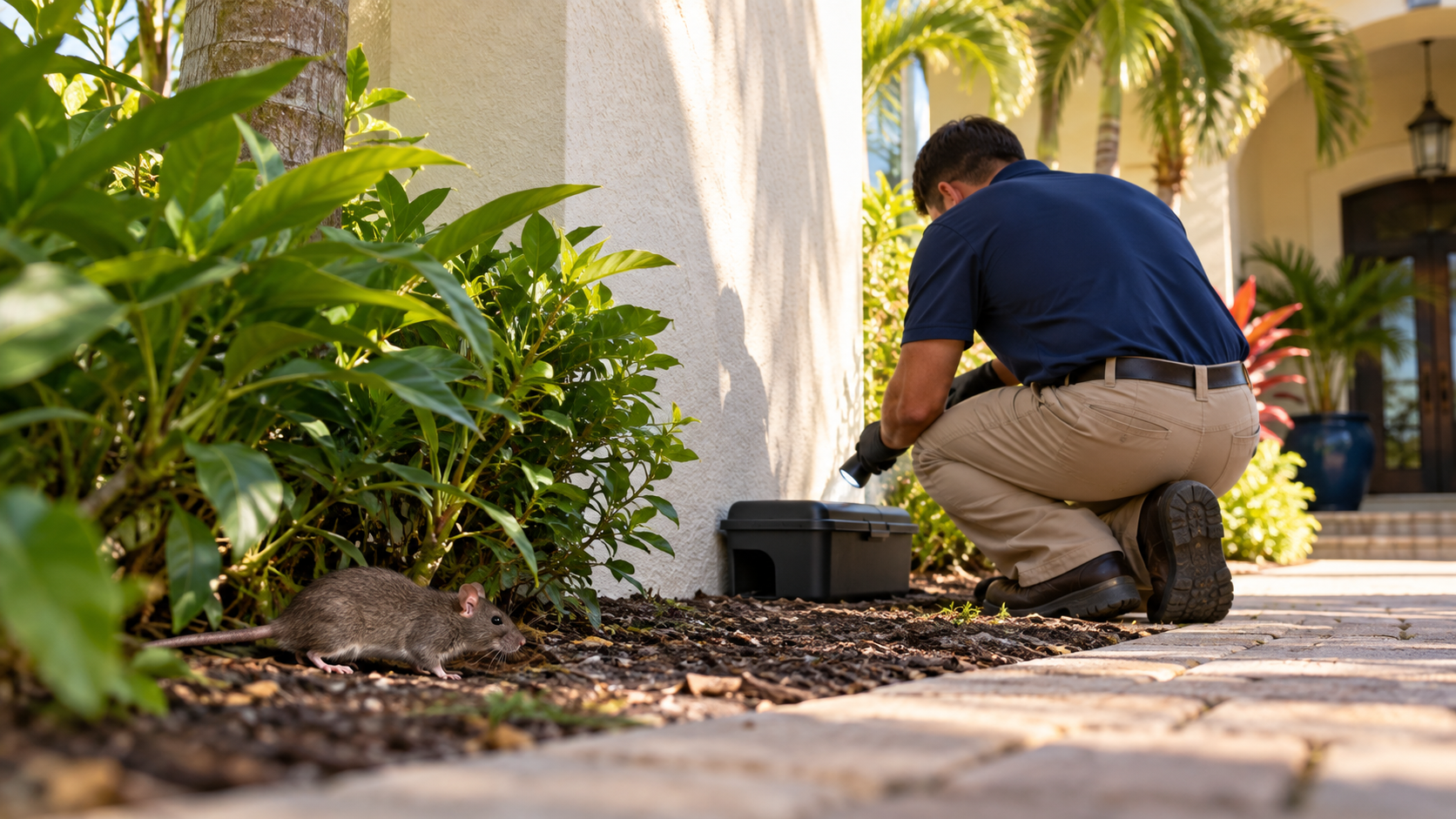
- Potential exterior access points around rooflines, vents, doors, and utility openings.
- Conditions that may provide water, shelter, or access to the building.
- Appropriate locations for traps or monitoring devices and a schedule for checking results.
Professional Pestguard provides commercial rodent control that can include inspection, targeted control measures, and follow-up monitoring. The company can identify potential entry points and recommend corrective action, but it does not provide exclusion sealing or structural repairs. A building owner or property manager should coordinate those repairs with the appropriate contractor.
How Can Managers Reduce the Chance of Repeat Activity?
A rodent problem can persist if the source of entry remains available or if monitoring stops before the activity has been evaluated. Strong commercial pest management combines the technician’s findings with routine property maintenance, rather than relying on a single visit or one type of trap.
Make building maintenance part of the response
Ask the facilities team to review any access routes identified during inspection and assign repairs to qualified personnel. Examples include damaged door sweeps, gaps around approved utility penetrations, and compromised screening. Keep maintenance records separate from the pest control treatment report so everyone knows who is responsible for the next action.
Watch for changes after control begins
Continue recording sightings, droppings, and sounds after the initial service. The number and location of new reports can help the technician determine whether activity is declining or whether the plan needs adjustment. The absence of sound for a single evening is not enough to establish that a problem has been resolved.
Address the conditions that attract rodents
Keep storage organized, maintain covered waste receptacles, repair water leaks, and ask landscape crews to manage vegetation touching the building. The EPA’s integrated pest management guidance emphasizes monitoring and reducing conditions that support pests. These measures complement commercial control efforts and can reduce repeated problems over time.
How Do Office Rodent Problems Differ From Warehouse Infestations?
Both environments can experience rodents, but the locations where they are detected and the operational risks may differ. Office managers are more likely to receive reports from staff about ceiling noises, dropped particles, or activity near conference rooms and utility closets. Warehouse teams may detect damage around receiving docks, packaging, or storage racks.
Our separate guide on preventing rodents in warehouses and commercial storage areas focuses on loading docks and inventory protection. This article instead addresses the practical steps to take when suspected rodents are above occupied office areas, where access coordination, staff communication, and ceiling safety matter.
When Should You Contact a Commercial Rodent Control Company?
Request an inspection when sounds keep returning, droppings reappear, staff report activity in multiple parts of a building, or a contractor finds gnaw damage or nesting evidence. The sooner those clues are evaluated, the easier it is to establish a documented starting point for monitoring and corrective recommendations.
Be ready to share the affected address, building type, first date of the complaint, the areas involved, and any photos taken safely from accessible locations. For a multi-tenant property, explain whether reports come from one suite or several. That context helps determine where to begin the assessment without promising an outcome before the inspection.
Frequently Asked Questions About Rodents in Office Ceilings
These answers address common concerns from property managers and facilities teams in South Florida. They are general guidance; the right action depends on the evidence at the property and any restrictions on access or cleanup.
Does scratching above ceiling tiles always mean rats?
No. Scratching or movement can have several causes. Repeated sounds combined with droppings, gnawing, or other rodent evidence warrant a closer inspection, but a sound alone is not a species identification.
Can rodents travel between office suites through ceilings?
Yes, connected ceiling and utility spaces may allow movement between rooms or suites. The place where a sound is heard may not be the point of entry, so building-wide conditions can matter.
Should staff lift ceiling panels to check for droppings?
Not without appropriate authorization, training, and safety precautions. Overhead spaces may contain wiring, insulation, and contaminated materials. Arrange an inspection through facilities management or a qualified professional.
Can a pest control company seal the openings it finds?
That depends on the company’s services. Professional Pestguard evaluates potential entry areas and makes recommendations, but it does not provide exclusion sealing or structural repairs. Building management should arrange repairs with the appropriate contractor.
Will the entire building need treatment?
Not necessarily. The scope depends on where the evidence is found, whether activity is confined or spreading, and the inspection findings. Commercial rodent service should be tailored to the property rather than assuming every room needs the same approach.
How quickly should management expect a result?
There is no universal timeline. The rodent species, size of the affected area, accessible routes, and follow-up findings all influence progress. Monitoring and follow-up provide a more reliable picture than the first day after service.
Request Commercial Rodent Control in Broward or Miami-Dade
Unexplained ceiling activity should not become a recurring mystery for employees and tenants. Professional Pestguard works with office buildings, managed properties, and other eligible commercial facilities across Weston, Broward County, and Miami-Dade County. Our team can inspect for signs of rodent activity, recommend targeted control, and explain the follow-up process while identifying building conditions management may need to address.
If your staff are hearing movement overhead or finding possible rodent evidence, request a free commercial pest control estimate or call (954) 389-6107. Describe what you are seeing and where it is occurring so the team can help determine an appropriate next step.
About Professional Pestguard
Professional Pestguard provides professional pest control in Weston, FL and nearby communities including Davie, Sunrise, Pembroke Pines, and Plantation. With over 40 years of experience, our licensed technicians protect homes and businesses across Broward County and Miami-Dade County from ants, cockroaches, rodents, spiders, and other common South Florida pests using safe and effective treatments.