What Type of Ant Is in My South Florida Home? A Guide to Common Ant Species
What kind of ants do I have in my South Florida home?
Tiny ants with dark heads and pale abdomens may be ghost ants. Small dark ants with pale feet may be white-footed ants. Larger reddish-and-black ants, especially those active at night, may be Florida carpenter ants. Reddish-brown ants associated with soil mounds may be fire ants. These clues narrow the possibilities; a close examination is needed to confirm the species.
Finding ants on a kitchen counter does not tell you where they are nesting or which treatment will work. Several common ants in South Florida look similar from a distance, and more than one species can be active around the same property. This guide explains the features to observe, what “house ants” actually means, and when identification needs a professional eye.
For homeowners researching ant control in Weston, identifying the ant is a useful first step before choosing a treatment or assuming that the nest is inside the house.
Quick comparison of common ants in South Florida
Sizes below refer to workers, not queens or winged reproductives. The table is a starting point for identification, not a substitute for examining a specimen.
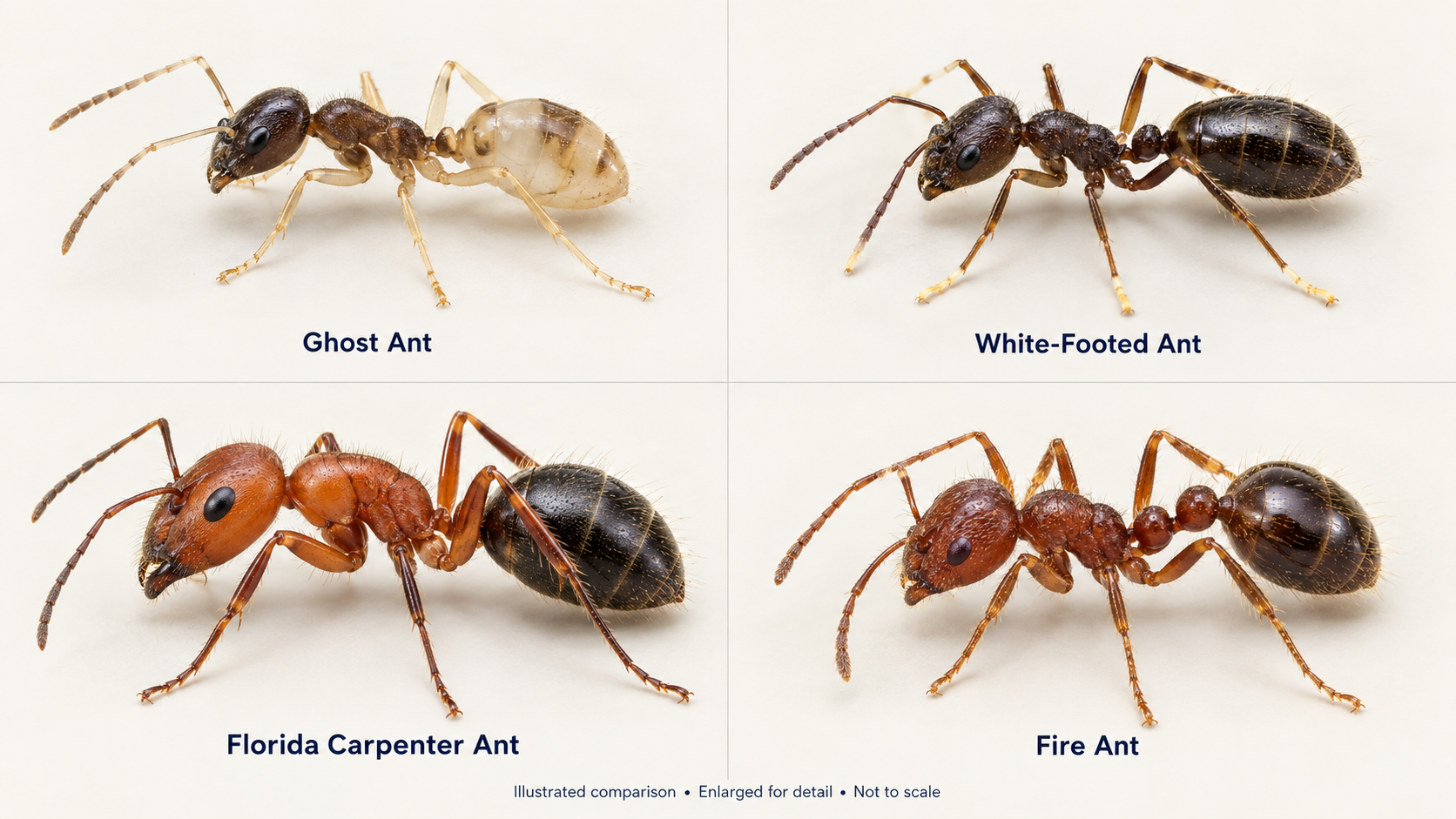
| Ant type | Typical worker size | Useful visual clue | Where to look |
|---|---|---|---|
| Ghost ant | 1.3–1.5 mm | Dark head and middle; pale abdomen and legs | Counters, sinks, cabinets, plants |
| White-footed ant | 2.5–3 mm | Dark body with pale feet | Walls, trees, rooflines, long trails |
| Florida carpenter ant | 5.5–11 mm | Rusty or brown head and middle; dark abdomen | Nighttime routes, trees, protected voids |
| Red imported fire ant | 2.4–6 mm | Reddish-brown body; darker abdomen; mixed worker sizes | Soil nests and lawn mounds |
| “House ants” | Varies | An everyday description, not one species | Any indoor room; identify further |
Color alone is not enough. Lighting, worker size, and similar-looking species can make an identification uncertain. Do not disturb a mound or handle live ants to test whether they sting.
How can I recognize ghost ants?
Ghost ants (Tapinoma melanocephalum) are extremely small, with dark heads and middle body sections that contrast with pale legs and abdomens. On a light countertop, the darker front of the ant may be easier to see than the rest of its body.
They commonly appear around sweets and moisture in kitchens and bathrooms. Nests can occur outdoors or in small indoor spaces, including wall voids, cabinetry gaps, and potted plants. A trail around a sink does not necessarily mean the colony is nesting beneath that sink.
Ghost ants can have multiple queens and connected nesting sites. Killing a few visible workers may leave the larger infestation intact. Record their routes before disturbing them so the inspection can consider both indoor and outdoor activity.
Read more about why ghost ants are hard to eliminate in South Florida.
How can I recognize white-footed ants?
White-footed ants (Technomyrmex difficilis) have dark brown to black bodies and yellowish-white feet. Unlike ghost ants, their abdomens remain dark. The pale feet can be difficult to see without magnification, so a distant photo of a dark ant trail is rarely enough for confirmation.
These ants may form long, busy trails along walls, fences, branches, and roof edges. Outdoor activity often involves plants with honeydew-producing insects. Nests can occupy trees, leaf litter, protected landscape spaces, wall voids, and attics.
White-footed ants do not sting. Their recurring trails are a nuisance, but trail length alone cannot identify them. Other ants may use the same structural edges. Inspect the workers themselves and consider where the route leads.
Our guide to white-footed ants in South Florida homes explains their trails and common entry routes in more detail.
How can I recognize Florida carpenter ants?
Florida carpenter ants are noticeably larger than ghost ants or white-footed ants. Workers commonly have rusty-orange or brown heads and middle sections with darker abdomens. Different-sized workers may belong to the same colony, and activity is often easiest to notice after sunset.
The Florida carpenter ant, Camponotus floridanus, and the related Tortugas carpenter ant, Camponotus tortuganus, are relevant to South Florida homes. These ants use existing cavities or soft materials for nesting. They do not eat wood, and these Florida species do not excavate sound wood as some other carpenter ant species do.
Repeated activity near a damp window frame, a plumbing area, or a wall opening deserves inspection. One large ant indoors may simply be foraging from outside. Coarse debris or winged ants can provide additional clues, but neither confirms the nest location by itself.
For a closer look at nesting areas and warning signs, see carpenter ants in South Florida.
How can I recognize fire ants?
Red imported fire ants (Solenopsis invicta) usually have reddish-brown bodies with darker abdomens. Workers vary in size within a colony. They are commonly associated with soil nests and lawn mounds, although a conspicuous mound is not always present.
Fire ants can bite and sting, and they may respond aggressively when their nest is disturbed. Keep children and pets away from suspected mounds. Never kick, dig into, or step on a mound to check the species.
Rain can make mound activity more noticeable, but a mound does not establish the identity of an ant by itself. Small red or brown ants indoors should not automatically be labeled fire ants. If ants are emerging from the lawn near a doorway, document the location from a safe distance.
Learn more about why fire ant mounds return after heavy rain and what recurring mound activity can indicate.
Are house ants and sugar ants actual species?
“House ants” usually means ants found indoors, while “sugar ants” usually describes ants attracted to sweet foods. Neither label, as commonly used by South Florida homeowners, identifies one particular species. Ghost ants, white-footed ants, and other ants may all visit a sugary spill.
The odorous house ant is a specific species, but calling an insect a “house ant” does not establish that identification. Likewise, an ant in a bathroom is not a separate “bathroom ant” species. The location helps explain its behavior, not necessarily its identity.
Other possibilities include bigheaded ants, crazy ants, and pharaoh ants. If your ants do not match the four profiles above, avoid forcing a match. A specimen may need closer examination of its antennae, waist, and other small features.
For help understanding indoor activity, read why ants keep appearing in your kitchen.
What should I record to help identify ants?
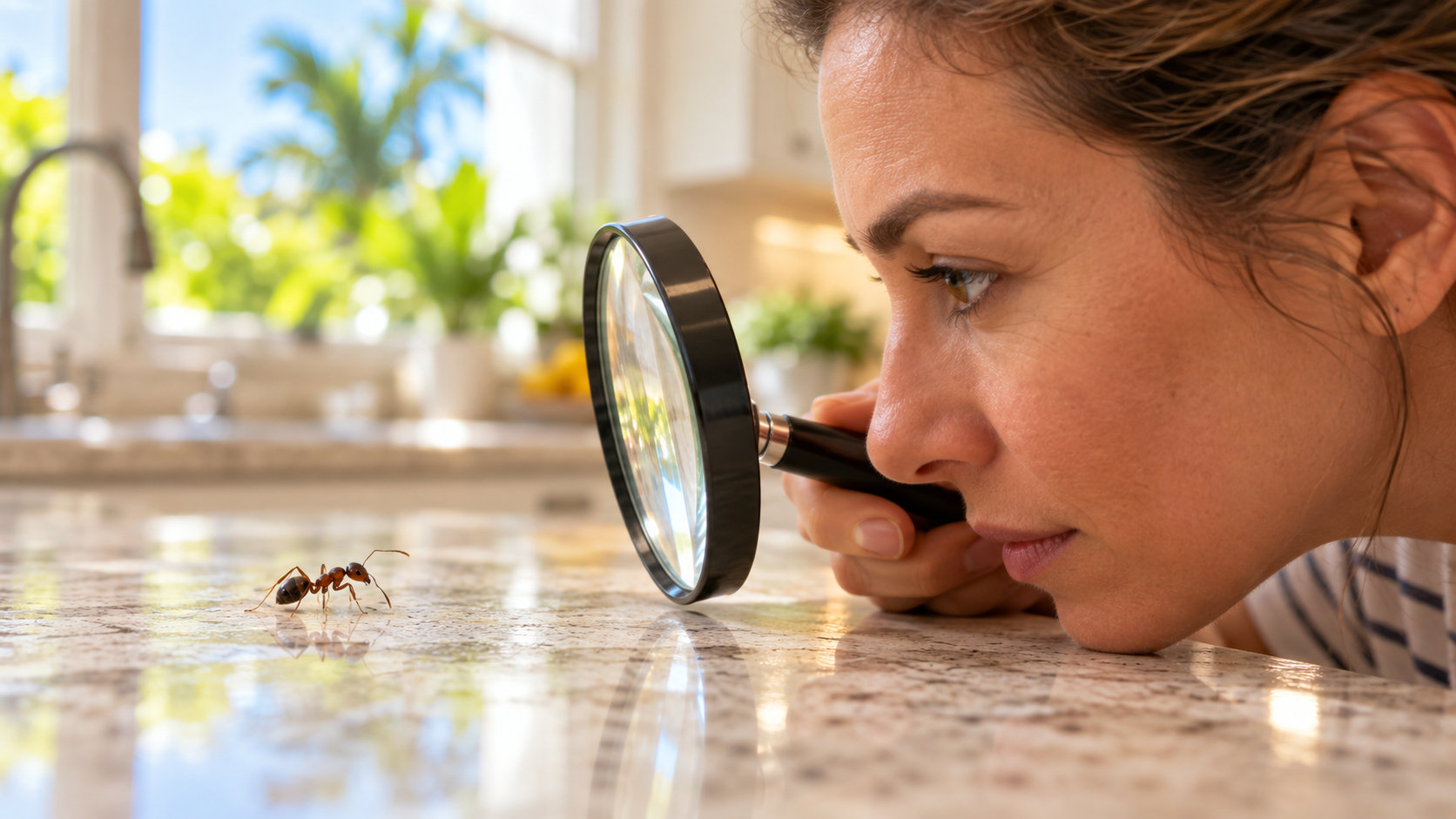
A useful ant identification record combines a close-up image with information about location and behavior. A photo of the trail alone usually leaves out the features needed to tell similar species apart.
- Take a clear close-up. If possible, photograph a worker from above and from the side without handling it. Avoid digital zoom that blurs the body.
- Include scale when practical. A ruler near an accessible, non-stinging specimen is more useful than describing it as “tiny.” Do not approach suspected fire ants to measure them.
- Record the room and entry point. Note whether ants appear beside a window, under a cabinet, near plumbing, or along an exterior wall.
- Note timing and movement. Record whether activity occurs at night, follows a steady trail, or involves ants of several sizes.
- Share recent changes. Mention leaks, heavy rain, landscape work, or any products already used, including where and when they were applied.
If a photograph is inconclusive, ask a pest professional how to provide a specimen. Do not open electrical fixtures, enter inaccessible voids, or disturb a suspected nest to collect one.
Why does identification matter before treatment?
Identification helps determine where to inspect and which control approach is appropriate. Ants feeding on the same counter may originate from very different nesting sites. Indoor activity may come from an outdoor colony, an indoor nest, or several connected nesting areas.
A product that kills visible workers does not necessarily address the colony. Bait acceptance, food availability, colony structure, and application location can affect results. Avoid adding sprays around bait placements; contamination or repellency can interfere with feeding. Follow the product label and any instructions from your technician.
If ants disappear briefly and return, review our explanation of why ants keep coming back after treatment. Recurrence is a reason to reassess the source and identification rather than repeatedly treating the same visible trail.
How can I make my home less attractive to ants?
Reducing food, moisture, and easy access can support ant management regardless of which species is present. These steps help reduce favorable conditions, but they do not prove that an established colony has been removed.
- Wipe up food and drink residue, including spills beneath small appliances.
- Store pantry items and pet food in closed containers, and clean feeding areas regularly.
- Repair leaks and investigate persistent dampness around sinks, windows, and air-conditioning drainage.
- Trim vegetation touching the home and clear accessible accumulations of leaf debris.
- Check door seals and gaps around windows or pipes. Coordinate repairs with an active treatment plan so you do not disrupt monitoring or bait placements.
When should Weston homeowners request an ant inspection?
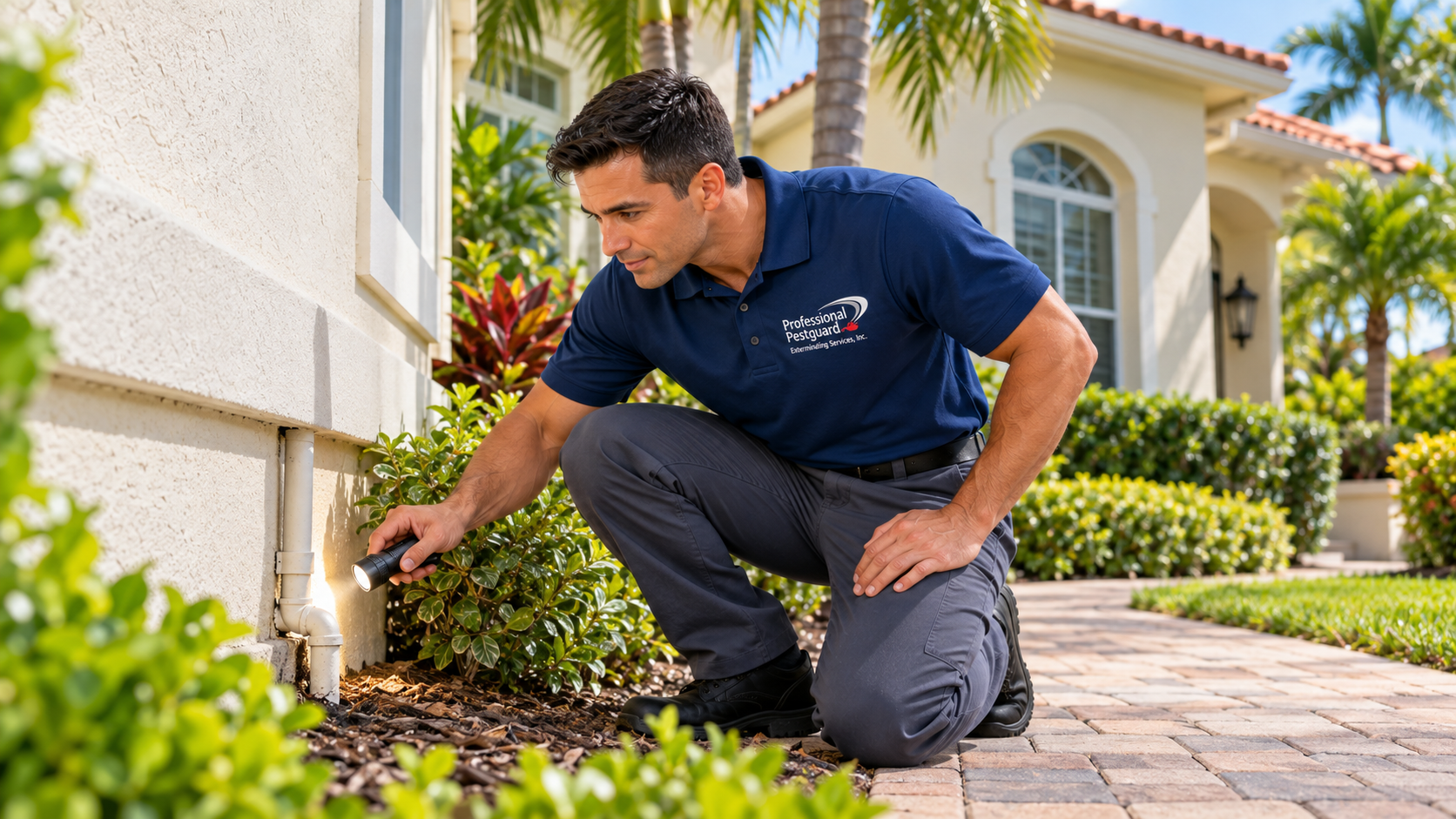
An inspection is useful when trails keep returning, activity spreads into several rooms, large ants repeatedly emerge from the same opening, or suspected fire ant nests occur near areas people use. Uncertain identification is also a reasonable reason to ask for help before selecting a product.
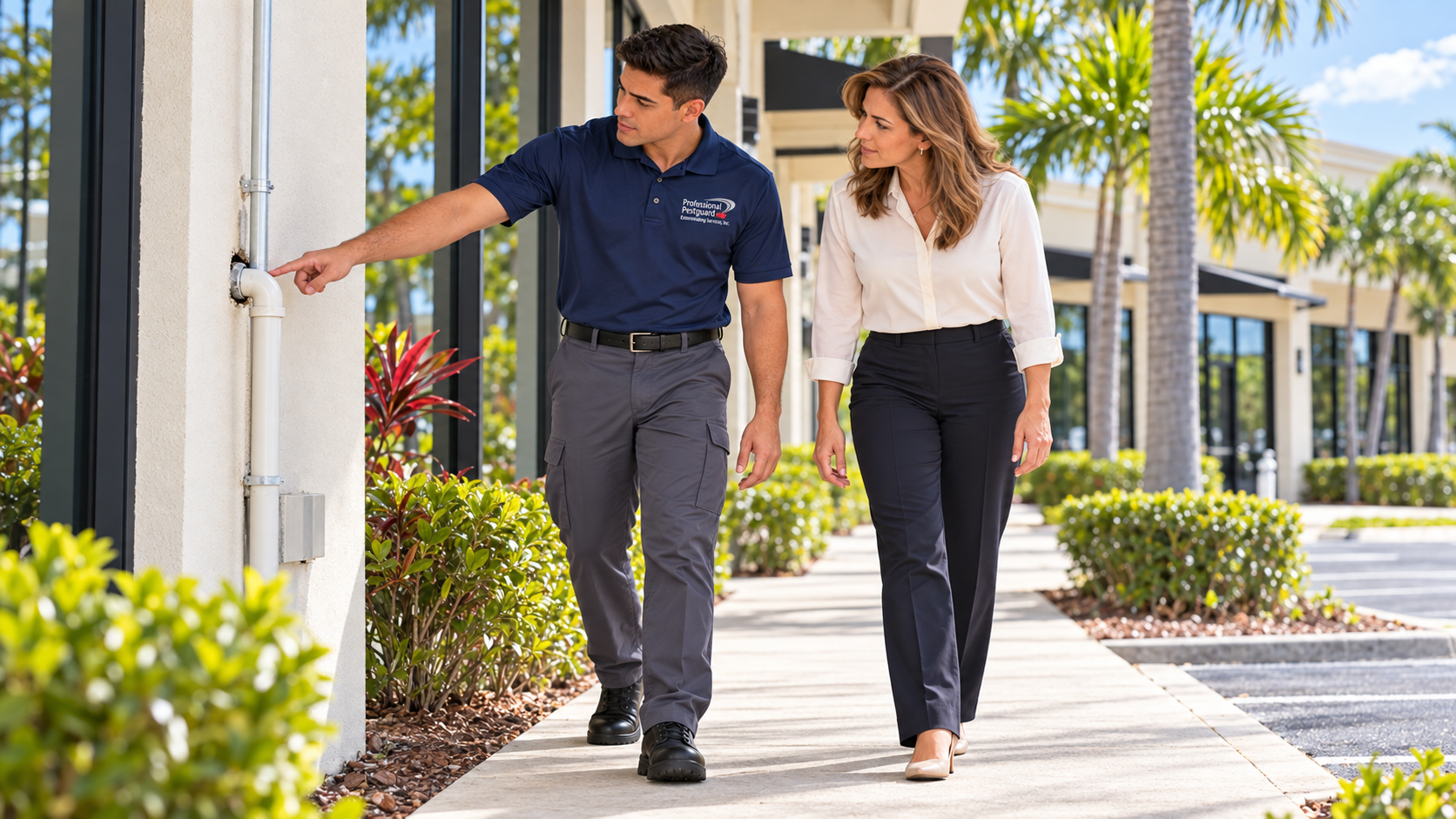
A Weston ant control inspection should consider the ants, their travel routes, nearby landscaping, moisture, and possible nesting areas. You can review Professional Pestguard’s Weston ant control services and broader residential pest control in Weston to understand the local service options.
Frequently asked questions about ant identification in Florida
Identifying ants is the first step toward understanding why they’re in your home. Below, we answer common questions about ant species in South Florida, the clues that help tell them apart, and when Weston homeowners should seek professional ant control.
What are the tiny almost clear ants in my kitchen?
They may be ghost ants, especially if the head and middle body are dark while the legs and abdomen look pale. Tiny size or transparency alone is not conclusive. A sharp close-up can help distinguish them from other small household ants.
How do I tell ghost ants from white-footed ants?
Look at the abdomen as well as the legs. Ghost ants have pale abdomens and legs, while white-footed ants have dark bodies with pale feet. White-footed workers are also typically larger. Magnification may be needed to see the difference clearly.
Do large ants mean my home has wood damage?
No. Large ants may be foraging from an outdoor nest. Florida carpenter ants do not eat wood, but repeated activity near damp or deteriorated materials warrants inspection of both the insects and the moisture source.
Are all red ants fire ants?
No. Color alone does not identify a fire ant. Worker size variation, body features, and nesting behavior provide additional clues. Avoid provoking ants to see whether they sting; suspected fire ants should be examined without disturbing their nest.
Does seeing ants mean my house is dirty?
No. Even a well-maintained home can provide water, shelter, or access from nearby outdoor colonies. Cleaning helps remove food sources, but entry routes and hidden nests may still need attention.
Do ants in several rooms mean several different species?
Not necessarily. One species may use multiple routes or nesting sites, and different species can also occur on the same property. Document ants from each area rather than assuming every trail has the same source.
Can I identify an ant from a phone photo?
Sometimes. A sharp, well-lit image with a size reference may show useful features. Very small ants and similar-looking species may require magnification or a specimen. A blurry photograph cannot reliably confirm the species.
What should I do before scheduling ant control in Weston?
Record where you see the ants, take clear photos when practical, and list any recent treatments. Share recurring routes, moisture concerns, and outdoor activity with the technician. These observations help focus the inspection and support a species-appropriate plan.
Identifying Common Ants in Your South Florida Home
Understanding which ants are entering your home starts with their size, coloring, and behavior. Ghost ants have pale legs and abdomens, white-footed ants have dark bodies with pale feet, Florida carpenter ants are larger and often active at night, and fire ants are commonly associated with soil nests and outdoor mounds. “House ants” and “sugar ants” are general descriptions, so those names alone do not identify the species.
These clues can help narrow the possibilities, but accurate identification may require a closer examination. Noting where ants appear, following visible trails, and addressing food sources, moisture, and entry points can support effective management. When activity keeps returning, an inspection can help determine whether ants are coming from outdoor colonies, hidden indoor nests, or multiple nesting sites.
Request a Free Estimate for Ant Control in Weston
Not sure which ants you have or why they keep coming back? Professional Pestguard provides ant control in Weston to help identify the species, evaluate activity, and recommend treatment for your home. Request your free ant control estimate or call (954) 389-6107 to discuss your concerns and available service options.
About Professional Pestguard
Professional Pestguard provides professional pest control in Weston, FL and nearby communities including Davie, Sunrise, Pembroke Pines, and Plantation. With over 40 years of experience, our licensed technicians protect homes and businesses across Broward County and Miami-Dade County from ants, cockroaches, rodents, spiders, and other common South Florida pests using safe and effective treatments.