The Most Common Pest Problems in Apartment Communities (And How to Prevent Them)
Managing an apartment community comes with countless responsibilities, and recurring pest complaints are one of the most common challenges property managers face. Because apartment buildings contain multiple units, shared walls, common areas, trash collection sites, and landscaped grounds, pests can spread much more easily than they can in a single-family home. If small pest problems aren't addressed quickly, they can grow into larger infestations that affect multiple residents and generate ongoing maintenance requests.
The key to reducing pest complaints isn't simply responding after residents report a problem—it's preventing infestations before they begin. Routine property inspections, preventative maintenance, resident education, and proactive Commercial Pest Control all play an important role in keeping apartment communities clean, comfortable, and pest-free.
In this guide, we'll explain the most common pest problems found in apartment communities, why they occur, and the steps property managers can take to reduce complaints while protecting their investment. Whether you manage apartment communities in Weston, Miami, Aventura, Davie, Fort Lauderdale, Pembroke Pines, Plantation, Cooper City, or elsewhere in South Florida, a proactive pest management strategy can help improve resident satisfaction and reduce long-term operating costs.
Why Apartment Communities Experience More Pest Problems
Apartment communities present unique challenges when it comes to pest prevention. Unlike single-family homes, multifamily properties consist of dozens—or even hundreds—of connected living spaces that share walls, plumbing systems, utility lines, attics, breezeways, and common areas. These shared spaces allow pests to move much more easily throughout the property, making early detection and preventative maintenance essential.
A pest problem that begins in one apartment can quickly spread to neighboring units if it isn't addressed promptly. Combined with frequent resident turnover, shared amenities, trash collection areas, and extensive landscaping, apartment communities naturally face greater pest pressure than many other commercial properties.
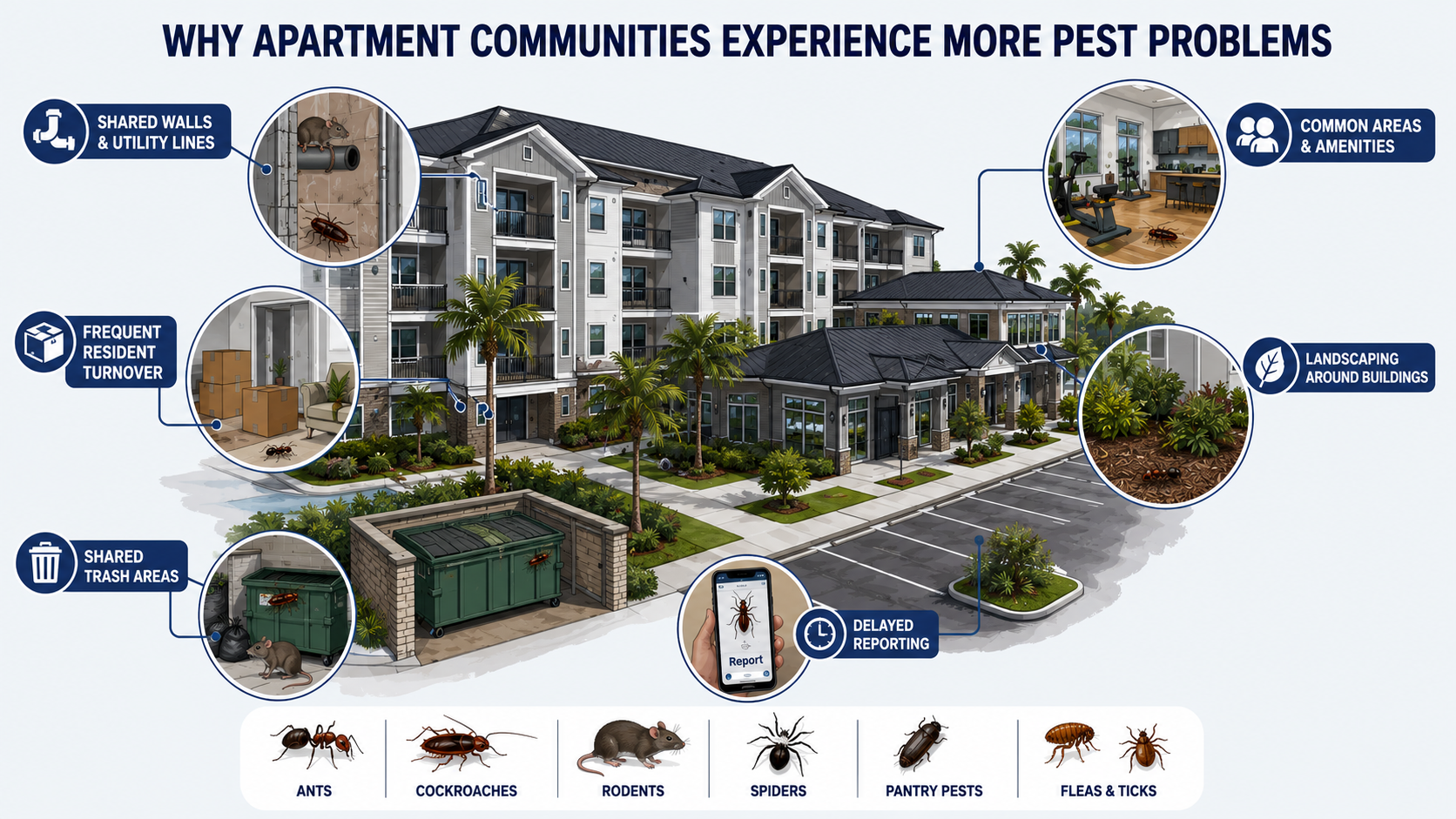
Why Apartment Communities Are More Vulnerable To Pests
- Shared Walls And Utility Lines
Rodents, cockroaches, ants, and other pests often travel through wall voids, plumbing penetrations, electrical conduits, and shared utility spaces, allowing them to move between apartments without ever going outside. - Frequent Resident Turnover
Every move-in and move-out creates an opportunity for pests to be introduced through furniture, boxes, stored belongings, or neglected food items left behind. - Shared Trash Areas
Dumpster enclosures, compactors, and community trash rooms can attract ants, cockroaches, rodents, and other pests if waste isn't managed properly. - Common Areas And Amenities
Clubhouses, fitness centers, laundry rooms, mailrooms, leasing offices, and community kitchens all experience regular foot traffic and can provide food, moisture, and shelter for pests. - Landscaping Around Buildings
Dense shrubs, mulch beds, irrigation systems, and decorative landscaping create excellent harborage areas where pests can establish themselves before migrating into nearby apartments. - Delayed Reporting
Not every resident reports pest activity immediately. Small problems can grow into larger infestations when pest sightings go unreported or aren't addressed quickly.
Because pests can move so easily throughout multifamily properties, waiting until multiple residents begin reporting problems often results in more extensive treatments and higher costs. Routine Commercial Pest Control helps property managers identify pest activity early, reduce conducive conditions, and prevent infestations from spreading throughout the community.
The Most Common Pests Found In Apartment Communities
Apartment communities provide many of the conditions pests need to survive, including food, water, shelter, and easy access between units. Because dozens or even hundreds of residents live within the same property, a single pest problem can quickly spread if it's not addressed early. Understanding which pests are most common in apartment communities helps property managers recognize warning signs and implement preventative measures before complaints begin increasing.
Common Apartment Community Pest Problems
- Ants
Ants are one of the most common pest complaints in apartment communities. They are often attracted to kitchens, bathrooms, break rooms, community clubhouses, and outdoor common areas where food, moisture, or sugary spills are present. Routine Commercial Ant Control helps eliminate colonies before they spread throughout multiple buildings or units. - Cockroaches
Cockroaches thrive in apartment communities because they have easy access to food, water, and shared utility spaces. They commonly travel between units through plumbing penetrations, wall voids, and electrical conduits, making early intervention essential. Professional Commercial Cockroach Control helps reduce infestations before they affect additional residents. - Rodents
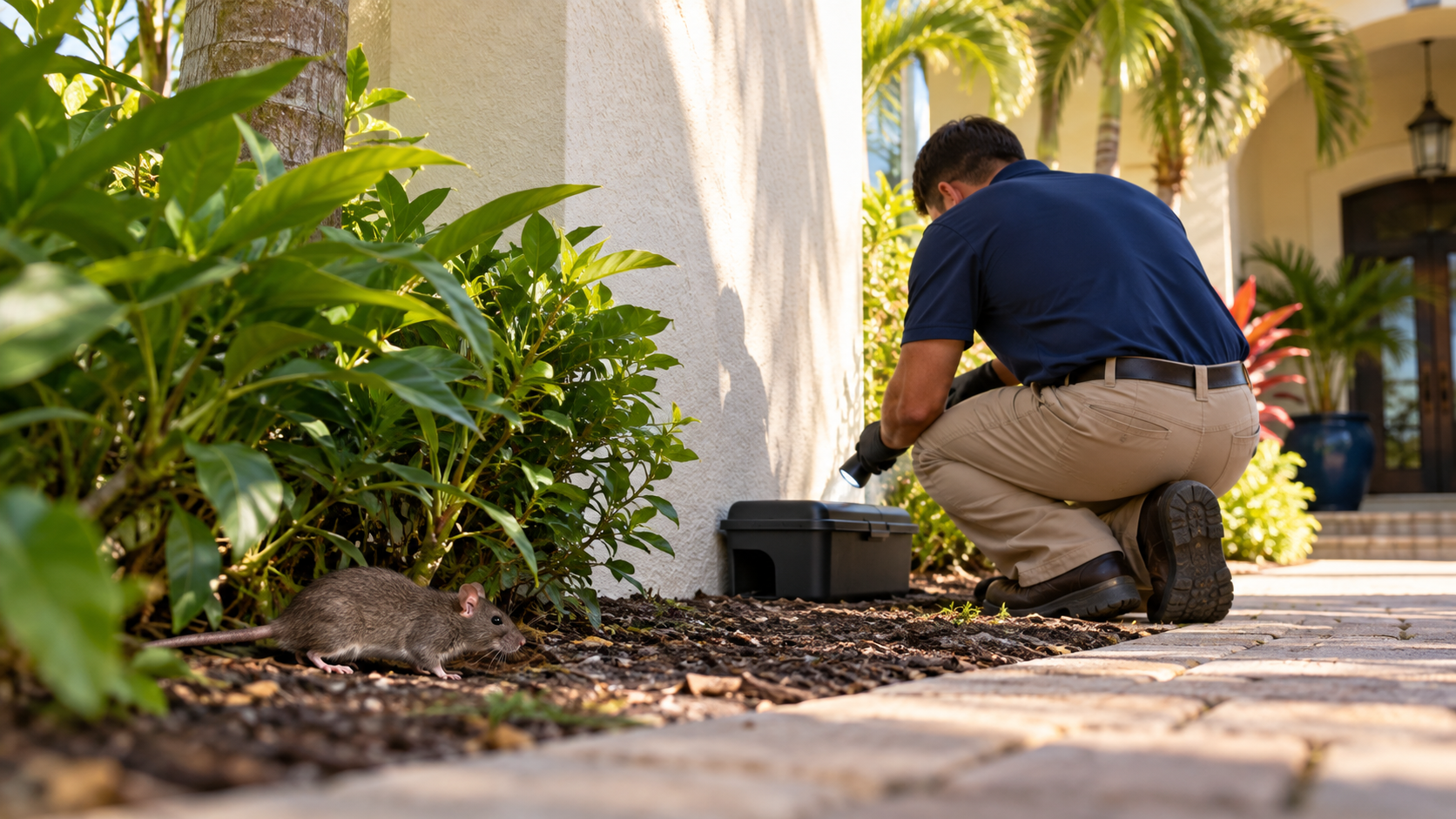
Rats and mice frequently enter apartment communities through utility penetrations, damaged doors, rooflines, garages, and dumpster areas. Once inside, they can move between units while contaminating common areas and damaging property. Routine Commercial Rodent Control helps identify entry points and reduce rodent activity before infestations become widespread. - Spiders
Spiders are commonly found around breezeways, garages, storage rooms, patios, exterior lighting, and landscaped areas where flying insects are abundant. Professional Commercial Spider Control helps reduce spider populations while addressing the insects that attract them. - Pantry Pests
Pantry pests may become an issue in apartment units, leasing offices, community kitchens, or clubhouses where dry food products are stored. Routine Commercial Pantry Pest Control helps protect stored food while preventing recurring infestations. - Fleas And Ticks
Pet-friendly apartment communities often experience flea and tick complaints in dog parks, landscaped areas, walking paths, and other shared outdoor spaces. Wildlife activity around the property can also introduce these pests. Professional Commercial Flea & Tick Control helps reduce flea and tick populations while creating a more comfortable environment for residents and their pets.
Because apartment communities are highly connected environments, addressing pest activity early is essential. A single untreated infestation can quickly affect neighboring units, resulting in more resident complaints, increased maintenance requests, and higher treatment costs. A proactive commercial pest management program helps property managers stay ahead of pest problems while protecting both residents and the property's reputation.
How Property Managers Can Prevent Pest Problems In Apartment Communities
The most effective way to reduce pest complaints is to prevent infestations before they begin. While it's impossible to eliminate every pest from a multifamily property, proactive maintenance and routine inspections can significantly reduce pest activity throughout the community. By identifying conditions that attract pests early, property managers can minimize resident complaints, protect their investment, and create a healthier living environment.
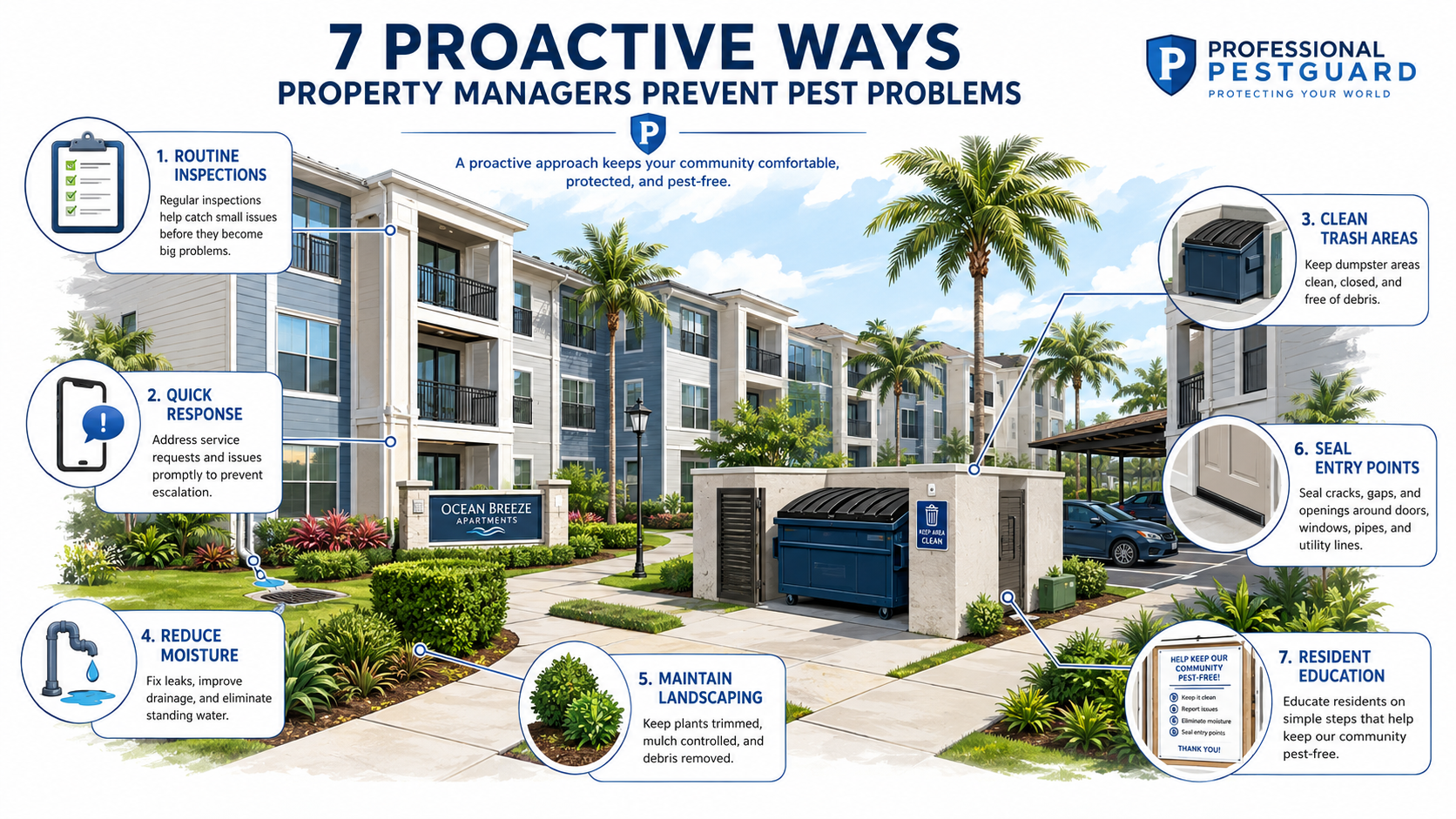
Best Practices For Preventing Pest Problems
- Schedule Routine Pest Inspections
Regular inspections allow pest activity to be identified before it spreads throughout multiple buildings or units. A proactive inspection program helps catch small issues early, making treatments more effective and less disruptive for residents. - Respond To Resident Reports Quickly
Even a single report of ants, cockroaches, or rodents should be investigated promptly. Fast response times help prevent pests from spreading to neighboring units and demonstrate that management takes resident concerns seriously. - Maintain Clean Dumpster And Trash Areas
Overflowing dumpsters, food debris, and improperly sealed trash containers are major attractants for rodents, cockroaches, and ants. Keeping waste collection areas clean and scheduling regular pickups helps reduce pest pressure around the property. - Reduce Moisture Around Buildings
Leaking irrigation systems, clogged gutters, standing water, and plumbing leaks create ideal conditions for many pests. Addressing moisture issues promptly helps eliminate one of the most common factors contributing to pest activity. - Maintain Landscaping Around Buildings
Overgrown shrubs, dense vegetation, mulch piled against buildings, and tree branches touching roofs can provide shelter and easy access for pests. Keeping landscaping properly maintained helps reduce harborage areas and limits pest entry points. - Seal Common Entry Points
Damaged door sweeps, gaps around utility penetrations, cracks in exterior walls, and openings around windows can allow pests to enter buildings. Routine property maintenance helps reduce these access points before they become larger problems. - Educate Residents On Pest Prevention
Simple reminders about proper food storage, trash disposal, reporting leaks, and notifying management when pests are first observed can make a significant difference in preventing infestations from spreading between units.
Apartment communities experience constant activity, making ongoing pest prevention far more effective than reacting to infestations after they occur. Partnering with a professional Commercial Pest Control Company allows property managers to identify potential problems early, implement preventative treatments, and maintain a consistent pest management program that protects both residents and the property year-round.
Why Routine Commercial Pest Control Is Essential For Apartment Communities
For apartment communities, pest control isn't just about eliminating pests after they're discovered—it's about preventing infestations before they impact residents. Routine commercial pest control provides ongoing monitoring, early detection, and preventative treatments that help reduce pest activity throughout the property while minimizing disruptions for tenants.
Waiting until multiple residents report the same pest problem often means the infestation has already spread beyond a single unit. By that point, treatments may require more time, additional follow-up visits, and greater coordination with residents. A proactive pest management program helps identify concerns early, allowing them to be addressed before they become larger and more costly problems.
Benefits Of Routine Commercial Pest Control
- Reduce Resident Complaints
Preventative pest management helps address pest activity before it becomes noticeable to residents, leading to fewer service requests and improved tenant satisfaction. - Protect Your Property's Reputation
Online reviews and resident referrals play a significant role in attracting new tenants. Maintaining a clean, well-managed community with fewer pest issues helps protect your property's reputation and marketability. - Identify Problems Early
Routine inspections allow pest professionals to detect early signs of activity, identify conducive conditions, and recommend corrective actions before infestations spread throughout the community. - Help Protect Buildings And Common Areas
Pests can contaminate common areas, damage stored materials, and create sanitation concerns. Ongoing pest management helps keep shared spaces cleaner and more comfortable for residents and staff. - Support Long-Term Property Maintenance
Regular inspections often uncover conditions that contribute to pest activity, such as moisture issues, damaged door sweeps, gaps around utility lines, or overgrown landscaping. Addressing these conditions helps reduce future pest pressure while supporting overall property maintenance.
Apartment communities are constantly evolving as residents move in and out, seasons change, and daily activity continues across the property. A consistent Commercial Pest Control program provides ongoing protection that adapts to these changes, helping property managers stay ahead of pest problems instead of reacting after they occur. By investing in preventative pest management, apartment communities can reduce recurring complaints, improve resident satisfaction, and create a cleaner, healthier environment for everyone on the property.
Frequently Asked Questions About Pest Control For Apartment Communities
Routine commercial pest control helps apartment communities reduce resident complaints, identify pest activity early, and prevent infestations from spreading throughout the property. A proactive pest management program protects both your residents and your investment while supporting a cleaner, healthier living environment.
How often should apartment communities receive pest control service?
The ideal service frequency depends on the size of the property, the number of buildings, resident activity, and the types of pests commonly found in the area. Many apartment communities benefit from routine commercial pest control visits that include inspections, preventative treatments, and monitoring to help identify pest activity before it spreads.
Why do pest problems spread so quickly in apartment buildings?
Apartment buildings contain shared walls, plumbing systems, electrical conduits, attics, and other interconnected spaces that allow pests to travel from one unit to another. A pest issue that begins in a single apartment can quickly affect neighboring units if it isn't addressed promptly.
What are the most common pests found in apartment communities?
Some of the most common pests found in apartment communities include ants, cockroaches, rodents, spiders, pantry pests, and fleas or ticks in pet-friendly communities. The types of pests can vary depending on the property's location, landscaping, sanitation practices, and seasonal conditions.
Can residents help prevent pest problems?
Yes. Residents play an important role in preventing pest infestations by storing food properly, disposing of trash regularly, reporting plumbing leaks, reducing clutter, and notifying property management as soon as they notice signs of pest activity. Early reporting often prevents small problems from becoming larger infestations.
Is preventative pest control better than treating infestations?
Absolutely. Preventative pest management helps identify pest activity and conducive conditions before infestations become widespread. Routine inspections and proactive treatments are typically more effective, less disruptive, and help reduce long-term pest complaints throughout the property.
Why should apartment communities hire a professional commercial pest control company?
A professional commercial pest control company develops customized treatment programs based on the property's layout, pest pressures, and risk factors. Routine inspections, preventative treatments, and expert recommendations help property managers protect residents, reduce recurring pest complaints, and maintain a cleaner, healthier community.
Protect Your Apartment Community With Proactive Commercial Pest Control
Keeping an apartment community pest-free requires more than simply responding to resident complaints—it requires a proactive strategy focused on prevention. Routine inspections, early intervention, and ongoing pest management help reduce infestations before they spread, creating a cleaner, healthier environment for residents while protecting your property's reputation.
At Professional Pestguard, we work with apartment communities throughout South Florida to develop customized commercial pest management programs tailored to each property's unique needs. Whether you manage a small apartment complex or a large multifamily community, our experienced team can help identify potential pest issues, reduce recurring complaints, and keep your property protected year-round.
If you're looking for a trusted Pest Control Company in Weston, FL, Pest Control Company in Miami, FL, or Pest Control Company in Aventura, FL, Professional Pestguard is here to help. Contact us today for a free commercial pest control estimate and discover how a proactive pest management program can help protect your residents, your property, and your investment.
About Professional Pestguard
Professional Pestguard provides professional pest control in Weston, FL and nearby communities including Davie, Sunrise, Pembroke Pines, and Plantation. With over 40 years of experience, our licensed technicians protect homes and businesses across Broward County and Miami-Dade County from ants, cockroaches, rodents, spiders, and other common South Florida pests using safe and effective treatments.