How Property Managers Can Reduce Pest Complaints at Commercial Properties
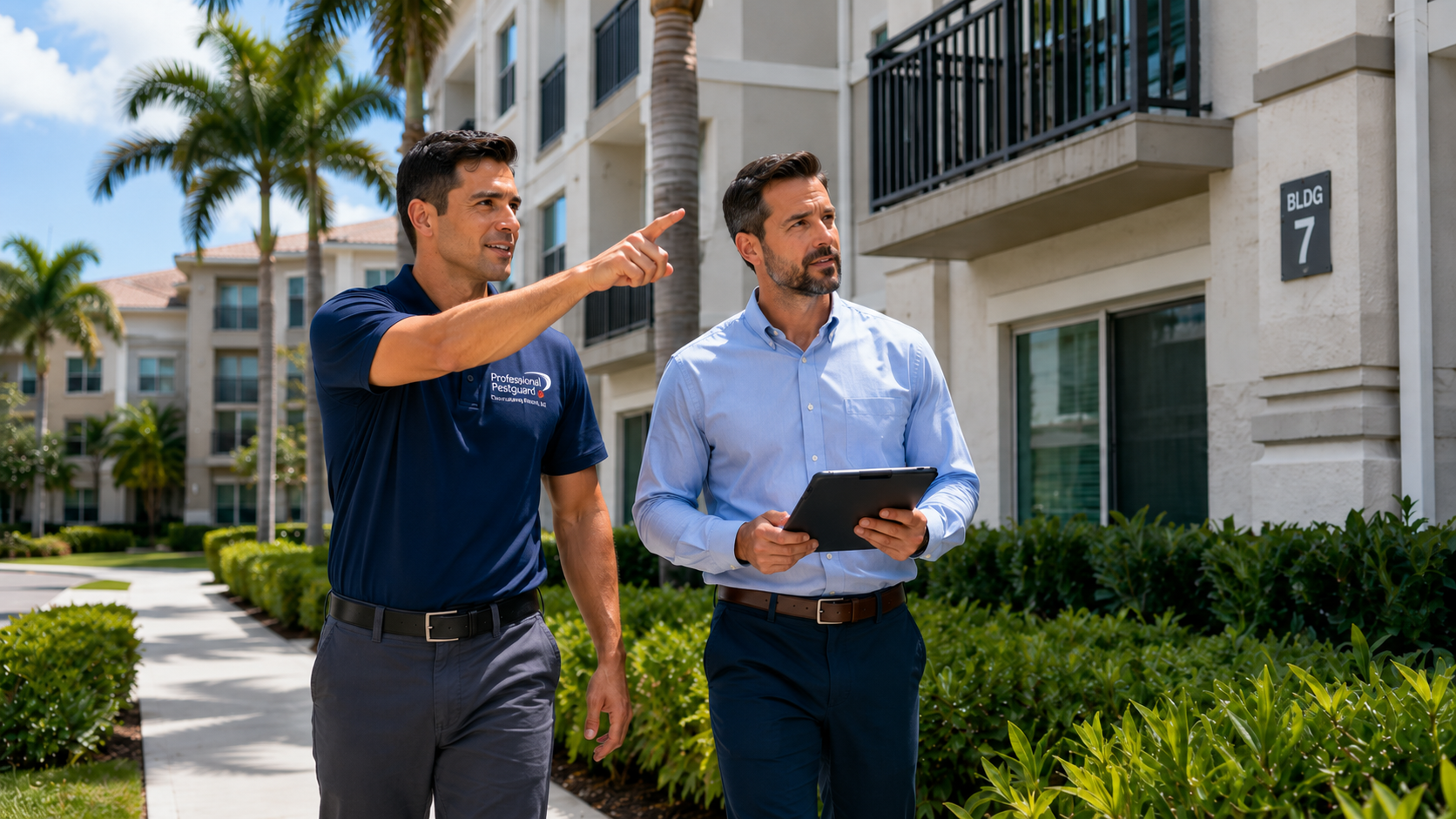
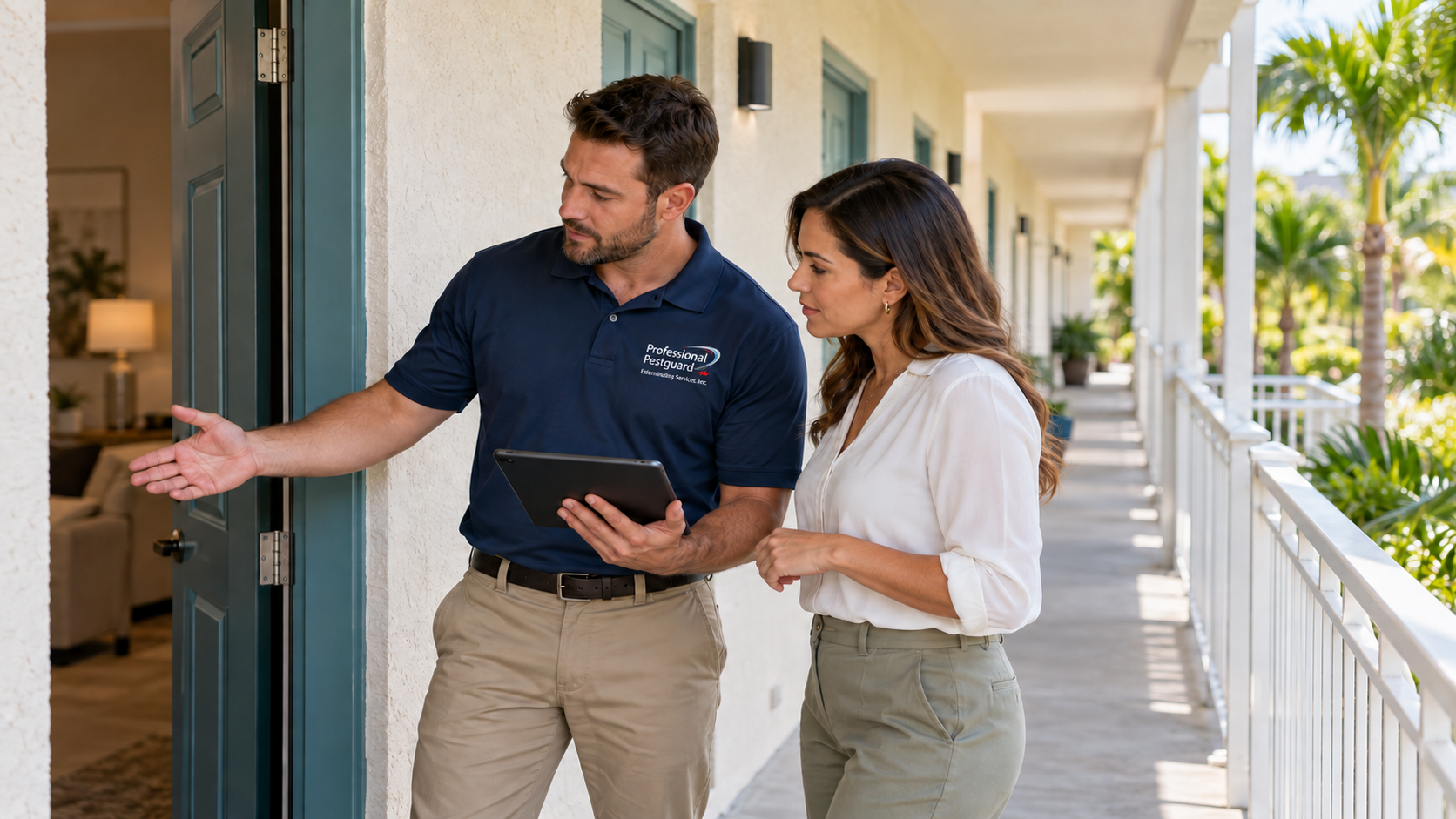
For property managers, pest complaints are more than just an inconvenience—they can affect tenant satisfaction, increase maintenance costs, and damage the reputation of an entire property. Whether you manage an apartment community, office building, retail center, medical office, warehouse, or other commercial facility, responding to recurring pest issues can quickly consume valuable time and resources. The good news is that many pest complaints can be prevented before they ever reach your office.
Successful property management isn't just about responding to problems—it's about identifying and addressing the conditions that allow pests to thrive. Routine inspections, preventative maintenance, proper sanitation, and proactive Commercial Pest Control all work together to reduce pest activity and create a cleaner, safer environment for tenants, employees, customers, and visitors.
In this guide, we'll explain practical strategies property managers can use to reduce pest complaints, improve tenant satisfaction, and help protect commercial properties throughout South Florida. Whether you manage properties in Weston, Miami, Aventura, Davie, Fort Lauderdale, Pembroke Pines, Plantation, Cooper City, or the surrounding area, implementing a proactive pest management program can make a significant difference in preventing recurring infestations.
Common Causes Of Pest Complaints At Commercial Properties
Pest complaints rarely happen without an underlying cause. While an occasional pest sighting can occur anywhere, recurring complaints often indicate that favorable conditions exist somewhere on the property. Moisture issues, sanitation concerns, structural gaps, and poor exterior maintenance can all contribute to increased pest activity. Identifying and correcting these issues early helps property managers reduce complaints while creating a cleaner, safer environment for tenants, employees, customers, and visitors.
A proactive approach focuses on eliminating the conditions that attract pests instead of simply responding after complaints are received. Regular property inspections, preventative maintenance, and routine Commercial Pest Control are some of the most effective ways to reduce recurring pest issues throughout commercial properties.
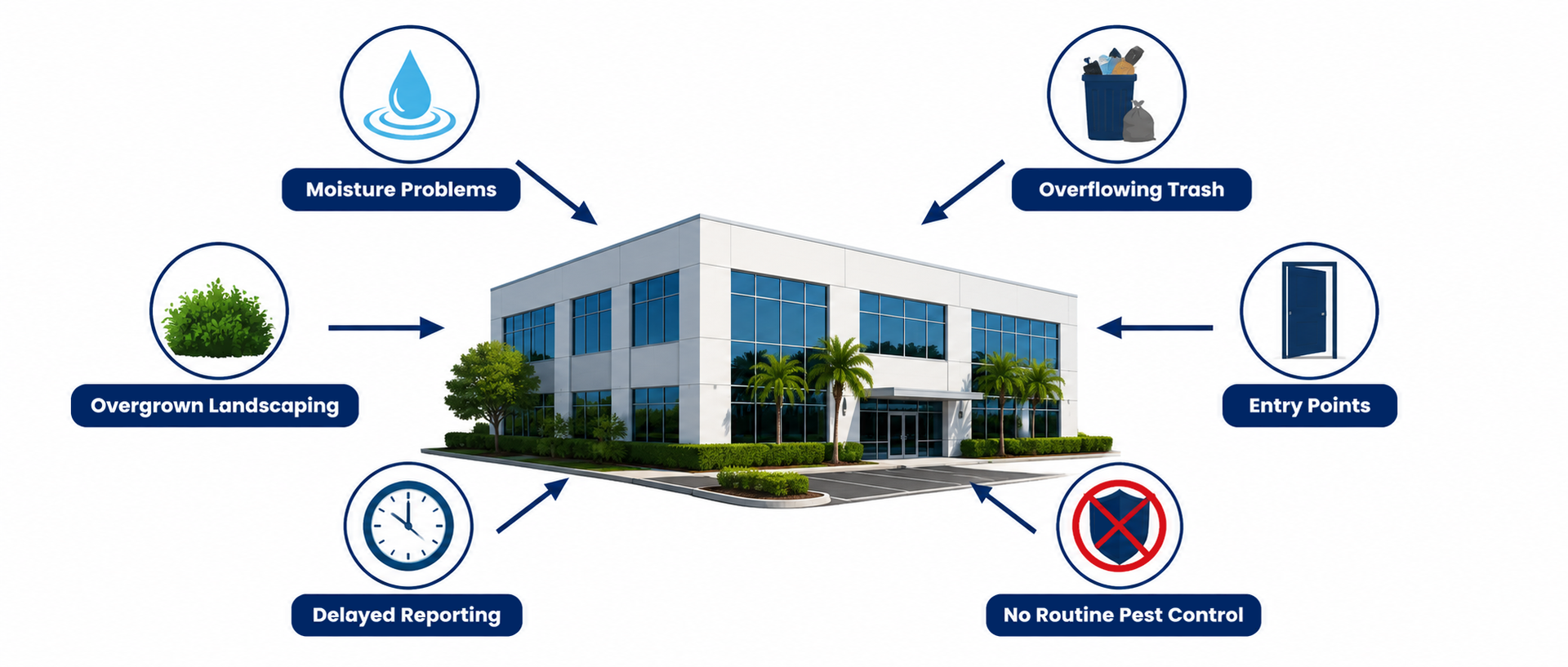
Common Causes Of Pest Complaints
- Poor Sanitation Practices
Overflowing trash receptacles, food debris in break rooms, improperly stored food, and neglected common areas can quickly attract ants, cockroaches, rodents, and pantry pests. - Moisture Problems
Leaking plumbing, standing water, poor drainage, clogged gutters, and excess irrigation create ideal conditions for many common South Florida pests to survive and reproduce. - Structural Entry Points
Small gaps around doors, utility penetrations, rooflines, loading docks, and foundation cracks allow pests to enter commercial buildings more easily. - Overgrown Landscaping
Dense shrubs, mulch beds, leaf litter, and poorly maintained landscaping provide shelter for pests before they migrate toward buildings. - Delayed Reporting
Small pest problems often become much larger infestations when sightings aren't reported or addressed promptly. Encouraging tenants and maintenance staff to report pest activity early can significantly reduce future complaints. - Lack Of Routine Pest Management
Waiting until tenants complain often allows pest populations to grow. Routine Commercial Pest Control helps identify pest activity before it affects occupants while reducing the conditions that support recurring infestations.
Many of these issues can be corrected through routine property maintenance and preventative pest management. Addressing the source of pest activity—not just the pests themselves—is one of the most effective ways for property managers to reduce complaints and improve tenant satisfaction over the long term.
Proactive Steps Property Managers Can Take To Prevent Pest Complaints
The most effective way to reduce pest complaints is to prevent pest activity before tenants, employees, or visitors ever notice a problem. A proactive pest management strategy combines routine property maintenance, regular inspections, good communication, and professional pest control to eliminate the conditions that attract pests in the first place.
By consistently monitoring your property and addressing small issues early, property managers can significantly reduce recurring complaints while improving the overall appearance and condition of the property.
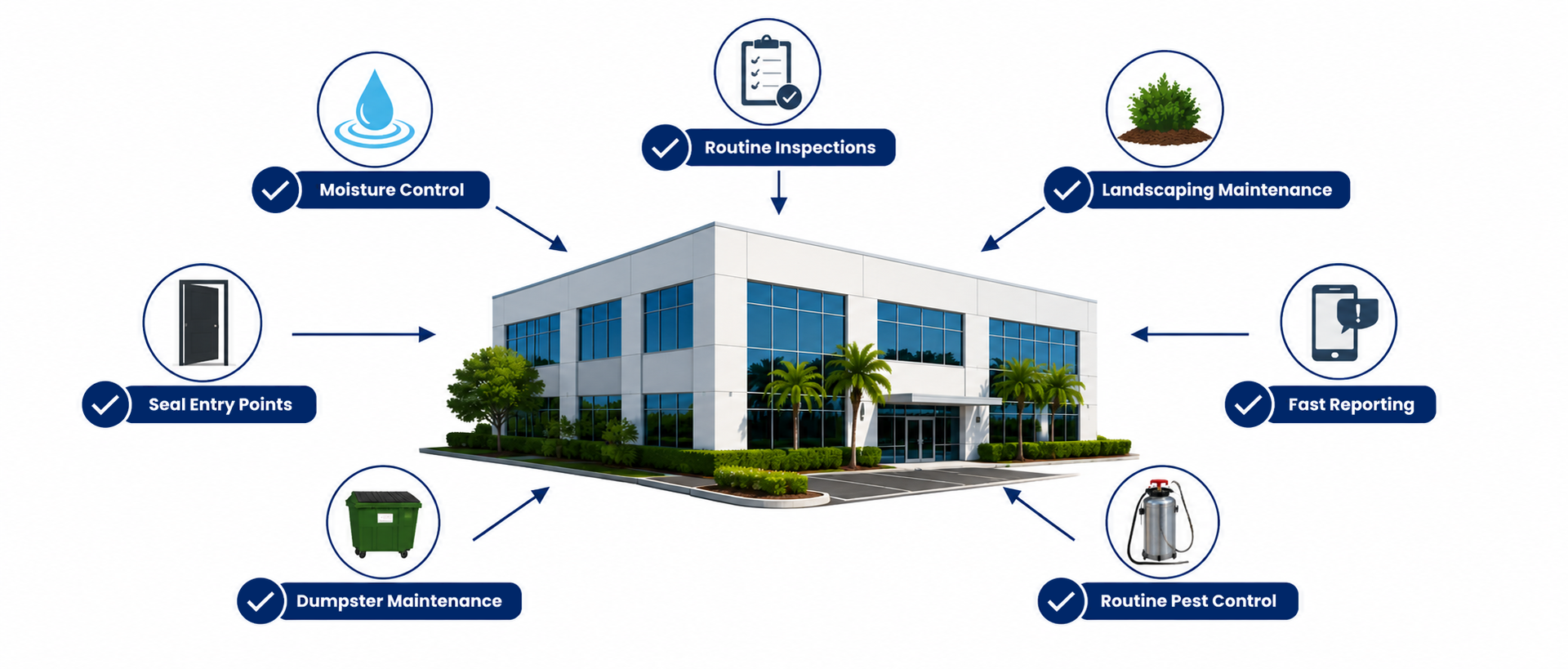
Best Practices For Property Managers
- Schedule Routine Property Inspections
Regular inspections help identify moisture issues, structural gaps, sanitation concerns, and early signs of pest activity before they become larger problems. - Encourage Early Reporting
Ask tenants, maintenance staff, and employees to report pest sightings immediately. Addressing a single complaint early is often much easier than responding to multiple complaints after an infestation has spread. - Maintain Landscaping
Keep shrubs trimmed, remove leaf litter, maintain proper mulch depth, and eliminate standing water around the property. Well-maintained landscaping reduces the shelter many pests rely on. - Address Moisture Issues Quickly
Repair plumbing leaks, improve drainage, clean gutters, and correct irrigation problems that create damp environments where pests thrive. - Work Closely With Your Maintenance Team
Routine maintenance plays a major role in pest prevention. Sealing entry points, repairing damaged doors, replacing weather stripping, and correcting structural deficiencies all help reduce pest access. - Keep Trash And Common Areas Clean
Regularly empty dumpsters, clean trash enclosures, maintain break rooms, and encourage proper waste disposal throughout the property to reduce food sources for pests. - Partner With A Professional Pest Control Company
Routine Commercial Pest Control provides ongoing inspections, preventative treatments, and recommendations that help property managers reduce pest activity before it results in tenant complaints. If recurring issues involve a specific pest, targeted services such as Commercial Ant Control, Commercial Cockroach Control, or Commercial Rodent Control can help address the source of the problem more effectively.
Property managers who combine preventative maintenance with routine pest management are often able to reduce complaints, improve tenant satisfaction, and avoid many of the costly issues associated with recurring pest infestations. Identifying pest activity early is almost always more cost-effective than waiting for a small problem to become a widespread infestation. Once pests have spread throughout multiple units, offices, or common areas, treatment often becomes more extensive, disruptions increase, and the overall cost to resolve the problem can rise significantly. A proactive approach helps protect both your property and your maintenance budget while reducing the likelihood of recurring tenant complaints.
The Most Common Commercial Pest Complaints Property Managers Receive
Not every pest complaint is the same. The type of pest activity often depends on the property's layout, maintenance practices, surrounding environment, and how the building is used. Understanding the most common complaints can help property managers respond quickly while implementing preventative measures that reduce future issues.
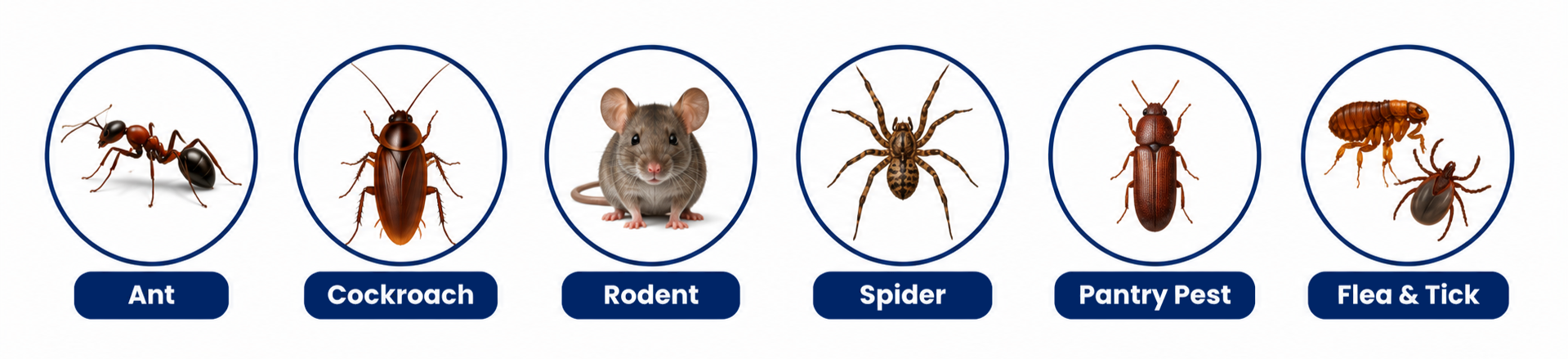
Common Commercial Pest Complaints
- Ants In Offices And Common Areas
Ants are often attracted to employee break rooms, kitchens, vending areas, and spaces where food or beverages are consumed. Even small crumbs or moisture around sinks can encourage recurring ant activity. Routine Commercial Ant Control helps identify nesting areas and reduce recurring infestations before they spread throughout the property. - Cockroaches Around Kitchens And Utility Rooms
Cockroaches thrive in warm, humid environments where food and water are available. Property managers commonly receive complaints from employees or tenants after cockroaches are seen in break rooms, utility rooms, restrooms, storage areas, or maintenance spaces. Professional Commercial Cockroach Control helps reduce infestations before they affect occupants or damage your property's reputation. - Rodent Activity Around Dumpsters And Storage Areas
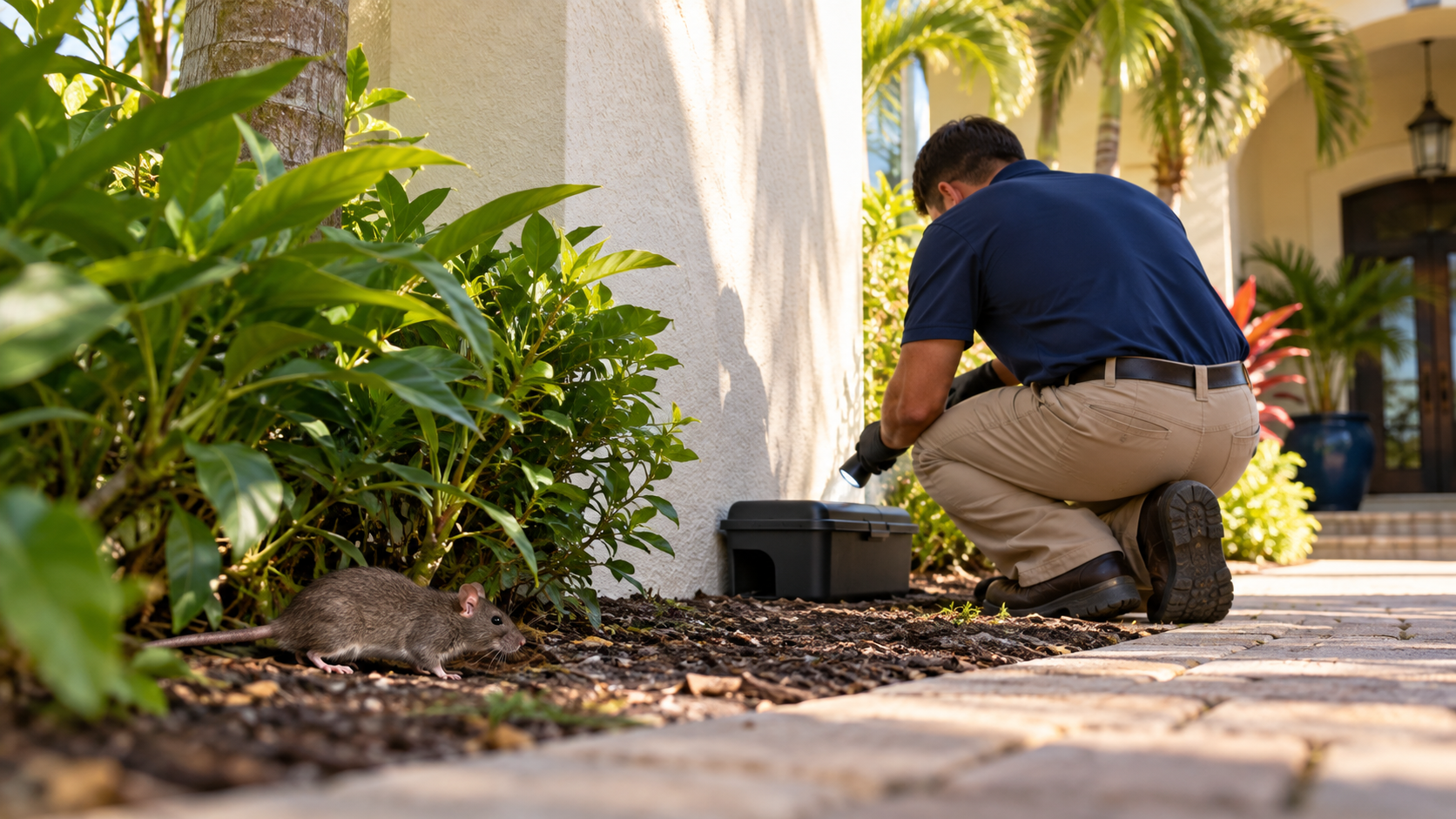
Rats and mice frequently travel near dumpsters, loading docks, garages, storage rooms, and utility areas where food, shelter, and water are readily available. Routine Commercial Rodent Control helps identify entry points and reduce rodent activity before damage or contamination occurs. - Spider Webs Around Entryways
Spiders commonly build webs around entrances, loading docks, exterior lighting, garages, and storage buildings where insects are abundant. Regular Commercial Spider Control helps reduce webs while addressing the insects that attract spiders in the first place. - Pantry Pests In Break Rooms
Office kitchens, employee break rooms, community clubhouses, and storage cabinets can occasionally develop pantry pest problems when dry goods are improperly stored or remain on shelves for extended periods. Routine Commercial Pantry Pest Control helps protect stored food items and reduce recurring activity. - Fleas And Ticks Around Common Areas
Pet-friendly communities, apartment complexes, HOAs, and commercial properties with frequent wildlife activity may occasionally experience flea and tick complaints in landscaped areas or shared outdoor spaces. Professional Commercial Flea & Tick Control helps reduce these pests before they become a larger concern for tenants or visitors.
Responding quickly to pest complaints is important, but identifying why those complaints are occurring is even more valuable. A comprehensive commercial pest management program helps reduce the root causes of pest activity, leading to fewer service requests, happier tenants, and a better-maintained property over the long term.
How To Choose The Right Commercial Pest Control Company
Choosing the right commercial pest control company is about more than finding someone who can eliminate pests. Property managers need a reliable partner who understands the unique challenges of commercial properties and focuses on preventing problems before they affect tenants, employees, customers, or daily operations. A proactive pest management program can save time, reduce complaints, and help avoid costly infestations over the long term.
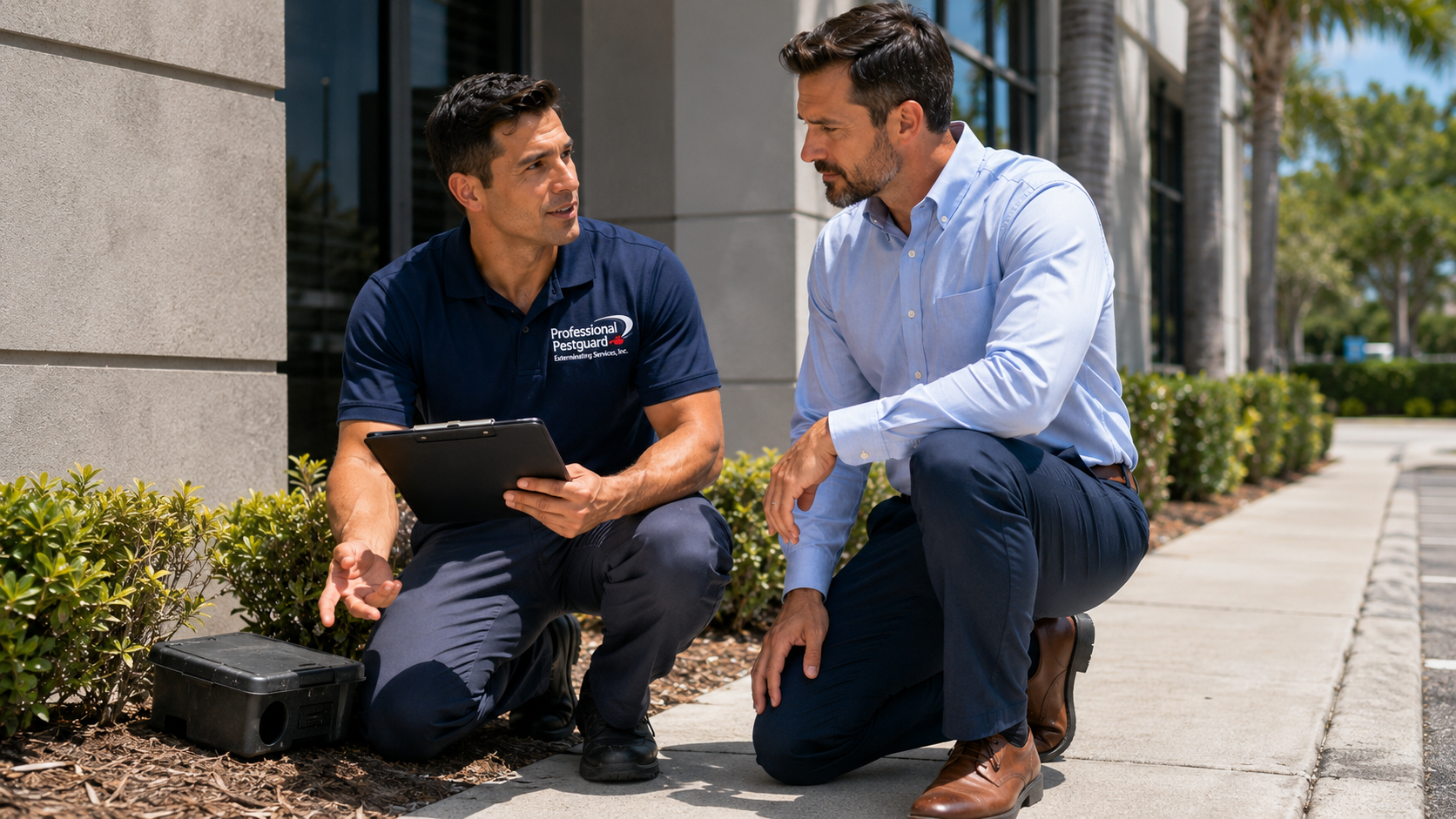
What Property Managers Should Look For
- Experience With Commercial Properties
Commercial buildings have different pest pressures than residential homes. Choose a company with experience servicing office buildings, apartment communities, warehouses, medical offices, retail centers, and other commercial facilities. - Customized Treatment Plans
Every property is different. A quality commercial pest control program should be tailored to your property's layout, pest history, occupancy, and maintenance needs instead of using the same approach for every building. - Preventative Pest Management
The best commercial pest control companies focus on preventing infestations rather than simply responding after complaints are received. Routine inspections and proactive treatments help reduce recurring pest activity throughout the year. - Fast Response When Problems Occur
Even with preventative service, occasional pest issues may arise. Choosing a company that responds quickly helps minimize disruptions while addressing problems before they spread. - Clear Communication
Property managers benefit from working with a pest control company that communicates clearly, explains findings, and provides practical recommendations for reducing pest activity around the property. - Long-Term Partnership
The goal isn't simply to eliminate today's pest problem—it's to help protect the property year after year. A trusted commercial pest control provider works alongside property managers to identify conducive conditions, recommend improvements, and develop a long-term pest prevention strategy.
Choosing the right pest management partner can make a significant difference in the number of complaints your property receives. A proactive commercial pest control program helps property managers spend less time reacting to pest issues and more time focusing on the overall success of the properties they manage.
Frequently Asked Questions About Commercial Pest Control
Whether you manage an office building, apartment community, retail center, or warehouse, commercial pest control plays an important role in protecting your property and reducing tenant complaints. Below are answers to some of the most common questions property managers and business owners ask.
What is commercial pest control?
Commercial pest control is a preventative pest management program designed to protect businesses, commercial buildings, and multi-unit properties from pest activity. Routine inspections and treatments help reduce the risk of infestations before they disrupt daily operations.
How often should a commercial property receive pest control?
The ideal service frequency depends on the type of property, the surrounding environment, and the level of pest pressure. Many commercial properties throughout South Florida benefit from routine monthly pest control to help prevent recurring infestations.
Why do apartment communities receive so many pest complaints?
Shared walls, multiple kitchens, trash collection areas, landscaping, and frequent resident turnover can all contribute to increased pest activity. Routine commercial pest control helps identify conducive conditions before they affect multiple units.
What are the most common commercial pests in South Florida?
Ants, cockroaches, rodents, spiders, pantry pests, and fleas are among the most common pests affecting commercial properties throughout South Florida.
Can routine pest control reduce tenant complaints?
Yes. A proactive pest management program helps reduce pest activity before tenants, employees, or customers begin noticing problems. Preventing infestations is often much more effective than responding after complaints have already been made.
Is commercial pest control different from residential pest control?
Yes. Commercial pest control programs are customized based on the property's size, occupancy, business type, and specific pest pressures. Commercial properties often require more frequent inspections and preventative maintenance than residential homes.
What should I do if tenants report pest activity?
Respond quickly and schedule an inspection as soon as possible. Addressing pest activity early helps reduce the likelihood of a larger infestation while showing tenants that their concerns are being taken seriously.
Why is preventative pest control more cost-effective?
Preventing pest problems early often reduces the need for larger, more expensive treatments later. Routine inspections help identify favorable conditions before infestations spread throughout a commercial property.
When should I contact a commercial pest control company?
If you're receiving recurring pest complaints, noticing increased pest activity, or want to proactively protect your property, professional Commercial Pest Control can help identify problem areas and reduce the conditions that attract pests.
Commercial Pest Control In Weston, Miami, Aventura & South Florida
Reducing pest complaints starts with a proactive approach. Property managers who invest in routine inspections, preventative maintenance, and professional pest management are often able to reduce recurring infestations, improve tenant satisfaction, and protect the long-term value of their properties. Addressing pest activity early is almost always more cost-effective than waiting for a widespread infestation to affect multiple tenants, employees, or customers.
At Professional Pestguard, we proudly provide professional Commercial Pest Control Company in Weston, FL, Commercial Pest Control Company in Miami, FL, and Commercial Pest Control Company in Aventura, FL, serving office buildings, apartment communities, warehouses, medical offices, retail centers, schools, hotels, government facilities, and other commercial properties throughout South Florida. Every property receives a customized pest management program designed to reduce pest activity while helping property managers prevent recurring complaints before they become costly problems.
If you're looking for a dependable commercial pest management partner, Professional Pestguard is here to help. Contact us today to request a free estimate and learn how our proactive commercial pest control programs can help protect your property, your tenants, and your reputation throughout the year.
About Professional Pestguard
Professional Pestguard provides professional pest control in Weston, FL and nearby communities including Davie, Sunrise, Pembroke Pines, and Plantation. With over 40 years of experience, our licensed technicians protect homes and businesses across Broward County and Miami-Dade County from ants, cockroaches, rodents, spiders, and other common South Florida pests using safe and effective treatments.