How Ant Problems Spread Through Apartment Communities
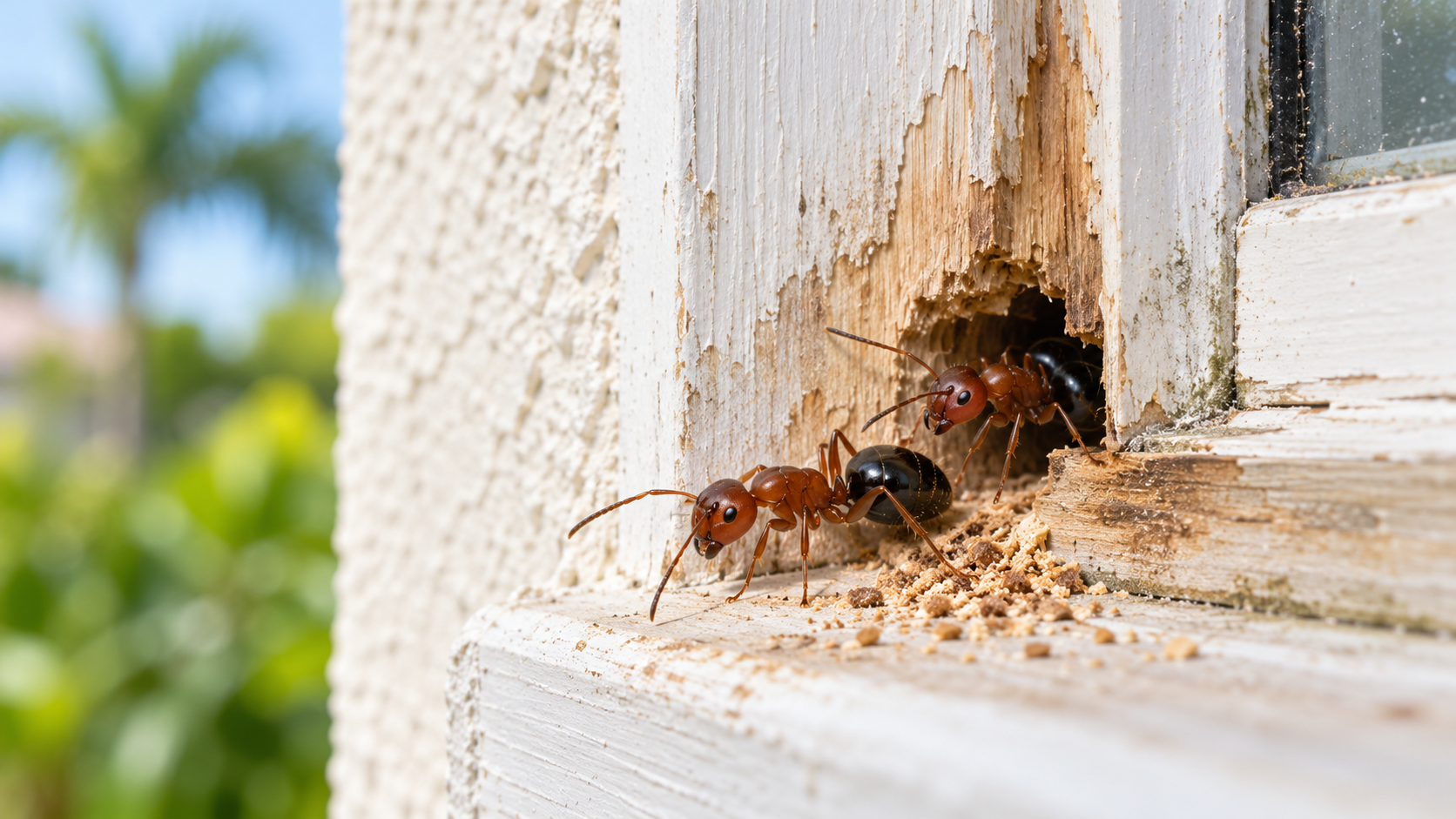
An ant complaint in one apartment may seem like an isolated issue, but in a multifamily community, it can quickly become a property-wide problem. Ants can travel through wall voids, plumbing lines, electrical openings, shared hallways, and exterior landscaping, allowing colonies to spread between neighboring units without being immediately noticed.
For apartment managers and multifamily property managers, treating only the unit where ants were reported may provide temporary relief without addressing the source of the infestation. Nearby colonies, moisture problems, food sources, and untreated entry points can allow ant activity to return or appear in other areas of the community.
A proactive apartment pest control plan helps identify how ants are entering the property, where colonies may be nesting, and which surrounding units or common areas could also be affected. In this guide, we explain how ant problems spread through apartment communities, why recurring infestations happen, and how professional multifamily pest control can help property management teams protect residents and reduce repeated service requests.
How Ants Spread Between Apartment Units
Unlike many pests that stay confined to a single area, ants are constantly searching for food, water, and new nesting locations. Once a colony becomes established within an apartment community, worker ants can easily travel throughout the property using structural pathways that connect multiple units.
Even when one apartment receives treatment, the colony itself may remain active elsewhere within the building. Without identifying the primary nesting site and treating surrounding activity, ants often return days or weeks later, resulting in repeated resident complaints and unnecessary service calls.
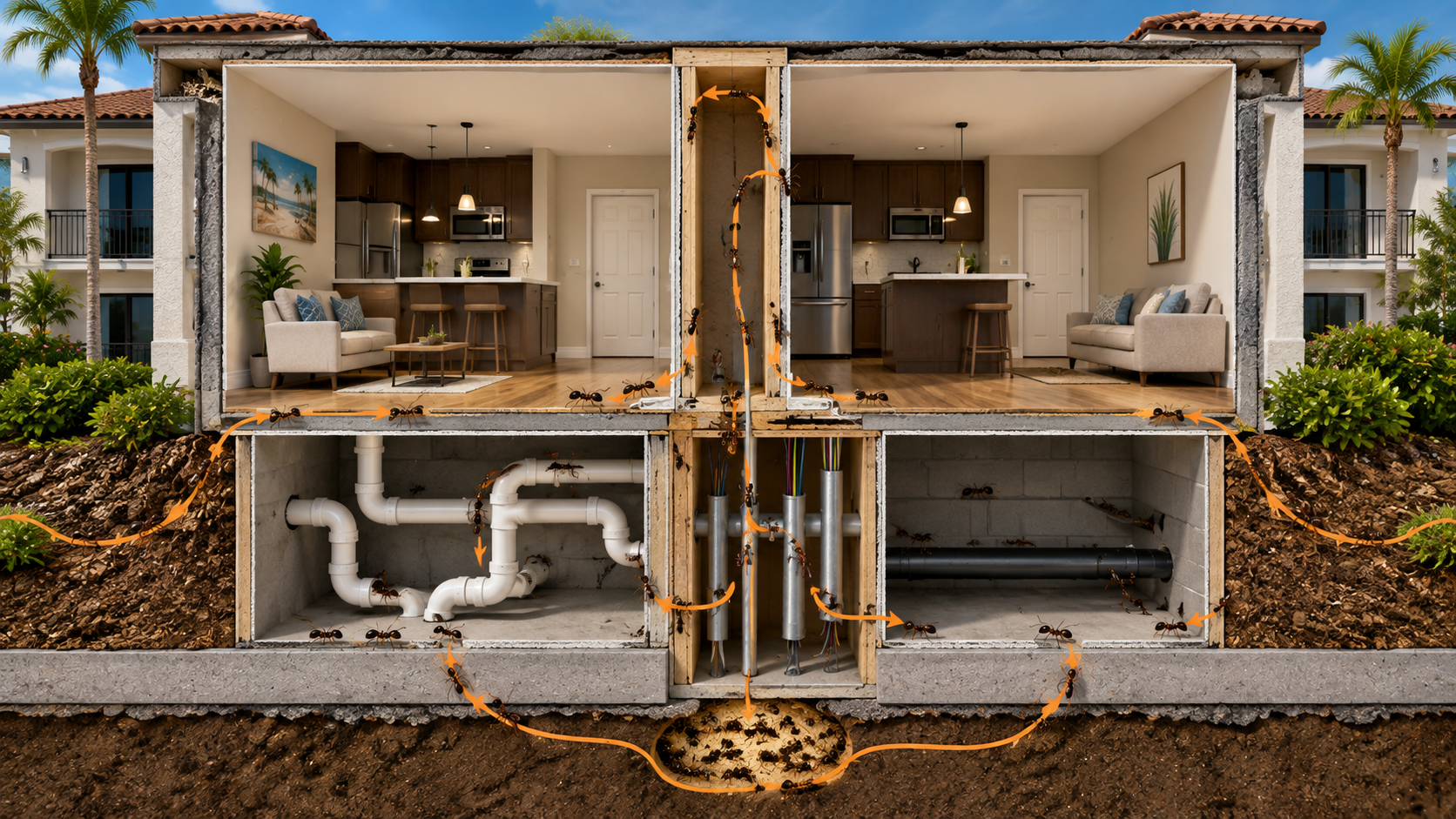
What Allows Ants to Spread Throughout Apartment Communities?
- Shared Wall Voids
Many apartment buildings have connected wall cavities that allow ants to travel unnoticed between neighboring units. Residents may believe they have separate infestations when the same colony is actually foraging throughout multiple apartments. - Plumbing Penetrations
Pipes running beneath kitchens, bathrooms, and laundry rooms often leave small gaps that provide ants with easy access between units. Moisture around plumbing also creates an attractive environment for nesting. - Electrical Conduits and Utility Openings
Electrical wiring, cable penetrations, and utility conduits create hidden pathways that ants can use to move throughout a building without being seen. - Utility Chases and Maintenance Areas
Shared utility rooms, maintenance corridors, and service chases often connect multiple apartments, allowing ant colonies to expand into neighboring units. - Common Areas and Hallways
Hallways, laundry rooms, mailrooms, fitness centers, clubhouses, and other shared spaces can all become travel routes for ants searching for food and water. - Exterior Landscaping
Mulch beds, shrubs, trees, and decorative landscaping surrounding apartment buildings often serve as nesting locations. From there, ants can easily move indoors through cracks and utility penetrations. - Foundation Cracks and Expansion Joints
Even very small openings around a building's foundation can provide entry points for ants, especially after heavy rain or routine irrigation. - Rooflines, Breezeways, and Balconies
Exterior architectural features often connect multiple apartments, giving ants additional pathways to spread between units without residents noticing.
For property managers, recurring ant complaints often indicate a building-wide issue rather than an isolated unit problem. Identifying how ants are moving throughout the property is one of the most important steps toward achieving long-term control. A professional Commercial Ant Control program can help locate nesting areas, eliminate active colonies, and prevent ants from spreading throughout the community.
Why Ant Problems Keep Coming Back in Apartment Communities
One of the biggest frustrations for apartment managers is receiving repeated ant complaints from the same building, even after treatment has been performed. In many cases, the issue isn't that the treatment failed—it's that the entire infestation was never addressed.
Ant colonies often contain thousands of workers and may have multiple nesting sites throughout a multifamily property. While residents typically notice ants inside their apartments, the colony itself may be located outdoors, inside wall voids, beneath sidewalks, in landscaping, or within shared utility spaces. Eliminating the visible ants inside one unit without targeting the colony allows new worker ants to continue entering the building.
Recurring infestations are also common when neighboring units have not been inspected. Ants can simply relocate to another apartment, travel through shared walls, and eventually return to the original unit once food or moisture becomes available again.
Why Do Apartment Ant Infestations Return?
- Treating Only the Reported Apartment
Eliminating ants inside a single apartment may temporarily reduce activity, but the main colony often remains active elsewhere within the building or outdoors. Without treating the source, worker ants will continue entering neighboring units. - Hidden Colonies Throughout the Property
Ant colonies frequently nest inside wall voids, beneath sidewalks, under mulch, around building foundations, and within shared utility spaces. These hidden nesting areas allow infestations to continue unnoticed. - Moisture Around Plumbing and HVAC Systems
Leaking pipes, condensation, and other moisture sources create ideal conditions for ants to survive and establish new colonies near kitchens, bathrooms, and mechanical rooms. - Food Sources in Common Areas
Crumbs, food waste, overflowing dumpsters, and improperly sealed trash containers provide a reliable food source that encourages ants to remain active throughout the property. - Structural Entry Points
Small cracks around doors, windows, utility penetrations, and expansion joints allow ants to move freely between apartments and common areas. - Seasonal Weather Changes
Heavy rainfall, drought, and extreme heat often drive ants indoors as they search for dependable food, water, and shelter, increasing activity throughout apartment communities. - Multiple Colonies on the Same Property
Large apartment communities may have several independent ant colonies established throughout the property. Treating one colony does not eliminate the others, making comprehensive inspections essential for long-term control.
Successful apartment ant control requires looking beyond the individual complaint. By identifying the source of the infestation and evaluating nearby units and common areas, property managers can significantly reduce recurring service requests and improve resident satisfaction. Learn more about our Commercial Ant Control services for apartment communities and multifamily properties.
What Attracts Ants to Apartment Communities?
Apartment communities provide everything ants need to survive: reliable food sources, moisture, shelter, and easy access between buildings and units. Even well-maintained properties can experience recurring ant activity when these conditions exist.
Unlike single-family homes, multifamily properties have dozens or even hundreds of kitchens, bathrooms, laundry areas, dumpsters, and landscaped spaces that can attract foraging ants. Once a colony discovers a dependable food or water source, worker ants leave invisible pheromone trails that guide other ants to the same location. As more ants follow these trails, a minor issue can quickly become a widespread infestation affecting multiple residents.
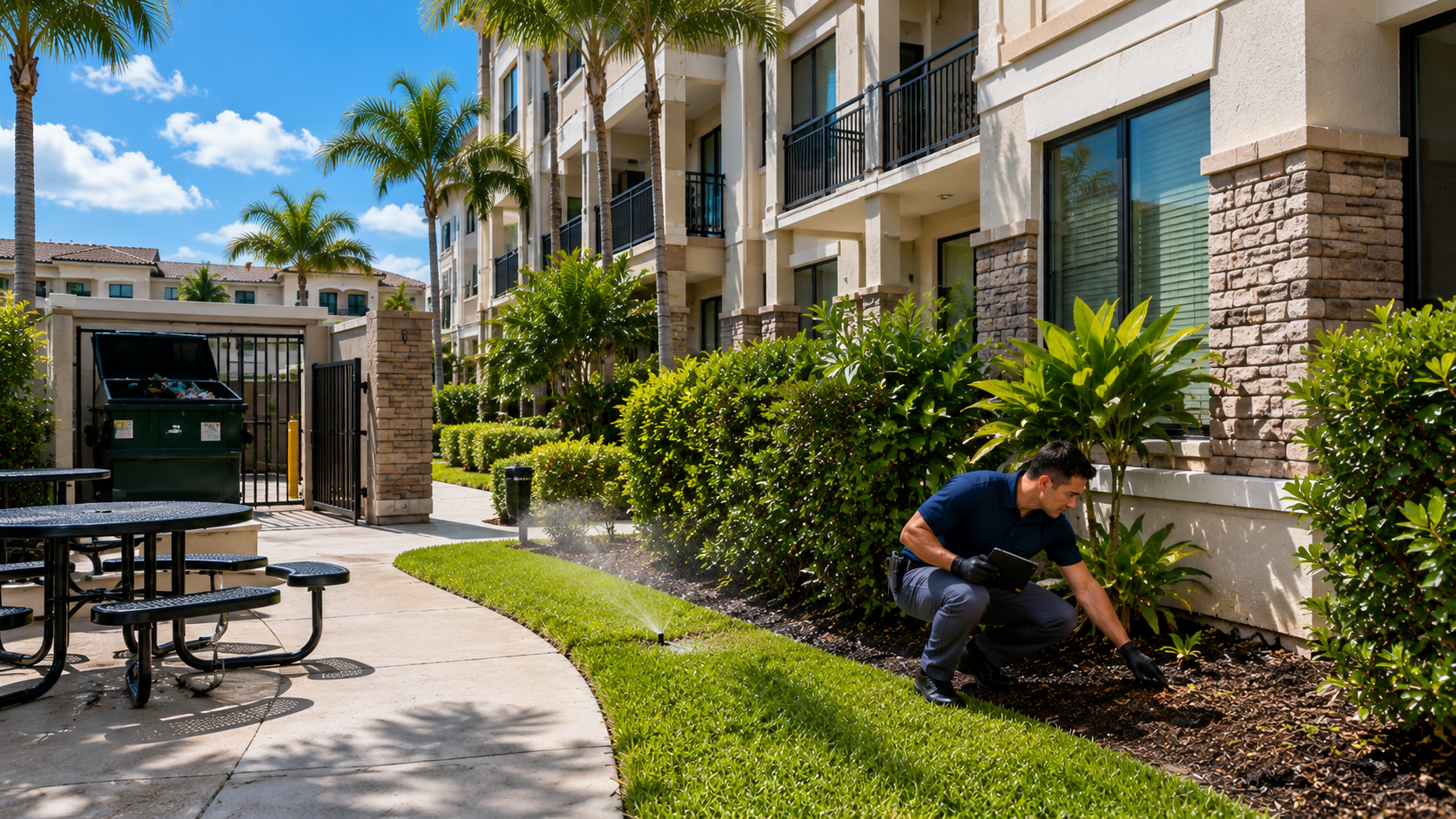
Common Conditions That Attract Ants
- Food Spills in Common Areas
Break rooms, clubhouses, community kitchens, mailrooms, and other shared spaces often contain crumbs, sugary spills, and food debris that attract foraging ants. - Dumpster and Trash Collection Areas
Overflowing dumpsters, leaking trash bags, and improperly sealed waste containers provide a consistent food source that encourages ants to establish nearby colonies. - Moisture Around Plumbing and HVAC Systems
Leaking pipes, condensation, and standing water beneath sinks or around HVAC equipment create ideal conditions for ants searching for water. - Dense Landscaping Around Buildings
Mulch beds, shrubs, decorative plants, and trees located against exterior walls provide shelter and nesting sites that allow ants to move indoors. - Cracks and Structural Entry Points
Small openings around doors, windows, foundations, and utility penetrations make it easy for ants to enter apartment buildings while remaining hidden from view. - Pet Food on Patios and Balconies
Food and water bowls left outdoors can quickly attract foraging ants, especially during South Florida's warm weather. - Outdoor Amenity Areas
Picnic tables, grilling stations, pool decks, and outdoor seating areas where food is frequently consumed can become regular feeding locations for ant colonies.
Regular inspections of these high-risk areas can help identify conditions that encourage ant activity before residents begin reporting problems. Addressing sanitation concerns, moisture issues, and structural entry points is an important part of preventing ants from becoming established throughout the property.
Property managers who combine preventive maintenance with routine professional inspections are often able to reduce recurring infestations, minimize resident complaints, and protect the overall appearance and reputation of their communities. Learn more about our Commercial Pest Control services for apartment communities throughout South Florida.
How Property Managers Can Help Prevent Ant Infestations
While professional pest control plays a critical role in eliminating active ant infestations, property managers and maintenance teams can also take proactive steps to reduce conditions that attract ants throughout the community. Preventing infestations before they begin often results in fewer resident complaints, lower maintenance costs, and improved tenant satisfaction.
Routine property inspections can identify conditions that allow ants to thrive before they become widespread problems. Small maintenance issues, such as plumbing leaks or gaps around utility penetrations, may seem minor but can provide ants with the moisture and access they need to establish new colonies.
Proactive Steps Property Managers Can Take
- Repair Plumbing Leaks and Eliminate Standing Water
Moisture is one of the biggest factors that attracts ants. Promptly repairing leaks, improving drainage, and eliminating standing water can make the property less inviting to foraging colonies. - Seal Structural Entry Points
Cracks around doors, windows, foundations, and utility penetrations allow ants to enter buildings and move between apartment units. Sealing these openings helps reduce access. - Maintain Clean Dumpster and Trash Areas
Overflowing dumpsters, food waste, and improperly sealed trash containers provide a dependable food source for ants. Regular cleaning and proper waste management help discourage infestations. - Trim Landscaping Away from Buildings
Trees, shrubs, and mulch beds that touch exterior walls can provide ants with easy access to buildings. Keeping landscaping properly maintained helps reduce nesting opportunities. - Remove Food Debris from Common Areas
Clubhouses, break rooms, outdoor seating areas, and other shared amenities should be cleaned regularly to eliminate crumbs, spills, and other food sources that attract ants. - Encourage Early Resident Reporting
Promptly addressing the first signs of ant activity allows infestations to be investigated before colonies have an opportunity to spread throughout the community. - Schedule Routine Commercial Pest Inspections
Preventative inspections help identify developing pest issues before they become widespread infestations, allowing property managers to address problems proactively rather than reactively.
Treating ant management as part of an ongoing property maintenance strategy is far more effective than responding only after complaints begin. Preventative inspections and routine commercial pest control services help stop infestations before they affect multiple buildings or large numbers of residents.
Many apartment communities find that a proactive pest management program not only reduces recurring infestations but also improves resident retention by creating a cleaner, more comfortable living environment. Our Commercial Pest Control services help apartment communities throughout Weston, Fort Lauderdale, Miami, Aventura, and the surrounding South Florida area stay ahead of pest problems before they impact residents.
Why Professional Multifamily Pest Control Matters
Treating ant activity in a single apartment may solve the immediate complaint, but it rarely addresses the underlying cause of the infestation. In multifamily communities, effective ant control requires evaluating the property as a whole, identifying where ants are nesting, how they are entering buildings, and what conditions are allowing colonies to thrive.
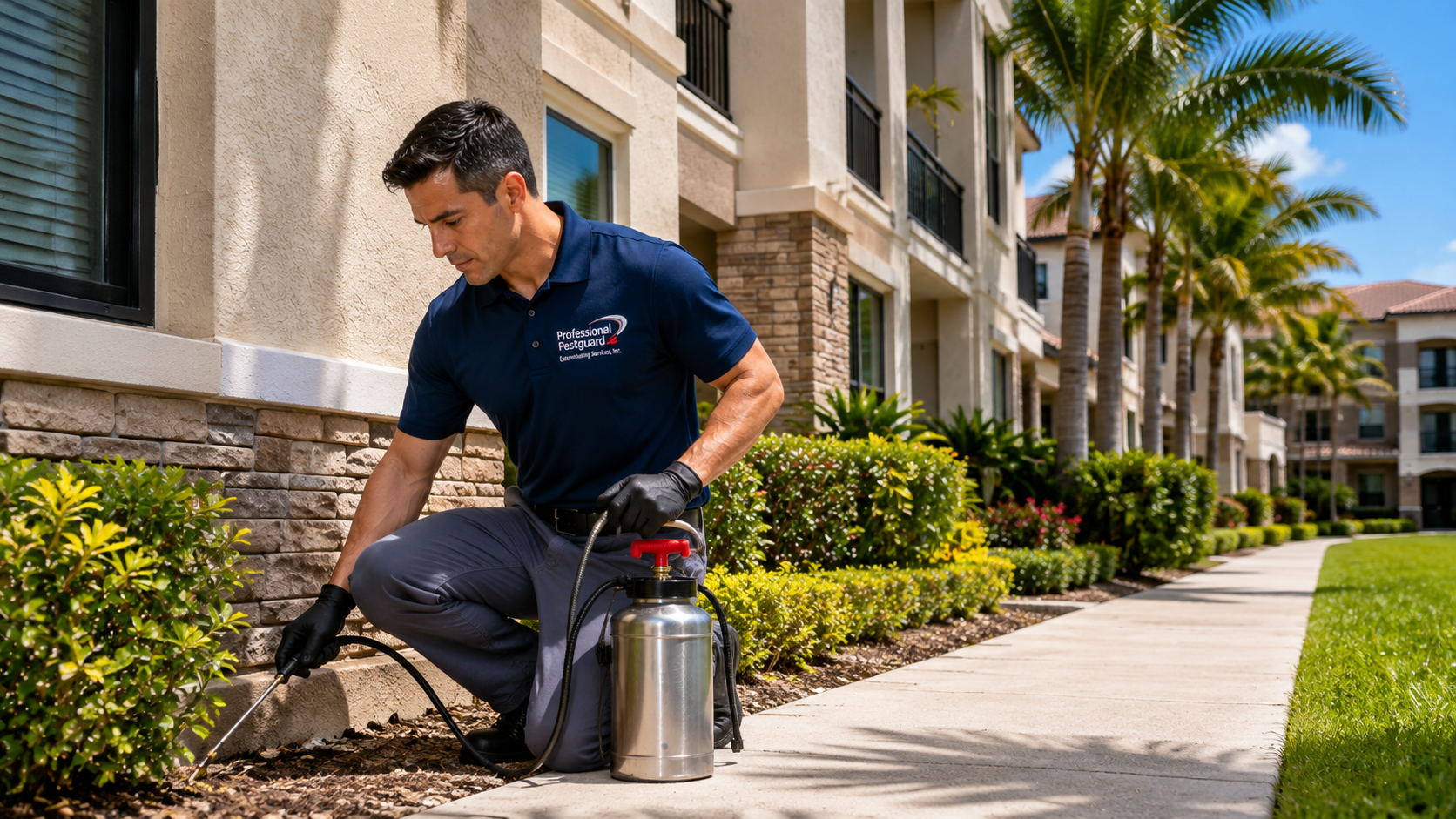
Professional multifamily pest control programs are designed to provide long-term solutions rather than temporary relief. Instead of focusing only on the apartment where ants were reported, technicians inspect surrounding units, common areas, exterior landscaping, utility access points, and other locations where ant colonies commonly develop.
What Does a Professional Multifamily Pest Control Program Include?
- Routine Property Inspections
Regular inspections of apartment buildings, common areas, exterior grounds, and utility spaces help identify developing ant activity before it becomes a widespread problem. - Identification of Ant Species and Nesting Areas
Different ant species require different treatment strategies. Proper identification allows technicians to locate nesting sites and implement the most effective solution. - Targeted Interior and Exterior Treatments
Treating both the inside and outside of the property helps eliminate active colonies while reducing the likelihood of ants re-entering apartment units. - Recommendations to Reduce Attractants
Pest professionals identify sanitation issues, moisture sources, structural entry points, and landscaping conditions that contribute to recurring infestations, allowing property managers to make preventative improvements. - Ongoing Monitoring and Preventative Service
Routine commercial pest control visits help detect new ant activity early, preventing small problems from spreading into multiple buildings or units. - Communication With Property Management
Detailed inspection findings and service recommendations help property managers make informed maintenance decisions while documenting pest management efforts.
By combining routine inspections with proactive treatment strategies, apartment managers can reduce recurring infestations, minimize resident complaints, and help protect the reputation of their communities. Investing in preventative pest management is often far more cost-effective than responding to repeated service requests after infestations have already spread.
A comprehensive Commercial Pest Control program focuses on preventing infestations before they become widespread, helping apartment communities maintain a healthier and more comfortable environment for residents.
Frequently Asked Questions About Apartment Ant Control
Apartment managers and multifamily property managers often have questions about preventing ant infestations and reducing recurring resident complaints. Below are answers to some of the most common questions about apartment ant control and commercial pest management.
Can ants spread from one apartment to another?
Yes. Ants commonly travel between apartment units through wall voids, plumbing penetrations, electrical openings, utility chases, and shared structural spaces. Although residents may only notice ants inside one apartment, the colony may actually be located elsewhere in the building or even outdoors. This is why treating a single unit often fails to eliminate the entire infestation.
Why do ant problems keep coming back after treatment?
Recurring ant infestations often occur because the original colony was never eliminated. Treating only the apartment where ants were seen may reduce activity temporarily, but ants can continue entering from nearby units, exterior landscaping, or hidden nesting areas inside the building. Long-term control requires identifying the source of the infestation and addressing conditions that attract ants.
How can apartment managers help prevent ant infestations?
Property managers can help reduce ant activity by repairing plumbing leaks, sealing structural gaps, maintaining clean dumpster areas, trimming landscaping away from buildings, and scheduling regular commercial pest inspections. Preventative maintenance combined with professional pest management is one of the most effective ways to reduce recurring infestations.
What types of ants are most common in South Florida apartment communities?
Some of the most common ants found in South Florida apartment communities include ghost ants, carpenter ants, white-footed ants, bigheaded ants, pharaoh ants, and fire ants. Each species behaves differently, making proper identification important for selecting the most effective treatment strategy.
When should a property manager contact a commercial pest control company?
Property managers should contact a commercial pest control company as soon as recurring ant complaints begin, multiple units report activity, or ants are consistently found in common areas. Early intervention can help prevent infestations from spreading throughout the community and reduce future service requests.
How often should apartment communities receive commercial pest control service?
The ideal service schedule depends on the size of the property, surrounding environment, and previous pest history. Many apartment communities benefit from routine commercial pest control services that include regular inspections and preventative treatments to help detect and address pest activity before it becomes a larger issue.
Key Takeaways for Apartment Managers
Keeping ant infestations under control requires more than responding to individual resident complaints. Understanding how ants spread through apartment communities allows property managers to take proactive steps that reduce recurring infestations and improve resident satisfaction.
Key points to remember:
- Ants can easily spread between apartment units through shared walls, plumbing penetrations, utility chases, and exterior landscaping.
- Treating a single apartment often fails to eliminate the entire colony.
- Moisture, food sources, and structural entry points contribute to recurring infestations.
- Routine inspections and preventative maintenance help reduce conditions that attract ants.
- A proactive commercial pest management program can minimize resident complaints and help protect your property's reputation.
Ready to Protect Your Apartment Community From Ant Infestations?
Recurring ant complaints don't have to become a routine part of property management. Professional Pestguard partners with apartment communities, condominiums, HOAs, and multifamily properties throughout Weston, Fort Lauderdale, Miami, Aventura, and the surrounding South Florida area to provide proactive commercial pest control solutions that help stop infestations before they spread.
Whether you're dealing with recurring resident complaints or want to implement a preventative pest management program, our experienced team can develop a customized treatment plan designed specifically for your property.
Contact Professional Pestguard today to schedule a commercial pest inspection and learn how our commercial pest control services can help protect your residents, your property, and your reputation.
About Professional Pestguard
Professional Pestguard provides professional pest control in Weston, FL and nearby communities including Davie, Sunrise, Pembroke Pines, and Plantation. With over 40 years of experience, our licensed technicians protect homes and businesses across Broward County and Miami-Dade County from ants, cockroaches, rodents, spiders, and other common South Florida pests using safe and effective treatments.