Why Ghost Ants Are So Hard to Eliminate in South Florida Homes
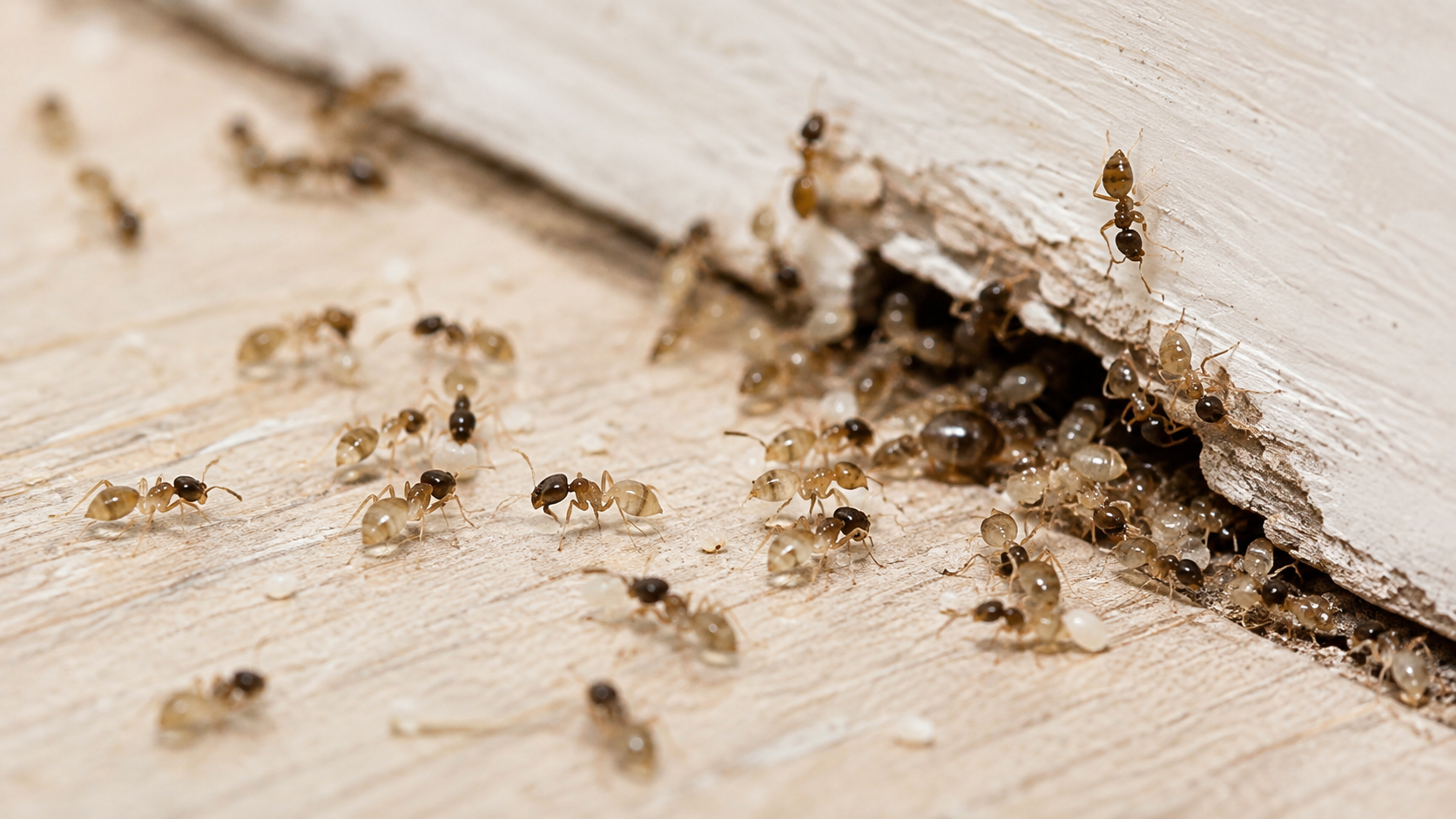
Ghost ants may be tiny, but they can create a surprisingly difficult pest problem for South Florida homeowners. These ants are commonly found in kitchens, bathrooms, laundry rooms, wall voids, cabinets, and other areas where moisture and food are available. Their pale legs and nearly transparent bodies can make them difficult to see, while their ability to form multiple nesting sites allows infestations to spread throughout a home before the problem is fully recognized.
What makes ghost ants especially challenging is that standard sprays and do-it-yourself treatments can sometimes make the infestation worse. When a colony is disturbed, ghost ants may divide into smaller groups and establish new nests in other areas of the home. This behavior, combined with South Florida’s warm and humid climate, makes professional ghost ant control especially important for long-term results.
In this guide, we’ll explain why ghost ants are so difficult to eliminate, where they commonly nest, what attracts them indoors, and how a professional ant treatment program can help control the entire infestation rather than only the ants you can see. Whether you are searching for an experienced ant exterminator in Weston or dependable pest control in Weston, understanding ghost ant behavior is the first step toward preventing recurring problems.
Why Ghost Ants Are So Difficult to Control
Ghost ants are difficult to eliminate because the ants homeowners see are usually only a small portion of the infestation. A colony may contain multiple queens, numerous nesting sites, and trails that extend through cabinets, wall voids, baseboards, plumbing areas, and outdoor landscaping. Treating only the visible ants may provide temporary relief, but it often fails to reach the colonies responsible for the activity.
Unlike some ant species that rely on a single central nest, ghost ants can establish several connected colonies throughout a property. This flexible colony structure allows them to survive disturbances, relocate quickly, and continue producing workers even after one nesting area has been treated.
What Makes Ghost Ant Infestations So Persistent?
- Multiple Queens
Ghost ant colonies may contain several reproductive queens. This makes the colony more resilient because eliminating one queen does not necessarily stop the infestation. - Multiple Nesting Sites
Ghost ants can nest in wall voids, cabinets, potted plants, beneath loose materials, around plumbing, and in landscaping outside the home. Several small colonies may be active at the same time. - Colony Budding
When ghost ants feel threatened, part of the colony may separate and create a new nest elsewhere. This process, known as budding, can cause the infestation to spread into additional rooms. - Tiny Size
Their small size allows ghost ants to travel through extremely narrow cracks and gaps around windows, doors, baseboards, pipes, and electrical outlets. - Constant Access to Food and Moisture
Kitchens, bathrooms, laundry rooms, and other humid areas provide the sugar, water, and shelter ghost ants need to survive. - Year-Round South Florida Activity
South Florida’s warm, humid climate allows ghost ants to remain active throughout much of the year. They may move indoors during heavy rain, extreme heat, or dry conditions while searching for more dependable resources.
Because of these behaviors, effective ghost ant control requires more than spraying the ants that appear on countertops or along baseboards. A successful treatment strategy must account for the colony’s nesting patterns, food preferences, moisture sources, and ability to spread when disturbed.
For homeowners dealing with recurring ghost ants in Florida, early identification and the correct treatment method can make a major difference. Professional Ant Control helps target the broader infestation instead of providing only temporary relief from visible activity.
Where Do Ghost Ants Commonly Nest?
One of the biggest reasons ghost ants are so difficult to eliminate is that their nests are rarely located in obvious places. Unlike larger ant species that build noticeable mounds outdoors, ghost ants prefer hidden, protected areas where they can remain undisturbed. They frequently establish multiple nesting sites both inside and outside the home, allowing the colony to expand while remaining difficult to locate.
Because these ants are so small, they can nest almost anywhere moisture, warmth, and food are available. It's common for homeowners to see ghost ants traveling across countertops or sinks while the actual colony is hidden behind walls or outside in nearby landscaping.
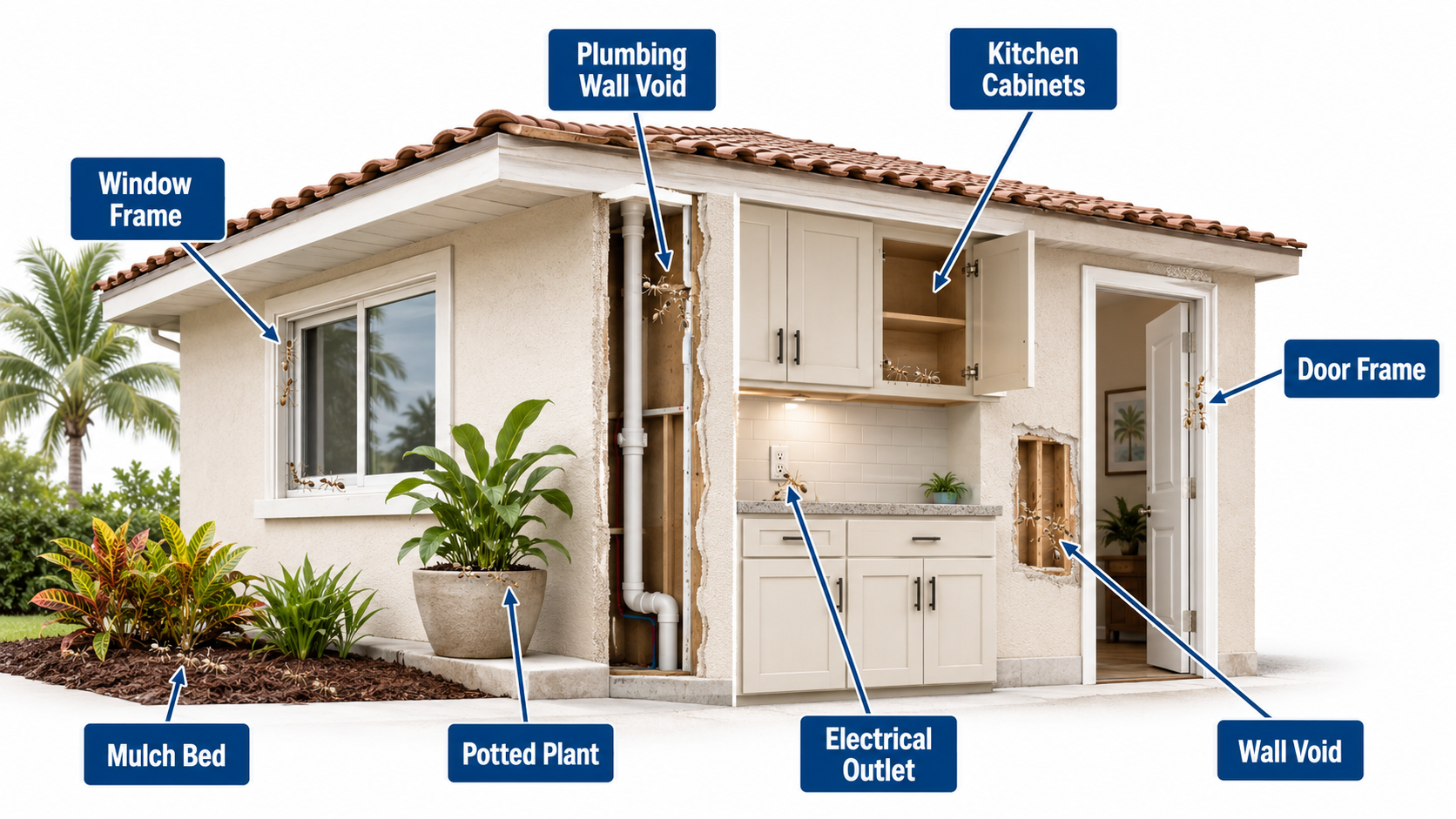
Common Ghost Ant Nesting Locations
- Wall Voids
Ghost ants commonly nest inside wall cavities where they are protected from weather and human activity. This allows them to move throughout the home without being seen. - Behind Cabinets And Appliances
Warm, dark spaces behind kitchen cabinets, refrigerators, dishwashers, and other appliances provide ideal nesting conditions, especially when moisture is present. - Bathrooms And Laundry Rooms
Ghost ants are attracted to humid environments. Plumbing penetrations, leaking pipes, and damp areas around sinks, tubs, and washing machines often become nesting locations. - Potted Plants And Mulch Beds
Outside the home, ghost ants frequently establish colonies beneath mulch, decorative stones, landscape timbers, flower pots, and other protected areas that retain moisture. - Around Windows And Door Frames
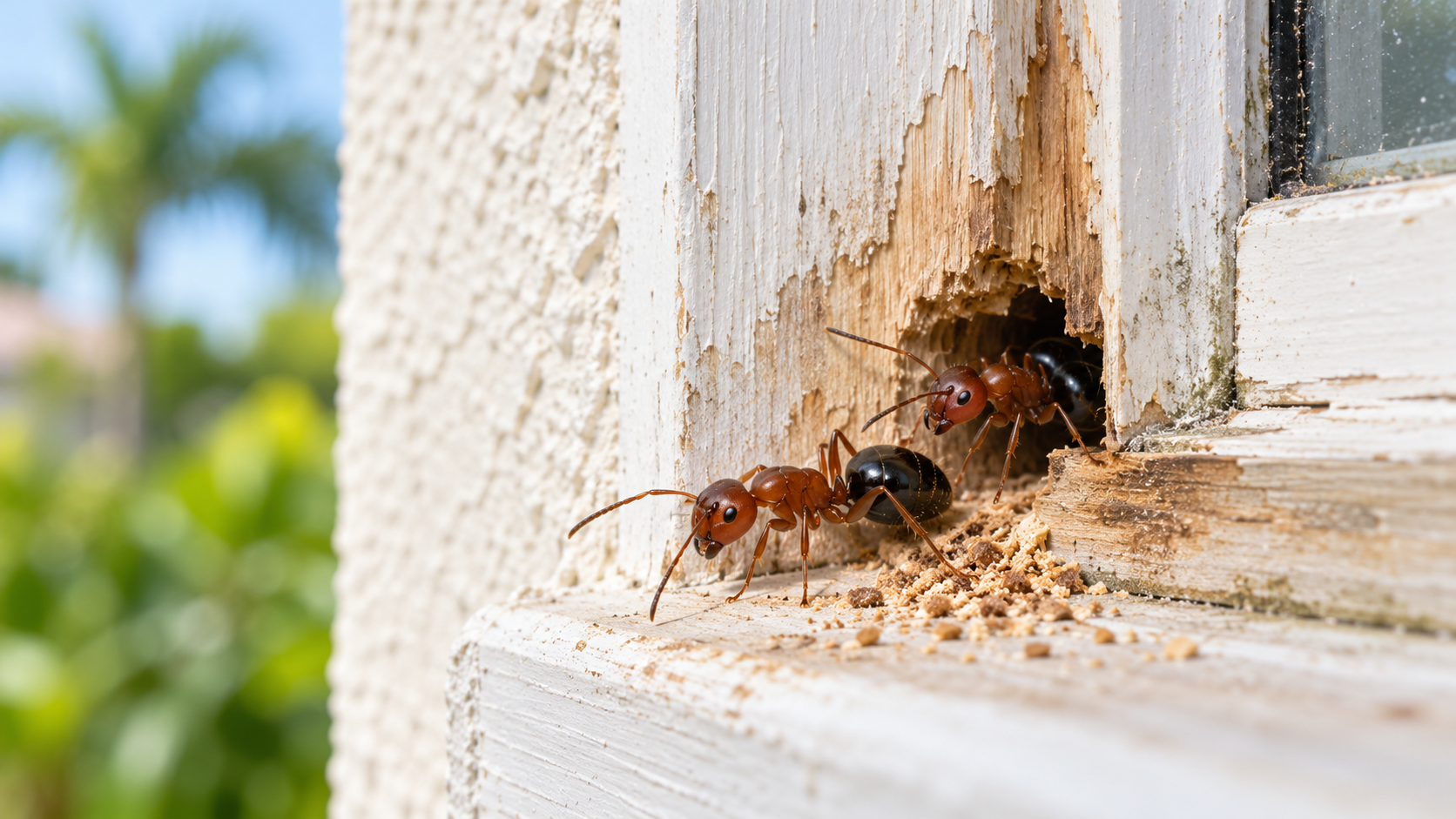
Small gaps around windows and doors provide easy access indoors. Colonies may develop nearby while worker ants travel inside searching for food and water. - Electrical Outlets And Utility Openings
Because of their tiny size, ghost ants often travel through openings around electrical outlets, plumbing penetrations, and utility lines that connect different parts of the home.
Finding the ants you see is often much easier than locating the colonies producing them. Since ghost ants commonly establish multiple nests throughout a property, successful ghost ant control requires identifying where the colony is nesting—not just where worker ants are foraging. Professional Ant Control focuses on treating the source of the infestation while helping reduce the conditions that allow ghost ants to continue spreading.
Why DIY Ghost Ant Treatments Often Fail
Many homeowners' first reaction to seeing ghost ants is to spray the ants they find on countertops, window sills, or floors. While this may kill the visible workers, it rarely solves the actual problem. In fact, some over-the-counter treatments can make ghost ant infestations even more difficult to control.
Because ghost ants commonly live in multiple connected colonies, eliminating one group of workers doesn't remove the queens or the hidden nests. When the colony senses danger, it may respond by dividing into additional colonies, allowing the infestation to spread throughout the home instead of disappearing.
Why Store-Bought Treatments Often Don't Eliminate Ghost Ants
- Sprays Only Kill The Ants You See
Worker ants represent only a small portion of the overall colony. Spraying visible ants usually has little impact on the queens or hidden nesting sites responsible for the infestation. - Colonies May Split And Relocate
When ghost ants are disturbed by certain insecticides, the colony may divide into several smaller colonies. This process, known as budding, often causes homeowners to begin seeing ants in multiple rooms instead of just one. - The Queens Remain Protected
Ghost ant queens usually stay hidden inside protected nesting sites where surface sprays cannot reach them. As long as the queens survive, the colony can continue producing new worker ants. - Not All Baits Are Effective
Ghost ants frequently change their feeding preferences depending on the colony's needs. A bait that works one week may become less attractive later, making proper bait selection and placement an important part of successful control. - Hidden Nests Continue Producing Workers
Even after visible ants disappear, additional workers may continue emerging from nests hidden behind walls, beneath cabinets, around plumbing, or outside in landscaping.
Professional Ghost Ant Control focuses on eliminating the entire colony rather than simply reducing the number of ants you see. By identifying nesting locations, using the appropriate baiting strategies, and treating both indoor and outdoor activity, professional treatments are designed to provide longer-lasting control than many do-it-yourself methods.
How To Help Prevent Ghost Ant Infestations
Completely preventing ghost ants isn't always possible in South Florida's warm, humid climate, but homeowners can take several steps to make their property less attractive to these persistent pests. Reducing food, moisture, and access points can significantly lower the likelihood of recurring infestations while supporting long-term ghost ant control.
Tips To Help Prevent Ghost Ants
- Clean Up Food And Drink Spills Quickly
Ghost ants are especially attracted to sugary foods and liquids. Wipe down countertops, sweep floors, and clean spills promptly to remove food sources that attract foraging worker ants. - Store Food In Sealed Containers
Keep snacks, cereals, pet food, and other pantry items in airtight containers whenever possible. Proper food storage helps reduce attractants inside the home. - Repair Moisture Problems
Ghost ants often gather around sinks, bathrooms, laundry rooms, and other damp areas. Repair leaking pipes, eliminate standing water, and reduce excess humidity to make your home less inviting. - Seal Small Entry Points
Inspect windows, doors, utility penetrations, and foundation cracks for small openings that may allow ants to enter. Replacing damaged weather stripping and sealing gaps can help reduce indoor activity. - Trim Landscaping Around Your Home
Trees, shrubs, vines, and mulch placed directly against the home create bridges for ants to travel indoors. Keeping vegetation trimmed back reduces easy access to the structure. - Reduce Outdoor Food Sources
Clean outdoor eating areas, secure garbage containers, and remove fallen fruit or sugary residue that may attract ant colonies near your home. - Schedule Routine
Ant Control
Because ghost ants often establish multiple hidden colonies, routine Ant Control provides ongoing inspections and treatments that help manage infestations before they become widespread.
Small maintenance improvements can make a significant difference in reducing ghost ant activity, but once colonies have become established inside wall voids or throughout the property, professional ghost ant control is usually the most effective long-term solution. Addressing the infestation early helps prevent colonies from spreading and becoming even more difficult to eliminate.
Frequently Asked Questions About Ghost Ants
Ghost ants are one of the most common household ants found in South Florida, and they're also one of the most frustrating to eliminate. Below are answers to some of the questions homeowners ask most often about ghost ants and how to control them.
Why are ghost ants so difficult to eliminate?
Ghost ants often establish multiple colonies with several queens spread throughout a property. Because they can relocate and create new nesting sites when disturbed, simply killing the ants you see rarely eliminates the entire infestation.
Where do ghost ants usually nest?
Ghost ants commonly nest inside wall voids, behind cabinets, around plumbing, beneath mulch, inside potted plants, beneath landscape materials, and other protected areas where moisture and shelter are available.
Are ghost ants dangerous?
Ghost ants are not considered dangerous and rarely bite people. However, they can contaminate food preparation areas, become a persistent nuisance indoors, and quickly spread throughout a home if left untreated.
Why do ghost ants keep coming back?
Recurring ghost ant activity usually means the main colony has not been eliminated or that favorable conditions still exist around the home. Multiple queens and hidden nesting sites allow the colony to continue producing worker ants even after surface treatments.
What attracts ghost ants into a home?
Ghost ants are attracted to sugary foods, moisture, pet food, crumbs, leaking plumbing, and other readily available food and water sources. They also take advantage of small gaps around windows, doors, and utility penetrations to enter the home.
Do store-bought ant sprays work on ghost ants?
Store-bought sprays may kill the ants you see, but they often fail to eliminate the hidden colonies responsible for the infestation. In some cases, disturbing the colony may cause it to split into multiple nests, making the problem even more difficult to control.
When should I call a professional for ghost ants?
If ghost ants continue returning despite cleaning, sealing entry points, or using over-the-counter products, it's time to consider professional Ant Control. A professional treatment focuses on eliminating the colony rather than simply reducing the number of visible ants.
Ghost Ant Control In Weston & Broward County
Ghost ants may be small, but they can quickly become one of the most frustrating household pests to eliminate. Their ability to establish multiple nesting sites, relocate colonies, and move through tiny openings makes them much more difficult to control than many homeowners expect. Taking action early is the best way to prevent a small ghost ant problem from spreading throughout your home.
At Professional Pestguard, we specialize in professional ghost ant control for homeowners throughout Broward County. Whether you're searching for an experienced Ant Exterminator in Weston, FL, dependable Ant Exterminator in Davie, FL, trusted Ant Exterminator in Plantation, FL, reliable Ant Exterminator in Pembroke Pines, FL, or professional Ant Exterminator in Sunrise, FL, our experienced technicians use proven treatment strategies designed to target the entire colony—not just the ants you can see.
If you're tired of seeing ghost ants returning to your kitchen, bathroom, or other areas of your home, don't wait for the infestation to continue spreading. Contact Professional Pestguard today to request a free estimate and learn how our professional ghost ant control services can help keep your South Florida home protected year-round.
About Professional Pestguard
Professional Pestguard provides professional pest control in Weston, FL and nearby communities including Davie, Sunrise, Pembroke Pines, and Plantation. With over 40 years of experience, our licensed technicians protect homes and businesses across Broward County and Miami-Dade County from ants, cockroaches, rodents, spiders, and other common South Florida pests using safe and effective treatments.