What Pests Are Most Active In June In South Florida?
June is one of the busiest months for pest activity in South Florida. As temperatures rise, humidity increases, and summer rainstorms become more frequent, many homeowners begin noticing more ants, cockroaches, rodents, mosquitoes, and other pests around their homes.
If it feels like pests suddenly appear everywhere this time of year, you're not imagining it. June creates ideal conditions for many common South Florida pests, allowing populations to grow rapidly and increasing the likelihood of pest activity indoors and around the property.
Throughout Weston, Davie, Sunrise, Pembroke Pines, and surrounding South Florida communities, homeowners often report increased ant trails, nighttime cockroach sightings, rodent activity, and other pest problems during the early summer months. Understanding which pests are most active in June can help homeowners identify problems early and take steps to reduce the risk of larger infestations.
In this guide, we'll cover the most active pests in South Florida during June, why their activity increases this time of year, common warning signs to watch for, and how professional residential pest control services can help protect your home throughout the summer season.
Why Pest Activity Increases During June
June marks the beginning of one of the busiest pest seasons in South Florida. Rising temperatures, frequent rainstorms, and increased humidity create ideal conditions for many common household pests.
As summer weather patterns become more consistent, pest populations often expand rapidly. Homeowners may suddenly notice more ant trails, increased cockroach activity, rodent sightings, and other signs of pest pressure around the home.
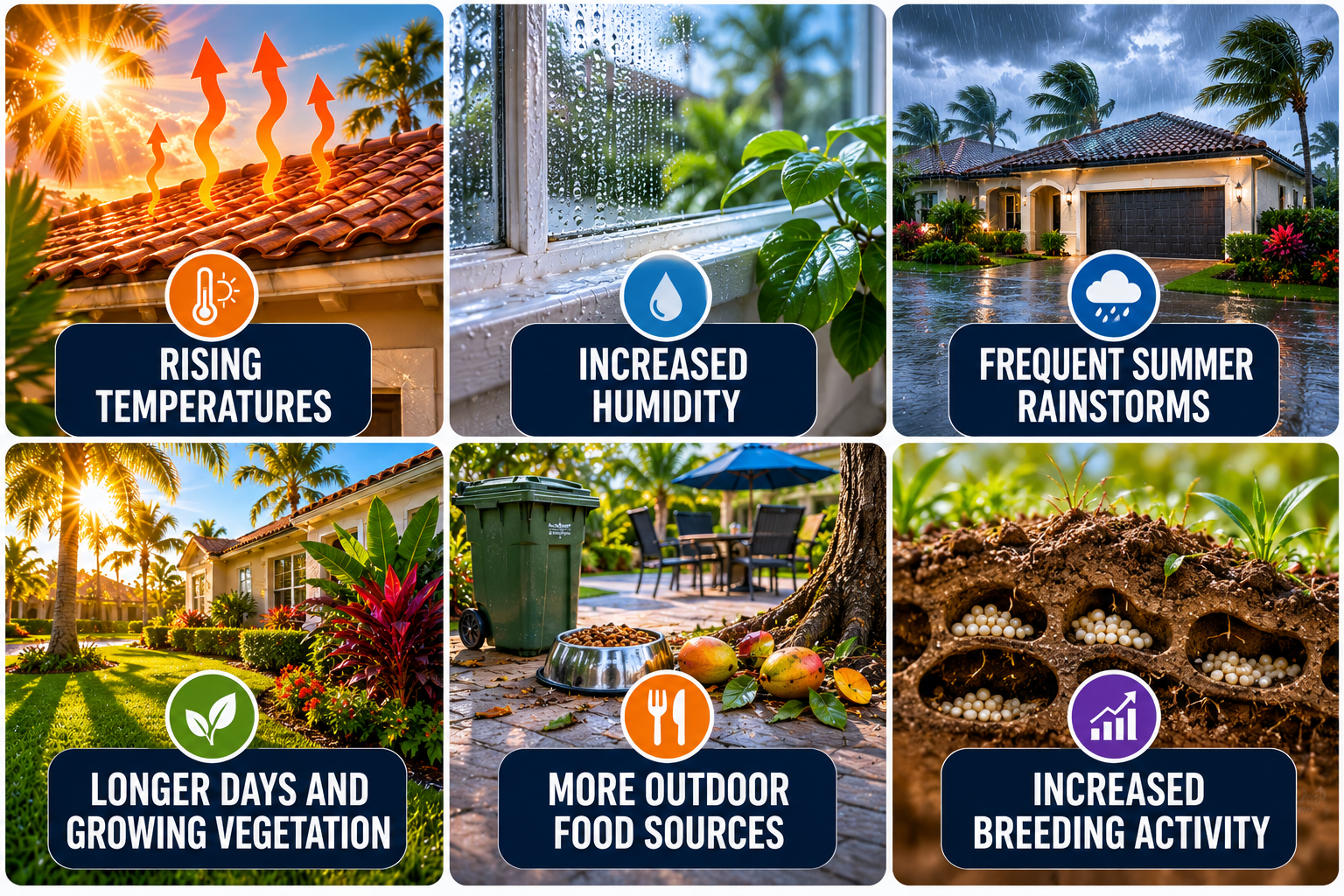
Common Reasons Pests Become More Active
- Rising Temperatures
Warmer weather accelerates insect development and increases daily activity levels. Many pests become more active as temperatures climb and food sources become easier to locate. - Increased Humidity
South Florida's humidity provides favorable conditions for ants, cockroaches, and many other pests. Moist environments help support nesting areas and provide the water sources pests need to survive. - Frequent Summer Rainstorms
Heavy rainfall can flood nests, burrows, and outdoor harborage areas. As a result, many pests are forced to search for drier shelter inside homes and structures. - Longer Days And Growing Vegetation
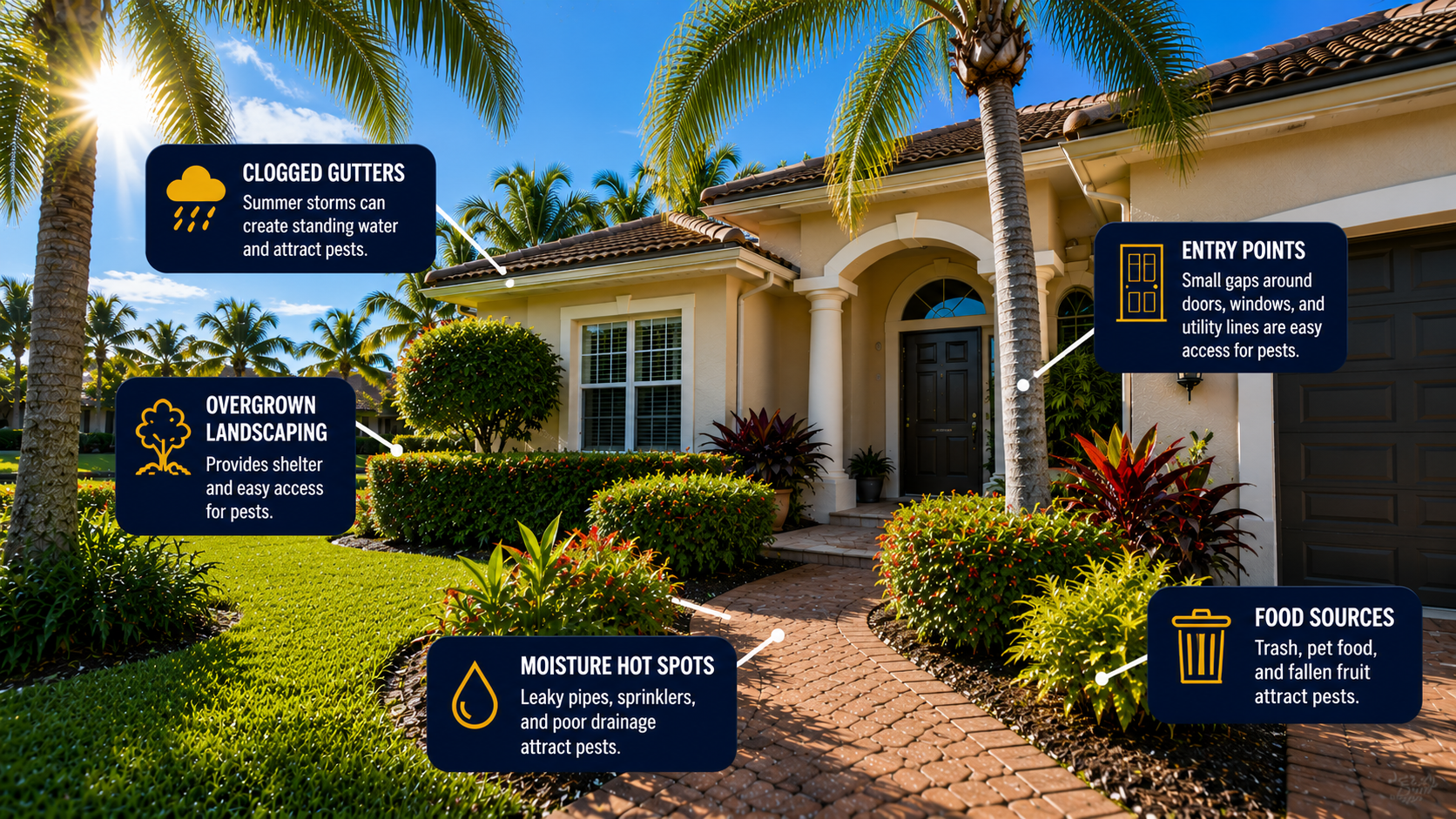
Rapid plant growth during summer creates additional shelter and travel routes for pests. Dense landscaping can also retain moisture and protect pests from heat and predators. - More Outdoor Food Sources
Fallen fruit, outdoor pet food, overflowing trash bins, and outdoor dining areas become increasingly attractive during summer months. These food sources can support larger pest populations around the property. - Increased Breeding Activity
Many pest species reproduce more rapidly during warm weather conditions. Larger populations often mean increased sightings, expanded colonies, and greater pressure around homes.
June often creates the perfect combination of heat, moisture, food sources, and shelter that pests need to thrive. Understanding these seasonal factors can help homeowners identify problems early and take steps to reduce pest activity before infestations become more difficult to control.
Ants Become More Active During Summer
Ant activity often increases significantly during June as temperatures rise and summer rainstorms become more frequent. Warm weather encourages colony growth while heavy rainfall can force ants to relocate and search for food, water, and shelter closer to homes.
Throughout South Florida, homeowners commonly notice larger ant trails, increased outdoor activity, and ants appearing in kitchens, bathrooms, and other moisture-prone areas. Many infestations begin outdoors before eventually spreading into the home.
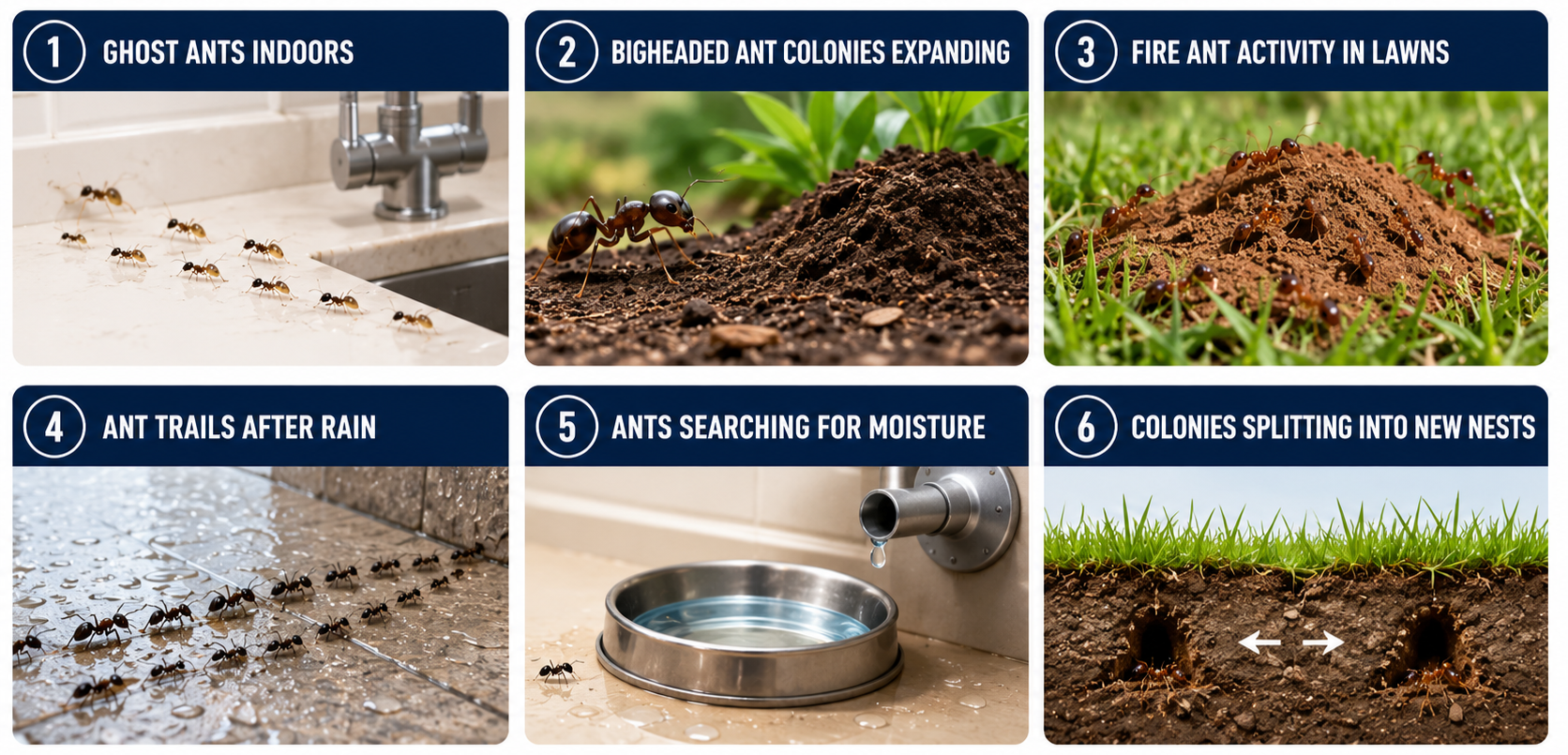
Common June Ant Problems
- Ghost Ants Indoors
Ghost ants are one of the most common nuisance ants found inside South Florida homes. Their tiny size allows them to enter through extremely small openings and quickly establish trails throughout kitchens, bathrooms, and living spaces. - Bigheaded Ant Colonies Expanding
Bigheaded ant colonies often expand rapidly during warm weather conditions. Large colonies can spread throughout lawns, mulch beds, and landscaping areas surrounding the home. - Fire Ant Activity In Lawns
Fire ant mounds become more noticeable during summer as colonies remain active and continue growing. Homeowners may encounter mounds in lawns, flower beds, playground areas, and around irrigation systems. - Ant Trails After Rain
Summer rainstorms frequently disrupt outdoor nesting sites and force ants to search for new routes. This often leads to sudden ant trails appearing along foundations, patios, sidewalks, and indoor entry points. - Ants Searching For Moisture
During hot weather, ants actively seek reliable water sources. Plumbing leaks, condensation, pet water bowls, and damp landscaping can all attract increased ant activity. - Colonies Splitting Into New Nests
Many ant species reproduce by creating satellite colonies during favorable weather conditions. This can cause infestations to spread quickly and make ant problems appear in multiple areas of a property at the same time.
Because many ant infestations begin outdoors before moving inside, early identification is important. Homeowners experiencing recurring ant activity may benefit from professional ant control services and routine residential pest control treatments designed to target colonies at their source.
Cockroaches Thrive During South Florida Summers
Cockroach activity often increases during June as hot temperatures, high humidity, and frequent rainstorms create favorable conditions for survival and reproduction. Many homeowners begin noticing more roaches around patios, garages, kitchens, and other areas where food, moisture, and shelter are available.
Summer weather can also force cockroaches out of outdoor harborage areas and into homes. Increased activity does not always indicate an infestation, but recurring sightings should never be ignored.
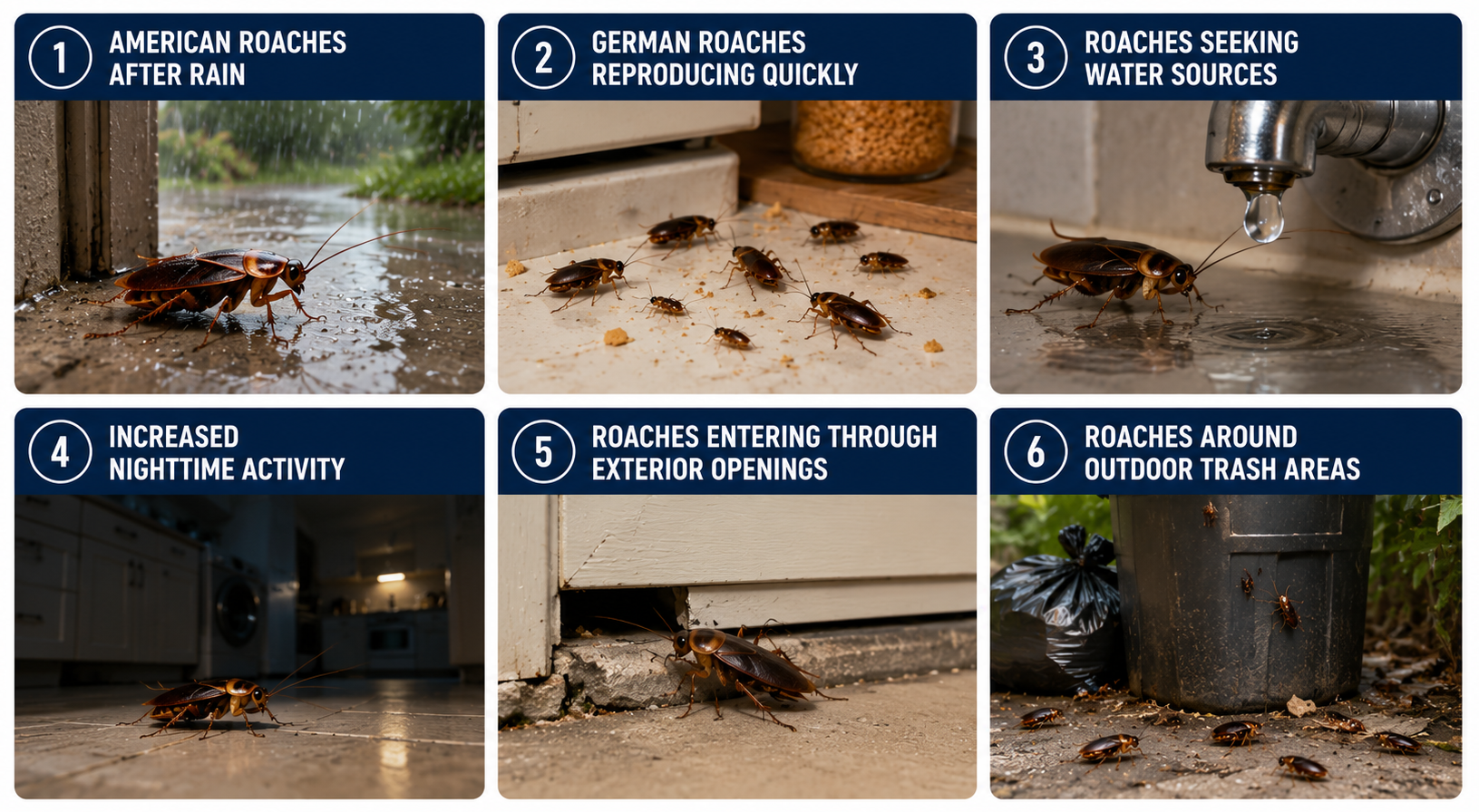
Common June Cockroach Activity
- American Roaches After Rain
Heavy summer rainstorms frequently flood outdoor hiding places and force American cockroaches to seek higher, drier areas. This is one reason many homeowners suddenly notice palmetto bugs appearing indoors after periods of heavy rainfall. - German Roaches Reproducing Quickly
German cockroaches reproduce rapidly in warm environments with easy access to food and moisture. Small infestations can grow significantly during summer if conditions remain favorable. - Roaches Seeking Water Sources
Cockroaches require moisture to survive and are often attracted to plumbing leaks, condensation, pet water bowls, and damp areas beneath sinks. Even small water sources can support ongoing roach activity. - Increased Nighttime Activity
Roaches are primarily nocturnal and often become more noticeable during summer evenings. Homeowners may see them in kitchens, garages, laundry rooms, and outdoor living spaces after dark. - Roaches Entering Through Exterior Openings
Small gaps around doors, utility penetrations, garage doors, and foundation openings can provide easy access indoors. Summer weather often increases the movement of cockroaches between outdoor and indoor environments. - Roaches Around Outdoor Trash Areas
Outdoor garbage containers, pet feeding stations, and food residue near patios can attract cockroaches. These areas often provide both food and shelter during the warmer months.
While occasional sightings can occur, repeated cockroach activity usually indicates favorable conditions somewhere on the property. Homeowners experiencing recurring issues may benefit from professional cockroach control services and ongoing residential pest control treatments designed to reduce pest pressure year-round.
Rodent Activity Continues Into Summer
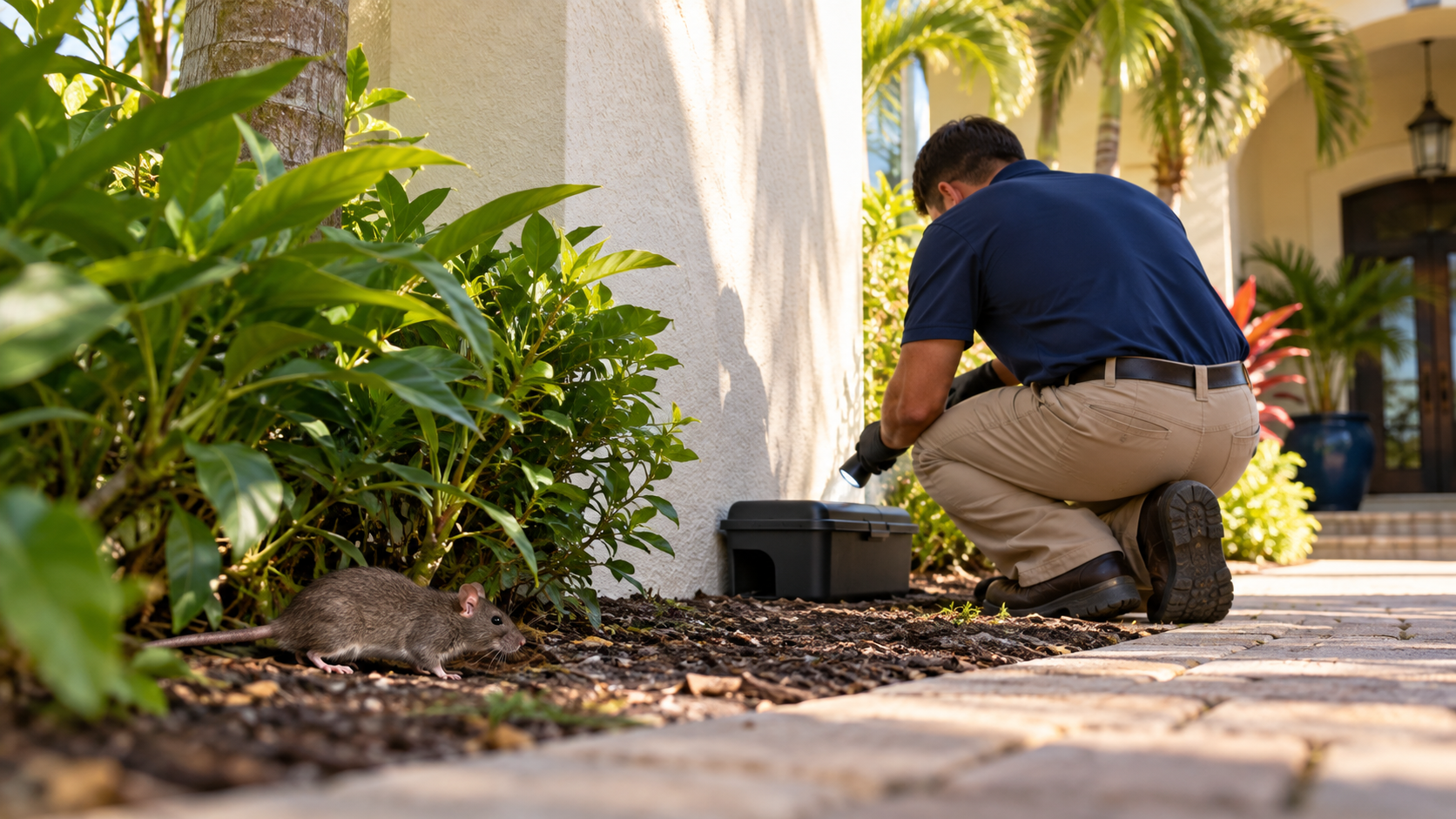
While many homeowners associate rodents with cooler weather, rodent activity remains active throughout South Florida summers. Warm temperatures, abundant food sources, and year-round access to shelter allow roof rats and other rodents to remain active during June.
Summer rainstorms, growing vegetation, and increased outdoor food availability can create favorable conditions for rodents around residential properties. Many infestations begin outdoors before eventually spreading into attics, garages, and wall voids.
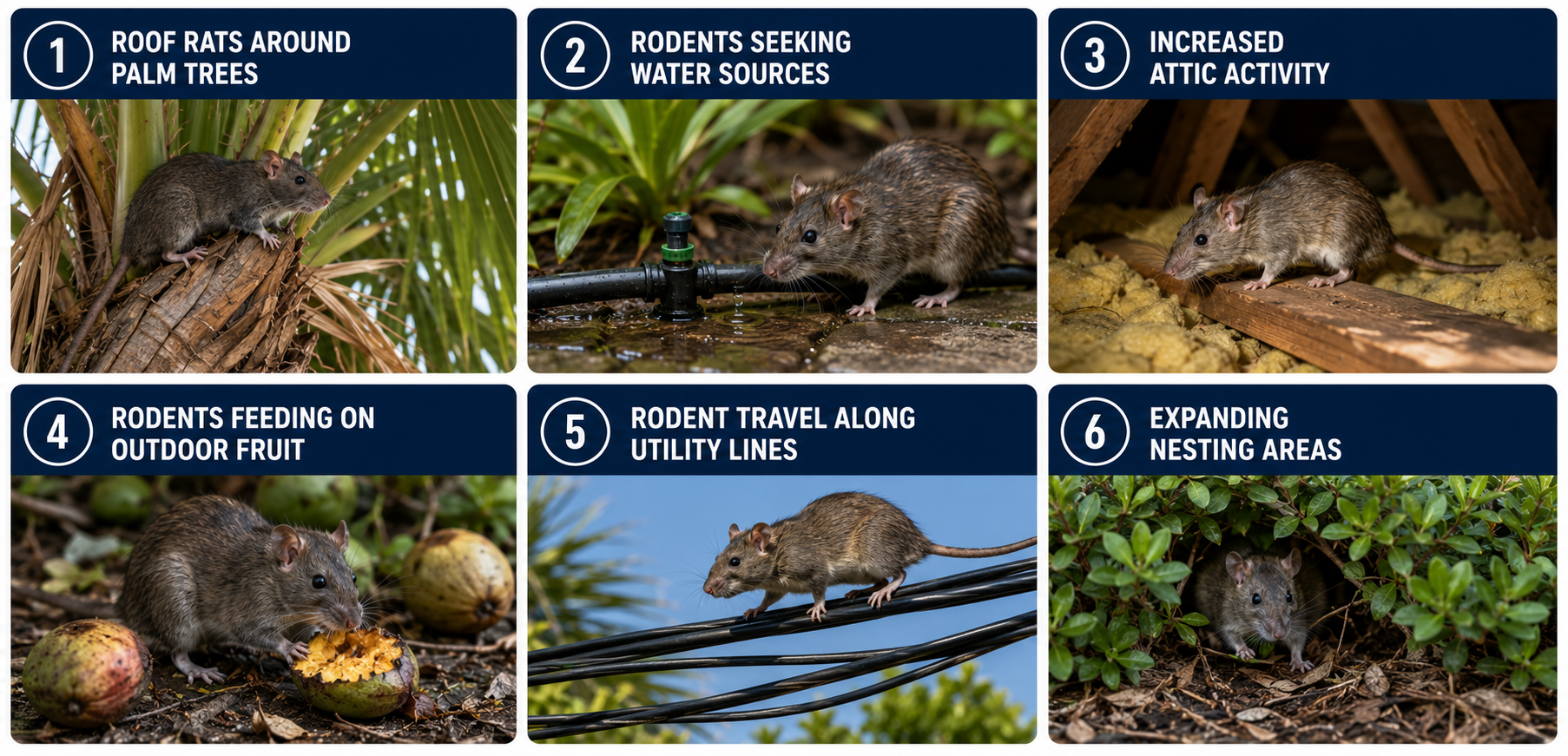
Common June Rodent Issues
- Roof Rats Around Palm Trees
Palm trees provide shelter, nesting material, and elevated travel routes for roof rats. Overgrown fronds can also create easy access to rooftops and attic entry points. - Rodents Seeking Water Sources
Rodents require regular access to water and are often attracted to irrigation systems, AC condensation lines, pet water bowls, and other moisture sources. Summer heat can increase their search for reliable hydration. - Increased Attic Activity
Attics remain a common nesting location for rodents throughout the year. Homeowners may hear scratching, gnawing, or movement in ceilings and attic spaces during evening hours. - Rodents Feeding On Outdoor Fruit
Fallen mangoes, avocados, coconuts, and other fruit can attract rodents to a property. Food sources located near the home often increase rodent activity around structures. - Rodent Travel Along Utility Lines
Roof rats are skilled climbers and frequently use utility lines, fences, and tree branches as travel routes. These pathways allow rodents to move between properties and access rooftops. - Expanding Nesting Areas
As vegetation grows during summer, rodents gain access to additional hiding places and nesting locations. Dense landscaping and cluttered outdoor areas often provide ideal harborage conditions.
Rodent problems often begin outside long before homeowners notice activity indoors. Early identification and routine rodent control services can help reduce rodent pressure and prevent infestations from becoming more difficult to manage.
Mosquito Activity Peaks During Summer
Mosquito activity increases dramatically during June as South Florida enters its rainy season. Frequent rainfall, warm temperatures, and abundant moisture create ideal breeding conditions throughout residential neighborhoods.
Even small amounts of standing water can support mosquito development in as little as a few days. Understanding where mosquitoes breed can help homeowners reduce mosquito populations around their property and enjoy outdoor spaces more comfortably.
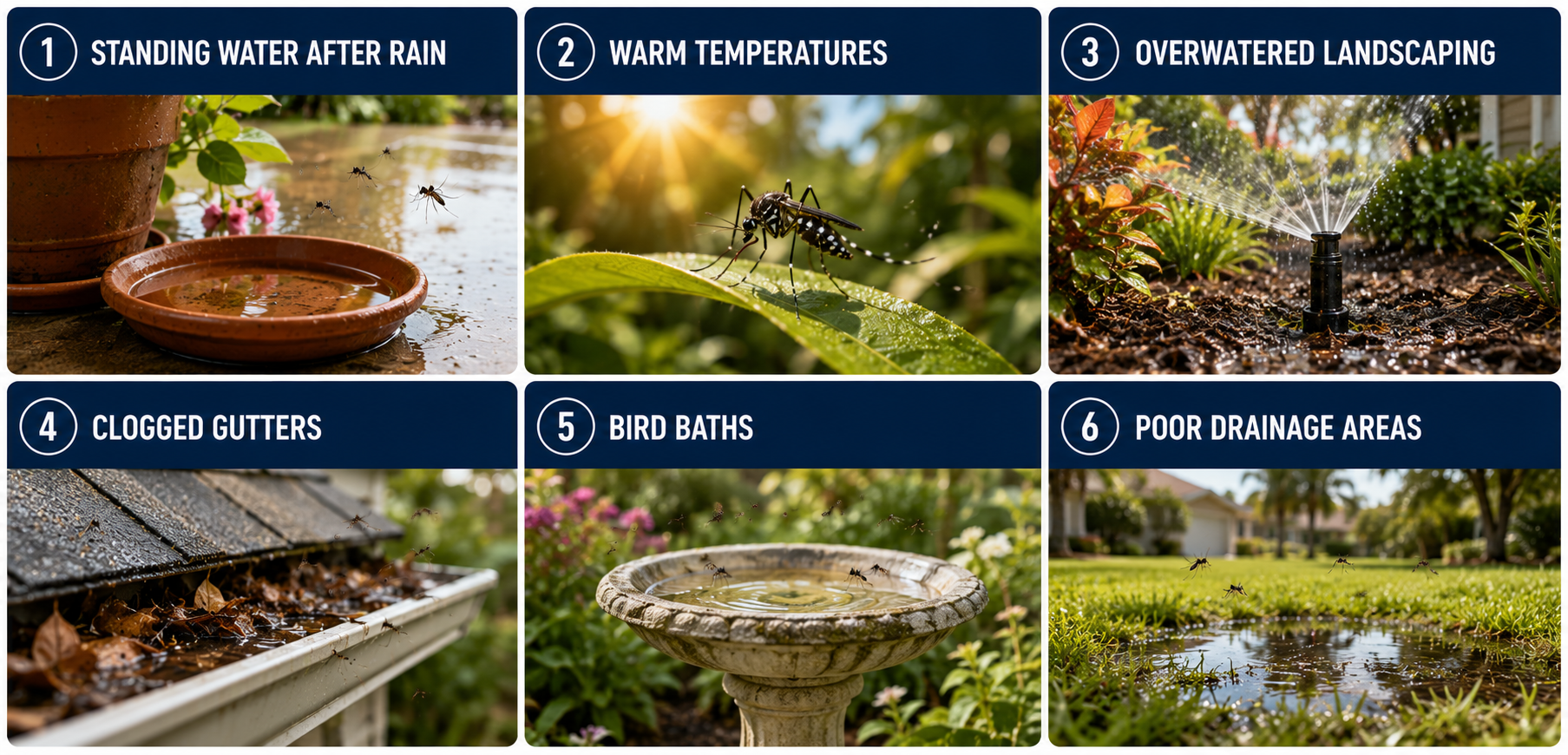
Common Reasons Mosquitoes Increase In June
- Standing Water After Rain
Summer rainstorms often leave water trapped in containers, plant pots, tarps, and low-lying areas. These small pools of water can quickly become mosquito breeding sites. - Warm Temperatures
Mosquitoes thrive in South Florida's summer heat. Warmer temperatures accelerate breeding cycles and allow mosquito populations to grow more rapidly. - Overwatered Landscaping
Excess irrigation can create damp conditions that support mosquito activity. Areas that remain consistently wet may provide favorable breeding environments. - Clogged Gutters
Gutters filled with leaves and debris can trap standing water for extended periods. Because these areas are often overlooked, they can become hidden mosquito breeding locations. - Bird Baths
Bird baths that are not cleaned or refreshed regularly may allow mosquito larvae to develop. Changing the water frequently can help reduce this risk. - Poor Drainage Areas
Low spots in lawns and landscaping can collect water after heavy rainfall. Improving drainage helps reduce standing water and limits mosquito breeding opportunities.
Homeowners can often reduce mosquito activity by eliminating standing water, maintaining gutters, improving drainage, and monitoring irrigation practices. For residents experiencing significant mosquito problems, Broward County offers free mosquito service requests through its Mosquito Control Program.
While mosquitoes are extremely active during June, Professional Pestguard currently focuses on residential pest control services for ants, cockroaches, rodents, and other common household pests.
Signs Pest Activity Is Increasing Around Your Home
Many pest infestations develop gradually before homeowners realize there's a problem. Small warning signs often appear weeks or even months before a larger infestation becomes obvious.
June's heat, humidity, and frequent rainstorms can increase pest activity throughout South Florida properties. Recognizing these early indicators can help homeowners address problems before populations have an opportunity to grow.
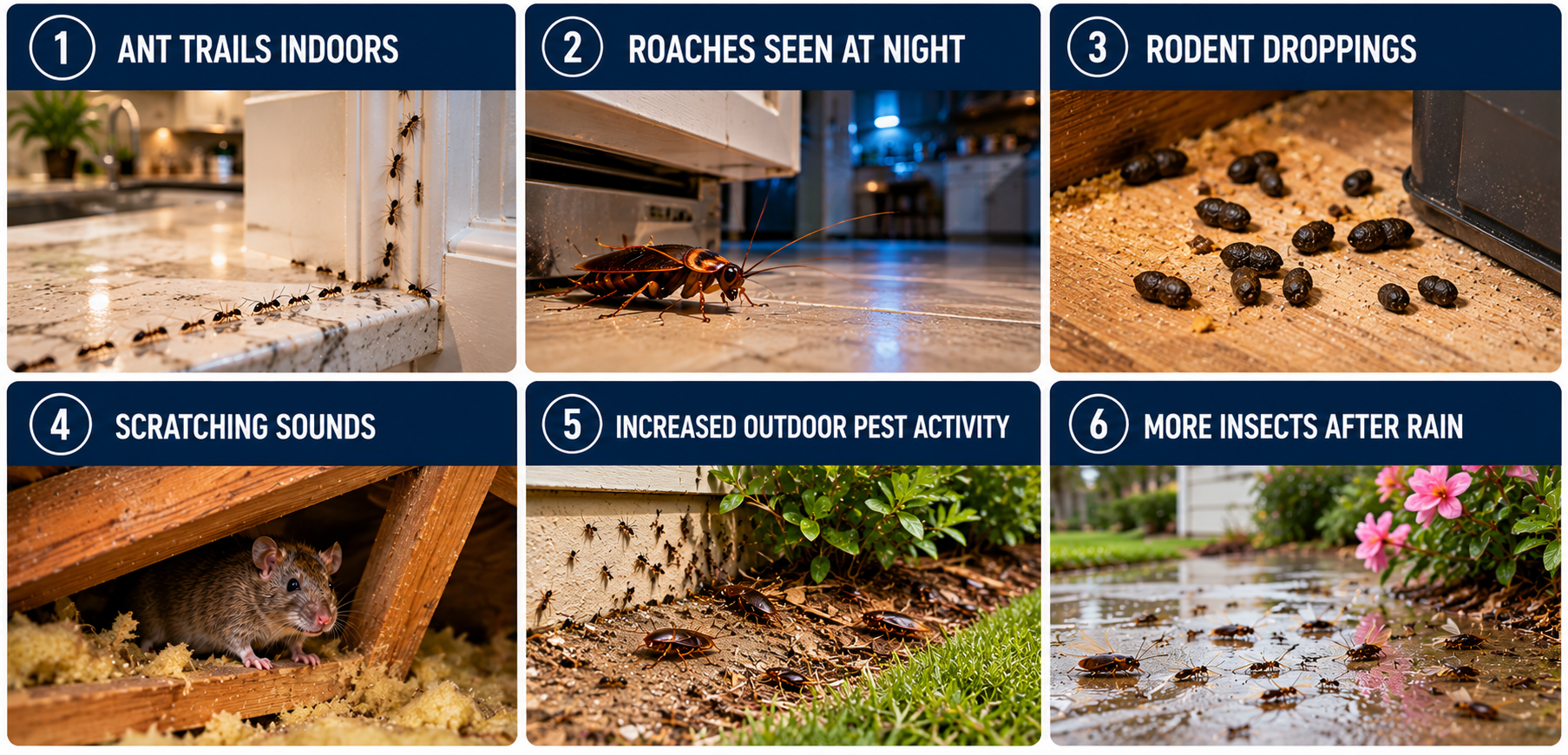
Common Warning Signs
- Ant Trails Indoors
Consistent ant trails in kitchens, bathrooms, or near windows often indicate an active colony nearby. Even small trails can signal a larger nesting area somewhere on the property. - Roaches Seen At Night
Cockroaches are primarily active after dark and frequently emerge in search of food and water. Repeated nighttime sightings may indicate favorable conditions that are supporting ongoing activity. - Rodent Droppings
Small droppings found in garages, attics, pantries, or storage areas are one of the most common signs of rodent activity. Fresh droppings often suggest rodents are actively using the area. - Scratching Sounds
Scratching, scurrying, or movement inside walls and ceilings may indicate rodents nesting within the structure. These sounds are often most noticeable during the evening or early morning hours. - Increased Outdoor Pest Activity
Large numbers of ants, roaches, or other pests around foundations, landscaping, patios, and exterior walls can signal growing populations nearby. Outdoor activity frequently increases before pests begin moving indoors. - More Insects After Rain
Heavy rainfall can force pests out of nests and hiding places. If you notice a sudden increase in pest sightings after storms, weather-related displacement may be contributing to the activity.
The earlier pest activity is identified, the easier it is to address underlying conditions before they develop into larger infestations. If you're noticing multiple warning signs around your property, a professional residential pest control inspection can help identify the source of the problem and recommend appropriate treatment options.
Frequently Asked Questions About Summer Pest Activity In South Florida
Many homeowners notice increased pest activity during June but aren't always sure what's normal and what may indicate a larger problem. Below are answers to some of the most common questions we receive about summer pests, seasonal infestations, and protecting homes throughout South Florida.
Why are pests worse in June in South Florida?
June brings higher temperatures, increased humidity, and frequent rainstorms that create ideal conditions for many common household pests. These environmental factors help pests find food, water, shelter, and breeding sites more easily, often leading to increased activity around homes.
What pests are most active during summer?
Ants, cockroaches, rodents, mosquitoes, spiders, and various outdoor insects tend to become more active during South Florida summers. Warm weather and seasonal rainfall allow many pest populations to grow rapidly during this time of year.
Do summer storms increase pest activity?
Yes. Heavy rain can flood nests, burrows, and outdoor hiding places, forcing pests to search for drier shelter. This often leads to increased sightings around foundations, garages, patios, and inside homes following major storms.
Why do ants appear after rain?
Rain can disrupt underground ant colonies and force ants to establish new foraging routes. Homeowners often notice ant trails appearing suddenly after storms as ants search for food, water, and suitable nesting locations.
Are cockroaches more active in hot weather?
Cockroaches generally thrive in warm, humid environments. Summer weather can increase cockroach movement and breeding activity, especially when moisture and food sources are readily available.
Do rodents stay active during summer?
Yes. Unlike some regions of the country, South Florida rodents remain active year-round. Roof rats and other rodents continue searching for food, water, and nesting sites throughout the summer months.
Why am I seeing more bugs at night?
Many pests are naturally nocturnal and become most active after sunset. Cockroaches, rodents, and certain ant species often emerge at night when temperatures are cooler and human activity is reduced.
Can preventative pest control help during summer?
Preventative pest control can help reduce pest pressure before infestations become established. Routine inspections and treatments are often more effective than waiting until a larger pest problem develops.
Should I be concerned about pests after heavy rain?
An increase in pest activity after heavy rainfall is common throughout South Florida. While occasional sightings may not indicate an infestation, repeated activity can suggest that pests are finding favorable conditions around the property.
When should I call a pest control company?
If you're noticing recurring pest activity, repeated sightings, droppings, ant trails, scratching sounds, or signs that pests are becoming more established, it's often best to schedule a professional inspection before the problem worsens.
Professional Pest Control During South Florida Summers
Summer creates ideal conditions for many common household pests throughout South Florida. Between rising temperatures, frequent rainstorms, increased humidity, and rapid vegetation growth, ants, cockroaches, rodents, and other pests often become more active around homes during June and the months that follow. Understanding these seasonal patterns can help homeowners identify potential problems early and take proactive steps to reduce the risk of infestations.
If you're noticing increased pest activity around your property, Professional Pestguard is here to help. Our team provides customized residential pest control, ant control, cockroach control, and rodent control services designed specifically for South Florida homes. Whether you're dealing with recurring pest issues or simply want peace of mind throughout the summer season, scheduling a professional inspection can help identify conducive conditions and stop small pest problems before they become larger infestations.
If you're ready to protect your home this summer, contact Professional Pestguard today to schedule an inspection or request a free estimate online.
About Professional Pestguard
Professional Pestguard provides professional pest control in Weston, FL and nearby communities including Davie, Sunrise, Pembroke Pines, and Plantation. With over 40 years of experience, our licensed technicians protect homes and businesses across Broward County and Miami-Dade County from ants, cockroaches, rodents, spiders, and other common South Florida pests using safe and effective treatments.