What Different Pest Droppings Can Tell You About an Infestation
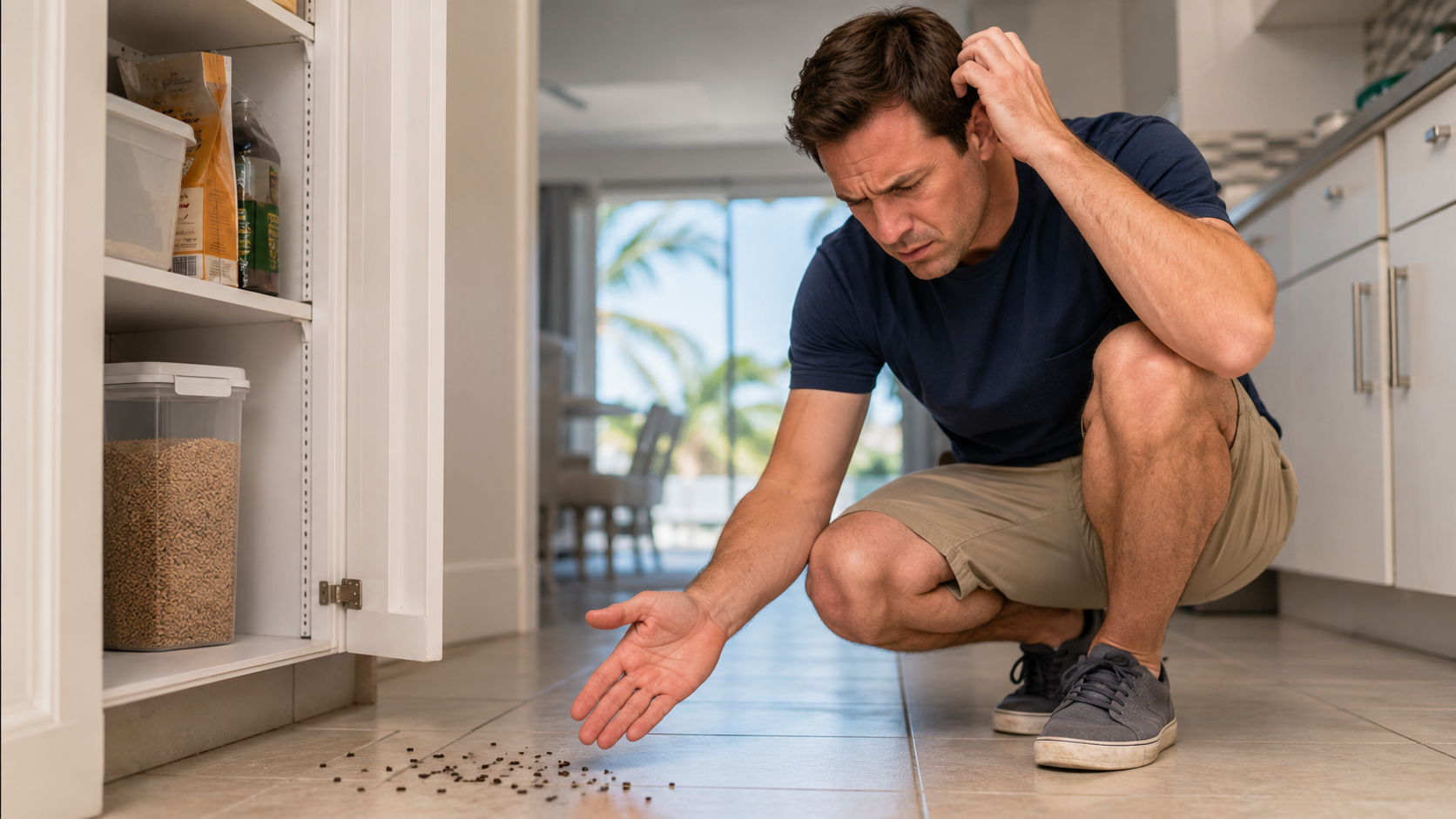
Have you discovered small droppings in your garage, attic, pantry, or around your home and wondered what left them behind? One of the earliest pest signs homeowners notice is animal droppings, but not all droppings come from the same pest. The size, shape, color, and location of the droppings can provide important clues about what's living in or around your home and how serious the problem may be.
From rodent droppings left by roof rats and mice to cockroach droppings, lizard droppings, bat guano, and other signs of pest activity, identifying the source can help you take action before an infestation becomes more severe. While it's never recommended to handle droppings without proper precautions, understanding what you're seeing can help you recognize when it's time to contact a pest control professional.
In this guide, we'll explain how to identify the droppings of some of the most common pests found in South Florida, what those droppings may indicate, and when they suggest a larger infestation may be developing. Whether you live in Weston, Davie, Pembroke Pines, Plantation, Cooper City, Sunrise, Miramar, Southwest Ranches, or anywhere else in South Florida, recognizing these warning signs early can help protect your home and your family.
Why Pest Droppings Are One Of The First Signs Of An Infestation
Many pests prefer to remain hidden, making them difficult to detect during the early stages of an infestation. They often stay inside walls, attics, crawl spaces, cabinets, or other secluded areas where homeowners rarely see them. As a result, pest droppings are frequently one of the first visible signs that unwanted visitors may be living in or around your home.
The size, shape, color, quantity, and location of droppings can provide valuable clues about the type of pest you're dealing with. While finding a single dropping may not always indicate a serious problem, discovering fresh droppings repeatedly or in multiple areas often suggests ongoing pest activity that should be investigated.
What Pest Droppings Can Tell You
- The Type Of Pest
Different pests leave droppings that vary in size, shape, color, and texture. Learning to recognize these differences can help narrow down what may be living in or around your home. - How Active The Infestation May Be
Large amounts of fresh droppings often indicate frequent pest activity. The more droppings you find, the greater the likelihood that multiple pests are present. - Where Pests Are Traveling
Droppings are commonly found along walls, inside cabinets, beneath sinks, in attics, garages, pantries, and other areas where pests travel or nest. Their location can help identify common pathways and hiding places. - Whether The Problem Is Current Or Old
Fresh droppings are typically darker, shinier, and softer, while older droppings become dry, dull, and brittle. This can help determine whether pests are still actively using the area. - When It's Time To Call A Professional
Finding droppings repeatedly, especially in food storage areas or living spaces, may indicate a larger infestation that requires professional treatment before the problem worsens.
Not all pest droppings look alike, and correctly identifying them is an important first step toward solving the problem. In the sections below, we'll compare the droppings left behind by some of South Florida's most common household pests and explain what each type may indicate.
Rodent Droppings
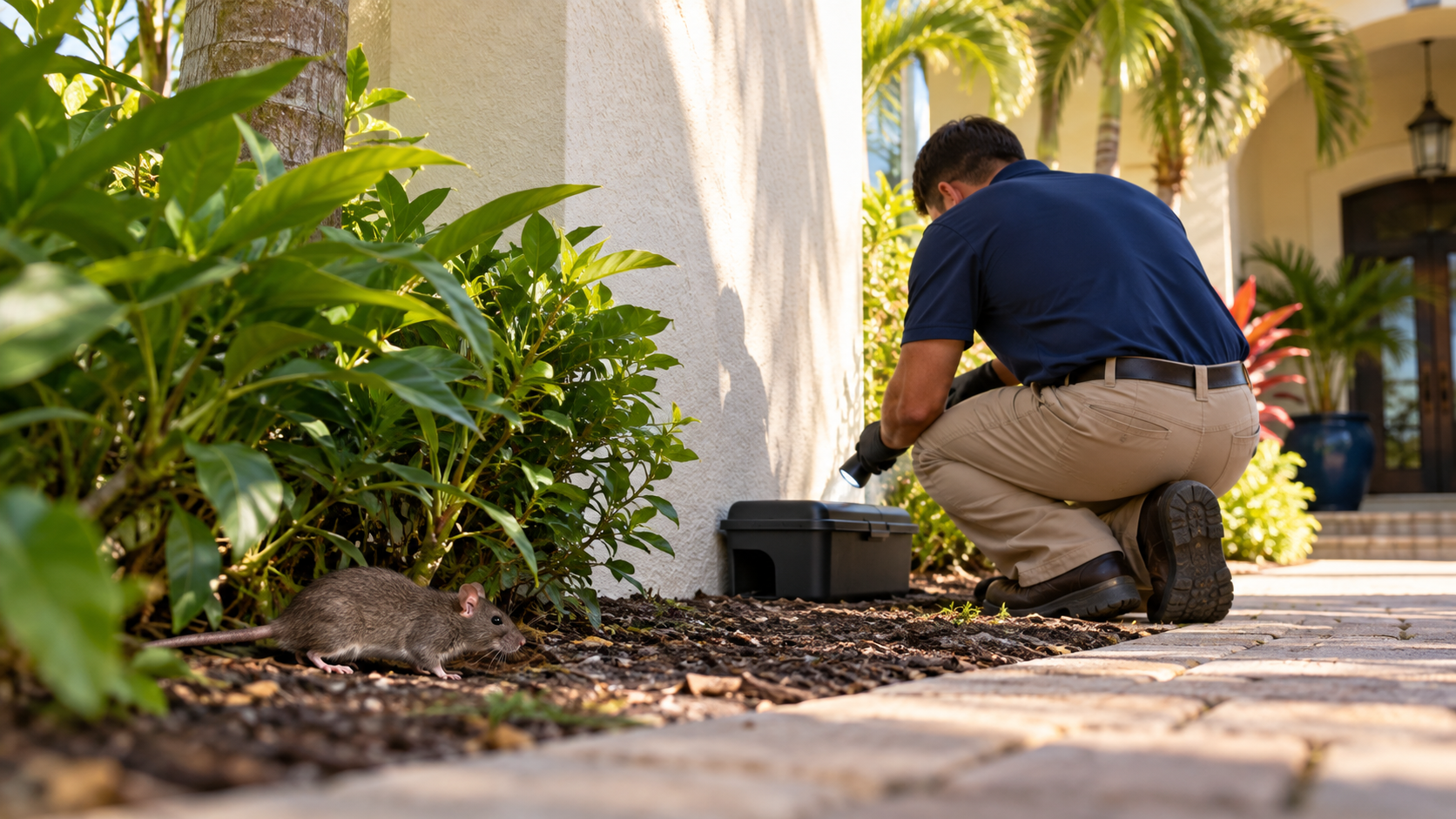
Rodents are one of the most common household pests in South Florida, and their droppings are often one of the first signs of an infestation. Because rats and mice are primarily active at night, homeowners may never actually see the animals themselves. Instead, they discover droppings in garages, attics, kitchens, pantries, laundry rooms, or along walls where rodents regularly travel in search of food, water, and shelter.
Recognizing rodent droppings early is important because rodents can contaminate food preparation areas, damage insulation and wiring, and spread bacteria through their urine and feces. The sooner an infestation is identified, the easier it is to prevent additional damage and reduce the health risks associated with rodent activity.
How To Identify Rodent Droppings
- Size And Shape
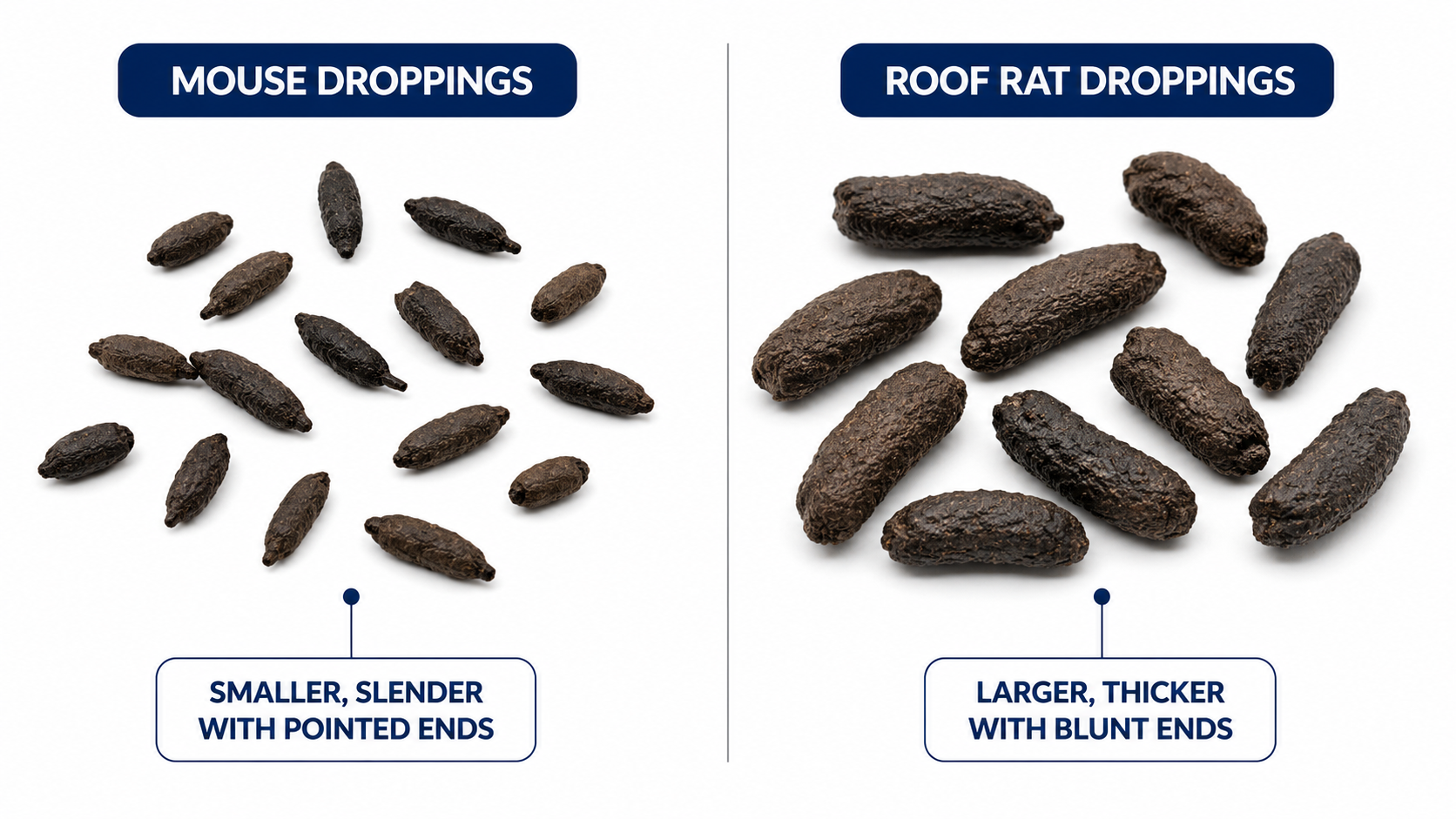
Rodent droppings are typically dark brown to black and shaped like small capsules. Mouse droppings are usually about ¼ inch long with pointed ends, while roof rat droppings are larger, measuring approximately ½ inch with tapered ends. - Where They're Commonly Found
Rodent droppings are often discovered along baseboards, inside cabinets, beneath sinks, in pantries, attics, garages, storage rooms, and near food sources. Because rodents tend to follow the same travel routes each night, droppings are frequently found in concentrated areas. - Fresh Vs. Old Droppings
Fresh rodent droppings are dark, shiny, and slightly soft. As they age, they become dry, dull, and brittle. Finding fresh droppings usually indicates that rodents are still actively using the area. - Large Quantities Often Indicate An Active Infestation
Finding a single dropping doesn't always mean you have a serious problem. However, discovering dozens of fresh droppings throughout your home often indicates that rodents are nesting nearby and regularly traveling through the area. - Health Risks
Rodent droppings may contain harmful bacteria and other disease-causing organisms. Avoid sweeping or vacuuming dry droppings, as this can disturb contaminated dust particles. Always wear appropriate protective equipment and follow proper cleaning procedures if droppings need to be removed.
If you've found rodent droppings around your home, it's important to identify where the rodents are entering and nesting before the infestation grows. Professional Rodent Control can help locate entry points, remove active rodents, and recommend exclusion measures to help prevent future infestations. If you suspect roof rats are responsible, our guide on Roof Rats in South Florida explains the warning signs, risks, and steps homeowners can take to protect their property.
Cockroach Droppings
Cockroach droppings are another common sign of pest activity inside South Florida homes. Because cockroaches are nocturnal and prefer dark, secluded spaces, homeowners often discover their droppings long before they ever see a live cockroach. These droppings are typically found in kitchens, bathrooms, laundry rooms, garages, and other areas where cockroaches have access to food, water, and shelter.
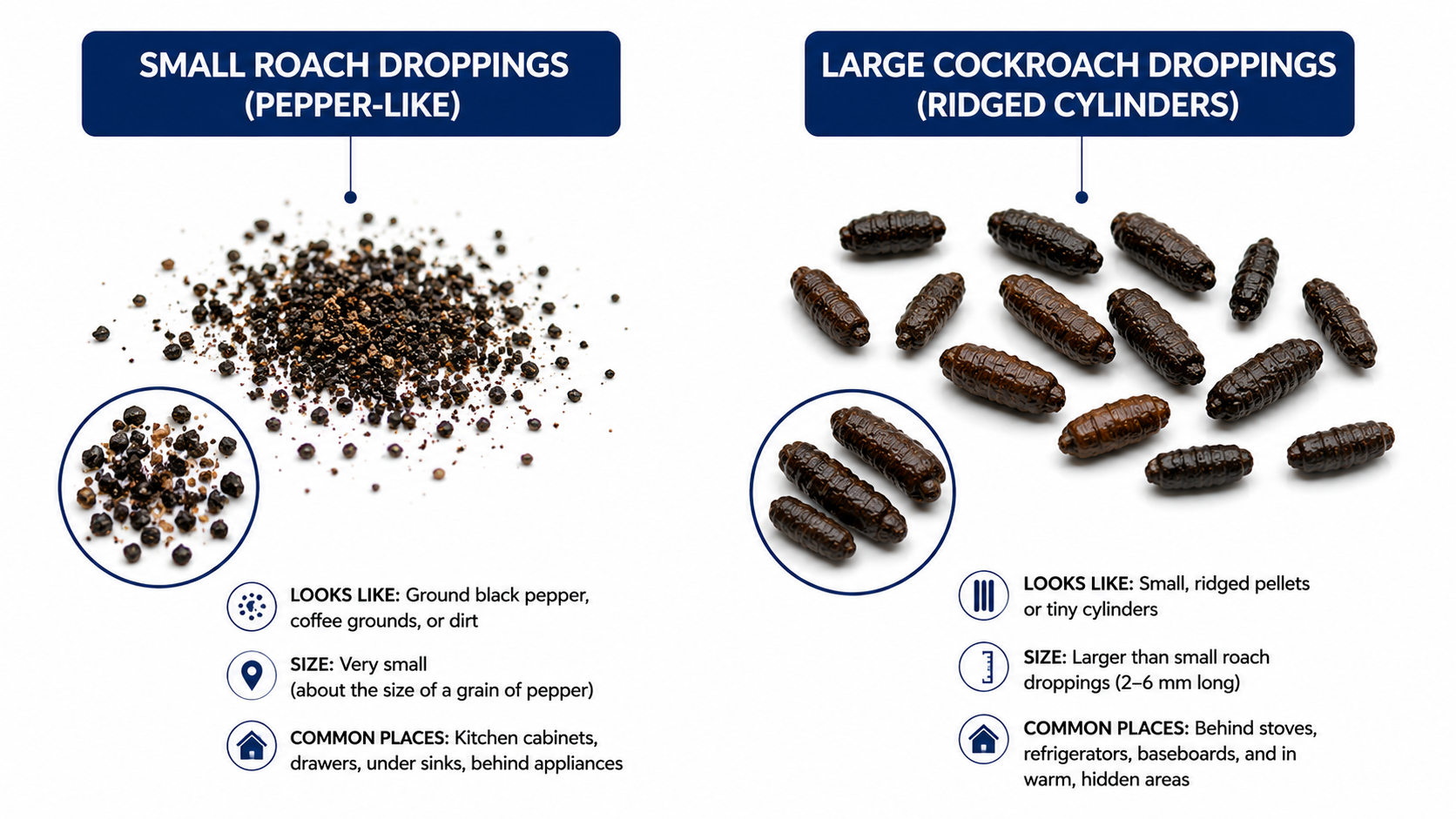
Unlike rodent droppings, cockroach droppings are much smaller and can easily be mistaken for coffee grounds, black pepper, or tiny dark specks. Finding large amounts of cockroach droppings usually indicates that cockroaches have been active in the area for some time.
How To Identify Cockroach Droppings
- Size And Shape
Small cockroach species often leave droppings that resemble coarse black pepper or coffee grounds. Larger cockroach species produce small cylindrical droppings with ridges along the sides. - Where They're Commonly Found
Cockroach droppings are commonly found inside kitchen cabinets, beneath sinks, behind appliances, inside pantries, around water heaters, in laundry rooms, and anywhere warmth and moisture are present. - Fresh Vs. Old Droppings
Cockroach droppings generally remain dark in color, but newer droppings may appear slightly shinier than older ones. A steady accumulation of fresh droppings usually indicates ongoing cockroach activity. - What They May Indicate
Finding droppings in multiple rooms or repeatedly cleaning up new droppings often suggests an active cockroach infestation rather than an occasional visitor. - Health Risks
Cockroach droppings can contaminate food preparation areas and may contribute to allergies and asthma symptoms, particularly in children and individuals with respiratory sensitivities.
If you're finding what appear to be cockroach droppings throughout your home, it's important to address the infestation as early as possible. Professional Cockroach Control can help identify where cockroaches are hiding and eliminate infestations before they continue spreading throughout your home. If you're unsure whether you're seeing an occasional cockroach or signs of a larger problem, our article Difference Between Occasional Roaches And A Cockroach Infestation can help you understand what to look for.
Spider Droppings
Although many homeowners never notice them, spiders also leave behind waste. Unlike rodents or cockroaches, spider droppings aren't solid pellets. Instead, they appear as small white, gray, or dark-colored splatters that resemble tiny drops of paint. They're most commonly found beneath spider webs, in ceiling corners, around windows, beneath soffits, garages, patios, and other areas where spiders spend long periods of time.
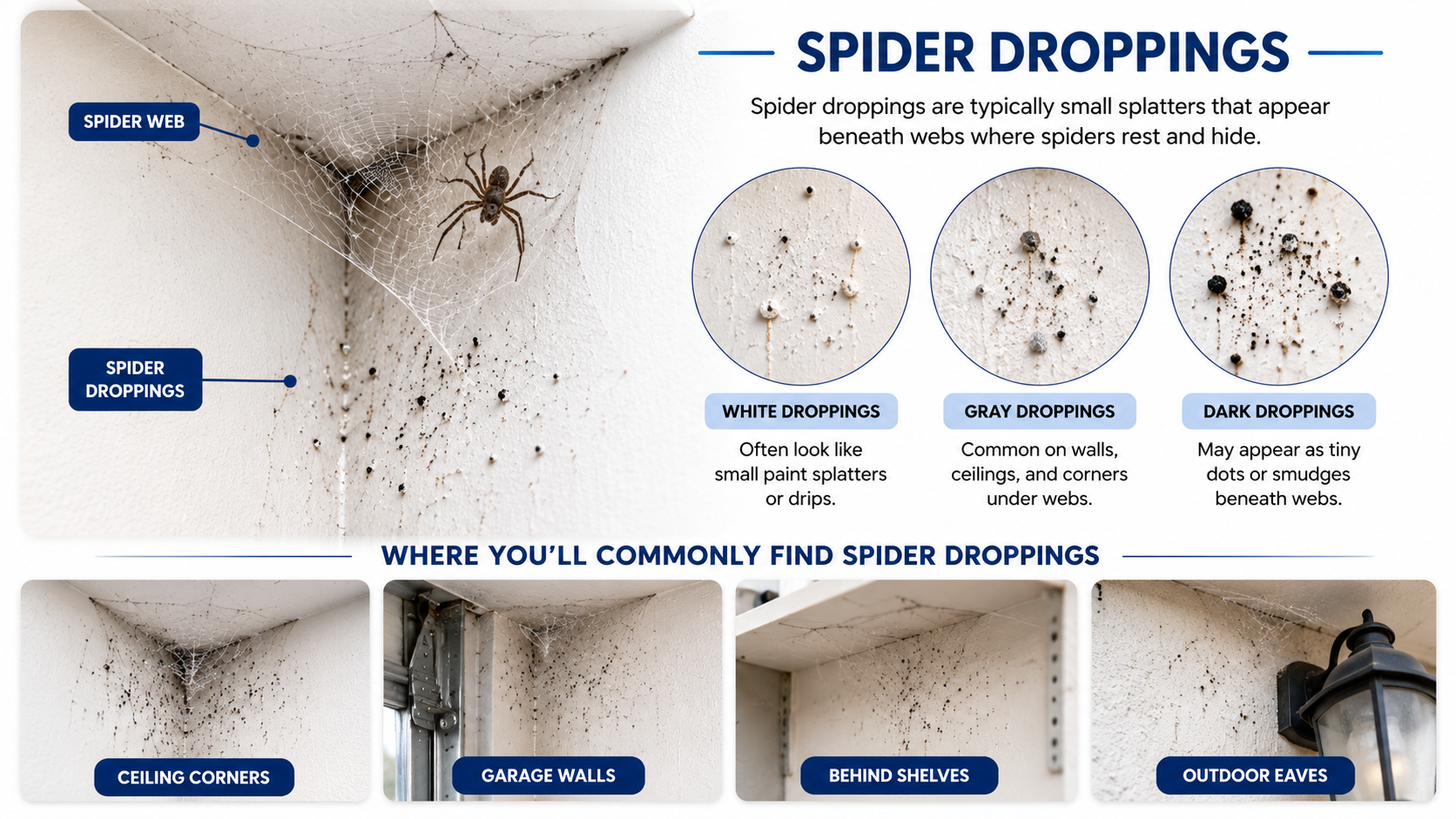
How To Identify Spider Droppings
- Appearance
Spider droppings typically look like small liquid splatters rather than pellets. They may be white, gray, black, or a combination of colors depending on the spider's diet. - Where They're Commonly Found
Beneath spider webs, along ceilings, garage walls, patios, lanais, porch ceilings, soffits, and window frames. - What They May Indicate
Finding numerous droppings beneath webs usually means spiders have been occupying the same location for an extended period and have an available food source nearby. - Health Risks
Spider droppings aren't generally considered hazardous, but large accumulations often indicate increased insect activity around the property.
If you're frequently finding spider webs and droppings around your home, professional Spider Control can help reduce both spiders and the insects they feed on.
When Pest Droppings May Indicate A Serious Infestation
Finding a single dropping doesn't always mean you have a major pest problem. In some cases, an occasional rodent, cockroach, or spider may simply be passing through your property. However, repeatedly finding fresh droppings or discovering them in multiple areas often suggests ongoing pest activity that should be investigated before it becomes more severe.
Knowing when pest droppings indicate a larger infestation can help homeowners address the problem before it leads to property damage, food contamination, or increased health risks.
Warning Signs To Watch For
- You're Finding Fresh Droppings Every Day
If new droppings continue appearing after you've cleaned the area, it's a strong indication that pests are still actively using the space. - Droppings Are Found In Multiple Areas
Finding droppings in the attic, garage, pantry, kitchen, laundry room, or around ceilings and garages often suggests pests are actively moving throughout your home or occupying multiple areas. - You Notice Gnaw Marks Or Property Damage
Rodents frequently chew on food packaging, insulation, wiring, and wooden materials. When rodent droppings are accompanied by gnaw marks, the infestation may already be well established. - You're Seeing Numerous Spider Webs And Droppings
Finding multiple spider webs along with droppings beneath them often indicates that spiders have been occupying the same areas for an extended period. Because spiders feed on insects, this may also suggest increased insect activity around your home. - There's A Persistent Musty Odor
Large rodent or cockroach infestations can produce noticeable odors caused by droppings, urine, nesting materials, and pheromones left behind by the pests. - You Begin Seeing Live Pests
Finding both droppings and live rodents, cockroaches, or large numbers of spiders usually indicates that the population has grown and professional treatment should not be delayed.
Ignoring pest droppings rarely causes the problem to resolve on its own. The longer an infestation remains active, the more opportunities pests have to reproduce, contaminate living spaces, and damage your home. Scheduling professional Rodent Control, Cockroach Control, or Spider Control at the first signs of ongoing activity can help stop the infestation before it becomes more extensive.
Frequently Asked Questions About Pest Droppings
Finding pest droppings can be alarming, especially if you're unsure what left them behind. Below are answers to some of the most common questions homeowners ask about identifying pest droppings and knowing when it's time to call a professional.
How can I tell if droppings are from a rodent or a cockroach?
Rodent droppings are typically larger and shaped like small capsules with pointed or tapered ends. Cockroach droppings are much smaller and often resemble coarse black pepper, coffee grounds, or tiny cylindrical pellets with ridges. The size, shape, and location of the droppings can help determine which pest is present.
Are fresh pest droppings more dangerous than old droppings?
Fresh droppings may indicate that pests are still actively using the area. Whether fresh or old, droppings should always be handled carefully because they may contain bacteria or other harmful microorganisms. Avoid sweeping or vacuuming dry droppings, as this can disturb contaminated dust.
Where are pest droppings most commonly found?
Pest droppings are commonly found in attics, garages, kitchens, pantries, laundry rooms, crawl spaces, beneath sinks, inside cabinets, and along walls where pests frequently travel or nest.
Can one dropping mean I have an infestation?
Not necessarily. A single dropping may indicate that a pest passed through the area. However, repeatedly finding fresh droppings or discovering them in multiple locations often suggests ongoing pest activity that should be investigated.
What should I do if I find rodent droppings?
Avoid handling droppings with bare hands or creating dust by sweeping or vacuuming them. If you're finding rodent droppings regularly, it's important to identify how rodents are entering your home and have the infestation professionally addressed.
Do spiders leave droppings?
Yes. Spider droppings typically appear as small white, gray, or dark-colored splatters beneath webs. While they're generally not considered hazardous, they often indicate that spiders have been occupying the area for an extended period.
How do I know if pest droppings are old or new?
Fresh droppings are usually darker in color and may appear slightly shiny or soft. As they age, they become lighter, drier, and more brittle. Regularly finding fresh droppings is often a sign of active pest activity.
When should I contact a pest control professional?
If you're repeatedly finding pest droppings, seeing live pests, hearing scratching noises, or noticing other signs of an infestation, professional Rodent Control, Cockroach Control, or Spider Control can help identify the source of the problem and recommend the most effective treatment.
Rodent, Cockroach & Spider Control In Weston And South Florida
Finding pest droppings around your home is never something to ignore. Whether you've discovered rodent droppings in your attic, cockroach droppings in your kitchen, or spider droppings beneath webs in your garage or patio, these signs often indicate that pests are actively using your property. Identifying the type of droppings is an important first step, but addressing the source of the problem is the key to preventing a larger infestation.
At Professional Pestguard, we proudly provide professional Rodent Control, Cockroach Control, and Spider Control services for homeowners in Weston, Davie, Plantation, Pembroke Pines, Cooper City, Sunrise, Miramar, Southwest Ranches, and surrounding South Florida communities. Our experienced technicians perform thorough inspections to identify pest activity, locate entry points and harborage areas, and develop customized treatment plans designed to protect your home from recurring infestations.
If you've found pest droppings in or around your home, don't wait for the problem to become more severe. Contact Professional Pestguard today to request a free estimate and learn how our professional pest control services can help keep your South Florida home protected year-round.
About Professional Pestguard
Professional Pestguard provides professional pest control in Weston, FL and nearby communities including Davie, Sunrise, Pembroke Pines, and Plantation. With over 40 years of experience, our licensed technicians protect homes and businesses across Broward County and Miami-Dade County from ants, cockroaches, rodents, spiders, and other common South Florida pests using safe and effective treatments.