Why Roach Bombs Often Make Cockroach Problems Worse
You set off a roach bomb, leave the house for a few hours, and expect the problem to disappear. Instead, a few days later you're still seeing cockroaches in the kitchen, finding them in new areas of the home, or noticing even more activity than before.
While bug bombs and total-release foggers remain popular do-it-yourself pest control products, they often fail to eliminate the source of a cockroach infestation. In some situations, roach bombs can actually cause cockroaches to scatter throughout the structure, making the problem more difficult to control.
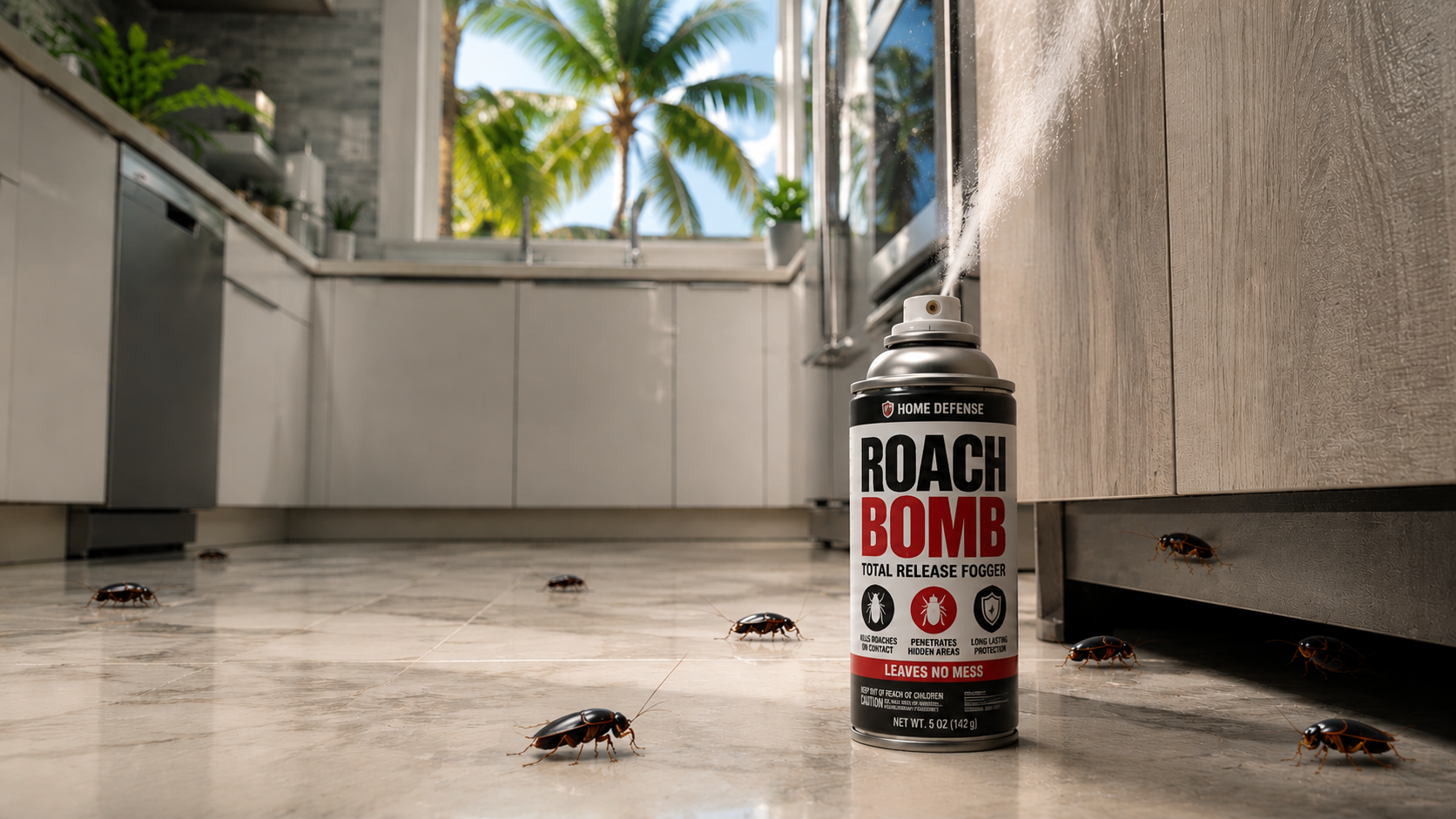
For homeowners throughout South Florida, recurring cockroach activity is one of the most common reasons people contact a professional pest control company. Understanding why roach bombs often fail can help homeowners avoid wasted time, unnecessary frustration, and infestations that continue growing behind the scenes.
In this guide, we'll explain how roach bombs work, why they frequently fail to eliminate cockroaches, warning signs that a treatment was unsuccessful, and why professional cockroach control services are often more effective for long-term results.
Why Roach Bombs Often Fail To Eliminate Cockroaches
Many homeowners assume that if a fogger fills the room with insecticide, every cockroach in the home will be exposed. Unfortunately, cockroaches are extremely skilled at hiding in protected areas that foggers often cannot reach.
While roach bombs may kill some exposed cockroaches, they rarely eliminate the source of the infestation. In many cases, surviving roaches continue breeding behind walls, inside cabinets, and in other hidden areas where the treatment never reaches.
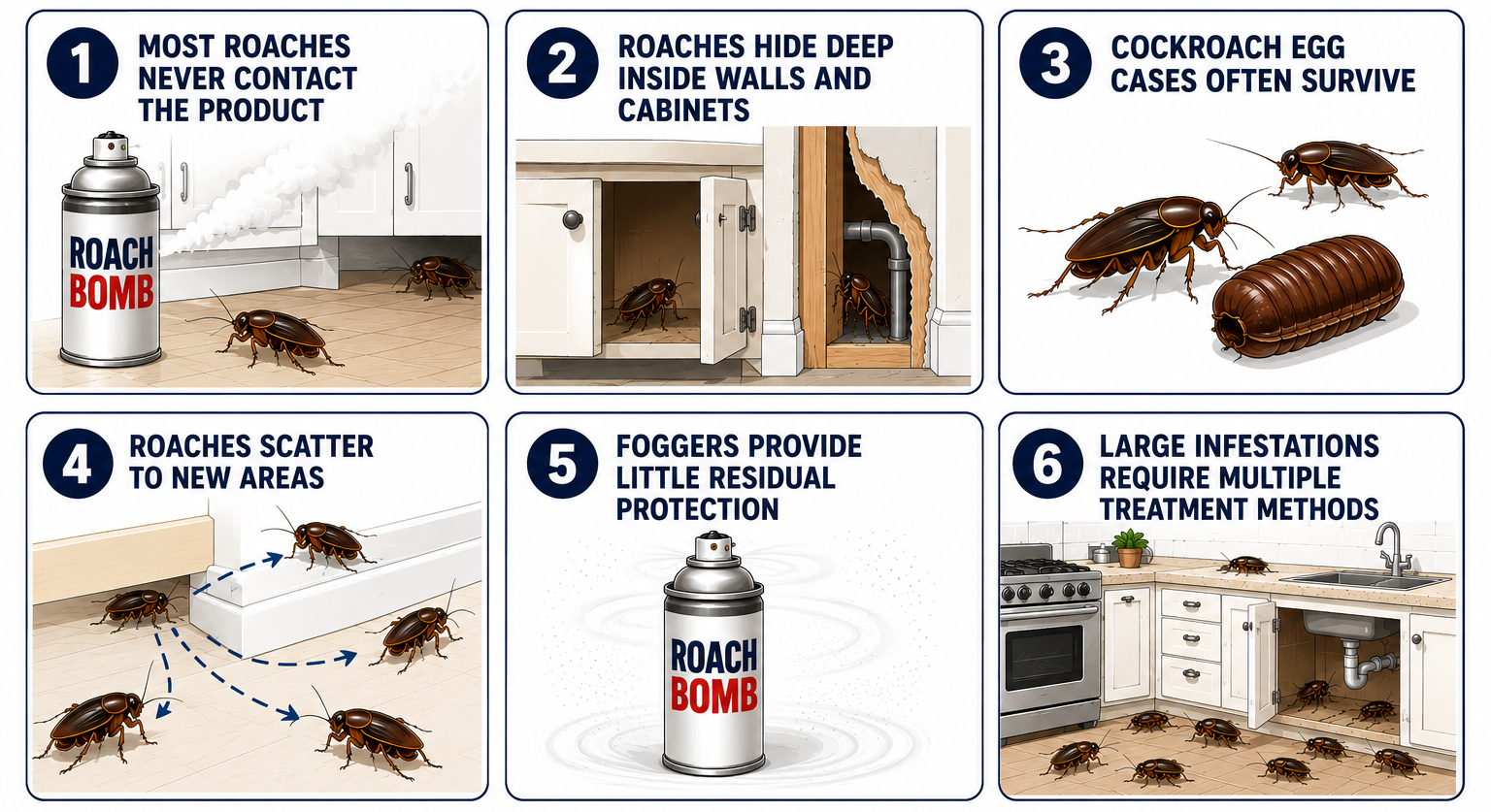
Common Reasons Roach Bombs Fail
- Most Roaches Never Contact The Product
Cockroaches spend much of their time hiding in cracks, voids, and protected harborage areas. Because foggers primarily affect exposed surfaces, many roaches avoid direct contact with the insecticide altogether. - Roaches Hide Deep Inside Walls And Cabinets
German cockroaches commonly hide behind appliances, inside wall voids, beneath cabinets, and around plumbing penetrations. These protected locations often shield them from the airborne mist produced by a roach bomb. - Cockroach Egg Cases Often Survive
Roach bombs typically do not penetrate egg cases effectively. Even if adult cockroaches are affected, surviving eggs can hatch later and quickly restart the infestation. - Roaches Scatter To New Areas
Exposure to insecticides can cause cockroaches to flee their normal hiding places. Instead of eliminating the infestation, a fogger may push surviving roaches deeper into the structure or into neighboring rooms. - Foggers Provide Little Residual Protection
Most roach bombs offer limited long-term protection once the product settles. Any surviving cockroaches can often return to the area after the treatment has dissipated. - Large Infestations Require Multiple Treatment Methods
Established cockroach infestations typically require inspection, targeted treatments, monitoring, and follow-up service. A single fogger rarely addresses every life stage or hiding location involved in a larger infestation.
Because cockroaches are excellent at avoiding danger and hiding in inaccessible areas, successful treatment often requires locating the source of the infestation rather than simply treating open spaces. This is one of the main reasons homeowners frequently turn to professional cockroach control services after do-it-yourself treatments fail.
Why German Roaches Are Especially Difficult To Control
Not all cockroach infestations are the same. While larger American cockroaches are often found outdoors or occasionally wander indoors, German cockroaches are indoor pests that thrive inside kitchens, bathrooms, laundry rooms, and other areas where food and moisture are readily available.
German roaches are responsible for many of the most challenging cockroach infestations encountered by homeowners, property managers, and apartment communities throughout South Florida. Their ability to reproduce quickly, hide effectively, and spread throughout structures often makes professional treatment necessary.
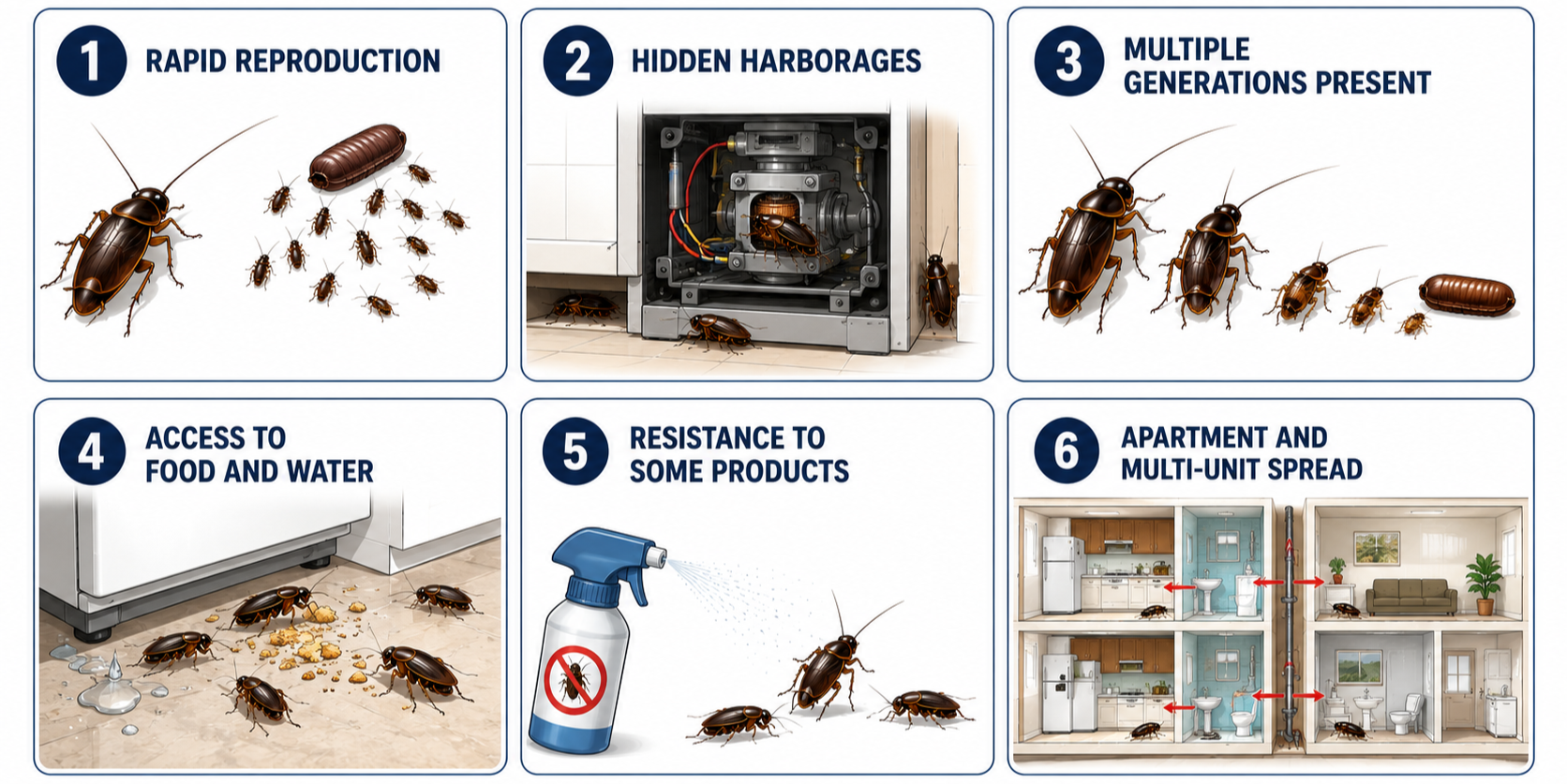
Challenges With German Roach Infestations
- Rapid Reproduction
German cockroaches reproduce at an alarming rate. A small infestation can grow into hundreds or even thousands of roaches if conditions remain favorable. - Hidden Harborages
German roaches spend most of their time hidden in cracks, wall voids, cabinet hinges, appliance motors, and other protected areas. Many infestations remain unnoticed until populations become much larger. - Multiple Generations Present
A typical infestation often contains adults, juveniles, and developing egg cases at the same time. This makes complete elimination more difficult because treatments must address multiple life stages. - Access To Food And Water
Even tiny amounts of food residue, grease buildup, crumbs, or moisture can support German roach populations. Kitchens and bathrooms often provide everything they need to survive. - Resistance To Some Products
German cockroaches have developed resistance to certain over-the-counter products and insecticides over time. This can reduce the effectiveness of many do-it-yourself treatment methods. - Apartment And Multi-Unit Spread
In apartment buildings, condominiums, and multi-family housing, German roaches can move between units through plumbing penetrations, utility openings, wall voids, and shared structural spaces.
German cockroach infestations rarely disappear on their own and often continue growing when only surface treatments are used. Professional cockroach control services focus on identifying harborages, targeting active nesting areas, and implementing treatment strategies designed to address the entire infestation rather than only the roaches that are visible.
Signs A Roach Bomb Didn't Solve The Problem
Many homeowners assume a roach bomb was successful because they initially see fewer cockroaches after treatment. Unfortunately, surviving roaches often remain hidden and may continue reproducing behind walls, cabinets, and appliances.
In many cases, the real test comes during the days and weeks following treatment. Persistent activity often indicates that the source of the infestation was never fully eliminated.
Common Warning Signs
- Roaches Return Within Days
If cockroaches reappear shortly after treatment, surviving roaches or egg cases may still be present. Temporary reductions in activity rarely indicate complete elimination. - Increased Nighttime Activity
Seeing cockroaches regularly after dark often suggests that an active population remains inside the structure. Roaches typically become most active when the home is quiet and lights are off. - Roaches Seen During The Day
Daytime sightings can indicate a larger infestation. When populations become crowded, cockroaches are often forced out of their normal hiding places. - New Roach Activity In Other Rooms
Roaches appearing in areas where they were not previously seen may indicate that surviving cockroaches have spread throughout the home. This can occur after a fogger causes them to relocate. - Egg Cases Continue Appearing
Finding cockroach egg cases after treatment is a strong indication that breeding activity is continuing. Surviving egg cases can quickly lead to a new generation of roaches. - Droppings Remain Present
Cockroach droppings found inside cabinets, drawers, pantries, or behind appliances often signal ongoing activity. Fresh droppings usually indicate that roaches are still actively using the area.
If one or more of these warning signs continue appearing after using a roach bomb, the infestation may still be active. Identifying the source of the infestation and implementing a more comprehensive treatment strategy is often necessary to achieve long-term control.
What Professional Cockroach Treatments Do Differently
Successful cockroach control involves much more than simply spraying visible roaches. Professional treatments focus on identifying where cockroaches are hiding, what is allowing them to survive, and how to eliminate the entire infestation rather than only the roaches that are seen.
Because every infestation is different, effective treatment often requires a combination of inspection, targeted applications, monitoring, and follow-up service. This comprehensive approach helps address both current activity and the conditions that may be supporting ongoing infestations.
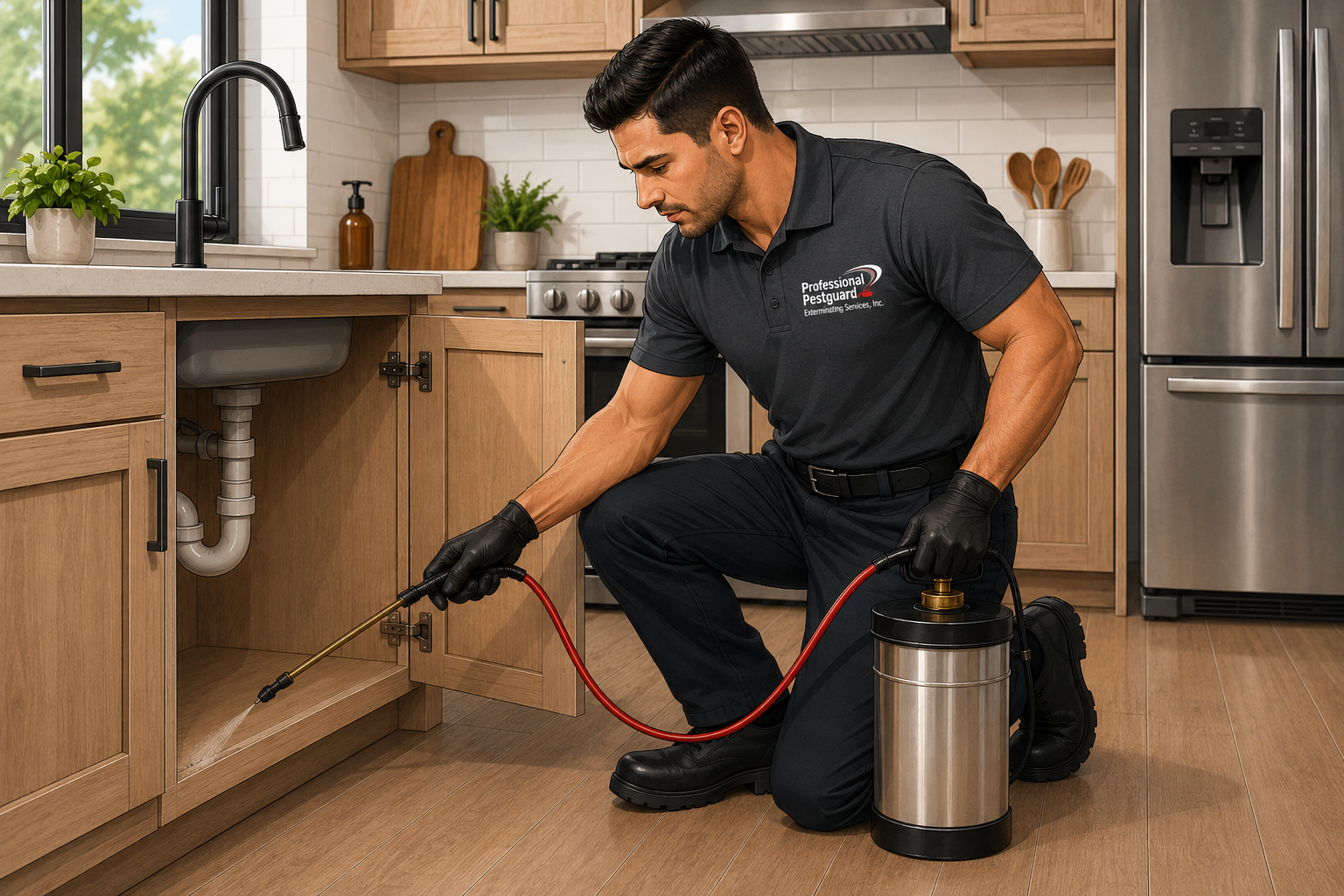
Advantages Of Professional Treatment
- Thorough Inspection
Professional inspections help identify nesting areas, entry points, moisture sources, and other factors contributing to cockroach activity. Locating the source of the infestation is often the first step toward effective control. - Targeted Product Placement
Instead of treating open spaces, professional treatments focus on areas where cockroaches actually live and travel. This allows products to be applied more effectively and efficiently. - Treatment Of Hidden Areas
Cockroaches frequently hide behind appliances, inside cabinets, around plumbing penetrations, and within wall voids. Professional treatment strategies are designed to address these difficult-to-reach locations. - Monitoring And Follow-Up
Ongoing monitoring helps determine whether populations are declining and whether additional treatment is needed. Follow-up service is often critical for larger infestations. - Identification Of Conducive Conditions
Moisture problems, food sources, clutter, and structural issues can all contribute to recurring infestations. Identifying and correcting these conditions helps reduce future pest pressure. - Long-Term Control Strategies
Professional programs focus on preventing infestations from returning rather than providing only temporary relief. This approach can help homeowners maintain a healthier and more pest-free environment over time.
Professional treatment is often more effective because it focuses on the source of the infestation rather than only the visible symptoms. Many homeowners ultimately choose professional residential pest control services after discovering that do-it-yourself products provide only temporary results.
Frequently Asked Questions About Roach Bombs
Roach bombs remain one of the most commonly purchased do-it-yourself pest control products. Below are answers to some of the most common questions homeowners ask about foggers, cockroach infestations, and professional treatment options.
Do roach bombs really work?
Roach bombs may kill some exposed cockroaches, but they rarely eliminate the entire infestation. Many roaches remain hidden inside walls, cabinets, appliances, and other protected areas that foggers cannot effectively reach.
Why do I see more roaches after using a bug bomb?
In some cases, the insecticide can cause surviving cockroaches to leave their hiding places and spread throughout the home. This can make it appear as though the infestation has become worse after treatment.
Can roach bombs eliminate German roaches?
German cockroach infestations are often too complex for a single fogger treatment. Their rapid reproduction and tendency to hide in protected areas make professional treatment a more effective option in many situations.
Are roach bombs safe around food preparation areas?
Roach bombs contain insecticides that can settle on exposed surfaces. Homeowners should always follow label instructions carefully and thoroughly clean food preparation areas after treatment.
How long does it take to get rid of a cockroach infestation?
The timeline depends on the size of the infestation, the species involved, and the treatment method used. Smaller infestations may be resolved relatively quickly, while larger infestations often require multiple visits and ongoing monitoring.
Why do cockroaches keep returning?
Recurring cockroach activity often indicates that nesting areas, food sources, moisture problems, or entry points have not been fully addressed. Surviving roaches and egg cases can quickly re-establish an infestation.
What is the best treatment for German roaches?
The most effective treatments typically combine inspection, targeted applications, monitoring, and follow-up service. Professional treatment programs focus on locating and eliminating the source of the infestation rather than only treating visible roaches.
Can cockroach eggs survive a fogger?
Yes. Cockroach egg cases are often protected from the insecticide released by foggers and roach bombs. This is one reason infestations frequently return after treatment.
Should I use multiple roach bombs?
Using multiple foggers does not necessarily improve results and can increase exposure to insecticides. More product does not always mean better control, especially when cockroaches remain hidden in inaccessible areas.
When should I call a professional exterminator?
If cockroaches continue returning after do-it-yourself treatments, if you are seeing roaches during the day, or if activity is spreading throughout the home, it may be time to schedule a professional inspection. Early intervention often prevents infestations from becoming larger and more difficult to control.
Professional Cockroach Control In South Florida
Cockroach infestations rarely disappear on their own, and many do-it-yourself treatments only address the symptoms rather than the source of the problem. Whether you're dealing with German cockroaches in the kitchen, American roaches entering from outdoors, or recurring activity that continues returning after treatment, identifying the root cause is often the key to long-term success.
At Professional Pestguard, our cockroach control and residential pest control services are designed to locate hidden harborages, identify conducive conditions, and implement targeted treatment strategies that help reduce current infestations and prevent future activity. If you're dealing with recurring cockroach activity, Professional Pestguard can help identify the source of the infestation and recommend an effective treatment plan. Contact Professional Pestguard today to schedule an inspection or request a free estimate online.
About Professional Pestguard
Professional Pestguard provides professional pest control in Weston, FL and nearby communities including Davie, Sunrise, Pembroke Pines, and Plantation. With over 40 years of experience, our licensed technicians protect homes and businesses across Broward County and Miami-Dade County from ants, cockroaches, rodents, spiders, and other common South Florida pests using safe and effective treatments.