White-Footed Ants in South Florida Homes: Why They Form Long Trails and How They Get Inside
Long trails of ants around a South Florida home may be caused by white-footed ants traveling between a large colony, nearby nesting sites, and reliable food or moisture sources. These ants establish organized foraging routes along tree trunks, exterior walls, fences, rooflines, foundations, sidewalks, and landscaping edges, which can make hundreds or even thousands of workers visible at once.
In this guide, we’ll explain how to identify white-footed ants, why their trails become so large, where they commonly nest, how they enter South Florida homes, and how professional ant control can help manage activity at its source.
Why Do White-Footed Ants Form Long Trails Around South Florida Homes?
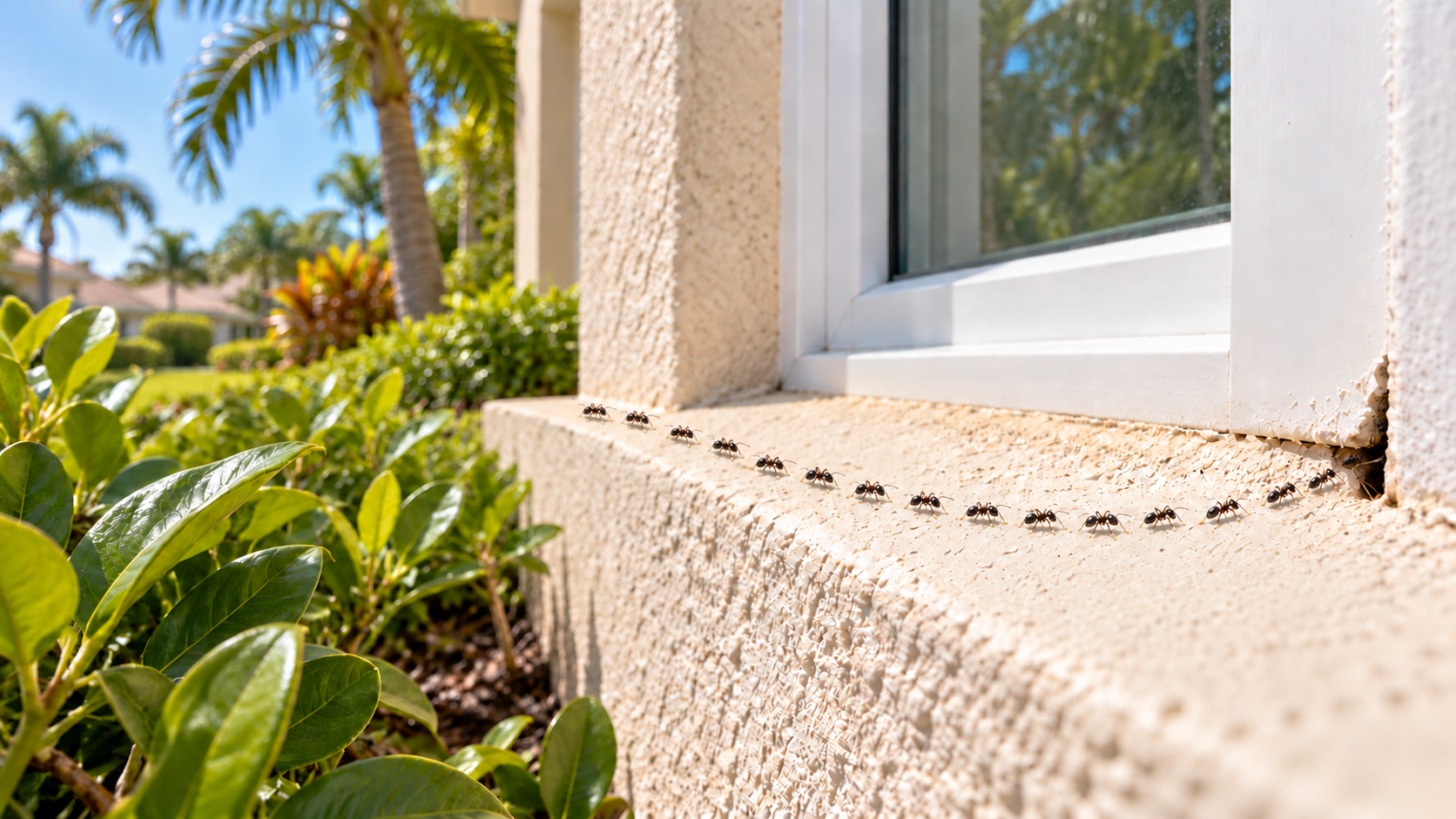
White-footed ants form long trails because large numbers of workers follow chemical scent markers between their nesting areas and dependable sources of food and moisture. A trail may connect trees, shrubs, mulch beds, exterior walls, rooflines, and indoor spaces, sometimes making it appear as though one continuous line of ants surrounds the home.
These visible trails are part of an organized foraging system. When worker ants locate a useful resource, they leave pheromones behind that help other members of the colony follow the same route. As more workers travel along it, the scent trail becomes stronger and easier for additional ants to follow.
What Causes White-Footed Ant Trails to Become So Large?
- Strong pheromone trails: Foraging workers create chemical paths that guide other ants between nesting areas and resources. Once a successful route is established, a steady stream of workers may continue using it.
- Large, interconnected colonies: White-footed ants can develop extremely large populations with multiple nesting areas spread across a property. Trails may connect a larger colony with smaller nests in trees, shrubs, wall voids, attics, and other protected locations.
- Reliable sources of sugary food: Outdoors, white-footed ants are strongly attracted to honeydew produced by aphids, scale insects, mealybugs, and other plant-feeding insects. They may repeatedly travel up trees and shrubs to reach this sugary liquid.
- Access to water and moisture: Irrigation, rainfall, leaking outdoor fixtures, damp landscaping, and moisture around the home can provide dependable water sources. Indoors, trails may lead toward kitchens, bathrooms, laundry rooms, and other moisture-prone areas.
White-footed ants often follow straight structural edges because these routes provide protection and make navigation easier. Homeowners may notice trails along sidewalks, fences, baseboards, exterior walls, soffits, window frames, or utility lines.
A long trail does not necessarily lead to one easily accessible nest. It may connect several nesting areas throughout the property, which is why spraying only the visible workers often provides temporary relief without addressing the larger white-footed ant problem.
How Do White-Footed Ants Get Inside South Florida Homes?
White-footed ants get inside homes by following established trails from outdoor nesting areas and entering through tiny openings in the structure. Their small size allows workers to pass through gaps that homeowners may not notice around windows, doors, utility lines, soffits, vents, and roof edges.
Many infestations begin outside in trees, shrubs, mulch, leaf litter, or other protected areas near the home. Once workers discover food, water, or shelter indoors, they reinforce the route with pheromones, allowing more ants to follow the same path.
Common Entry Points Used by White-Footed Ants
- Tree branches and shrubs touching the home: Overhanging branches, vines, and dense shrubs can act as bridges between outdoor nests and the roof, siding, windows, or exterior walls.
- Utility lines and cable openings: Ants may follow electrical wires, plumbing pipes, air-conditioning lines, internet cables, and other utilities that enter through exterior walls.
- Gaps around windows and doors: Damaged seals, loose weatherstripping, and small spaces around frames can give foraging workers direct access to indoor rooms.
- Cracks in stucco and exterior walls: Small cracks around the foundation, siding, expansion joints, and damaged stucco may provide access to protected wall spaces.
- Roof vents, soffits, and fascia gaps: White-footed ants traveling along trees or rooflines may enter attics through unscreened vents, damaged soffits, or openings beneath roof edges.
- Attached fences and screen enclosures: Fences, railings, gutters, and patio structures that connect with the home can provide protected routes toward exterior openings.
Finding white-footed ants inside does not always mean the main colony is located indoors. Workers may be traveling from a large outdoor population to reach moisture or food inside the home. However, these ants can also establish protected nesting areas in wall voids, attics, and other hidden spaces.
Following the trail back toward its outdoor source can help reveal how the ants are entering. Because one trail may connect several nesting areas, sealing a single gap may redirect the ants without resolving the larger infestation.
Where Do White-Footed Ants Nest In and Around South Florida Homes?
White-footed ants commonly nest in trees, shrubs, mulch, leaf litter, wall voids, attics, and other protected areas that provide shelter and access to moisture. A single property may contain several interconnected nesting sites, which allows the ants to spread across the landscape and structure without depending on one easily identifiable nest.
Unlike fire ants, white-footed ants do not usually create large soil mounds in open lawns. Their nesting sites are often hidden inside vegetation, beneath organic debris, or within small structural spaces. This can make the source of a long ant trail difficult for homeowners to locate.
Common Outdoor Nesting Areas
- Trees, palms, and shrubs: White-footed ants may nest beneath loose bark, inside hollow branches, or within protected spaces where branches and leaves overlap.
- Mulch and leaf litter: Damp organic material provides shade, moisture, and protection close to the foundation. These areas may also contain insects that produce the honeydew white-footed ants feed on.
- Landscape timbers and yard debris: Ants may establish nests beneath wood, stones, planters, stacked materials, or other objects that protect them from direct sunlight and weather.
- Dense landscaping near the home: Thick shrubs, vines, and ground cover can hide ant activity while providing routes between outdoor nests and the structure.
Common Indoor Nesting Areas
- Wall voids: Small openings around pipes, cables, windows, and doors may allow ants to reach protected spaces between interior and exterior walls.
- Attics and roof spaces: Ants entering through soffits, vents, fascia gaps, or overhanging branches may establish activity in warm, protected areas near the roofline.
- Voids around windows and doors: Hollow frames, damaged seals, and small construction gaps can provide shelter near established foraging routes.
- Moist areas inside the home: Kitchens, bathrooms, laundry rooms, and plumbing areas may attract workers searching for water, although seeing ants there does not always mean the colony is nesting in that room.
The location where ants are visible is not necessarily the location of the nest. A trail inside the kitchen may lead outdoors to shrubs or trees, while a trail on an exterior wall may connect several hidden nesting areas around the home.
Identifying the full travel pattern is important because treating only the room where ants appear may reduce visible activity temporarily while the larger colony remains active elsewhere on the property.
Why Are White-Footed Ants So Difficult to Control?
White-footed ants are difficult to control because their colonies can contain large populations spread among multiple indoor and outdoor nesting sites. Eliminating the workers visible on a trail may reduce activity temporarily, but it does not necessarily reach the reproductive ants or hidden nests sustaining the infestation.
Their ability to travel between trees, landscaping, exterior walls, attics, and wall voids also means the problem may extend far beyond the room or entry point where ants were first noticed.
What Makes White-Footed Ant Control Challenging?
- Large colony populations: A well-established colony can support an enormous number of workers. The ants seen inside the home may represent only a small portion of the overall population.
- Multiple nesting locations: White-footed ants may occupy several connected nesting sites throughout the property. Treating one location may leave other nests active.
- Hidden outdoor sources: Colonies often begin in trees, palms, shrubs, mulch, or yard debris. Indoor treatments alone may not address the outdoor population continually sending workers toward the house.
- Protected structural spaces: Wall voids, attics, soffits, roof gaps, and other enclosed areas can shelter ants and make nesting activity difficult to locate.
- Well-established travel routes: Strong pheromone trails allow workers to return to reliable food and water sources. If one route is interrupted, the ants may create a new path through another opening.
- Temporary surface treatments: Spraying the visible trail may kill some workers without affecting the larger colony. It can also make it harder to follow the trail back toward the nesting or entry area.
Effective white-footed ant control should begin with accurate identification and a thorough inspection of both the home and surrounding landscape. The goal is to determine where the ants are nesting, how they are entering, and which food, moisture, or landscaping conditions are supporting the activity.
Because white-footed ants can spread across several nesting areas, successful control may require targeted treatment, exclusion, landscape adjustments, and follow-up monitoring rather than a single application.
How Can Homeowners Help Prevent White-Footed Ants From Getting Inside?
Homeowners can help prevent white-footed ants by removing outdoor pathways, sealing small entry points, reducing moisture, and limiting the food sources that attract workers toward the home. Prevention is most effective when the landscaping and the structure are addressed together.
Because white-footed ants often originate outdoors, cleaning the kitchen alone may not stop the problem. Homeowners should also inspect trees, shrubs, mulch beds, roof edges, and utility openings for trails leading toward the structure.
Steps That Can Reduce White-Footed Ant Activity
- Trim vegetation away from the home: Cut back tree branches, shrubs, vines, and palm fronds that touch the roof, walls, windows, or screen enclosure. This removes direct bridges ants can use to bypass the foundation.
- Seal exterior cracks and gaps: Apply appropriate sealant around windows, doors, utility lines, plumbing penetrations, and small cracks in stucco or siding. Pay attention to openings where an active trail appears to enter.
- Repair roofline openings: Replace damaged vent screens, repair loose soffits, and seal gaps around fascia boards or roof penetrations that may provide access to attics and wall voids.
- Correct moisture problems: Repair leaking faucets, pipes, irrigation lines, and air-conditioning drainage issues. Improve drainage in areas where water regularly collects near the foundation.
- Inspect plants for honeydew-producing insects: Aphids, scale insects, mealybugs, and similar pests produce sugary honeydew that attracts white-footed ants. Managing these plant pests can remove an important outdoor food source.
- Reduce protected nesting material: Remove unnecessary leaf litter, fallen branches, stacked wood, and yard debris near the house. Avoid allowing damp mulch or dense ground cover to remain pressed against the foundation.
- Limit indoor food sources: Clean sugary spills, wipe countertops, rinse beverage containers, and store sweet foods in sealed containers. Even small amounts of residue can encourage workers to maintain an indoor trail.
- Monitor trails instead of immediately disturbing them: Observe where the ants are coming from and where they are going. This information can help identify entry points and guide a more complete professional inspection.
These steps can make a property less attractive and reduce the number of routes white-footed ants use to enter the home. However, exclusion and sanitation may not eliminate an established colony that already occupies multiple nesting sites.
If long trails continue after entry points and conducive conditions are addressed, a professional inspection may be needed to identify the broader outdoor source and develop a targeted control plan.
How Does Professional White-Footed Ant Control Work?
Professional white-footed ant control begins with identifying the ant species, tracing active trails, locating potential nesting areas, and determining how the ants are entering the home. The treatment plan should address both the indoor activity homeowners notice and the larger outdoor population that may be sustaining it.
Because white-footed ants can occupy several connected nesting areas, treatment may need to extend beyond the kitchen or bathroom where workers are visible. Trees, shrubs, mulch beds, rooflines, utility openings, attics, and exterior walls may all need to be evaluated.
What a White-Footed Ant Control Service May Include
- Accurate ant identification: White-footed ants can resemble other small, dark-colored ants. Correct identification is important because different ant species have different nesting habits, food preferences, and responses to treatment.
- Indoor and outdoor inspection: The technician examines active trails, landscaping, moisture-prone areas, exterior entry points, roof edges, wall voids, and other locations where colonies may be nesting or traveling.
- Tracing ants toward the source: Following established trails can help reveal whether the ants are coming from a tree, shrub, mulch bed, attic, exterior wall, or another protected area.
- Targeted treatment selection: Treatment methods are selected based on the ant species, nesting location, severity of the infestation, and conditions around the home. All products should be applied according to their labels.
- Entry-point and landscape recommendations: The homeowner may receive recommendations for trimming vegetation, sealing structural gaps, correcting moisture problems, or addressing plant pests that produce honeydew.
- Follow-up monitoring: Additional inspections may be needed to determine whether trails have decreased, shifted to another route, or revealed a previously hidden nesting area.
The goal of professional treatment is not simply to kill the ants visible on a countertop or exterior wall. Effective control focuses on the colony structure, nesting areas, entry routes, and environmental conditions allowing the infestation to continue.
For homeowners seeking ant control in Weston or surrounding South Florida communities, choosing a licensed pest control provider familiar with white-footed ants can make it easier to identify the source and create a treatment plan suited to the property.
How Can You Identify White-Footed Ants?
White-footed ants can be identified by their small, dark bodies, pale-colored feet, and long, organized foraging trails. Adult workers are usually about 2.5 to 3 millimeters long, making the light coloring at the ends of their legs difficult to see without looking closely.
Their appearance may cause homeowners to confuse them with other small household ants. The location and behavior of the ants are often just as important as their color when determining the species.

Common Signs of White-Footed Ant Activity
- Dark brown or black bodies: Most of the ant’s body appears dark, creating a noticeable contrast with the lighter ends of its legs.
- Pale yellowish-white feet: The ant receives its common name from the light-colored lower portions of its legs. This feature may be easier to see in a close photograph than with the naked eye.
- Small, consistently sized workers: White-footed ant workers are small and generally similar in size, unlike species whose colonies contain visibly different worker sizes.
- Long, organized trails: Large numbers of workers may travel in steady lines along sidewalks, fences, tree trunks, exterior walls, baseboards, and roof edges.
- Activity around trees and shrubs: Trails are often connected with palms, flowering plants, dense vegetation, or landscaping where honeydew-producing insects provide sugary food.
- Movement between outdoor and indoor areas: Homeowners may see trails entering through window frames, utility openings, soffits, or branches touching the structure.
White-Footed Ants vs. Ghost Ants
White-footed ants have mostly dark bodies with pale coloring concentrated near their feet. Ghost ants have dark heads and upper bodies but noticeably pale, almost translucent abdomens and legs. From a distance, a ghost ant’s rear body may appear difficult to see, while a white-footed ant usually looks dark except for the light ends of its legs.
White-footed ants do not have a stinger and are generally considered nuisance pests rather than wood-destroying insects. However, their large colonies and persistent trails can make them difficult to control once they become established around a home.
Because several South Florida ant species are small and similar in appearance, professional identification is recommended before treatment. Treating the wrong species may reduce visible workers temporarily without addressing the actual nesting behavior.
Frequently Asked Questions About White-Footed Ants
White-footed ants can be difficult to identify and control because their colonies may extend across landscaping, trees, and hidden areas of the home. Below are answers to common questions South Florida homeowners ask about their trails, nesting habits, and indoor activity.
Why do I have long trails of ants around my South Florida home?
Long trails may indicate white-footed ants traveling between large, interconnected nesting areas and dependable sources of food or moisture. Workers reinforce successful routes with pheromones, allowing thousands of ants to follow the same paths along trees, sidewalks, fences, walls, and rooflines.
Are white-footed ants harmful?
White-footed ants do not have a stinger and are not known for damaging wood like termites or carpenter ants. They are primarily nuisance pests, but their large colonies and persistent indoor trails can become difficult to manage.
Where do white-footed ants usually nest?
White-footed ants commonly nest in trees, shrubs, mulch, leaf litter, wall voids, attics, soffits, and other protected spaces. A property may contain multiple connected nesting areas rather than one obvious nest.
Why are white-footed ants crawling on my trees and plants?
White-footed ants frequently travel on trees and plants to collect honeydew, a sugary substance produced by aphids, scale insects, mealybugs, and similar plant-feeding pests. Branches touching the home can also give ants a direct route to the roof or exterior walls.
Can white-footed ants live inside walls?
Yes. White-footed ants may establish activity in wall voids, attics, window frames, and other protected structural spaces. However, seeing ants indoors does not always mean the main colony is inside because workers may be traveling from outdoor nests.
Why do white-footed ants return after I spray them?
Surface sprays may kill visible workers without reaching the hidden nests and reproductive ants supporting the colony. If the colony remains active, workers may rebuild the trail or begin using a different route.
Does rain cause white-footed ants to enter homes?
Rain can disturb outdoor nesting and foraging areas, while dry conditions can increase the ants’ search for water. Both changes may encourage workers to seek food, moisture, or shelter inside a home.
When should I call a pest control company for white-footed ants?
Consider professional ant control when trails continue returning, ants are entering multiple rooms, or the nesting source cannot be located. A professional inspection can identify the species, trace entry routes, and evaluate indoor and outdoor nesting areas before recommending treatment.
Key Takeaways
Long trails of small, dark ants around a South Florida home may indicate a large white-footed ant colony living across the landscaping and structure. Identifying the species, tracing its travel routes, and addressing both indoor and outdoor activity are essential for effective control.
Here’s What Homeowners Should Remember
- White-footed ants have dark bodies with pale yellowish-white coloring near the ends of their legs.
- Large colonies and strong pheromone trails allow thousands of workers to travel along the same routes.
- Trees, shrubs, mulch, exterior walls, rooflines, and utility lines can connect outdoor nests with the home.
- White-footed ants can enter through tiny gaps around windows, doors, soffits, vents, and utility penetrations.
- Spraying visible workers may provide temporary relief without reaching the larger colony or its multiple nesting areas.
- Effective white-footed ant control combines accurate identification, targeted treatment, exclusion, landscape adjustments, and follow-up monitoring.
Conclusion
Long trails of ants outside or around a South Florida home may be caused by white-footed ants traveling between large, interconnected nesting areas and dependable food or moisture sources. Their small size allows them to enter through tiny structural gaps, while trees, shrubs, utility lines, and roof edges can provide direct pathways into the home.
Because white-footed ants may occupy several indoor and outdoor nesting sites, controlling only the workers visible on a trail often provides temporary results. Effective management begins with proper identification, a complete inspection, targeted treatment, entry-point exclusion, and changes to the conditions supporting the colony.
Need White-Footed Ant Control in Weston or South Florida?
Professional Pestguard provides professional ant control services for homeowners in Weston, Broward County, and surrounding South Florida communities. Our experienced team can evaluate the ant activity around your home and recommend a treatment plan based on the species, nesting behavior, and areas affected.
If long trails of ants keep returning around your house, call (954) 389-6107 or fill out our free estimate request form to request your free estimate.
About Professional Pestguard
Professional Pestguard provides professional pest control in Weston, FL and nearby communities including Davie, Sunrise, Pembroke Pines, and Plantation. With over 40 years of experience, our licensed technicians protect homes and businesses across Broward County and Miami-Dade County from ants, cockroaches, rodents, spiders, and other common South Florida pests using safe and effective treatments.