Why Outdoor Lights Attract Bugs Around Your South Florida Home
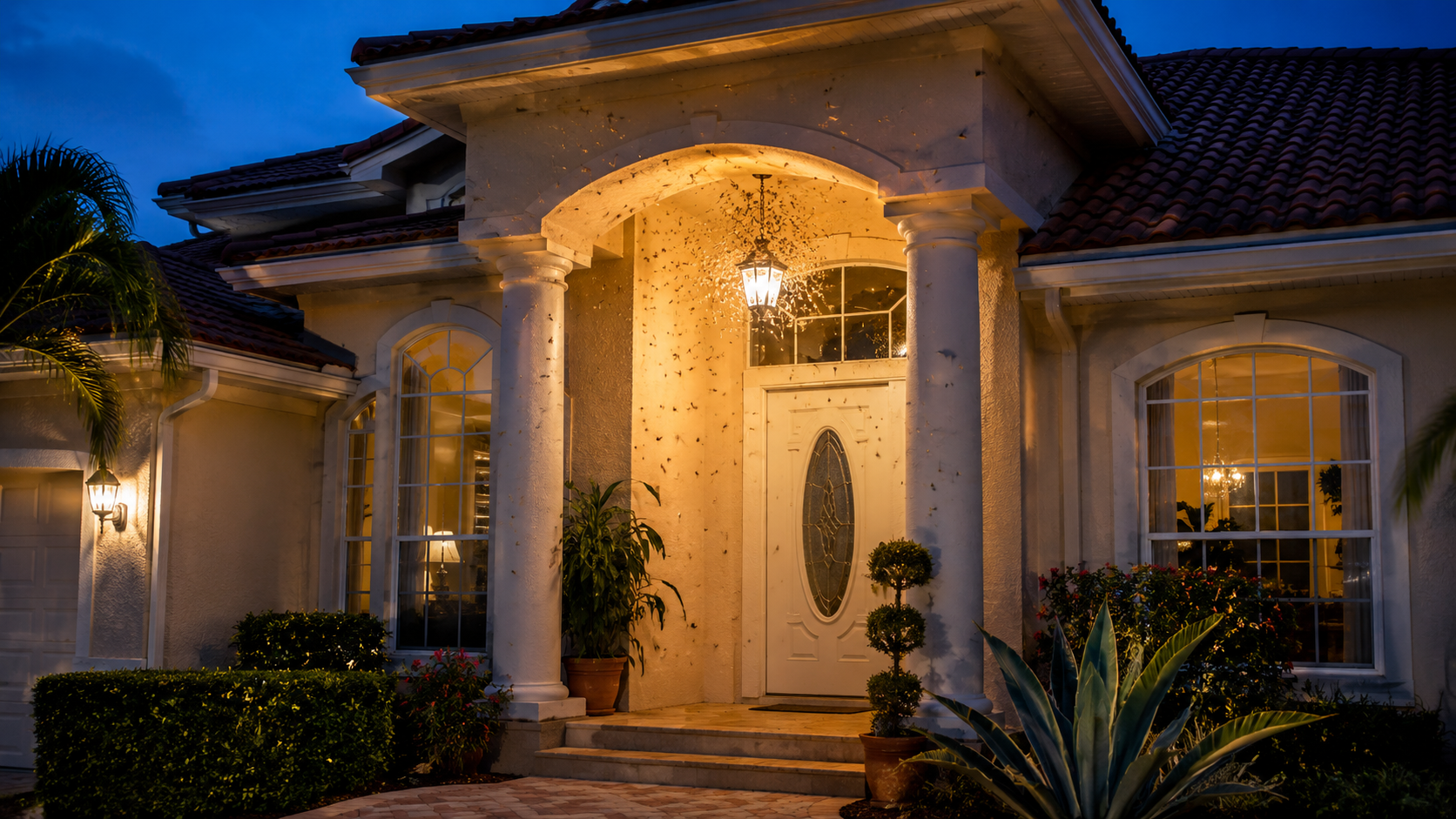
Have you ever turned on your porch light at night only to find dozens of insects flying around it within minutes? From moths and beetles to flying ants and mosquitoes, outdoor lighting often becomes a gathering place for insects after the sun goes down. While this may seem like nothing more than a nuisance, it can actually contribute to increased pest activity around your home.
Many homeowners don't realize that outdoor lights do more than attract insects—they can also attract spiders, geckos, frogs, lizards, bats, and other wildlife searching for an easy meal. In South Florida's warm, humid climate, where insects remain active for much of the year, bright exterior lighting can unintentionally create a nighttime feeding ground right outside your front door.
Understanding why bugs gather around lights can help homeowners make informed decisions about outdoor lighting, reduce unnecessary insect activity, and create a less inviting environment for other pests. Whether you're noticing insects around your porch, patio, garage, or pool enclosure, learning what's attracting them is the first step toward keeping your home more comfortable.
Why Are Bugs Attracted To Outdoor Lights?
If you've ever wondered why insects seem to appear the moment your outdoor lights turn on, you're not alone. Many flying insects use natural light sources, such as the moon and stars, to help navigate while searching for food, mates, or suitable places to lay eggs. Artificial lighting can interfere with this natural behavior, causing insects to gather around homes night after night.
In South Florida, where warm temperatures and high humidity allow insects to remain active for much of the year, outdoor lighting can become a magnet for a wide variety of flying pests. While the lights themselves don't create insects, they can concentrate large numbers of bugs in one location, increasing overall pest activity around your home.
Why Outdoor Lights Attract So Many Insects
- Artificial Lights Disrupt Natural Navigation
Many flying insects use the moon as a natural point of reference while traveling at night. Bright porch lights, garage lights, and landscape lighting can confuse their navigation, causing them to circle around the light source instead of continuing on their normal path. - Bright White And Cool-Colored Bulbs Attract More Bugs
Not all outdoor lights attract insects equally. Bright white, blue, and ultraviolet-rich lighting tends to attract significantly more insects than warm-colored or amber LED bulbs because many insects are naturally more sensitive to shorter wavelengths of light. - Warm South Florida Nights Increase Insect Activity
South Florida's subtropical climate allows insects to remain active during much of the year, especially on warm evenings with high humidity. As temperatures rise after sunset, many insects become more active, making illuminated areas around homes even more attractive. - Outdoor Lights Create Gathering Areas
Porch lights, patio lights, garage fixtures, pool lighting, and landscape lights become central gathering points where flying insects naturally concentrate. The more insects that gather around these areas, the greater the chance you'll notice increased pest activity around doors, windows, and outdoor living spaces. - Moisture Can Make The Problem Even Worse
Outdoor lights located near landscaping, irrigation systems, ponds, or other sources of moisture often attract even larger numbers of insects. Many species thrive in humid environments, making South Florida homes especially susceptible to nighttime insect activity.
Understanding why bugs gather around lights is the first step toward reducing insect activity around your home. In the next section, we'll look at the most common insects homeowners are likely to see around outdoor lighting and why some species are more attracted to lights than others.
What Types Of Bugs Are Commonly Found Around Outdoor Lights?
Outdoor lighting can attract a surprising variety of insects, especially during warm South Florida evenings. While some insects simply fly around the light temporarily, others remain nearby because the area provides opportunities to feed, rest, or reproduce. The longer lights remain on, the more insects may gather around your home.
Although not every insect attracted to outdoor lighting is considered a structural pest, large numbers of flying insects can become a nuisance for homeowners and may encourage additional pest activity around porches, garages, patios, entryways, and windows. In some cases, these insects can also contribute to larger pest problems that may require Residential Pest Control to help manage recurring activity around the home.
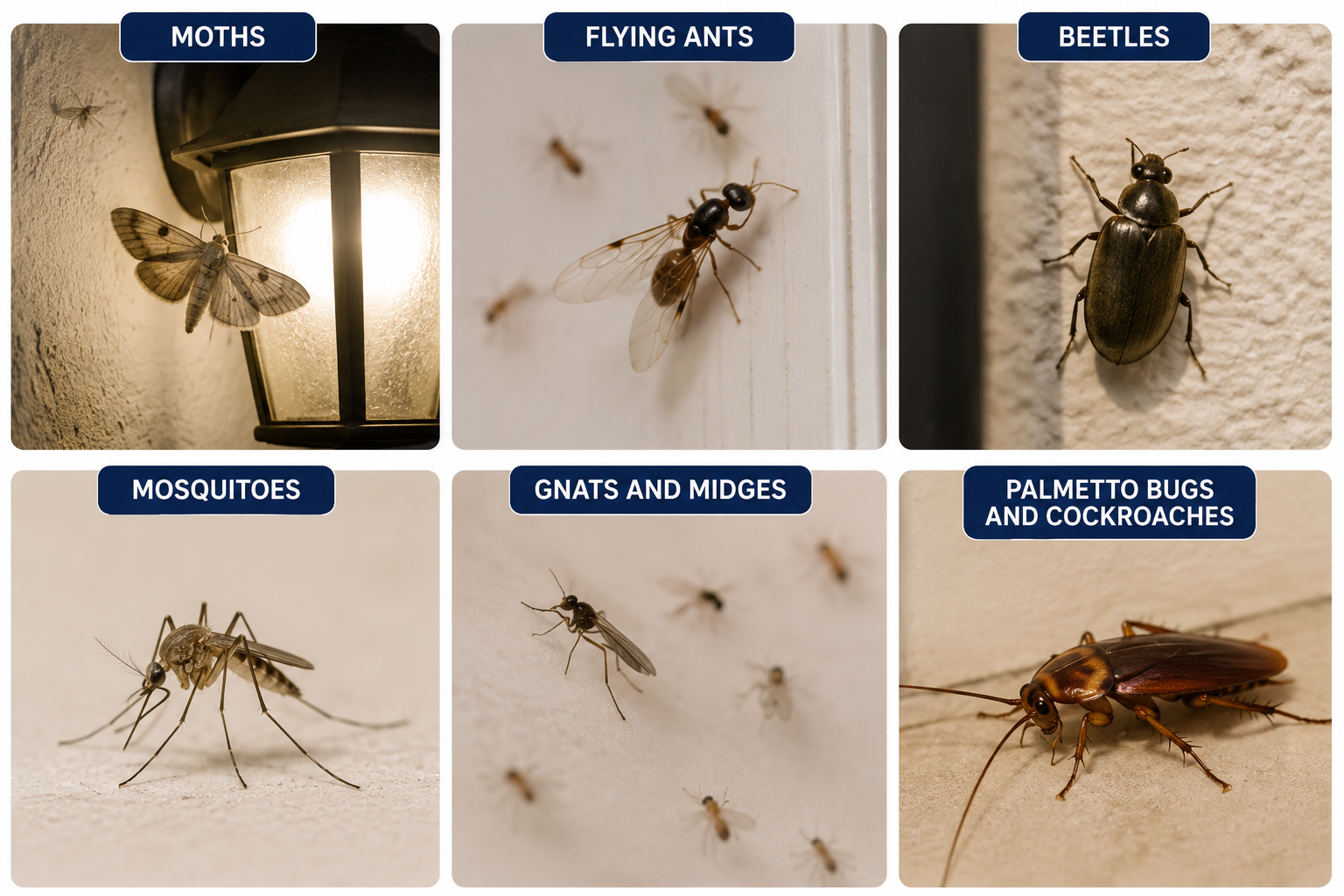
Common Bugs You May See Around Outdoor Lights
- Moths
Moths are among the most recognizable insects attracted to outdoor lighting. Many species use natural light sources to navigate at night, making porch lights and garage lights especially attractive. While moths themselves are usually harmless, they often attract spiders, geckos, frogs, and other insect-eating animals that gather wherever food is plentiful. - Flying Ants
During certain times of the year, reproductive ants develop wings and leave their colonies in search of new nesting locations. Homeowners may notice large numbers of flying ants gathering around exterior lights during these seasonal swarms. If flying ants are becoming a recurring problem around your property, our Ant Control service can help identify the source of the infestation and provide long-term protection. - Beetles
Many beetle species are naturally attracted to bright outdoor lighting. Depending on the species, homeowners may find beetles gathering around front doors, patios, garages, and porch lights throughout the warmer months. While most beetles are considered nuisance pests, large numbers around entryways can become frustrating for homeowners. - Mosquitoes
Mosquitoes are primarily attracted to carbon dioxide, body heat, and human scent rather than light itself. However, because people often gather around patios, porches, and outdoor seating areas with lights on, mosquito activity tends to become much more noticeable during the evening hours. - Gnats And Midges
Small flying insects such as gnats and midges thrive in South Florida's warm, humid climate. These insects frequently swarm around porch lights, landscape lighting, and pool areas, making outdoor entertaining less enjoyable. - Palmetto Bugs And Cockroaches
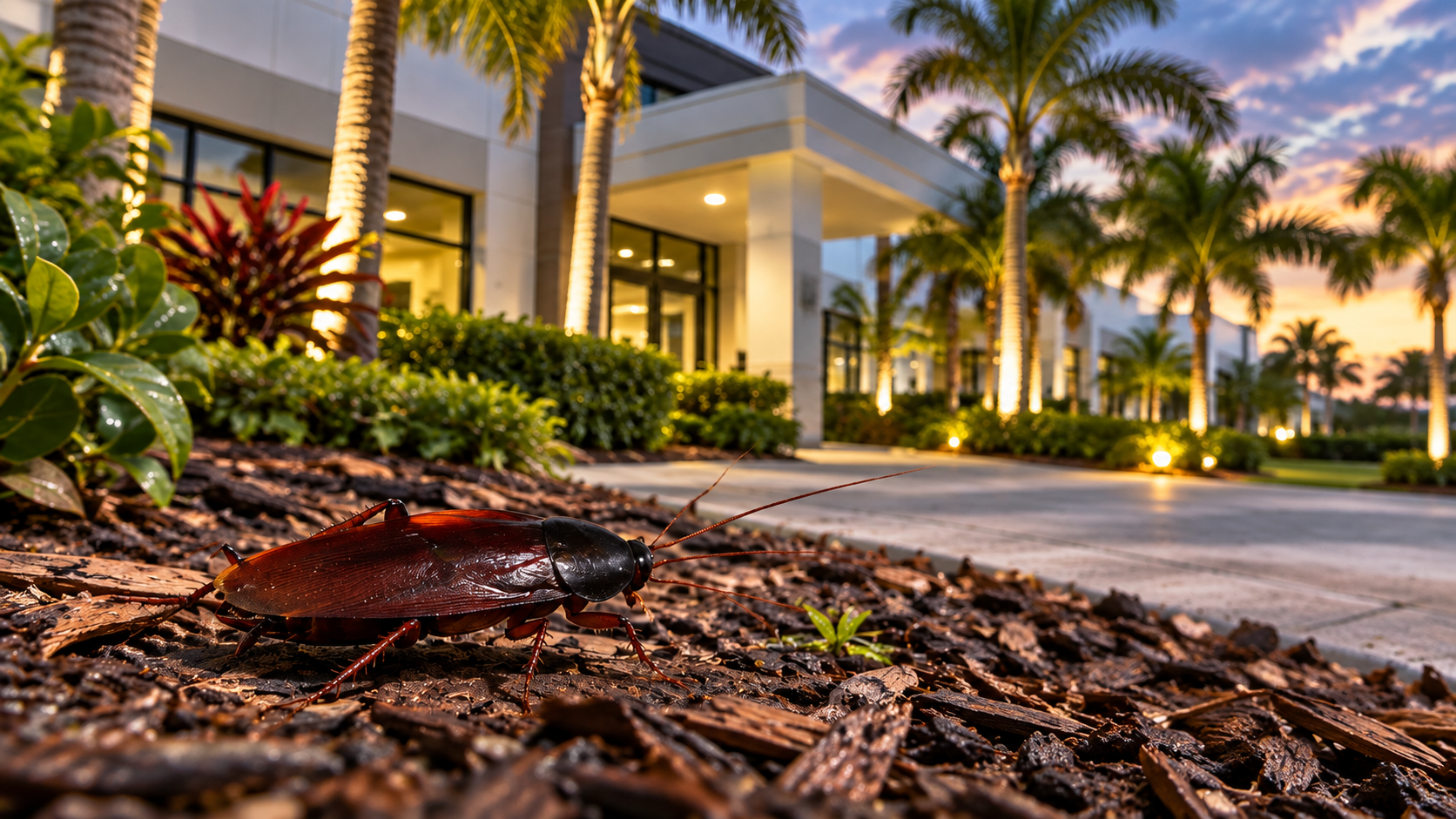
American cockroaches, commonly called palmetto bugs, may be seen around outdoor lighting while searching for food, moisture, or shelter. Increased insect activity around the home can also create favorable conditions for cockroaches. If you're noticing roaches indoors or around your property, our Cockroach Control service can help identify the source of the infestation and reduce recurring activity.
Outdoor Lights Can Create A Food Chain
The more insects that gather around outdoor lighting, the more attractive your home becomes to insect-eating animals. Spiders build webs where flying insects are plentiful, geckos and frogs hunt around illuminated walls, and even certain birds may take advantage of the steady food source.
If you've noticed an increase in spider webs around your porch or garage, it's often because your outdoor lighting is attracting the insects they feed on. Learn more in our guide to What Attracts Spiders Into South Florida Homes, where we explain why spiders choose certain areas around your property and how homeowners can reduce spider activity.
Why Outdoor Lights Attract More Than Just Bugs
Outdoor lighting doesn't just attract insects—it creates an entire nighttime food chain around your home. As flying insects gather around porch lights, garage lights, patios, and landscape lighting, they become an easy food source for many other animals that naturally feed on insects. This is why homeowners often notice more spiders, geckos, frogs, and even certain birds around well-lit areas after sunset.
While these animals may help reduce insect populations, their presence often indicates that outdoor lighting is supporting increased insect activity. By reducing the number of bugs around lights, homeowners can often make their property less attractive to many of the animals that follow.
Common Animals Attracted To Outdoor Lights
- Spiders
Spiders build webs wherever flying insects are abundant. Porch lights, entryways, garages, patios, and exterior lighting fixtures often become ideal hunting locations because insects continually gather around the light source. - Geckos
Small geckos are commonly seen on exterior walls near porch lights because they feed almost exclusively on insects. They patiently wait near illuminated surfaces, quickly catching moths, flies, gnats, and other insects throughout the evening. - Tree Frogs
South Florida's native tree frogs frequently gather around lights at night for the same reason as geckos—they're following their food source. Homeowners often notice frogs near patios, pool cages, and entryways where insects are most active. - Anoles And Other Small Lizards
Green and brown anoles are another common sight around homes with abundant insect activity. Although they are typically active during the day, they may still be found near well-lit areas where insects remain plentiful. - Bats
Certain bat species feed on flying insects after dark and may hunt around neighborhoods with significant nighttime insect activity. Although homeowners rarely notice them, bats often benefit from insects gathering around outdoor lighting. - Night-Feeding Birds
Some bird species take advantage of insects that congregate around outdoor lights, especially during the early morning and evening hours. Bright exterior lighting can unintentionally create reliable feeding opportunities for these insect-eating birds.
Outdoor lighting plays an important role in home security and visibility, but understanding how it affects the surrounding environment can help homeowners reduce unnecessary pest activity. Simple changes to lighting and routine Residential Pest Control can often make a noticeable difference in the number of insects—and the animals that follow them—around your property.
Where Around Your Home Do Outdoor Lights Attract The Most Bugs?
Not every outdoor light attracts the same amount of insect activity. The location of the fixture, nearby landscaping, moisture levels, and how long the light remains on all play a role in determining how many insects gather around it. Some areas naturally create ideal conditions where bugs become much more noticeable after sunset.
By identifying the outdoor areas that attract the highest numbers of insects, homeowners can make small adjustments that help reduce pest activity before insects begin finding their way indoors.
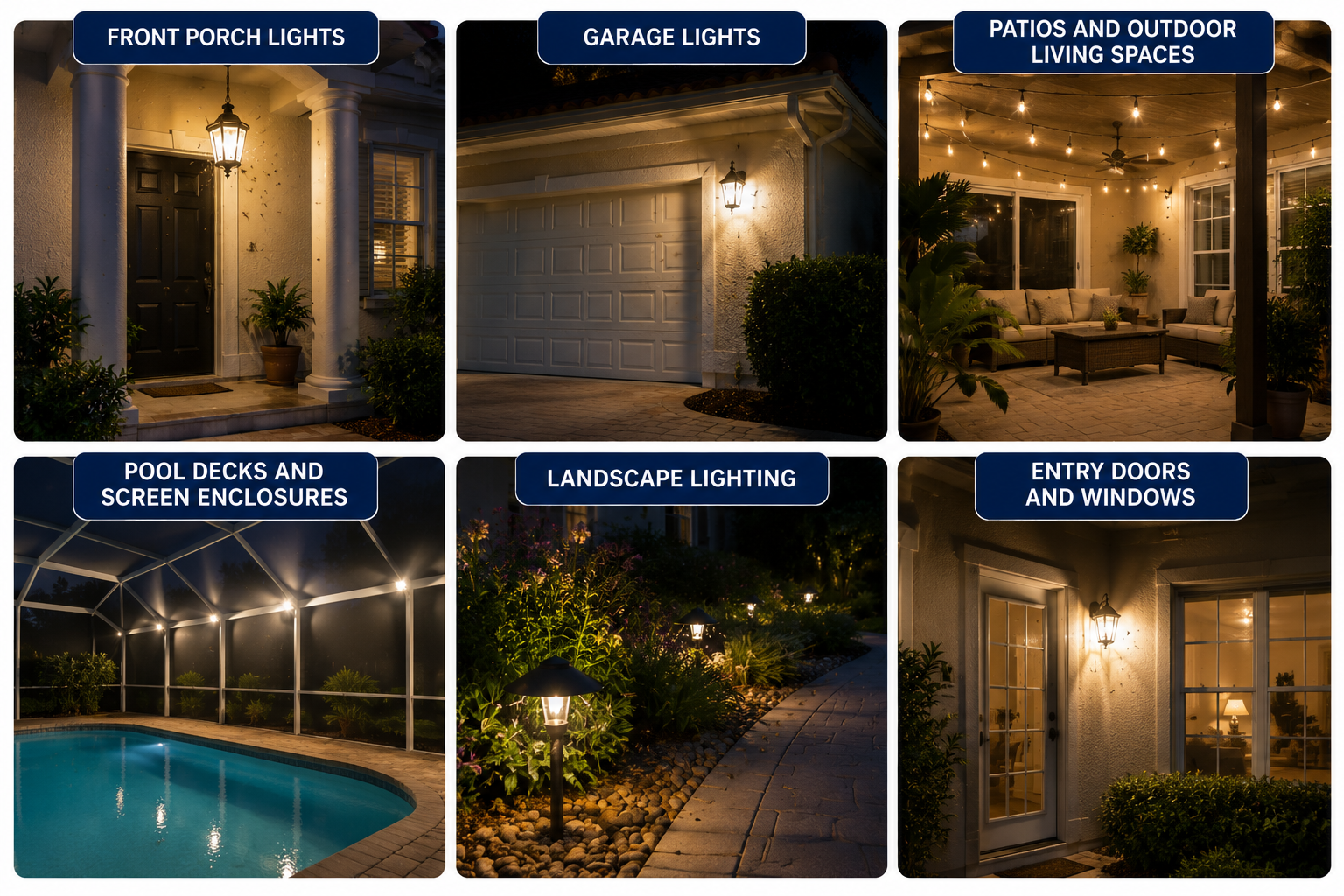
Outdoor Areas That Commonly Attract Bugs
- Front Porch Lights
Porch lights are often one of the busiest gathering points for nighttime insects because they remain illuminated for long periods and are positioned near entry doors. As insects accumulate around the light, homeowners may also notice more spiders, geckos, and other insect-eating animals nearby. - Garage Lights
Exterior garage lights frequently attract moths, beetles, flying ants, and other insects during the evening hours. Because garages often have small gaps around doors and weather stripping, increased insect activity can sometimes lead to more pests finding their way inside. - Patios And Outdoor Living Spaces
Outdoor dining areas, lanais, and covered patios are popular gathering places for families—and unfortunately for insects as well. Bright lighting combined with outdoor furniture and landscaping can create comfortable conditions for bugs to remain active throughout the evening. - Pool Decks And Screen Enclosures
Pools naturally increase humidity around the home, and when combined with bright lighting, they can attract large numbers of flying insects. Homeowners often notice insects collecting around pool cage screens, making nighttime swimming or entertaining less enjoyable. - Landscape Lighting
Decorative lighting installed throughout flower beds, shrubs, and walkways may attract insects closer to the home's foundation. Dense landscaping also provides shelter during the day, allowing insects to remain nearby even after the lights are turned off. - Entry Doors And Windows
Outdoor lights positioned near doors and windows attract insects directly to the areas where they are most likely to enter the home. Keeping doors closed, maintaining weather seals, and reducing unnecessary nighttime lighting can help limit insects gathering around these entry points.
While outdoor lighting is an important part of home safety and security, understanding where insects are most likely to gather can help homeowners reduce unnecessary pest activity. If you're noticing increasing numbers of ants, cockroaches, spiders, or other household pests indoors, our Residential Pest Control services can help identify the conditions attracting pests and provide long-term solutions.
Does The Type Of Outdoor Light Bulb Matter?
Yes—it absolutely can. While no outdoor light bulb will completely eliminate insects, the type, color, brightness, and placement of your lighting can significantly influence how many bugs gather around your home each night. Making a few simple lighting changes can often reduce insect activity without sacrificing safety or visibility.
Many homeowners automatically install bright white LED floodlights because they provide excellent illumination. However, these cooler-colored lights tend to attract more insects than warmer-colored alternatives. Choosing the right lighting can help reduce the number of bugs around lights and make outdoor spaces more enjoyable after sunset.
Outdoor Lighting Tips To Reduce Bugs
- Choose Warm-Colored LED Bulbs
Warm white LED bulbs (typically 2,700K to 3,000K) emit less blue and ultraviolet light than cool white bulbs. Because many flying insects are more attracted to shorter wavelengths of light, switching to warmer bulbs can noticeably reduce nighttime insect activity. - Consider Amber "Bug Lights"
Amber or yellow bug lights are designed to produce wavelengths that are less attractive to many flying insects. While they won't eliminate bugs entirely, they can help reduce the number of moths, beetles, and gnats gathering around porches, patios, and entryways. - Avoid Unnecessarily Bright Floodlights
Extremely bright exterior lighting can be visible from much farther away, making it easier for insects to locate your home. Choosing lighting that provides adequate visibility without excessive brightness may help reduce the number of insects attracted to the area. - Use Motion-Activated Lighting When Possible
Lights that remain on all night continuously attract insects for hours at a time. Motion-activated fixtures provide security when needed while reducing the amount of time insects have to gather around your home. - Direct Light Toward The Ground
Shielded fixtures that focus light downward rather than in all directions reduce the distance the light can be seen by flying insects. This not only minimizes light pollution but may also reduce the number of insects attracted from surrounding areas. - Keep Light Fixtures Clean
Dust, cobwebs, dead insects, and debris can accumulate around outdoor fixtures over time. Cleaning light fixtures regularly improves visibility while removing food sources that may continue attracting spiders and other insect predators.
Although selecting the right light bulb can help reduce bug activity, lighting is only one piece of the puzzle. South Florida's warm climate allows insects to remain active throughout much of the year, making ongoing prevention equally important. For more information about how seasonal changes affect insect populations, read our guide on What Time Of Year Are Pests Worst In South Florida.
Why Some Homes Attract More Bugs Than Others
Have you ever noticed that one home seems to have insects covering the porch every evening while a nearby house has very little bug activity? Although outdoor lighting plays an important role, it's only one piece of the puzzle. The location of your home, surrounding landscape, moisture levels, and nearby food sources can all influence how many insects gather around your property.
In South Florida, even two homes on the same street can experience very different levels of insect activity. Understanding what makes one property more attractive than another can help homeowners identify conditions that may be contributing to recurring pest problems.
Factors That Can Increase Insect Activity Around Your Home
- Water Features And Standing Water
Homes located near lakes, canals, ponds, retention areas, or other sources of standing water often experience higher levels of insect activity. Many flying insects thrive in moist environments, making nearby outdoor lighting even more attractive after sunset. - Heavy Landscaping
Thick shrubs, palm trees, ornamental plants, mulch, and dense ground cover provide insects with shade, moisture, and shelter during the day. As evening approaches, many of these insects become active and are naturally drawn toward nearby outdoor lighting. - High Humidity And Irrigation
Frequent lawn irrigation, damp soil, and South Florida's naturally humid climate create favorable conditions for many insects. Moist environments can support larger insect populations, especially during the warmer months. - Nearby Natural Areas
Homes located next to preserves, wooded areas, parks, or undeveloped land are often exposed to greater insect activity than homes surrounded by densely developed neighborhoods. These natural habitats support a wide variety of insects that become more active after dark. - Outdoor Food Sources
Pet food, overflowing trash cans, fallen fruit, compost piles, and outdoor cooking areas can all attract insects. Once insects begin gathering around these food sources, nearby lights may concentrate their activity around porches, patios, garages, and entryways. - Seasonal Pest Activity
Certain insects become much more active during specific times of the year. Warm temperatures, increased rainfall, and changing weather patterns can all contribute to larger insect populations around homes
Every home is unique, and insect activity is often the result of several environmental factors working together rather than a single cause. While homeowners may not be able to control the weather or surrounding environment, understanding these conditions can help reduce the number of bugs around lights and make outdoor spaces more enjoyable throughout the year.
Frequently Asked Questions About Bugs Around Outdoor Lights
Outdoor lighting plays an important role in home security, safety, and curb appeal, but it can also increase insect activity around your property. Below are answers to some of the most common questions homeowners ask about bugs around lights, why they gather near homes, and what can be done to reduce their presence.
Why are bugs attracted to outdoor lights?
Many insects use natural light sources, such as the moon, to help navigate at night. Artificial lighting can interfere with this process, causing insects to gather around porch lights, garage lights, patios, and other illuminated areas around the home.
What bugs are most commonly attracted to outdoor lights?
Some of the most common insects attracted to outdoor lights include moths, flying ants, beetles, mosquitoes, gnats, midges, and other flying insects. The types of bugs you see can vary depending on the season, weather conditions, and your home's surrounding environment.
Do LED lights attract fewer bugs?
It depends on the color of the LED bulb. Warm white and amber-colored LED lights generally attract fewer insects than cool white or bright blue-toned lights because many insects are more sensitive to shorter wavelengths of light.
Why are there so many bugs around my porch light?
Porch lights often remain on for long periods and are located near entryways, making them natural gathering points for flying insects. Nearby landscaping, standing water, and South Florida's warm climate can further increase insect activity around these areas.
Do outdoor lights attract spiders?
Outdoor lights don't attract spiders directly—they attract the insects that spiders feed on. As insects gather around illuminated areas, spiders often build webs nearby to take advantage of the reliable food source. Learn more in our guide to What Attracts Spiders Into South Florida Homes.
Why do I keep seeing geckos and frogs around my lights?
Geckos and tree frogs are insect-eating animals that often hunt around porch lights, patios, and garages because insects naturally gather there. If outdoor lighting attracts large numbers of bugs, it's common to see these animals nearby looking for an easy meal.
Can changing my light bulbs reduce insect activity?
Yes. While no light bulb will completely eliminate bugs, switching to warm-colored or amber LED bulbs may help reduce the number of insects attracted to your outdoor lighting. Using motion-activated lighting instead of leaving lights on all night can also help minimize insect activity.
Why does my neighbor have fewer bugs around their lights?
Every property is different. Factors such as nearby lakes, landscaping, irrigation, moisture, vegetation, lighting type, and surrounding natural areas can all influence how many insects gather around a home. Even neighboring houses can experience very different levels of insect activity.
When should I consider professional pest control?
If insects are consistently gathering around your home and you're also noticing ants, cockroaches, spiders, or other household pests indoors, it may be time to consider Residential Pest Control. A professional inspection can help identify the conditions contributing to recurring pest activity and recommend effective long-term solutions.
Can outdoor lighting cause a pest infestation?
Outdoor lighting does not directly cause an infestation, but it can concentrate insects around your home and make existing pest problems more noticeable. If you're seeing increasing numbers of insects, spiders, or cockroaches around your property, addressing the underlying conditions can help reduce long-term pest activity.
Professional Pest Control In Weston, FL
Outdoor lighting is an important part of keeping your home safe, secure, and enjoyable after sunset. However, it's also one of the many environmental factors that can increase insect activity around your property. While changing light bulbs or adjusting outdoor lighting may help reduce the number of bugs around lights, it's equally important to address the conditions that allow pests to thrive around your home.
At Professional Pestguard, we help homeowners throughout Weston and South Florida identify the conditions contributing to recurring pest activity. Whether you're dealing with increased insects around your home, recurring ants, cockroaches, spiders, rodents, or pantry pests, our comprehensive Residential Pest Control services are designed to provide long-term protection and peace of mind.
If you're searching for reliable pest control in Weston, FL, our experienced team is here to help. Contact Professional Pestguard today to schedule a free estimate and learn how we can help protect your home from unwanted pests year-round.
About Professional Pestguard
Professional Pestguard provides professional pest control in Weston, FL and nearby communities including Davie, Sunrise, Pembroke Pines, and Plantation. With over 40 years of experience, our licensed technicians protect homes and businesses across Broward County and Miami-Dade County from ants, cockroaches, rodents, spiders, and other common South Florida pests using safe and effective treatments.