Australian Roaches vs. American Roaches: How South Florida Homeowners Can Tell Them Apart
How Can You Tell an Australian Cockroach From an American Cockroach?
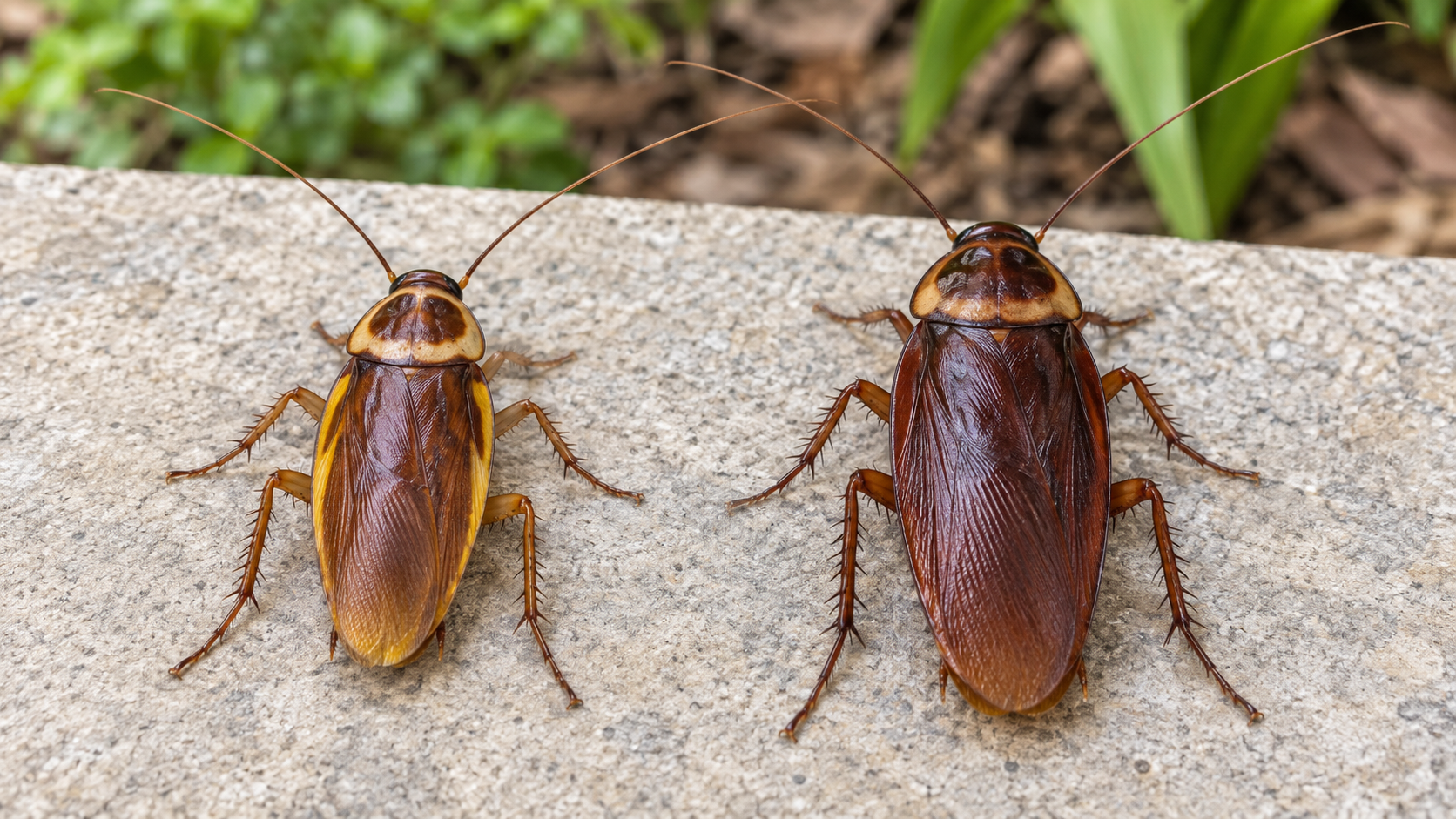
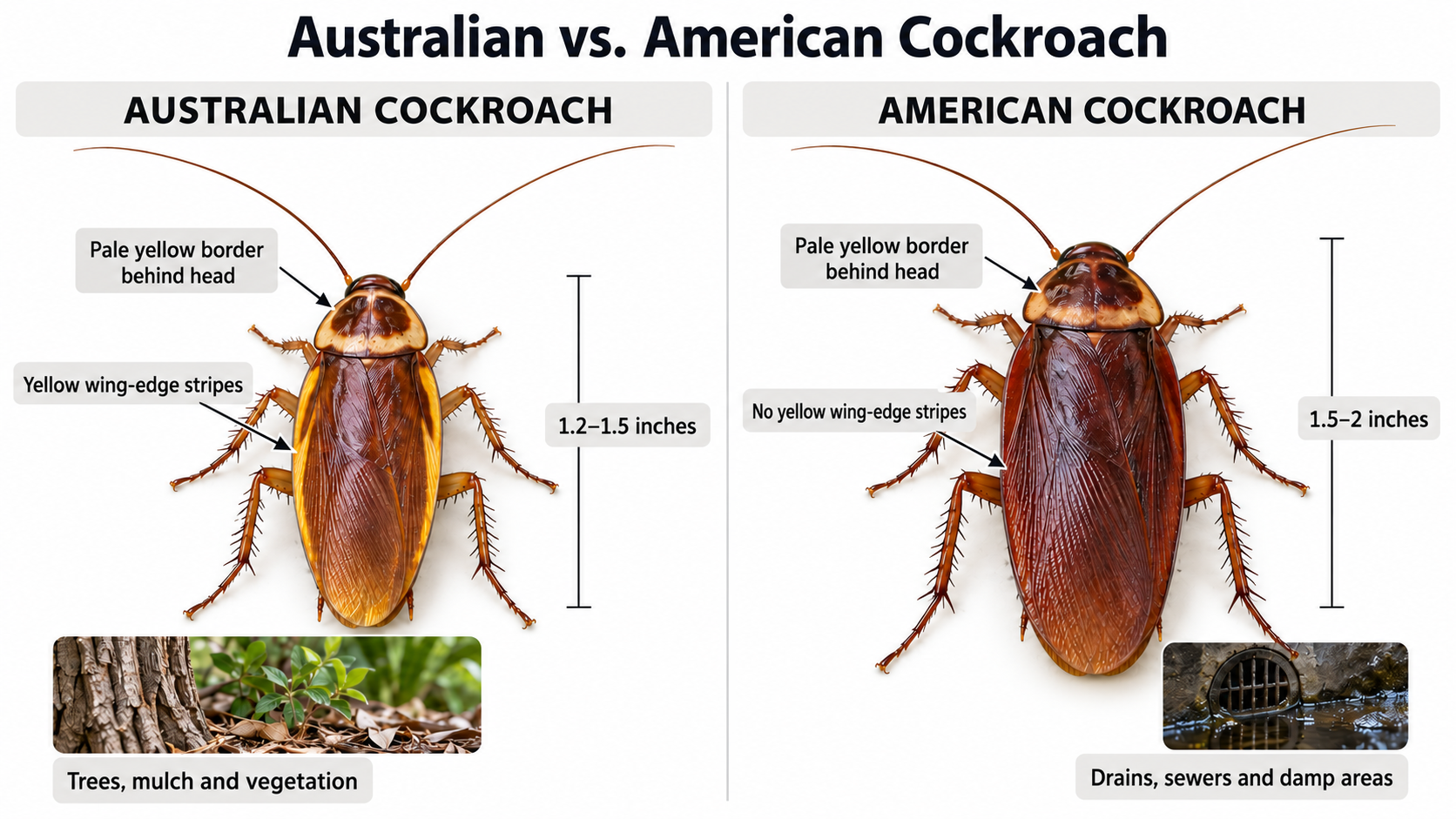
You can tell an Australian cockroach from an American cockroach by looking at the wings and the area behind the head. Australian cockroaches have distinct yellow markings along the outer edges and near the base of their wings. American cockroaches lack those yellow wing stripes and are usually larger, with reddish-brown bodies and a pale yellow border around the shield behind the head.
Both species are large outdoor roaches found in South Florida, but they tend to favor different environments. Australian cockroaches are commonly associated with trees, landscaping, mulch, and decaying plant material, while American cockroaches are frequently found around drains, sewers, plumbing areas, and other warm, damp spaces. Correct identification helps determine where the roaches may be coming from and which cockroach control approach is appropriate for the property.
Australian Roach vs. American Roach: Quick Identification Guide
The easiest way to distinguish these two roaches is to look for yellow markings on the wings. Australian cockroaches have distinct yellow stripes along the outer edges near the base of their wings, while American cockroaches do not.
| Identification clue | Australian cockroach | American cockroach |
|---|---|---|
| Adult size | Approximately 1.2 to 1.5 inches long | Approximately 1.5 to 2 inches long |
| Body color | Dark reddish-brown | Reddish-brown |
| Wing markings | Bright yellow markings along the outer edges near the wing base | No yellow stripes along the wing edges |
| Area behind the head | Yellow border around the pronotum | Pale yellow or tan border around the pronotum |
| Young roaches | Dark nymphs with noticeable pale or yellow markings | More uniformly reddish-brown nymphs |
| Typical habitat | Trees, shrubs, mulch, woodpiles, and decaying vegetation | Drains, sewers, plumbing areas, crawl spaces, and other damp locations |
Size and color can vary, so the yellow wing markings are generally the most useful visual clue. Homeowners should also consider where the roach was found because its location may provide additional evidence about the species.
South Florida is home to several large outdoor cockroach species that can look similar from a distance. If the roach is uniformly dark and appearing around trees, rooflines, or attics, compare it with our guide to smokybrown roaches in South Florida.
What Does an Australian Cockroach Look Like?
An Australian cockroach is a large, dark reddish-brown roach identified by the bright yellow markings along the outer edges near the base of its wings. It also has a pale yellow border around the pronotum, which is the shield-like area directly behind its head.
Six Identification Clues to Look For
- Yellow wing markings: The most reliable clue is the pair of yellow streaks running along the outer edges near the base of the front wings.
- Yellow-bordered pronotum: The shield behind the head has a noticeable pale yellow or tan border surrounding a darker center.
- Dark reddish-brown body: Adult Australian cockroaches are generally darker than their name might suggest and can appear nearly black in poor lighting.
- Large adult size: Adults are usually around 1.2 to 1.5 inches long, making them considerably larger than German cockroaches but slightly smaller than most American cockroaches.
- Fully developed wings: Adult males and females have wings covering the abdomen and may fly short distances, especially during warm, humid weather.
- Patterned young roaches: Australian cockroach nymphs are wingless and may display contrasting pale yellow or white markings against their darker bodies.
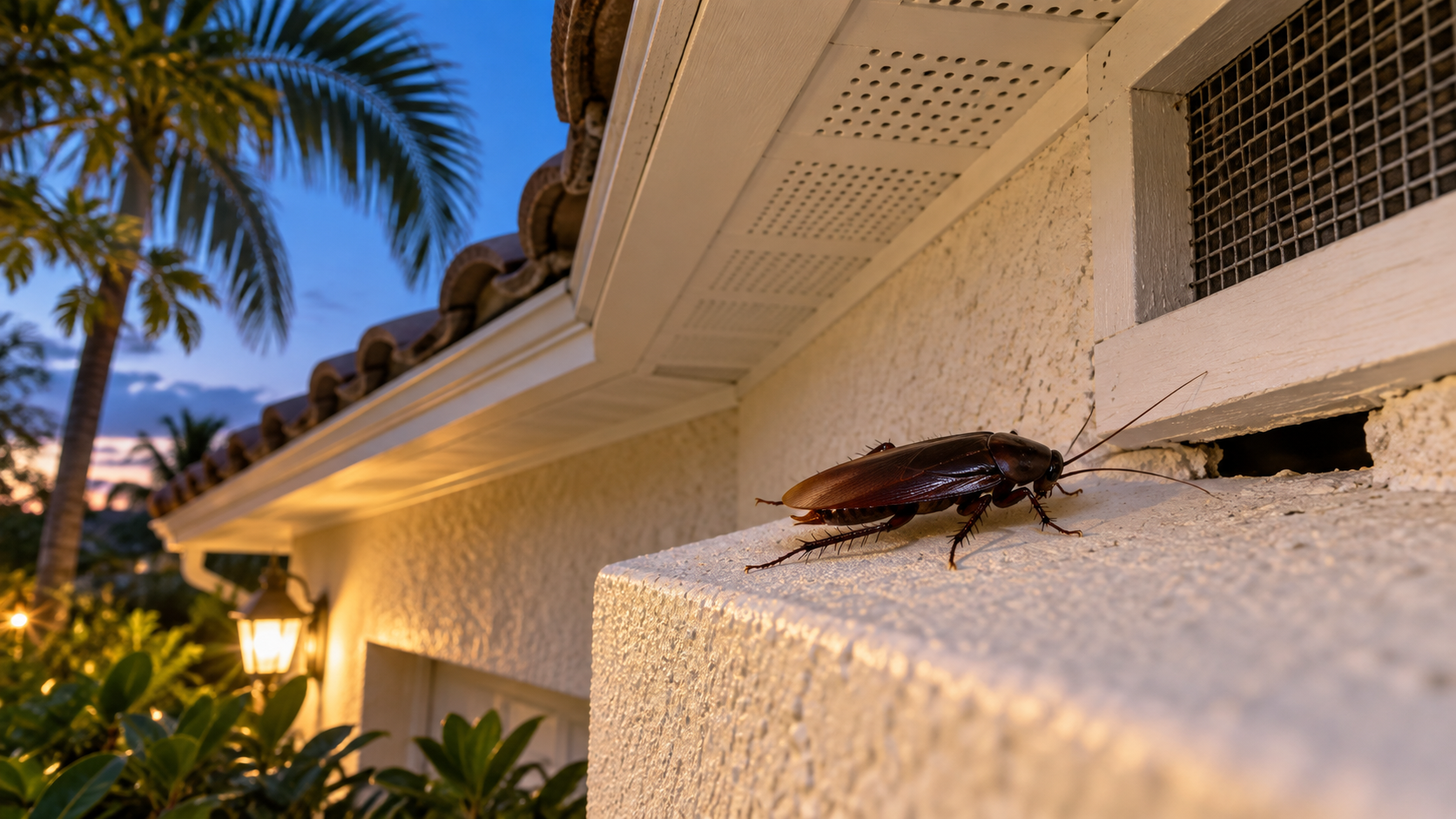
Australian cockroaches in Florida are frequently found outdoors among trees, shrubs, mulch, woodpiles, and decaying vegetation. Seeing one inside does not always indicate that a colony is established indoors. It may have entered through a door, window, attic vent, or gap in the exterior while searching for food, moisture, or shelter.
What Does an American Cockroach Look Like?
An American cockroach is a large, reddish-brown roach with a pale yellow or tan border around the pronotum, the shield-like area behind its head. Unlike the Australian cockroach, it does not have bright yellow stripes along the outer edges of its wings.
Four Identification Clues to Look For
- Large body size: Adult American cockroaches are commonly 1.5 to 2 inches long, making them one of the largest cockroach species found around South Florida homes.
- Reddish-brown coloring: Their bodies are generally lighter and more uniformly reddish-brown than those of Australian or smokybrown cockroaches.
- Pale pronotum border: The area directly behind the head has a yellowish or tan outline surrounding a darker center.
- Unmarked wings: Adults have long, fully developed wings but lack the bright yellow markings found near the wing edges of Australian cockroaches.
Young American cockroaches are wingless and have a more uniform reddish-brown appearance. Their lack of developed wings can make them look different from the adults, but they do not have the contrasting patterns commonly seen on young Australian cockroaches.
American cockroaches are frequently associated with warm, damp environments such as drains, sewer lines, utility areas, crawl spaces, garages, and plumbing access points. Where the roach appears can therefore be just as useful as its coloring when making an identification.
Do Australian and American Cockroaches Infest South Florida Homes?
Both Australian and American cockroaches can enter and reproduce inside South Florida homes. However, Australian cockroaches are more strongly associated with outdoor landscaping, while American cockroaches are more likely to maintain activity in warm, damp areas connected to the structure.
What an Indoor Sighting May Indicate
An Australian cockroach found near a patio door, garage, window, or attic vent may have wandered or flown inside from nearby vegetation. Trees, shrubs, mulch, leaf litter, and woodpiles can support activity close to the home.
An American cockroach seen near a bathroom, laundry room, utility area, garage, or floor drain may be entering through plumbing or traveling from another moisture-rich location. These roaches can live in sewer systems, drains, crawl spaces, wall voids, and other protected areas.
Four Signs Roaches May Be Living Inside
- Repeated sightings: Seeing large roaches regularly, especially during daylight hours, may indicate that more are hiding nearby.
- Young roaches: Finding wingless nymphs indoors suggests that cockroaches may be developing or reproducing within the structure.
- Egg cases: Brown capsule-shaped egg cases found in cabinets, utility spaces, garages, or other sheltered areas can indicate ongoing reproductive activity.
- Droppings or musty odors: Dark droppings and persistent unpleasant odors may develop where larger cockroach populations are hiding.
A single outdoor cockroach that enters through an open door does not always mean the home is infested. Repeated sightings, multiple life stages, or activity concentrated around the same area provide stronger evidence that an indoor harborage or nearby exterior population needs to be addressed.
Why Are Australian and American Cockroaches Common in South Florida?
Australian and American cockroaches are common in South Florida because the region provides year-round warmth, high humidity, abundant vegetation, and dependable moisture. These conditions allow outdoor populations to remain active while giving roaches frequent opportunities to enter nearby homes.
Six South Florida Conditions That Support Large Roaches
- Warm temperatures: South Florida’s mild winters allow cockroaches to remain active and reproduce during much of the year.
- High humidity: Moist air helps prevent roaches from drying out and supports activity in landscaping, garages, crawl spaces, drains, and other sheltered areas.
- Dense landscaping: Palms, shrubs, mulch, leaf litter, and tree debris provide Australian cockroaches with food, moisture, and protected hiding places.
- Frequent rainfall: Heavy rain can saturate outdoor harborages or disrupt drainage systems, causing roaches to move toward drier areas around homes.
- Drains and sewer lines: American cockroaches can travel through drainage systems, plumbing routes, and utility openings that connect exterior and interior spaces.
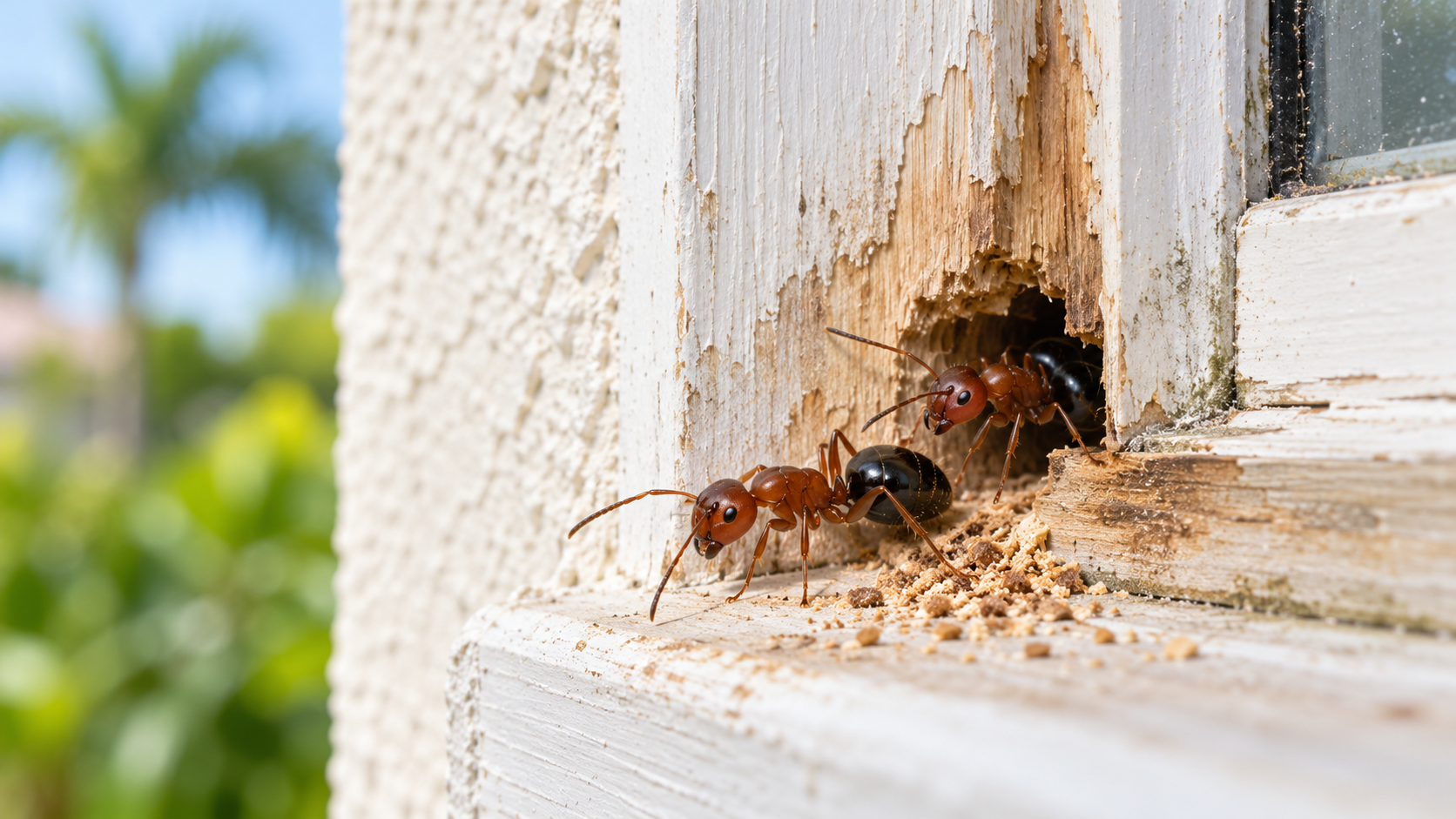
- Accessible entry points: Gaps beneath doors, damaged screens, attic vents, utility penetrations, and cracks around the exterior can allow either species to enter.
The conditions attracting roaches may be located outside even when the insects are first noticed indoors. Looking at nearby landscaping, drainage areas, plumbing routes, and exterior openings can help homeowners determine why the activity is occurring and whether it is likely to continue.
Which Is More Likely to Fly: an Australian or American Cockroach?
Both Australian and American cockroaches have fully developed wings and are capable of flight. Australian cockroaches are generally more likely to fly short distances, while American cockroaches usually escape by running but may fly or glide when conditions are especially warm and humid.
How Flight Behavior Can Help With Identification
- Australian cockroaches: These roaches may fly from trees, shrubs, fences, or other elevated outdoor areas toward lights, windows, rooflines, and open doors.
- American cockroaches: Although capable of flight, they are more commonly seen running along floors, walls, drainage areas, garages, and building exteriors.
- Warm-weather activity: High temperatures and humidity can make both species more active, particularly during the evening and overnight hours.
- Elevated sightings: A large roach flying near a second-story window, balcony, tree canopy, or roofline is more likely to be an outdoor species approaching from the surrounding landscape.
Flight behavior can provide a useful clue, but it should not be used alone to identify the species. The yellow markings on an Australian cockroach’s wings remain the clearest difference between it and an American cockroach.
How Can You Keep Australian and American Cockroaches Out of Your Home?
Homeowners can reduce Australian and American cockroach activity by limiting moisture, removing outdoor hiding places, and sealing the routes roaches use to enter. Because these species often begin around the exterior, prevention should address both the landscape and the structure.
Reduce Outdoor Roach Activity
- Clear organic debris: Remove fallen palm fronds, leaves, decaying wood, and other plant material where roaches can hide and feed.
- Manage mulch carefully: Avoid piling thick mulch directly against the foundation, exterior walls, or doorways.
- Trim nearby vegetation: Cut back tree branches, shrubs, and palm fronds that touch or hang over the roof, windows, balconies, or exterior walls.
- Correct moisture problems: Repair leaking outdoor faucets, improve drainage, clean clogged gutters, and eliminate standing water near the home.
Block Indoor Entry Routes
- Seal exterior openings: Close cracks and gaps around utility lines, plumbing penetrations, doors, windows, and exterior wall joints.
- Repair screens and vents: Replace damaged window screens and install secure screening over attic, soffit, and crawl-space vents.
- Check door seals: Add or replace weatherstripping and door sweeps where light is visible beneath exterior doors.
- Inspect plumbing areas: Address leaks beneath sinks, around appliances, and near drains that may provide water or concealed access.
These steps can make the property less attractive to both species, but prevention may not resolve activity originating from sewer lines, wall voids, attics, or large outdoor populations. Continued sightings may require a broader inspection of the structure and surrounding landscape.
Why Does Correct Cockroach Identification Matter for Control?
Correct identification matters because Australian and American cockroaches often come from different parts of a property. Treating only the room where a roach was found may provide temporary relief without addressing the outdoor habitat, moisture source, or entry route supporting the activity.
Control Priorities for Australian Cockroaches
Australian cockroach control often begins around the home’s exterior. An inspection may focus on:
- Trees, shrubs, palms, and dense vegetation
- Mulch, leaf litter, woodpiles, and organic debris
- Rooflines, attic vents, windows, and exterior doors
- Moisture and hiding places near the foundation
Reducing landscape harborages and blocking entry points are especially important because Australian cockroaches commonly approach homes from outdoor areas.
Control Priorities for American Cockroaches
American cockroach control may require closer attention to structural moisture and plumbing routes. An inspection may focus on:
- Floor drains, sewer connections, and plumbing access points
- Garages, utility rooms, crawl spaces, and wall voids
- Leaking pipes, condensation, and persistent dampness
- Exterior debris, trees, and drainage conditions near the building
Because American cockroaches can move between sewers, drains, outdoor harborages, and structures, controlling only the visible roaches may leave the primary source untouched.
An effective plan should match the treatment area to the species, source, and conditions found on the property. This is why a photograph or captured specimen can be helpful when the roach’s identity is uncertain.
When Should You Call a Professional for Large Cockroaches?
Professional cockroach control should be considered when large roaches appear repeatedly, young roaches or egg cases are found indoors, or the source cannot be traced to a single entry point. These signs may indicate activity in plumbing routes, wall voids, attics, drainage systems, or exterior harborages that require a broader approach.
Six Signs It Is Time for Professional Control
- Sightings continue after entry points are sealed: Ongoing activity may mean roaches are entering through a route that has not been identified or are already living nearby.
- Young roaches are found indoors: Nymphs can indicate that cockroaches are developing or reproducing within the structure.
- Egg cases or droppings appear: These signs suggest more than an occasional outdoor roach wandering inside.
- Roaches repeatedly emerge near drains: Consistent activity around bathrooms, laundry rooms, utility areas, or floor drains may be connected to plumbing or sewer routes.
- Activity reaches attics or upper floors: Roaches near rooflines, attic vents, balconies, or second-story windows may be entering from overhanging vegetation or elevated exterior gaps.
- Store-bought products provide only temporary relief: Killing visible roaches does not correct the moisture, harborage, or access conditions supporting continued activity.
Professional cockroach control in Weston should begin with identifying the species and locating the conditions that support it. The resulting plan may include targeted treatment, exterior perimeter attention, moisture and harborage recommendations, and guidance for reducing future entry.
Frequently Asked Questions About Australian and American Cockroaches
Australian and American cockroaches are similar enough to be confused at first glance. These answers address the most common questions South Florida homeowners have about their appearance, behavior, and presence around homes.
What Is the Main Difference Between an Australian and American Cockroach?
The clearest difference is the yellow coloring along the outer edges near the base of an Australian cockroach’s wings. American cockroaches have a pale border behind the head but do not have the same bright yellow wing markings.
Which Cockroach Is Larger?
American cockroaches are generally larger and may reach approximately 1.5 to 2 inches in length. Australian cockroaches are usually around 1.2 to 1.5 inches long, although judging size without a point of reference can be difficult.
Can Australian and American Cockroaches Fly?
Both species have fully developed wings and can fly. Australian cockroaches are generally more likely to fly short distances, while American cockroaches more commonly run and may fly or glide when temperatures are warm.
Where Do Australian Cockroaches Live in Florida?
Australian cockroaches in Florida commonly live in warm, humid outdoor areas with abundant vegetation. They may be found around trees, shrubs, mulch, woodpiles, greenhouses, rooflines, and accumulations of decaying plant material.
Why Do Large Roaches Appear After Heavy Rain?
Heavy rain can flood or disturb outdoor hiding places, sewer systems, drainage areas, and mulch beds. Australian and American cockroaches may then move toward garages, patios, attics, or indoor spaces in search of drier shelter.
Does Seeing One Large Roach Mean the Home Is Infested?
One large roach may have entered accidentally from outside, especially after rain or through an open door. Repeated sightings, nymphs, egg cases, droppings, or activity concentrated in the same area provide stronger evidence of an established problem.
Key Takeaways
Australian and American cockroaches may look similar, but their wing markings, size, preferred habitats, and common entry routes provide useful identification clues. Knowing which species is present helps homeowners focus on the areas most likely to be supporting the activity.
What South Florida Homeowners Should Remember
- Check the wings first: Australian cockroaches have bright yellow markings along the outer edges near the base of their wings, while American cockroaches do not.
- Compare their size: American cockroaches are generally larger, reaching approximately 1.5 to 2 inches long, while Australian cockroaches are usually around 1.2 to 1.5 inches long.
- Consider where the roach was found: Australian cockroaches are commonly associated with landscaping, trees, mulch, and decaying vegetation. American cockroaches are frequently connected with drains, sewer lines, plumbing routes, and other damp areas.
- Do not rely on flight alone: Both species have developed wings and can fly, although Australian cockroaches are generally more likely to take short flights.
- Look for evidence of ongoing activity: Repeated sightings, nymphs, egg cases, droppings, or activity concentrated around the same area may indicate more than an occasional outdoor roach entering the home.
- Match control to the species and source: If large roaches continue appearing indoors, Professional Pestguard’s cockroach control services can help identify the species, locate contributing conditions, and develop an appropriate treatment plan.
Know Which Roach You Are Dealing With
Australian and American cockroaches may look similar, but their markings provide a clear starting point for identification. Australian cockroaches have yellow markings near the outer edges of their wings, while American cockroaches are usually larger and lack those yellow wing stripes. Considering the roach’s appearance, location, and behavior can help reveal where the activity is coming from and which areas of the property need attention.
Schedule Cockroach Control in South Florida
If large roaches continue appearing around your home, Professional Pestguard provides residential cockroach control throughout Weston, Broward County, Miami-Dade County, and Palm Beach County. Call (954) 389-6107 or contact Professional Pestguard for a free estimate to discuss the activity you are seeing and schedule service.
About Professional Pestguard
Professional Pestguard provides professional pest control in Weston, FL and nearby communities including Davie, Sunrise, Pembroke Pines, and Plantation. With over 40 years of experience, our licensed technicians protect homes and businesses across Broward County and Miami-Dade County from ants, cockroaches, rodents, spiders, and other common South Florida pests using safe and effective treatments.