Smokybrown Roaches in South Florida: Why They Gather Near Rooflines, Trees, and Attics
Why Am I Seeing Large Dark Roaches Near My Roofline or Attic?
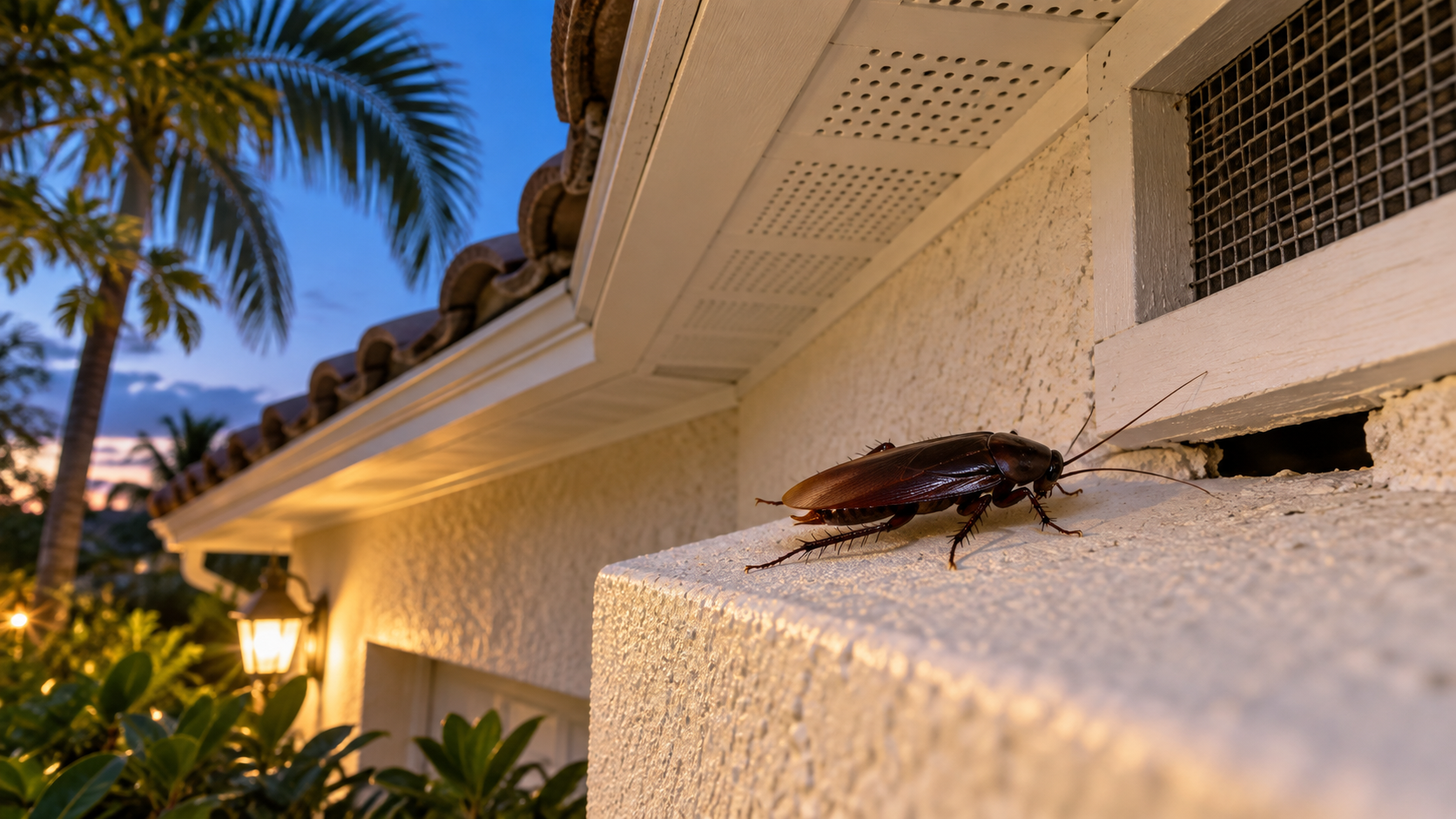
Large, shiny dark roaches near a roofline or attic may be smokybrown cockroaches. These outdoor roaches thrive in South Florida’s warm, humid climate and commonly shelter in tree holes, palms, mulch, leaf litter, and gutters. They can fly toward exterior lights or use overhanging branches to reach the roof before entering through gaps around soffits, vents, fascia boards, and other roof openings.
Smokybrown roaches have a uniformly dark brown or mahogany appearance. German roaches are much smaller, tan, and marked with two dark stripes, while American roaches are usually reddish-brown with a pale border behind the head. In this guide, we’ll explain why smokybrown roaches gather near trees and rooflines, how they enter Florida attics, which warning signs homeowners should watch for, and how professional cockroach control can help address the outdoor sources and entry points contributing to the problem.
Why Do Smokybrown Roaches Gather Near Trees and Rooflines?
Smokybrown roaches gather near trees and rooflines because these areas provide the moisture, shelter, organic material, and access points they need. They are primarily outdoor cockroaches, but their ability to climb and fly allows them to move easily from South Florida landscaping onto roofs and upper exterior walls.
Six Reasons Smokybrown Roaches Appear Around Rooflines
- Natural outdoor shelter: Tree holes, loose bark, palm fronds, woodpiles, mulch, and leaf litter provide protected places for smokybrown roaches to hide.
- High moisture levels: Irrigation, frequent rain, damp tree cavities, and shaded landscaping help create the humid conditions these roaches need.
- Decaying organic material: Leaves, bark, mulch, and debris provide food and shelter, especially when they collect inside gutters or along roof edges.
- Overhanging branches: Tree limbs and palm fronds touching the home can create direct bridges to the roof, gutters, soffits, and exterior walls.
- Attraction to exterior lights: Smokybrown roaches are strong fliers and may be drawn toward porch lights, security lights, and illuminated windows after dark.
- Protected roofline openings: Gaps around soffits, fascia boards, vents, flashing, and roof penetrations can provide shelter or access to attic spaces.
How Do Smokybrown Roaches Get Into Florida Attics?
Smokybrown roaches usually reach an attic from above rather than moving through kitchens, drains, or lower plumbing areas. They may fly from nearby trees, crawl across branches touching the house, or travel along exterior walls until they locate an opening near the roof.
The Typical Route From the Landscape to the Attic
- They begin in outdoor hiding areas. During the day, smokybrown roaches may remain concealed beneath bark, inside tree cavities, under palm debris, within mulch, or among leaves collected in gutters.
- They become active after dark. At night, adults leave their hiding places to search for food, moisture, and shelter. Exterior lighting can draw flying roaches toward upper walls, balconies, eaves, and rooflines.
- They enter through an unprotected opening. Damaged soffits, unscreened vents, fascia gaps, loose flashing, and openings around pipes or cables can provide access to the attic.
- They remain where moisture is available. A dry attic is less suitable for smokybrown roaches. Roof leaks, condensation, clogged gutters, damp insulation, or poorly ventilated areas can create humid pockets where they are more likely to survive.
A roach found in an attic may have entered accidentally. Repeated sightings, shed skins, droppings, egg cases, or activity around the same vent can suggest that the attic is providing ongoing shelter rather than serving as a temporary entry point.
How Can You Tell a Smokybrown Roach From German and American Roaches?
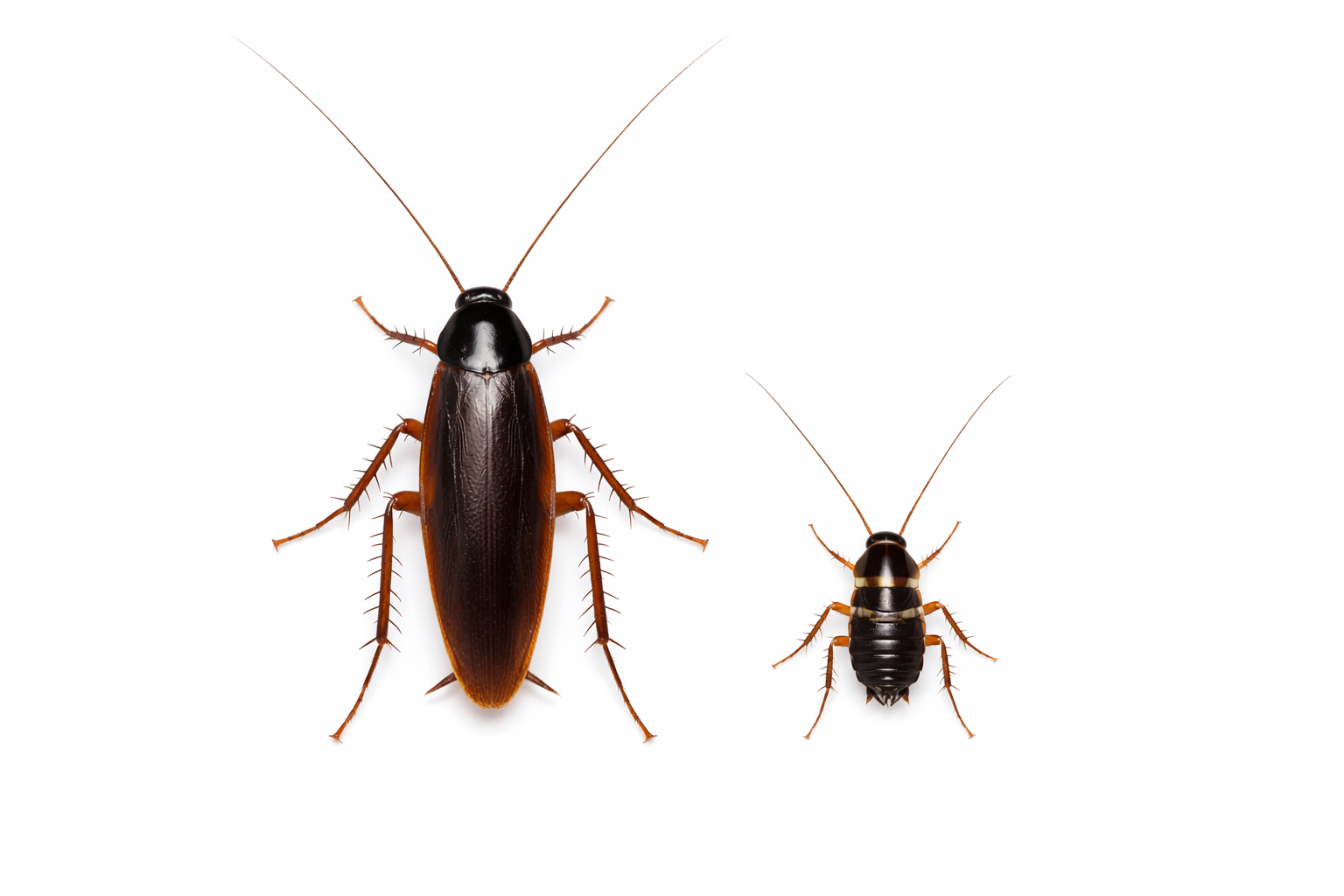
Adult smokybrown roaches are large, uniformly dark brown or mahogany, and commonly found around trees, rooflines, soffits, and attics. American roaches are similarly large but usually appear more reddish-brown, while German roaches are much smaller, lighter in color, and primarily associated with indoor kitchens and bathrooms.
Smokybrown Roaches
- Appearance: Adults are approximately 1¼ to 1½ inches long with a shiny, evenly colored dark brown or mahogany body. They do not have pale markings behind the head.
- Typical location: These strong fliers usually begin outdoors around trees, mulch, gutters, and leaf litter before entering through upper structural openings.
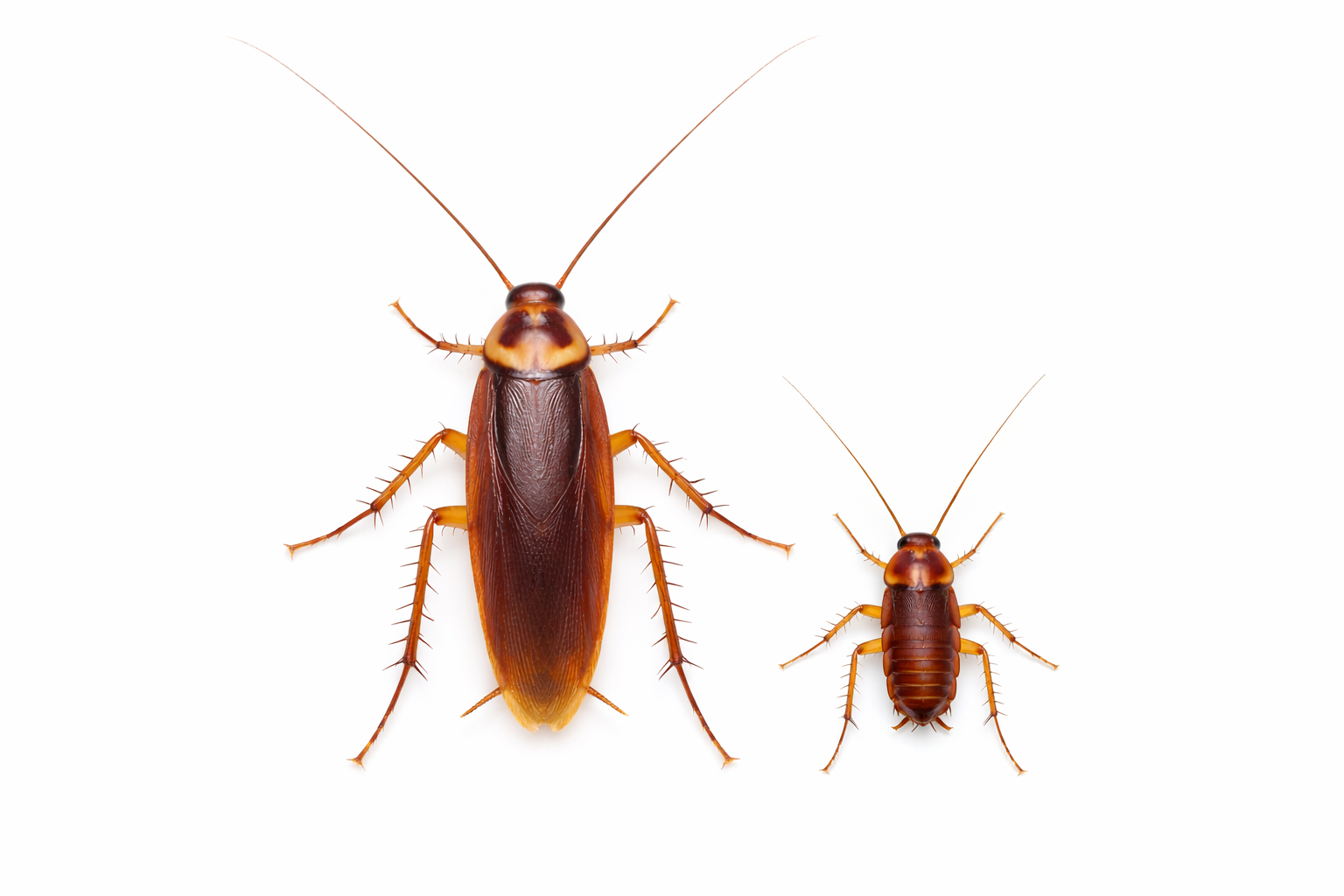
American Roaches
- Appearance: American roaches are reddish-brown and may grow to approximately 1½ inches or longer. A pale yellowish border behind the head helps distinguish them from uniformly dark smokybrown roaches.
- Typical location: They are often associated with drains, sewers, garages, utility areas, and other warm, damp locations closer to ground level.
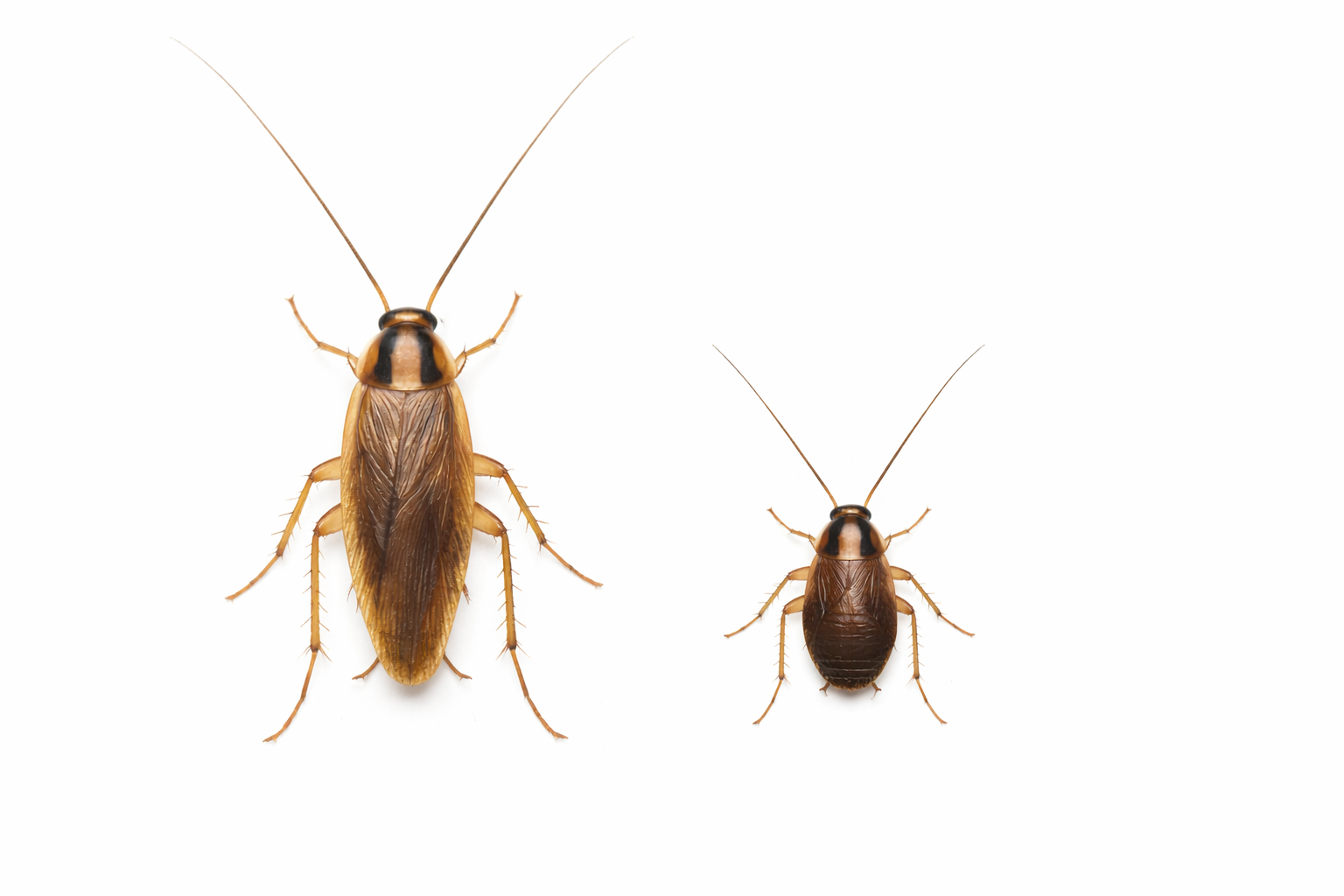
German Roaches
- Appearance: German roaches are usually about ½ inch long, tan or light brown, and marked with two dark parallel stripes behind the head.
- Typical location: They are primarily indoor pests that commonly hide around kitchen appliances, cabinets, sinks, bathrooms, and plumbing areas.
Location provides an important clue, but it should not replace proper identification. Smokybrown nymphs can look different from adults, and poor lighting can make large roach species appear similar. Professional cockroach control services begin by identifying the species and the areas supporting its activity so the treatment can target the correct hiding places and entry routes.
What Are the Signs of Smokybrown Roaches in an Attic?
Signs of smokybrown roaches in an attic include repeated nighttime sightings, droppings, shed skins, egg cases, and dead roaches near vents or light sources. One roach may be an accidental visitor, but several signs appearing in the same area can indicate ongoing attic activity.
Six Signs Homeowners Should Watch For
- Repeated nighttime sightings: Smokybrown roaches are most active after dark. Seeing them regularly near soffits, attic vents, roof edges, or upper-floor ceilings deserves attention.
- Roaches on upper levels of the home: Adults or nymphs appearing in upstairs rooms, closets, or near attic access panels may be moving from a roof-level hiding area.
- Droppings in protected areas: Large cockroach droppings may appear along rafters, near stored items, on insulation, or around attic entry points. They can sometimes resemble rodent droppings, so identification is important.
- Shed skins: Young roaches shed their outer covering as they grow. Finding these skins in quiet attic corners can indicate that immature roaches are developing nearby.
- Egg cases: Dark brown egg cases found near insulation, wood framing, stored boxes, or protected crevices may indicate reproductive activity rather than an occasional visitor.
- A persistent musty odor: Larger cockroach populations can produce an unpleasant, stale odor in enclosed areas, although odor alone cannot confirm the species.
Homeowners should avoid disturbing insulation or reaching into concealed attic spaces without proper protection. Documenting where and when signs appear can help determine whether the activity originates in the attic, at the roofline, or in nearby landscaping.
Why Do Smokybrown Roaches Appear After Heavy Rain?
Smokybrown roaches may become more visible after heavy rain because water disturbs their outdoor hiding areas and changes where moisture is available. Roaches sheltering in mulch, leaf litter, tree cavities, and other low or exposed areas may move toward drier, protected locations around a home.
How Rain Changes Smokybrown Roach Activity
- Outdoor hiding areas become saturated: Heavy rain can soak mulch, leaf litter, woodpiles, and tree cavities, causing roaches to leave their usual shelter.
- Upper areas provide protection: Roof overhangs, soffits, covered patios, and attics offer sheltered spaces above wet landscaping.
- Gutters retain moisture and debris: Clogged gutters can collect water, leaves, and decaying organic matter, creating favorable conditions close to roof-level entry points.
- Indoor moisture becomes more attractive: Roof leaks, damp insulation, condensation, and humid attic spaces may provide the moisture smokybrown roaches need after a storm.
Rain does not automatically create an attic infestation. However, repeated sightings following storms may reveal an existing outdoor population, a moisture problem, or an opening that allows roaches to move from the roofline into the home.
For a broader explanation of how wet weather affects ants, cockroaches, and rodents, read our guide to pest activity after South Florida rain.
How Can Homeowners Keep Smokybrown Roaches Out of the Attic?
Homeowners can help prevent smokybrown roaches by reducing outdoor hiding places, interrupting routes to the roof, sealing upper-level openings, and correcting attic moisture. The most effective prevention addresses the landscaping, roofline, and attic together.
1. Reduce Roach Pressure From the Landscaping
- Trim trees away from the structure: Cut back branches, palm fronds, vines, and shrubs that touch or overhang the roof, gutters, windows, or exterior walls.
- Remove protected hiding material: Clear excessive leaf litter, palm debris, woodpiles, and damp organic material from areas near the home. Avoid allowing thick mulch to remain pressed against the foundation.
2. Close Roofline Pathways
- Repair and screen openings: Seal gaps around soffits, fascia boards, flashing, pipes, and cables. Repair damaged attic vents while preserving the ventilation the home requires.
- Maintain gutters and exterior lighting: Remove leaves and standing water from gutters. Consider warm-colored or motion-activated exterior lighting where practical to reduce nighttime attraction.
3. Make the Attic Less Suitable
- Correct moisture problems: Repair roof leaks, address air-conditioning condensation, replace damp materials, and improve ventilation where humidity regularly accumulates.
- Monitor vulnerable areas: Check around attic access panels, vents, stored boxes, insulation edges, and roof penetrations for droppings, egg cases, shed skins, or repeated live activity.
These steps can reduce access and make the property less attractive, but they may not eliminate roaches already sheltering inside the attic or around the roofline. Continued sightings may require professional identification and targeted treatment of both the indoor activity and its outdoor source.
How Does Professional Smokybrown Roach Control Work?
Professional smokybrown roach control begins by confirming the species and determining whether the activity originates in the attic, roofline, gutters, or surrounding landscape. Unlike German roach infestations centered around kitchens and appliances, smokybrown roach problems often require attention to both the exterior environment and upper areas of the home.
What a Smokybrown Roach Control Plan May Include
- Accurate species identification: The roach’s size, color, markings, life stage, and location are evaluated to distinguish smokybrown roaches from American, German, and other South Florida species.
- Exterior source evaluation: Trees, palms, mulch, leaf litter, gutters, woodpiles, and shaded moisture areas are checked for conditions that may be supporting activity.
- Roofline and attic assessment: Soffits, vents, fascia gaps, roof penetrations, attic access points, and areas with repeated sightings are examined for entry routes and hidden activity.
- Targeted treatment: Treatment methods are selected according to the species, affected areas, severity of activity, and layout of the home. Products should always be applied according to their labels.
- Moisture and exclusion recommendations: Homeowners may be advised to correct leaks, improve ventilation, clean gutters, trim vegetation, repair screens, or seal appropriate structural gaps.
- Follow-up monitoring: Continued observation helps determine whether sightings are declining or whether another outdoor source or entry route needs attention.
The goal is not simply to treat the room where a roach was found. Effective control addresses the outdoor pressure, structural access, and attic conditions allowing smokybrown roaches to keep appearing.
Homeowners looking for cockroach control in Weston and South Florida can receive a treatment plan based on the species present and the areas of the property contributing to the problem.
Frequently Asked Questions About Smokybrown Roaches
Smokybrown roaches behave differently from the smaller indoor roaches commonly found in kitchens. Below are concise answers to common questions South Florida homeowners ask about roofline sightings, attic activity, and identification.
Why am I seeing large dark roaches near my roofline?
Smokybrown roaches commonly live outdoors in trees, mulch, leaf litter, and gutters. They may fly toward exterior lights or use overhanging branches and exterior walls to reach the roofline.
Can smokybrown roaches fly?
Yes. Adult smokybrown roaches are strong fliers and may travel from nearby trees or landscaping toward illuminated walls, porches, balconies, and roof areas after dark.
Can smokybrown roaches live in an attic?
Yes, especially when the attic contains moisture, roof leaks, condensation, damp insulation, or protected hiding areas. A hot but completely dry attic is less suitable for them.
Does one smokybrown roach mean I have an infestation?
Not necessarily. One roach may have flown or wandered inside accidentally. Repeated sightings, nymphs, droppings, shed skins, or egg cases provide stronger evidence of ongoing activity.
Do smokybrown roaches enter through drains?
Drains are not their most typical entry route. Smokybrown roaches are more often associated with trees, exterior walls, soffits, attic vents, roof gaps, and other openings near the upper structure.
Are smokybrown and American roaches the same?
No. Both are large cockroaches, but smokybrown adults are uniformly dark brown or mahogany. American roaches are usually reddish-brown with a noticeable pale yellowish border behind the head.
Are smokybrown roaches harmful?
Smokybrown roaches are not known for biting people, but they can move across decaying vegetation, gutters, and other unsanitary areas before entering a home. Their droppings and shed material may also contribute to indoor allergens.
When should I call a pest control company?
Consider professional service when roaches repeatedly appear near the attic or roofline, immature roaches are found indoors, or droppings and egg cases are present. Professional identification can determine which species is active and where the problem originates.
Key Takeaways
Large, dark roaches appearing near a South Florida roofline or attic may be smokybrown roaches traveling from outdoor hiding areas. Their location, appearance, and behavior provide important clues for proper identification and control.
What South Florida Homeowners Should Remember
- Smokybrown roaches have large, shiny, uniformly dark brown or mahogany bodies.
- They commonly shelter outdoors in trees, palms, mulch, leaf litter, woodpiles, and gutters.
- Overhanging branches and exterior lights can bring these climbing and flying roaches close to the roof.
- Soffit gaps, damaged vents, fascia openings, and roof penetrations may provide access to attics.
- German roaches are smaller and usually infest kitchens, while American roaches are reddish-brown with pale markings behind the head.
- Effective smokybrown roach control addresses landscaping, roofline entry points, attic moisture, and hidden activity together.
Conclusion
Large, dark roaches appearing around a South Florida roofline or attic may be smokybrown roaches traveling from nearby trees, palms, gutters, mulch, or other outdoor hiding areas. Their ability to climb and fly allows them to reach upper exterior walls and enter through small openings around soffits, vents, fascia boards, and roof penetrations.
Because smokybrown roaches behave differently from German and American roaches, effective control begins with proper identification. Addressing outdoor activity, roofline access, attic moisture, and hidden harborage areas together provides a more complete approach than treating only the room where a roach was found.
Need Smokybrown Roach Control in Weston or South Florida?
Professional Pestguard provides professional cockroach control services for homeowners in Weston, Broward County, and surrounding South Florida communities. With more than 40 years of experience, our licensed team can evaluate the activity and recommend a treatment plan based on the cockroach species and areas affected.
If large dark roaches keep appearing near your roofline, attic, or upper floors, call (954) 389-6107 or fill out our free estimate request form to request a free estimate.
About Professional Pestguard
Professional Pestguard provides expert pest control in Weston, FL and nearby communities including Davie, Sunrise, Pembroke Pines, and Plantation. With over 40 years of experience, our licensed technicians protect homes and businesses across Broward County and Miami-Dade County from ants, cockroaches, rodents, spiders, and other common South Florida pests using safe and effective treatments.