Smokybrown Roach Prevention Around Commercial Landscapes, Rooflines, and Exterior Areas
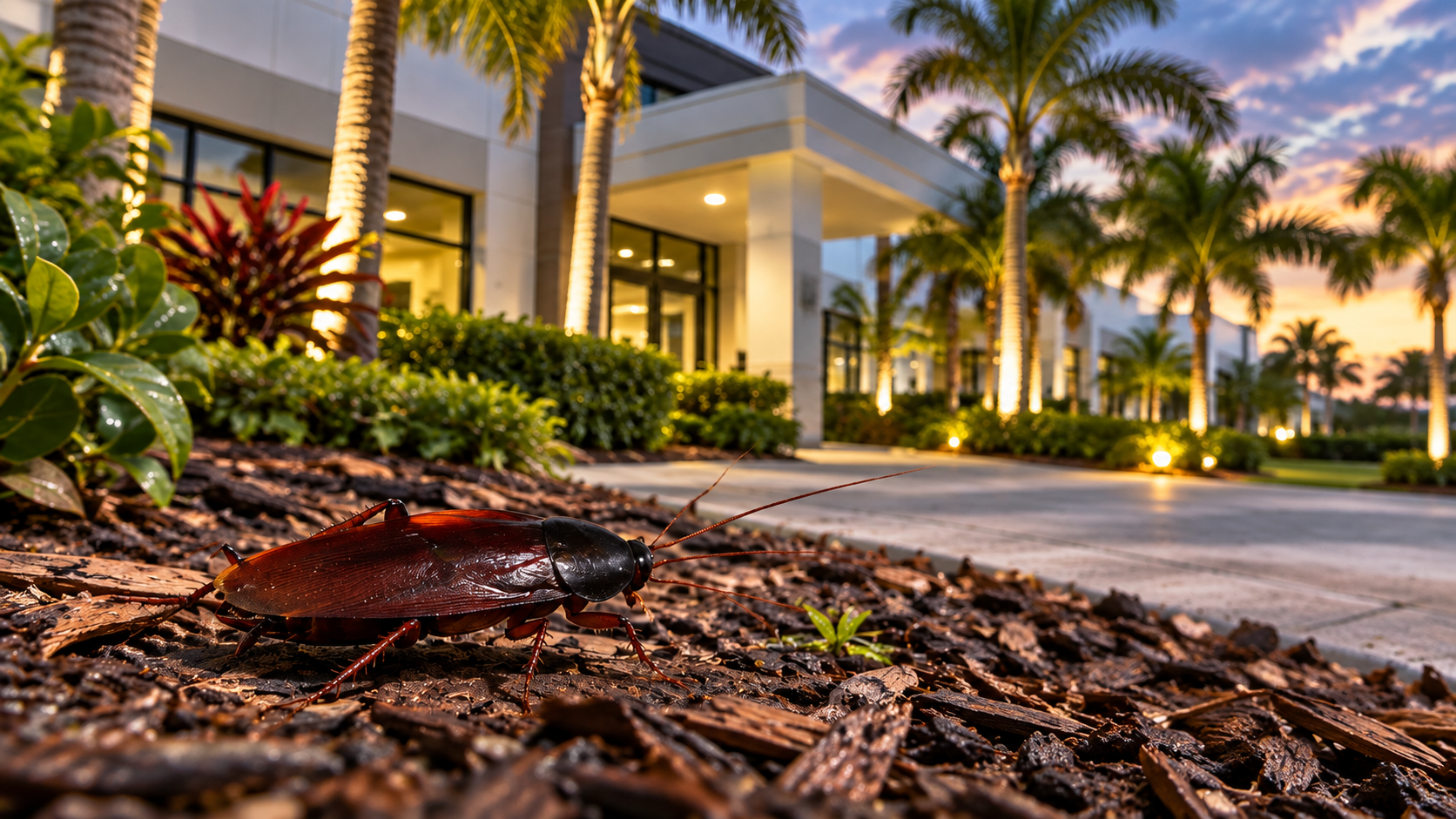
Why Are Large Roaches Appearing Around a Commercial Building When the Interior Is Clean?
Large roaches may appear around a clean commercial building because smokybrown cockroaches commonly originate outdoors. They are attracted to warm, humid exterior areas with trees, palms, dense landscaping, mulch, leaf litter, clogged gutters, roof debris, exterior lighting, and other protected hiding places. From these areas, they can crawl or fly toward rooflines, soffits, vents, doors, loading areas, and upper-level openings.
A clean interior can reduce available food and shelter indoors, but it does not eliminate the exterior conditions supporting smokybrown roach activity. Commercial properties may continue experiencing sightings when vegetation touches the structure, irrigation creates excess moisture, gutters collect organic debris, or gaps provide access around the roofline and building envelope.
Effective commercial cockroach control should therefore include preventative inspections of the landscaping, exterior walls, roofline, drainage areas, utility penetrations, and other potential harborage or entry points. Identifying where smokybrown roaches are living and how they are approaching the building helps property managers address the source before exterior activity becomes a recurring indoor concern.
Where Do Smokybrown Roaches Hide Around Commercial Properties?
Smokybrown roaches commonly hide in warm, humid exterior areas containing moisture, organic debris, and protection from sunlight. Around commercial properties, activity may develop in landscaping, gutters, rooflines, drainage areas, waste-storage zones, and exterior utility spaces before roaches are noticed near building entrances or indoors.
Six Common Exterior Harborage Areas
- Trees, palms, and dense landscaping: Tree holes, loose bark, palm fronds, shrubs, and thick vegetation provide shaded hiding places close to commercial buildings.
- Mulch and accumulated plant debris: Mulch beds, fallen leaves, decaying wood, and landscape debris retain moisture while providing food and shelter.
- Gutters and rooflines: Leaves and organic material trapped in gutters can create protected conditions near soffits, vents, fascia boards, and rooftop openings.
- Drainage and irrigation areas: Leaking irrigation equipment, standing water, storm drains, and poorly drained landscape beds can provide dependable moisture.
- Dumpsters and exterior waste areas: Food residue, cardboard, grease, and accumulated debris around commercial waste-storage areas may attract roaches and support additional pest activity.
- Utility and equipment spaces: Electrical boxes, utility penetrations, rooftop equipment, storage areas, and gaps around exterior fixtures can provide concealed shelter and access to the building.
Because smokybrown roaches can climb and fly, ground-level activity may eventually reach upper walls, balconies, rooflines, and rooftop equipment. Property managers should inspect both the landscape and elevated exterior areas instead of limiting inspections to the location where a roach was reported.
Our guide to smokybrown roaches in South Florida provides additional information about their appearance, behavior, preferred habitats, and common entry routes.
Why Are Smokybrown Roaches Found Near Commercial Rooflines?
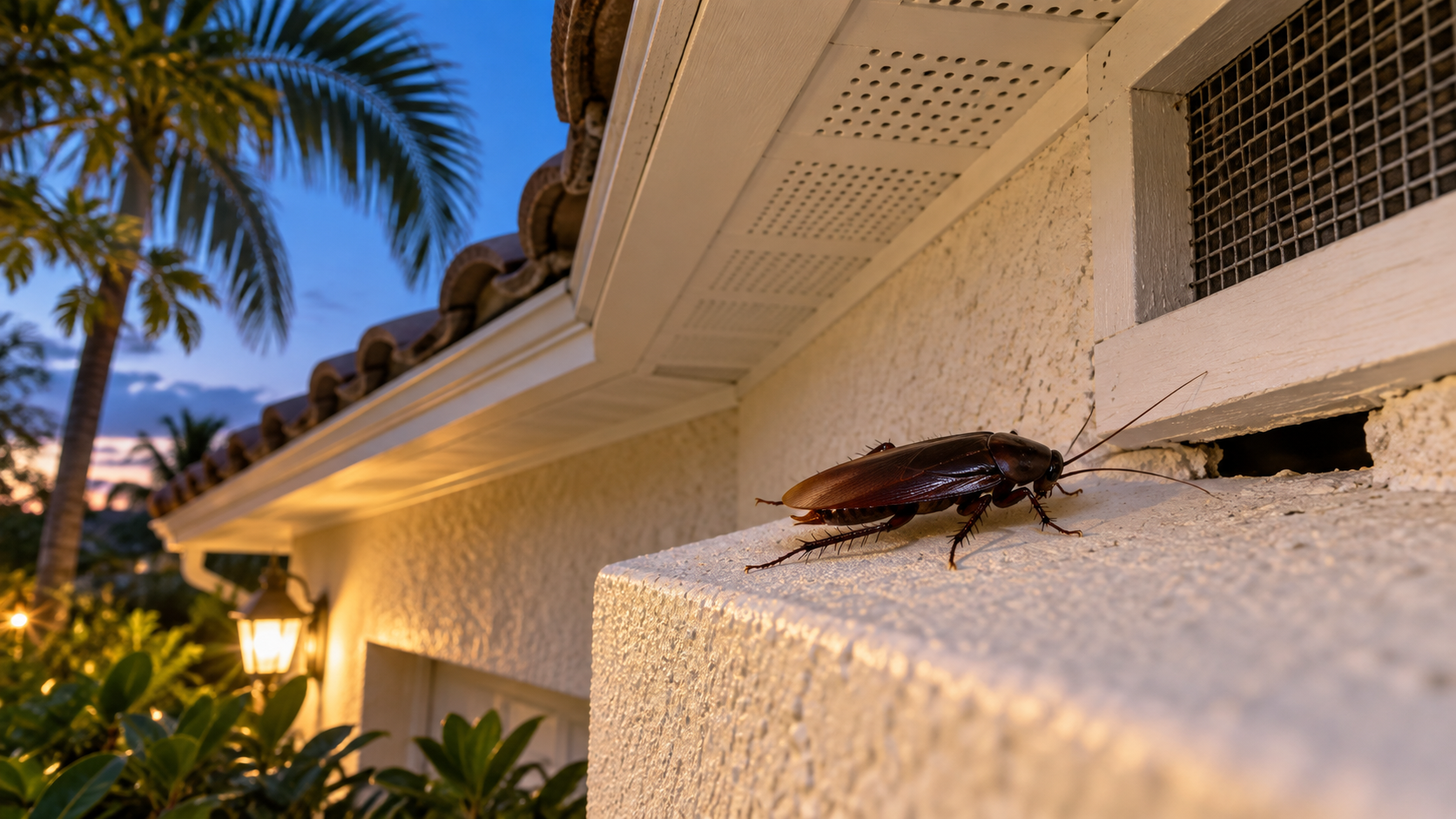
Smokybrown roaches are frequently found near commercial rooflines because they can climb exterior walls and fly from nearby trees or landscaping. Roofs may also provide moisture, organic debris, warmth, lighting, and protected openings that allow these outdoor roaches to remain near the structure.
Six Conditions That Attract Smokybrown Roaches to Rooflines
- Overhanging trees and palms: Branches and palm fronds touching or extending over a building can create direct pathways from landscape harborages to the roof.
- Exterior lighting: Illuminated signs, wall-mounted fixtures, security lights, and brightly lit entrances may attract flying smokybrown roaches after dark.
- Clogged gutters: Leaves, twigs, and other organic material can collect moisture and create sheltered conditions along the edge of the roof.
- Rooftop equipment: HVAC systems, drainage lines, equipment platforms, and other rooftop components may produce condensation or protected hiding areas.
- Soffit and vent openings: Damaged screens, gaps around vents, loose fascia boards, and unsealed roof penetrations can provide access to concealed structural spaces.
- Warm upper-level areas: Heat retained around roofs, equipment, utility components, and exterior walls can support nighttime activity.
A ground-level inspection alone may miss the source of a smokybrown roach problem. Commercial properties with repeated sightings near upper floors, balconies, rooftop equipment, or ceiling areas should have rooflines and elevated exterior access points included in the preventative inspection.
How Do Smokybrown Roaches Enter Commercial Buildings?
Smokybrown roaches can enter commercial buildings by crawling through exterior gaps or flying toward illuminated doors, windows, rooflines, and upper-level openings. Because they often originate outdoors, an indoor sighting may result from nearby landscape or rooftop activity rather than an infestation beginning inside the building.
Six Common Commercial Entry Points
- Exterior doors: Gaps beneath doors, worn weatherstripping, and doors left open during deliveries can allow roaches to enter reception areas, hallways, storage rooms, and loading zones.
- Windows and damaged screens: Torn screens, loose frames, and open windows can provide access, especially when exterior lighting attracts roaches toward the building.
- Soffits and roof vents: Openings around soffits, attic vents, exhaust vents, and roof penetrations may allow roaches to enter upper structural areas.
- Utility penetrations: Gaps around electrical conduits, plumbing lines, cables, and HVAC connections can lead into wall voids, utility rooms, and other concealed spaces.
- Loading docks and service entrances: Frequent door activity, stacked materials, exterior lighting, and nearby waste or landscaping can increase opportunities for roaches to enter.
- Cracks and structural gaps: Expansion joints, damaged sealants, exterior wall cracks, and openings around building materials may connect outdoor harborages with interior spaces.
The location of the first indoor sighting can help identify the likely entry route. Roaches found near upper floors or ceilings may be entering around the roofline, while sightings near service doors, loading areas, or utility rooms may point to ground-level access. A preventative inspection should trace the activity from the interior location back toward the surrounding exterior conditions.
How Can Property Managers Reduce Smokybrown Roaches in Commercial Landscapes?
Property managers can reduce smokybrown roach activity by limiting moisture, removing organic debris, trimming vegetation away from buildings, and correcting exterior conditions that provide food and shelter. Commercial landscape pest control is most effective when routine property maintenance and pest-prevention efforts address the same exterior areas.
Seven Landscape Maintenance Priorities
- Trim trees and palms away from buildings: Remove branches and palm fronds that touch or hang over roofs, balconies, windows, signage, and exterior walls.
- Reduce dense vegetation near the structure: Thin shrubs, vines, and ground cover that create shaded, humid hiding places along foundations and walkways.
- Manage mulch carefully: Avoid applying excessively deep mulch or allowing it to rest directly against exterior walls, doors, utility equipment, or building foundations.
- Remove organic debris: Clear fallen leaves, palm fronds, decaying wood, fruit, and other plant material from landscape beds, drainage areas, and the perimeter of the building.
- Correct irrigation problems: Repair leaking sprinkler heads, adjust overspray, and address areas where water repeatedly collects beside the structure.
- Maintain gutters and drainage systems: Remove roof debris, clean gutters and downspouts, and correct drainage problems that allow moisture and organic material to accumulate.
- Inspect exterior storage and waste areas: Keep cardboard, pallets, landscape materials, and other stored items off the ground and away from exterior walls whenever possible.
Landscape crews, maintenance teams, and pest-control providers should communicate about recurring problem areas. If one team removes debris while another continues overwatering the same location, conditions favorable to smokybrown roaches may quickly return. Documenting moisture, vegetation, and harborage concerns can help property managers coordinate corrective work across the property.
How Can Commercial Buildings Prevent Smokybrown Roaches Around Rooflines?
Commercial buildings can reduce smokybrown roach activity around rooflines by removing roof debris, controlling moisture, screening openings, sealing structural gaps, and managing exterior lighting. Preventative roofline maintenance is especially important when nearby trees or palms provide access to elevated areas.
Seven Roofline and Exterior Prevention Steps
- Clean gutters and roof surfaces: Remove leaves, twigs, palm debris, and other organic material that can hold moisture or provide protected hiding places.
- Repair drainage problems: Correct clogged downspouts, standing water, condensation, and drainage lines that repeatedly leave rooftop or upper exterior areas damp.
- Screen vents and openings: Install or repair appropriate screening around attic vents, soffit vents, exhaust openings, and other exterior ventilation points.
- Seal structural gaps: Close openings around fascia boards, utility lines, roof penetrations, exterior panels, and wall joints where roaches may enter concealed spaces.
- Inspect rooftop equipment: Check beneath and around HVAC units, equipment platforms, drainage trays, access panels, and utility components for moisture, debris, and pest activity.
- Manage exterior lighting: When appropriate for safety and property requirements, use shielded fixtures and direct light away from doors, windows, vents, and other potential entry points.
- Maintain separation from vegetation: Trim branches, vines, and palm fronds so they do not touch or overhang the roof, signage, balconies, or upper exterior walls.
Roofline prevention should be coordinated with ground-level landscape maintenance. Cleaning gutters or sealing vents may not resolve the problem if trees continue touching the building or outdoor harborages remain active below. A complete prevention plan should examine how roaches move between the landscape, exterior walls, roofline, and interior access points.
What Should a Preventative Smokybrown Roach Inspection Include?
A preventative smokybrown roach inspection should examine the commercial property from the surrounding landscape to the roofline. The goal is to identify exterior harborages, moisture sources, lighting conditions, and structural openings before roaches begin appearing regularly inside the building.
Seven Areas to Include in the Inspection
- Landscape beds and building perimeters: Check mulch, leaf litter, ground cover, tree bases, retaining walls, and debris near foundations for moisture and concealed activity.
- Trees, palms, and shrubs: Look for tree holes, loose bark, dead palm fronds, dense foliage, and vegetation touching or overhanging the building.
- Irrigation and drainage systems: Identify leaking sprinkler heads, excessive irrigation, clogged drains, standing water, and consistently damp soil.
- Gutters and rooflines: Examine gutters, soffits, fascia boards, vents, roof debris, drainage lines, and rooftop equipment for moisture, shelter, and possible entry points.
- Exterior doors and windows: Inspect door sweeps, weatherstripping, screens, frames, and gaps around entrances—especially near bright lights or landscaping.
- Utility and service areas: Check loading docks, electrical rooms, utility penetrations, exterior storage, waste areas, and spaces around HVAC equipment.
- Reported activity and monitoring points: Document where roaches have been seen and use that information to trace possible travel routes back toward exterior sources.
Inspection findings should be recorded by location so maintenance teams, landscape contractors, and pest-control providers can address the same contributing conditions. Photographs, service notes, and recurring sighting reports can also help determine whether activity is isolated or developing across multiple areas of the property.
Why Is Interior Treatment Alone Not Enough for Smokybrown Roaches?
Interior treatment alone may not stop smokybrown roach activity because the primary population often lives outside the commercial building. Treating visible roaches indoors does not remove the landscape harborages, rooftop moisture, exterior lighting, or structural openings that allow new roaches to approach and enter the property.
Exterior Conditions Can Continue Reintroducing Roaches
A commercial building may remain clean and well-maintained inside while surrounding conditions continue supporting activity. Mulch beds, tree cavities, palm debris, clogged gutters, irrigation leaks, and rooftop equipment can provide the moisture and shelter smokybrown roaches need.
If these areas are not addressed, additional roaches may continue entering through doors, vents, soffits, utility penetrations, and other exterior openings.
Effective Control Requires a Coordinated Approach
A complete smokybrown roach control plan may include:
- Identifying exterior harborages and moisture sources
- Reducing debris and dense vegetation near the structure
- Inspecting gutters, rooflines, and rooftop equipment
- Sealing gaps and repairing damaged screens or door seals
- Monitoring areas where activity has been reported
- Applying targeted treatment where appropriate
The objective is not only to address the roaches already visible but also to reduce the conditions allowing repeated activity. Coordinating pest control with landscaping, building maintenance, and sanitation teams gives property managers a more complete approach than relying on interior treatment alone.
When Should Property Managers Request Professional Smokybrown Roach Control?
Property managers should consider professional smokybrown roach control when sightings continue after basic maintenance, activity appears across multiple exterior areas, or roaches begin entering occupied spaces. Repeated sightings may indicate that landscaping, rooflines, moisture sources, or structural openings require a coordinated property-wide approach.
Six Signs Professional Control May Be Needed
- Sightings occur repeatedly: Roaches continue appearing around entrances, walkways, exterior walls, balconies, or indoor common areas.
- Multiple buildings or property zones are affected: Reports come from different units, offices, structures, or sections of the commercial property.
- Activity reaches upper floors: Roaches appear near ceilings, balconies, rooftop access points, or upper-level windows, suggesting roofline or elevated exterior activity.
- Young roaches are present: Finding smokybrown roach nymphs may indicate that a nearby harborage is supporting ongoing development.
- Maintenance changes have not resolved the problem: Landscaping has been trimmed, debris removed, and moisture corrected, but sightings continue.
- The source remains difficult to locate: Roaches appear indoors without an obvious ground-level entry point or visible exterior harborage.
Professional property management pest control should evaluate the areas where roaches are being reported along with the surrounding landscaping, roofline, drainage systems, exterior lighting, and building openings. This broader inspection can help identify the source and determine which corrective and treatment measures are appropriate.
Property managers can call (954) 389-6107 or request a free commercial pest control estimate to discuss recurring smokybrown roach activity.
Frequently Asked Questions About Smokybrown Roaches Around Commercial Properties
These answers address common questions property managers have about smokybrown roaches around commercial landscapes, rooflines, and exterior building areas.
Are Smokybrown Roaches a Sign That a Commercial Building Is Dirty?
Not necessarily. Smokybrown roaches primarily live outdoors and may approach clean commercial buildings from trees, palms, mulch, roof debris, gutters, drainage areas, or other exterior harborages. Indoor sanitation remains important, but exterior conditions may be the primary source.
Can Smokybrown Roaches Fly Onto Commercial Roofs?
Yes. Adult smokybrown roaches have developed wings and can fly toward rooflines, upper-level windows, balconies, illuminated signs, and rooftop areas. They may also reach roofs by climbing walls or traveling from overhanging vegetation.
Why Do Smokybrown Roaches Appear After Heavy Rain?
Heavy rain can flood or disturb outdoor harborages and push smokybrown roaches toward drier, protected areas. Activity may increase around covered walkways, loading areas, rooflines, utility spaces, and building entrances after storms.
Can Commercial Landscaping Attract Smokybrown Roaches?
Yes. Dense shrubs, palms, mulch, leaf litter, decaying wood, overwatering, and vegetation touching the building can provide moisture, shelter, food, and travel routes.
Does Seeing One Smokybrown Roach Mean the Building Is Infested?
One roach may have flown or wandered inside from outdoors. Repeated sightings, young roaches, activity in several locations, or roaches appearing from the same structural area provide stronger evidence of a nearby harborage or continuing entry problem.
Where Should Property Managers Look First?
Property managers should begin with the area where the roach was reported and then inspect outward. Nearby doors, windows, utility penetrations, landscaping, drainage systems, exterior lights, gutters, rooflines, and rooftop equipment may reveal the source or travel route.
Key Takeaways
Smokybrown roaches can appear around well-maintained commercial buildings because they frequently originate in exterior landscaping, rooflines, drainage areas, and other protected outdoor spaces. Prevention requires attention to both the surrounding environment and the building’s exterior access points.
What South Florida Property Managers Should Remember
- Clean interiors do not eliminate exterior activity: Smokybrown roaches may approach a commercial building from outdoor harborages even when indoor sanitation is carefully maintained.
- Landscaping can support recurring activity: Trees, palms, dense shrubs, mulch, leaf litter, decaying wood, and excessive irrigation can provide food, moisture, and shelter.
- Rooflines require preventative attention: Gutters, soffits, vents, rooftop equipment, roof debris, and overhanging vegetation can support activity above ground level.
- Roaches can crawl or fly into buildings: Exterior doors, windows, loading areas, utility penetrations, vents, and structural gaps may provide access.
- Interior treatment alone may not address the source: Long-term prevention should include exterior inspection, harborage reduction, moisture correction, exclusion, monitoring, and targeted treatment where appropriate.
- Coordination improves prevention: Property managers should share inspection findings with landscaping, maintenance, sanitation, and pest-control teams so contributing conditions are corrected across the property.
- Professional control should address the entire exterior environment: Professional Pestguard’s commercial cockroach control services can help identify smokybrown roach harborages, entry routes, and conditions contributing to recurring activity.
- Clean interiors do not eliminate exterior activity: Smokybrown roaches may approach a commercial building from outdoor harborages even when indoor sanitation is carefully maintained.
- Landscaping can support recurring activity: Trees, palms, dense shrubs, mulch, leaf litter, decaying wood, and excessive irrigation can provide food, moisture, and shelter.
- Rooflines require preventative attention: Gutters, soffits, vents, rooftop equipment, roof debris, and overhanging vegetation can support activity above ground level.
- Roaches can crawl or fly into buildings: Exterior doors, windows, loading areas, utility penetrations, vents, and structural gaps may provide access.
- Interior treatment alone may not address the source: Long-term prevention should include exterior inspection, harborage reduction, moisture correction, exclusion, monitoring, and targeted treatment where appropriate.
- Coordination improves prevention: Property managers should share inspection findings with landscaping, maintenance, sanitation, and pest-control teams so contributing conditions are corrected across the property.
- Professional control should address the entire exterior environment: Professional Pestguard’s commercial cockroach control services can help identify smokybrown roach harborages, entry routes, and conditions contributing to recurring activity.
Prevent Smokybrown Roach Activity From Moving Indoors
Smokybrown roaches can gather around commercial properties even when the interiors are clean because the conditions supporting them are often outside. Landscapes, rooflines, gutters, drainage areas, exterior lighting, and structural gaps can provide the moisture, shelter, and access these roaches need. Addressing exterior harborages and entry routes through routine inspections and coordinated property maintenance can help reduce recurring activity.
Schedule Commercial Cockroach Control in South Florida
Professional Pestguard provides commercial cockroach control for property managers, HOAs, offices, warehouses, and other commercial properties throughout Weston, Broward County, Miami-Dade County, and Palm Beach County. Call (954) 389-6107 or contact Professional Pestguard for a free estimate to discuss smokybrown roach activity around your property.
About Professional Pestguard
Professional Pestguard provides professional pest control in Weston, FL and nearby communities including Davie, Sunrise, Pembroke Pines, and Plantation. With over 40 years of experience, our licensed technicians protect homes and businesses across Broward County and Miami-Dade County from ants, cockroaches, rodents, spiders, and other common South Florida pests using safe and effective treatments.