
How to Prevent Pantry Pest Problems in Apartment Communities and Shared Storage Areas
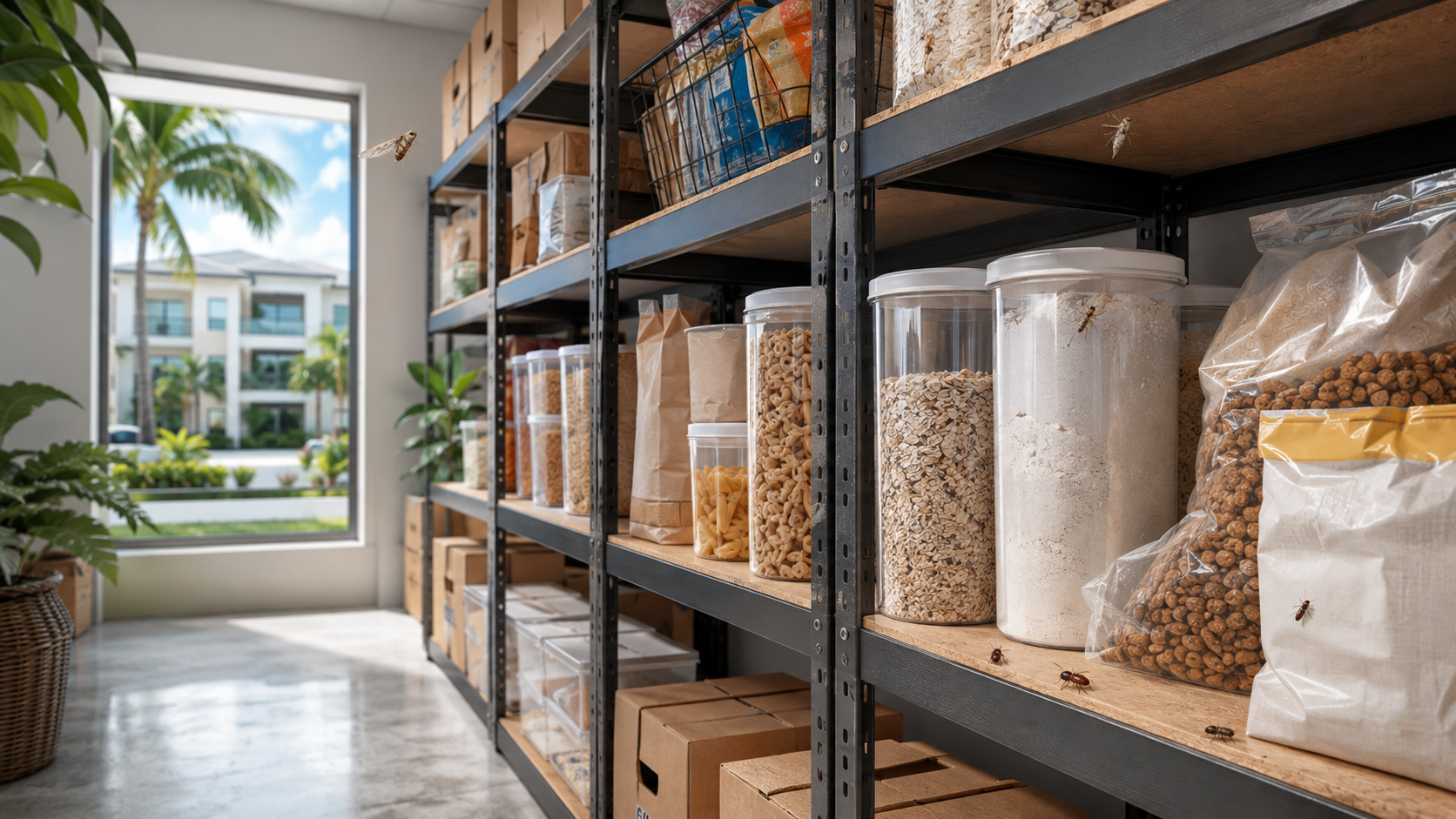
Pantry pests can become a surprisingly persistent problem in apartment communities, condominiums, and shared storage areas because food products and stored goods often move between multiple units, closets, and common spaces. Once pests such as beetles, moths, or weevils become established in dry goods, they can spread through neighboring storage areas before property managers realize there is a larger issue.
For apartment managers, condominium associations, and property managers throughout South Florida, prevention starts with routine inspections, proper food storage, sanitation, and early identification. In this guide, we’ll explain where pantry pests commonly come from, how they spread through shared spaces, what warning signs to watch for, and how professional Commercial Pantry Pest Control can help reduce recurring problems.
Why Pantry Pests Spread Through Apartment Communities
Pantry pests often begin with a single infested food product, but in apartment and condominium communities, the problem can spread beyond one kitchen or storage area. Shared hallways, storage closets, maintenance spaces, and resident turnover can all create opportunities for stored-product pests to move from one location to another.
Because these insects are small and often remain hidden inside dry goods or packaging, infestations may go unnoticed until multiple residents begin reporting activity.
Common Ways Pantry Pests Spread in Multifamily Properties
- Infested Food Products Enter the Property
Pantry pests are often introduced through flour, cereal, rice, pasta, pet food, birdseed, spices, or other dry goods that already contain eggs or larvae. - Shared Storage Areas
Community pantries, storage rooms, resident lockers, and maintenance closets can allow infested products to remain undisturbed long enough for pests to spread. - Resident Move-Ins and Turnover
Boxes, food products, and stored belongings brought into new units can introduce pantry pests into apartment or condominium buildings. - Improperly Sealed Food Containers
Open bags, cardboard packaging, and loosely sealed containers make it easier for pantry pests to access nearby food sources. - Cracks and Small Structural Gaps
Beetles and moths can travel through small openings around shelving, cabinets, walls, and storage areas once they leave an infested product. - Delayed Removal of Infested Items
If contaminated food or packaging remains in a unit or shared space, pantry pests may continue reproducing and spread to surrounding areas. - Limited Inspection of Low-Traffic Storage Spaces
Areas that are rarely checked can allow infestations to grow before property managers or residents notice signs of activity.
When pantry pest complaints begin appearing in multiple units or storage areas, professional Commercial Pantry Pest Control can help identify the source and determine how far the activity has spread. For apartment communities and condominium properties dealing with broader pest concerns, a routine Commercial Pest Control program can also help property managers monitor shared spaces and identify developing issues before they become recurring complaints.
Where Pantry Pests Commonly Hide in Shared Storage Areas
Pantry pests are easy to miss because they often remain hidden inside packaging, shelving, and stored products until the infestation becomes more noticeable. In apartment communities and condominium properties, shared storage spaces can create ideal conditions for these pests to remain undisturbed for long periods.
Common Pantry Pest Hiding Areas
- Dry Food Storage Shelves
Flour, rice, cereal, pasta, baking mixes, spices, and other dry goods can become infested if packaging is damaged or left open. - Cardboard Boxes and Paper Packaging
Pantry pests can hide inside seams, folds, and small openings in cardboard packaging, especially when boxes remain stored for long periods. - Pet Food and Birdseed Storage
Large bags of pet food, birdseed, and similar products can provide a steady food source if they are not stored in sealed containers. - Resident Storage Lockers
Shared storage lockers may contain forgotten food products, paper goods, or other materials that allow pantry pests to remain hidden. - Maintenance and Utility Closets
Low-traffic areas where supplies are stored can become overlooked harborages, particularly when cardboard and dry goods are present. - Cabinet Corners and Shelving Gaps
Small cracks around shelves, cabinet joints, and wall edges can provide protected areas where beetles, moths, or larvae remain out of sight. - Trash and Recycling Areas
Food packaging and discarded dry goods can attract pantry pests if waste is not removed promptly or stored securely.
Routine inspection of these areas is an important part of effective Commercial Pantry Pest Control, especially in multifamily properties where shared storage can make it harder to determine where the infestation began.
A broader Commercial Pest Control program can also help apartment managers and condominium associations monitor common areas, storage rooms, and other shared spaces for developing pest activity.
Signs of a Pantry Pest Problem in Apartment Communities
Pantry pest infestations can develop quietly because the insects often remain hidden inside food packaging or stored products. By the time residents or maintenance teams notice visible activity, the problem may already involve multiple items or shared storage areas.
Recognizing the early warning signs can help apartment managers and condominium associations respond before the infestation spreads further.
Common Signs of Pantry Pest Activity
- Small Beetles or Moths Near Stored Food
Finding insects around pantry shelves, cabinets, storage rooms, or dry food products can indicate an active infestation. - Webbing Inside Food Packages
Some pantry moth larvae produce fine webbing inside flour, cereal, grains, pet food, and other stored products. - Tiny Holes in Packaging
Small openings in paper or cardboard food packages may indicate that stored-product pests have entered or emerged from the contents. - Larvae or Shed Skins
Finding larvae, cast skins, or other insect debris inside cabinets, shelving, or storage bins can point to an established problem. - Clumped or Contaminated Dry Goods
Infested food products may appear clumped, dusty, or contain visible insect activity. - Pests Appearing Away From the Original Food Source
Adult moths or beetles may travel beyond the infested product and show up on walls, ceilings, windows, or nearby storage areas. - Multiple Resident Complaints
Similar reports from neighboring units or shared storage spaces may suggest that pantry pest activity is no longer isolated to one location.
When these signs begin appearing, professional Commercial Pantry Pest Control can help identify the stored-product pest involved and locate the source of the infestation. If the property is also dealing with other recurring pest concerns, a comprehensive Commercial Pest Control program can help property managers take a broader preventative approach.
How Property Managers Can Help Prevent Pantry Pest Problems
Preventing pantry pests in apartment communities and condominium properties requires a combination of good storage practices, routine inspections, sanitation, and quick response when activity is reported. Because stored-product pests can spread quietly through shared spaces, property managers should focus on reducing the conditions that allow infestations to go unnoticed.
Preventative Steps Property Managers Can Take
- Encourage Sealed Food Storage
Residents and staff should keep flour, cereal, rice, pet food, birdseed, and other dry goods in tightly sealed containers whenever possible. - Inspect Shared Storage Areas Regularly
Community pantries, resident lockers, maintenance closets, and storage rooms should be checked for damaged packaging, insect activity, and forgotten food products. - Remove Infested Products Quickly
Any food item showing signs of beetles, moths, larvae, or webbing should be removed promptly so the infestation does not continue spreading. - Limit Cardboard and Paper Clutter
Excess boxes and packaging can create hidden spaces where pantry pests remain undisturbed. Keeping storage areas organized makes activity easier to detect. - Maintain Clean Shelving and Cabinets
Crumbs, spilled dry goods, and food residue should be cleaned regularly from shelves, corners, and storage bins. - Monitor Pet Food and Birdseed Storage
Large bags of pet food and birdseed can become major sources of pantry pest activity if they are stored improperly or left open. - Document Resident Complaints
Tracking where and when pantry pest activity is reported can help reveal patterns between neighboring units or shared areas. - Schedule Preventative Pest Service
Routine professional inspections can help identify developing stored-product pest activity before it turns into repeated resident complaints.
A proactive Commercial Pantry Pest Control program can help property managers identify infestation sources and monitor high-risk storage areas. For communities that need broader protection against ants, roaches, rodents, pantry pests, and other common issues, a comprehensive Commercial Pest Control plan can provide ongoing support across the property.
Why Preventative Pantry Pest Control Matters for Multifamily Properties
Pantry pest problems can become difficult to manage when property teams only respond after residents begin reporting insects. Because stored-product pests often remain hidden inside packaging, cabinets, and shared storage areas, infestations may already be well established by the time visible activity appears.
Preventative service helps property managers take a more proactive approach by identifying high-risk areas, sanitation gaps, and early signs of activity before the problem spreads across multiple units or common spaces.
Benefits of Preventative Pantry Pest Control
- Identify Problems Earlier
Routine inspections can help detect pantry pest activity before residents begin seeing adult moths or beetles throughout the property. - Reduce Recurring Complaints
Addressing infestation sources and high-risk storage areas can help reduce repeated service requests from neighboring units. - Protect Shared Storage Spaces
Preventative service is especially valuable in community pantries, resident storage areas, maintenance closets, and other shared spaces where dry goods may be stored. - Support Better Sanitation Practices
Regular monitoring can help identify food residue, damaged packaging, clutter, and other conditions that contribute to stored-product pest activity. - Limit the Spread Between Units
Early identification can help contain activity before pantry pests move through shared walls, hallways, cabinets, or storage areas. - Improve Property-Wide Pest Management
Pantry pests are only one of many pest concerns apartment and condominium communities may face. A broader prevention program can help property managers stay ahead of multiple pest issues at once.
For apartment communities and condominium properties throughout Weston, Fort Lauderdale, Miami, Aventura, and surrounding South Florida areas, routine Commercial Pantry Pest Control can help reduce stored-product pest activity before it becomes a recurring property-wide issue. A comprehensive Commercial Pest Control program can also support ongoing prevention across shared spaces and common areas.
Frequently Asked Questions About Pantry Pest Control in Apartment Communities
Apartment managers, condominium associations, and property managers often have questions about where pantry pests come from, how they spread, and what can be done to reduce recurring problems in shared storage spaces.
What are the most common pantry pests in apartment communities?
Common pantry pests include Indian meal moths, flour beetles, rice weevils, drugstore beetles, and other stored-product insects. These pests are often introduced through infested dry goods such as flour, cereal, rice, pasta, pet food, birdseed, and spices.
How do pantry pests spread between apartment units?
Pantry pests may spread when infested food products are moved between units or shared storage areas. Adult moths and beetles can also travel beyond the original source into nearby cabinets, hallways, storage rooms, and neighboring spaces.
Can pantry pests live in shared storage areas?
Yes. Shared storage lockers, community pantries, maintenance closets, and other low-traffic areas can provide ideal conditions for pantry pests, especially when cardboard, paper packaging, pet food, or dry goods are stored for long periods.
How can property managers help prevent pantry pest infestations?
Property managers can reduce risk by encouraging sealed food storage, inspecting shared storage spaces, removing infested products promptly, reducing cardboard clutter, maintaining clean shelving, and documenting resident complaints. Routine Commercial Pantry Pest Control can provide additional monitoring and support.
Why do pantry pests keep coming back?
Recurring infestations often happen when the original source has not been identified or when infested products remain somewhere on the property. Hidden activity in cabinets, storage lockers, or neighboring units can allow the problem to continue even after visible insects are removed.
When should a property manager call for stored product pest control?
Professional Stored Product Pest Control should be considered when multiple residents report activity, pests are found in shared storage areas, infestations keep returning, or the source cannot be located. Early inspection can help reduce the chance of the problem spreading further.
Can commercial pest control help prevent other pests in apartment communities too?
Yes. A broader Commercial Pest Control program can help property managers monitor for pantry pests as well as ants, roaches, rodents, and other common pests that may affect multifamily properties and shared spaces.
Key Takeaways
Pantry pest prevention in apartment communities and shared storage areas depends on catching problems early, keeping stored goods properly contained, and making common spaces easier to inspect. Because these pests can spread quietly through dry goods and packaging, prevention is especially important in multifamily properties.
Here's what to remember:
- Pantry pests often enter through infested dry goods such as flour, cereal, rice, pet food, birdseed, and spices.
- Shared storage spaces can allow infestations to spread when food products, cardboard, and packaging remain undisturbed for long periods.
- Adult moths and beetles may travel beyond the original food source, making it harder to determine where an infestation began.
- Cardboard, paper packaging, and clutter can create hidden harborage and make early detection more difficult.
- Routine inspections and clean storage practices help reduce risk in community pantries, resident lockers, maintenance closets, and other shared spaces.
- Multiple resident complaints may indicate a broader problem rather than isolated activity in one unit.
- Removing infested products quickly is critical because stored-product pests can continue reproducing if the original source remains on the property.
- Professional Commercial Pantry Pest Control can help identify infestation sources, while a broader Commercial Pest Control program can support ongoing prevention throughout apartment and condominium communities.
Conclusion
Pantry pest problems in apartment communities and shared storage areas can spread quietly when infested products, cardboard packaging, and low-traffic storage spaces go unchecked. For property managers and condominium associations, early identification and consistent prevention are key to reducing recurring complaints and limiting the spread of stored-product pests.
Routine inspections, better storage practices, prompt removal of infested items, and professional pest management can all help keep shared spaces cleaner and easier to monitor.
Need Help With Pantry Pests at Your Property?
Professional Pestguard provides Commercial Pantry Pest Control and Commercial Pest Control services for apartment communities, condominium properties, and other commercial facilities throughout Weston, Fort Lauderdale, Miami, Aventura, and surrounding South Florida communities.
Our team can help identify pantry pest activity, inspect shared storage areas, and recommend a treatment and prevention plan based on the conditions found throughout your property.
Contact Professional Pestguard today to schedule a commercial pest inspection and learn how our pantry pest and property management pest control services can help reduce recurring pest problems across your community.
About Professional Pestguard
Professional Pestguard provides professional pest control in Weston, FL and nearby communities including Davie, Sunrise, Pembroke Pines, and Plantation. With over 40 years of experience, our licensed technicians protect homes and businesses across Broward County and Miami-Dade County from ants, cockroaches, rodents, spiders, and other common South Florida pests using safe and effective treatments.