Rodent Prevention for Medical Offices: Entry Points, Storage Areas, and Exterior Risk Zones
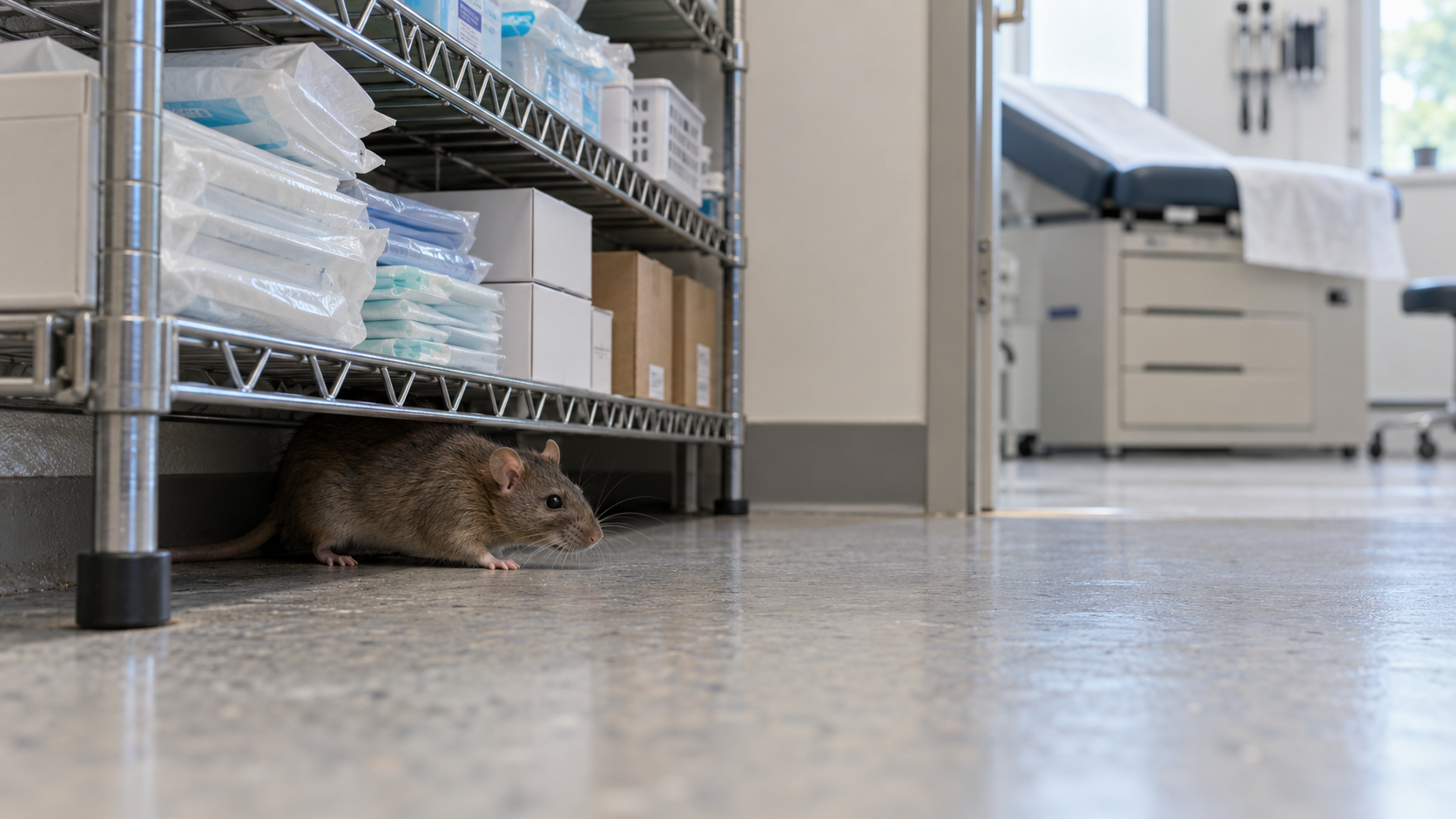
How Can Medical Office Managers Prevent Rodents Before They Get Inside?
Medical office managers can help prevent rodents by sealing exterior gaps, organizing storage areas, maintaining strict sanitation practices, and routinely inspecting the property for early warning signs. These preventive measures reduce access to the food, water, shelter, and entry points that attract rats and mice.
Medical offices face unique pest-management concerns because rodents can contaminate stored materials, damage wiring and insulation, and disrupt an environment where cleanliness and patient confidence are essential. Deliveries, utility penetrations, shared walls, landscaping, dumpsters, and frequently opened exterior doors can all create potential routes into the building.
Effective medical office rodent control begins outside and continues throughout storage rooms, break areas, utility spaces, and other low-traffic locations. By correcting structural vulnerabilities and monitoring these risk zones consistently, office managers and property management teams can often identify developing problems before rodents establish themselves indoors.
When signs of activity or recurring vulnerabilities are discovered, a professional commercial rodent control program can help medical facilities address existing concerns and establish a long-term prevention strategy.
Where Do Rodents Enter Medical Office Buildings?
Rodents commonly enter medical offices through exterior gaps around doors, utility lines, rooflines, vents, and shared structural connections. Because mice can fit through very small openings, even minor building defects may provide access to storage rooms, utility areas, break rooms, and other protected indoor spaces.
Medical office managers should inspect the entire building perimeter regularly, including areas that receive little daily foot traffic. Gaps may become more noticeable after construction, plumbing repairs, equipment installations, landscaping work, or damage caused by weather and normal building wear.
Common Rodent Entry Points to Inspect
- Exterior doors: Worn door sweeps, damaged weather stripping, and gaps beneath delivery or employee entrances can allow rodents inside.
- Utility penetrations: Openings around plumbing, electrical wiring, internet cables, and HVAC lines may provide direct access through exterior walls.
- Rooflines and soffits: Rats may reach upper entry points by climbing trees, utility lines, downspouts, or textured exterior surfaces.
- Vents and exhaust openings: Missing screens or damaged vent covers can leave protected openings into the building.
- Loading and delivery areas: Doors that remain open during deliveries may allow rodents to enter unnoticed.
- Shared walls and utility spaces: Medical offices located in multi-tenant buildings may be exposed to rodent activity originating in neighboring suites or connected service areas.
Any gaps, gnaw marks, droppings, rub marks, or damaged materials found during an inspection should be documented and addressed promptly. Sealing exterior vulnerabilities is one of the most important steps in commercial rodent prevention because it limits access before rodents can establish activity indoors.
How Should Medical Offices Organize Storage Areas to Prevent Rodents?
Medical offices can reduce rodent risks by keeping storage rooms organized, limiting cardboard accumulation, protecting food products, and leaving enough space to inspect floors and walls. Crowded or rarely disturbed areas can provide rodents with shelter while allowing evidence of activity to remain hidden.
Supply closets, records rooms, utility spaces, employee break rooms, and receiving areas should be included in routine commercial rodent prevention efforts. Even nonfood materials can provide nesting material or create concealed spaces where rodents can remain undetected.
Storage Practices That Reduce Rodent Risks
- Keep supplies off the floor: Store boxes and materials on shelving so floors and wall edges remain visible during inspections.
- Reduce cardboard accumulation: Remove empty boxes and unnecessary packaging instead of allowing them to collect in storage areas.
- Maintain space along walls: Avoid packing supplies tightly against walls, corners, utility lines, or access panels.
- Use sealed containers: Keep snacks, coffee supplies, pet food, and other edible products in durable containers with secure lids.
- Rotate stored materials: Use older supplies first and inspect items that have remained undisturbed for extended periods.
- Check incoming deliveries: Examine boxes, pallets, and packaged materials for droppings, gnaw marks, damaged packaging, or other signs of rodent activity.
Organized storage makes sanitation easier and helps employees or pest-control technicians identify potential problems sooner. Any unexplained damage, nesting material, droppings, or unusual odors should be reported promptly so the affected area can be evaluated.
How Does Sanitation Help Prevent Rodents in Medical Offices?
Sanitation helps prevent rodents by removing the food, water, and shelter that allow them to remain near or inside a medical office. Even small amounts of food debris, standing water, unsecured waste, or clutter can make employee areas and utility spaces more attractive to rats and mice.
A medical office may appear clean in patient-facing areas while still containing less-visible risk zones. Break rooms, supply closets, janitorial areas, mechanical rooms, dumpsters, and spaces beneath appliances should all be included in routine sanitation checks.
Sanitation Areas Medical Office Managers Should Monitor
- Employee break rooms: Clean crumbs and spills promptly, wipe beneath appliances, and avoid leaving food out overnight.
- Food storage: Keep snacks, coffee supplies, and other food products in sealed containers or enclosed cabinets.
- Waste containers: Use containers with secure lids and empty interior trash regularly, especially before weekends or office closures.
- Water sources: Repair leaking pipes, faucets, refrigerator lines, and drainage issues that may provide rodents with water.
- Janitorial spaces: Keep mop sinks, cleaning supplies, and damp materials organized so moisture does not remain unnoticed.
- Exterior waste areas: Position dumpsters away from entrances when possible and keep surrounding areas free of loose trash and spilled materials.
- Cluttered spaces: Remove unused paper, fabric, cardboard, and other materials that rodents could use for nesting.
Sanitation should work together with structural repairs, organized storage, and routine monitoring. Medical office managers preparing for professional service can also review our rodent control preparation guide for practical steps that support long-term prevention.
Which Exterior Areas Increase Rodent Risks Around Medical Offices?
Exterior rodent risks are often concentrated near dumpsters, landscaping, drainage areas, delivery entrances, rooflines, and neighboring properties. These areas may provide food, water, shelter, or direct travel routes that bring rats and mice closer to the medical office.
Routine exterior inspections should extend beyond the front entrance. Property managers and facility teams should evaluate the entire perimeter, including areas maintained by landlords, landscaping companies, waste providers, or other tenants within the property.
Exterior Risk Zones That Require Regular Attention
- Dumpsters and waste enclosures: Loose trash, food residue, damaged lids, and overflowing containers can attract rodents to the property.
- Dense landscaping: Overgrown shrubs, heavy ground cover, fallen fruit, and accumulated debris can create protected hiding areas near the building.
- Trees near the roofline: Overhanging branches may help roof rats reach roofs, soffits, vents, and upper utility openings.
- Drainage and moisture areas: Standing water, leaking irrigation systems, clogged drains, and poorly graded soil may provide dependable water sources.
- Delivery entrances: Frequently opened doors and gaps around loading or receiving areas can create direct access into the building.
- Outdoor storage: Equipment, pallets, unused containers, and building materials may provide shelter when stored against exterior walls.
- Neighboring properties: Restaurants, vacant units, construction sites, and poorly maintained waste areas nearby can contribute to rodent pressure around a medical office.
Vegetation should be trimmed away from the structure, waste areas should remain clean, and stored materials should be moved away from exterior walls whenever possible. Managers who notice activity near trees or upper building areas can review the common signs of roof rats in South Florida to better understand the warning signs that may appear around roofs and attics.
How Often Should Medical Offices Be Inspected for Rodent Activity?
Medical offices should complete routine rodent inspections throughout the year, with additional checks after construction, utility repairs, severe weather, landscaping changes, or reports of suspicious activity. The goal is to identify warning signs and correct vulnerable conditions before rodents become established inside the building.
Inspection responsibilities should be clearly assigned to office managers, maintenance teams, property managers, or pest-control professionals. A written checklist can help ensure that exterior entry points, storage areas, sanitation conditions, and low-traffic spaces are reviewed consistently.
What a Medical Office Rodent Inspection Should Include
- Exterior perimeter: Check foundations, doors, vents, utility penetrations, rooflines, and landscaping for gaps or rodent activity.
- Storage areas: Look beneath shelving and behind stored materials for droppings, gnaw marks, nesting material, or damaged packaging.
- Break rooms: Inspect cabinets, appliances, food-storage areas, and plumbing fixtures for crumbs, moisture, or signs of activity.
- Utility spaces: Examine mechanical rooms, electrical closets, janitorial areas, and pipe penetrations that may provide hidden access.
- Waste areas: Review dumpsters, trash enclosures, and surrounding pavement for spilled materials, burrows, or damaged containers.
- Shared structural areas: Coordinate with property management when activity may involve neighboring suites, shared walls, roof systems, or common utility pathways.
- Service records: Document findings, repairs, sightings, and follow-up actions so recurring conditions can be identified over time.
Consistent documentation helps medical office managers determine whether an issue is isolated, recurring, or connected to a larger property concern. A structured commercial pest control program can support property management pest control efforts through routine monitoring, preventative recommendations, and service plans tailored to the facility.
What Are the Early Signs of Rodents in a Medical Office?
Early signs of rodents in a medical office may include droppings, gnaw marks, damaged packaging, unusual odors, scratching noises, and grease marks along walls. Identifying these warning signs quickly can help managers respond before activity spreads into additional rooms or disrupts daily operations.
Because rats and mice are often active when the office is quiet, employees may notice evidence without seeing a live rodent. Staff members should know which signs to report and where rodent activity is most likely to appear.
Rodent Warning Signs Employees Should Report
- Droppings: Small droppings may appear inside cabinets, beneath sinks, behind equipment, or along walls.
- Gnaw marks: Rodents may damage boxes, food packaging, insulation, wiring, plastic containers, or other stored materials.
- Scratching noises: Sounds inside ceilings, walls, attics, or storage rooms may indicate movement in concealed areas.
- Grease marks: Repeated travel along walls and structural edges may leave dark smudges or rub marks.
- Nesting material: Shredded paper, fabric, insulation, or cardboard may indicate a hidden nesting area.
- Unusual odors: Persistent musty or unpleasant odors may develop near concealed activity or nesting sites.
- Damaged deliveries: Torn packaging, holes in boxes, or unexplained contamination may indicate that rodents reached stored materials.
- Daytime sightings: Seeing a rat or mouse during operating hours may indicate that rodents are actively using the building or surrounding property.
Employees should report these observations immediately rather than moving traps, cleaning evidence without documentation, or attempting to treat the area independently. Recording the location, date, and type of evidence can help office managers and pest-control professionals identify patterns and determine where further inspection is needed.
When Should a Medical Office Call for Professional Rodent Control?
Medical office managers should contact a pest-control professional when employees report a rodent sighting, droppings, gnaw marks, nesting material, or repeated scratching noises. Evidence inside supply rooms, break rooms, ceilings, or utility spaces warrants prompt inspection to determine where rodents may be entering and which areas are affected.
Professional support is also helpful when rodent activity returns after repairs or when a medical office shares walls, waste areas, or utility pathways with other tenants. In these situations, effective medical office rodent control may require coordination with property management to address conditions beyond the individual suite.
What Should a Professional Rodent Control Plan Address?
- Entry points: Identify openings around doors, utility lines, vents, and rooflines, and recommend appropriate exclusion repairs.
- Activity locations: Inspect reported problem areas and nearby concealed spaces for evidence of rodent movement.
- Food, water, and shelter: Identify sanitation, moisture, storage, and landscaping conditions that may support activity.
- Treatment and monitoring: Select control methods and device locations appropriate for the facility’s layout and use.
- Property coordination: Communicate concerns involving shared spaces, neighboring units, or building maintenance.
- Follow-up: Review monitoring results and confirm that recommended repairs and preventive measures have been completed.
Professional Pestguard helps businesses address rodent concerns and conditions that contribute to recurring activity. If your team has noticed warning signs, contact us to schedule an inspection and discuss a commercial rodent control plan for your property.
How Can Property Managers Support Rodent Prevention in Medical Office Buildings?
Property managers can support rodent prevention by maintaining shared building areas, coordinating structural repairs, and responding promptly to reports from tenants. In multi-tenant medical buildings, prevention requires attention to the entire property because rodents may travel through connected ceilings, utility pathways, and common service areas.
Medical office managers should have a clear contact for reporting pest concerns and requesting repairs. Sharing inspection findings helps property management identify recurring vulnerabilities and coordinate corrective work with maintenance teams, waste providers, landscapers, and pest-control professionals.
Shared Responsibilities That Strengthen Rodent Prevention
- Maintain common entrances: Repair damaged door sweeps, weather stripping, and doors that fail to close properly.
- Coordinate exterior repairs: Address gaps around shared utility lines, roof systems, vents, and exterior walls.
- Manage waste areas: Arrange reliable trash collection and correct overflowing containers or damaged dumpster lids.
- Maintain landscaping: Trim vegetation away from buildings and remove debris that may provide shelter.
- Communicate with tenants: Establish a simple process for reporting sightings, damaged materials, and other warning signs.
- Track corrective work: Document reported concerns, completed repairs, and follow-up inspections.
A coordinated property management pest control approach helps individual medical offices maintain prevention practices while ensuring shared building concerns receive attention.
Frequently Asked Questions About Rodent Prevention for Medical Offices
Medical office managers often have questions about rodent entry points, early warning signs, and prevention responsibilities. These answers explain practical steps for reducing rodent risks in medical offices and shared commercial buildings.
How can medical office managers prevent rodents before they get inside?
Medical office managers can help prevent rodents by sealing exterior gaps, maintaining door sweeps, keeping food in secure containers, removing clutter, and correcting water leaks. Regular inspections of storage rooms, utility spaces, landscaping, and waste areas help identify conditions that need attention.
What attracts rodents to medical office buildings?
Rodents are attracted to accessible food, water, and shelter. Employee snacks, food residue in trash containers, plumbing leaks, accumulated cardboard, dense landscaping, and sheltered exterior storage can make a medical office property more attractive to rats and mice.
Where do rodents usually enter a medical office?
Rodents may enter through gaps beneath exterior doors, openings around utility lines, damaged vents, and roofline defects. In multi-tenant buildings, connected ceilings, shared walls, and utility pathways may also allow rodents to move between spaces.
Can rodents infest storage rooms that contain no food?
Yes. Rodents may use storage rooms for shelter even when no food is present. Cardboard, paper, and other stored materials can provide nesting material, while crowded shelving and undisturbed boxes can conceal activity.
What are the first signs of rodents in a medical office?
Early signs may include droppings, gnaw marks, damaged packaging, shredded nesting material, and scratching sounds inside walls or ceilings. Employees should report the location and type of evidence promptly so the affected area can be inspected.
Does seeing one mouse mean there is an infestation?
One mouse sighting does not establish the size of a rodent problem, but it warrants inspection. A pest-control professional can look for additional evidence, identify possible entry points, and determine whether monitoring or treatment is needed.
How often should medical offices check for rodent activity?
Medical offices should include rodent checks in routine facility maintenance and conduct additional inspections after construction, utility repairs, severe weather, or employee reports. The frequency of professional inspections should reflect the property’s conditions, history of activity, and findings.
Who should handle rodent prevention in a shared medical office building?
Office managers should oversee conditions within their suites, while property management should coordinate concerns involving shared areas and building systems, subject to lease responsibilities. Effective prevention depends on communication between tenants, maintenance teams, and pest-control professionals.
Is sanitation alone enough to prevent rodents?
Sanitation helps reduce rodent attraction, but it cannot close entry points or resolve every source of shelter. Effective commercial rodent prevention combines cleaning, secure storage, structural repairs, exterior maintenance, and monitoring.
Does Professional Pestguard provide commercial rodent control in South Florida?
Yes. Professional Pestguard provides commercial rodent control in Broward and Miami-Dade counties. Medical office managers and property managers can call (954) 389-6107 to discuss rodent concerns and request a free estimate.
Keep Rodent Prevention Part of Your Medical Office Routine
Rodent prevention works best when medical office managers consistently address entry points, storage conditions, sanitation, and exterior risk zones. Maintaining door seals, repairing leaks, reducing clutter, and inspecting less-visible spaces can help limit access and make early warning signs easier to identify.
A coordinated approach between office staff, maintenance teams, property managers, and pest-control professionals helps keep prevention efforts on track. When evidence appears, prompt inspection and follow-up can help address the source of activity and reduce the risk of recurring problems.
Request a Free Estimate for Commercial Rodent Control
Professional Pestguard serves medical offices and commercial properties throughout Broward and Miami-Dade counties. Call (954) 389-6107 or contact us to request a free estimate and discuss a rodent control plan for your property.
About Professional Pestguard
Professional Pestguard provides professional pest control in Weston, FL and nearby communities including Davie, Sunrise, Pembroke Pines, and Plantation. With over 40 years of experience, our licensed technicians protect homes and businesses across Broward County and Miami-Dade County from ants, cockroaches, rodents, spiders, and other common South Florida pests using safe and effective treatments.