House Mice vs. Field Mice: Which Is Getting Into Your South Florida Home?
How Do I Know Whether I Have House Mice or Field Mice?
To determine whether you have house mice or field mice, compare where the mice are active and nesting before relying on appearance alone. House mice are well adapted to living indoors and commonly nest behind appliances, beneath cabinets, inside wall voids, in attics, and around garages. “Field mouse” is a general name for several outdoor mice rather than one specific species, so their appearance and behavior can vary.
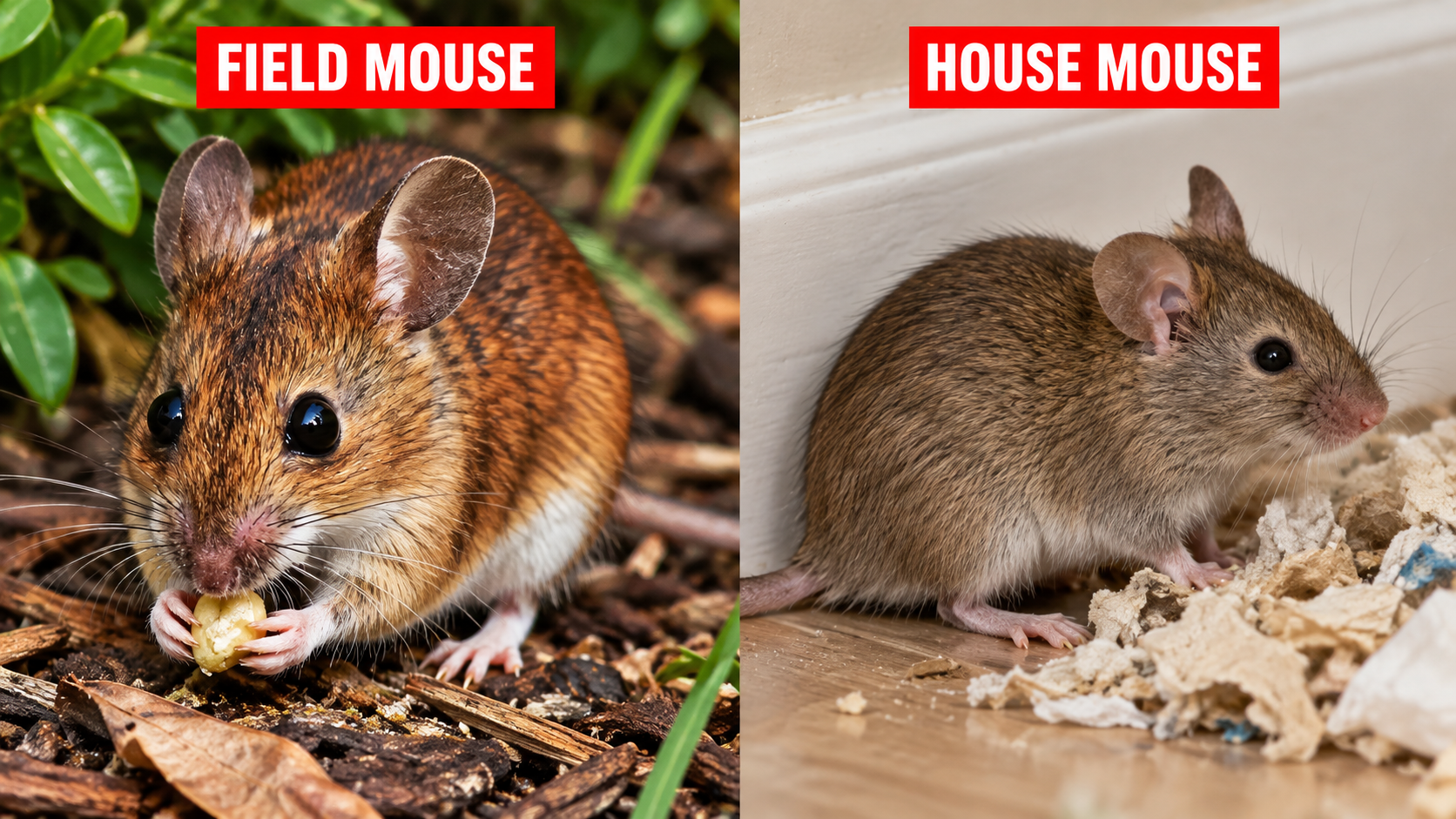
House mice usually have mostly uniform grayish-brown fur, a long tail with little visible hair, and a slightly lighter belly. Mice commonly described as field mice often have more noticeable contrast between the upper body and lighter underside, although coloring alone cannot confirm the species.
The location of the activity usually provides the strongest clue. Evidence concentrated around kitchens, pantries, appliances, and interior walls is more consistent with house mice. Activity beginning near dense vegetation, sheds, woodpiles, exterior storage, garages, or homes beside natural areas may involve an outdoor mouse entering through a structural opening.
Droppings, gnaw marks, scratching sounds, and damaged food packaging can occur with either type. Identifying the likely entry area, nesting location, and pattern of activity helps determine whether mouse control in Weston should focus on an established indoor population, occasional outdoor entry, or a combination of both.
House Mice Versus Field Mice: What Is the Difference?
The main difference between house mice and field mice is where they normally live. House mice are adapted to living inside buildings, while mice commonly called field mice typically live outdoors and enter homes while searching for food, water, or shelter. Their coloring, nesting locations, entry areas, and activity patterns can provide additional identification clues.

House Mice vs. Field Mice at a Glance
| Feature | House Mice | Field Mice |
|---|---|---|
| Typical coloring | Usually grayish-brown with a slightly lighter underside | Often brown or reddish-brown with a more noticeable white or light-colored underside |
| Tail | Long, thin, mostly hairless, and generally uniform in color | May appear hairier or have stronger color contrast between the top and underside |
| Eyes and ears | Small eyes with rounded, moderately sized ears | Many outdoor mice have larger, more noticeable eyes and ears |
| Normal habitat | Homes, garages, warehouses, sheds, and other structures | Fields, wooded areas, gardens, dense vegetation, and areas near water |
| Common nesting areas | Wall voids, attics, cabinets, appliances, storage areas, and insulation | Burrows, vegetation, woodpiles, sheds, garages, and protected outdoor areas |
| Indoor activity | May live and reproduce inside throughout the year | More likely to enter temporarily when outdoor conditions become unfavorable |
| Common entry areas | Gaps around doors, garages, foundations, pipes, vents, and utility lines | Openings near landscaping, patios, garages, rooflines, and exterior storage areas |
“Field mouse” is a general term used for several types of outdoor mice rather than one specific species. Because their appearance can vary, homeowners should not rely on fur color alone. Where the droppings, nesting material, gnaw marks, and nighttime activity are found often provides a more useful identification clue.
Where Do House Mice and Field Mice Enter South Florida Homes?
House mice and field mice can enter South Florida homes through small gaps around doors, garages, utility lines, vents, and foundations. House mice are more likely to use openings that lead directly to indoor nesting areas, while outdoor mice often enter from landscaping, sheds, patios, or other ground-level areas near the home.
Common House Mouse Entry Areas
- Gaps beneath garage doors and exterior doors
- Openings around plumbing, electrical, and air-conditioning lines
- Cracks near foundations, exterior walls, and attached garages
- Damaged vents, screens, and weather stripping
- Openings that lead into wall voids, cabinets, pantries, or attics
- Gaps around appliances and built-in cabinetry
Because house mice can remain indoors and reproduce inside protected spaces, activity may continue even when homeowners rarely see a mouse.
Common Field Mouse Entry Areas
- Dense landscaping growing close to the foundation
- Ground-level gaps near patios, porches, and exterior storage areas
- Open sheds, garages, and pool-equipment enclosures
- Woodpiles, yard debris, and clutter stored near the home
- Openings around exterior pipes, cables, and utility boxes
- Damaged door sweeps or screens near gardens and natural areas
Field mice are generally associated with outdoor environments, so their indoor activity may begin near a garage, shed, patio, or room located beside dense vegetation. Heavy rain, nearby construction, changes in food availability, or disturbed landscaping may also encourage outdoor mice to seek shelter closer to a home.
Finding the entry point is important because trapping a mouse does not address the opening or outdoor conditions that allowed it inside. If droppings, scratching sounds, or gnaw marks continue to appear, professional mouse control in Weston can help identify likely travel routes, nesting areas, and the type of rodent activity affecting the property.
Where Do House Mice and Field Mice Build Their Nests?
House mice usually build nests inside quiet, concealed areas near dependable food sources. Field mice normally nest outdoors but may shelter in garages, sheds, storage areas, or other protected spaces after entering a property.
Common House Mouse Nesting Locations
House mice are well adapted to living inside homes and may establish nests in:
- Wall voids and spaces beneath cabinets
- Pantries and kitchen storage areas
- Areas behind refrigerators, stoves, and other appliances
- Attics and disturbed insulation
- Garages, closets, and utility rooms
- Cardboard boxes and cluttered storage areas
- Upholstered furniture or stored fabrics
Finding shredded paper, fabric, cardboard, insulation, or other soft material in these areas may indicate an indoor nest. Droppings and gnaw marks concentrated near the same location can provide additional clues.
Common Field Mouse Nesting Locations
Mice commonly described as field mice are more likely to nest in outdoor or semi-outdoor areas, including:
- Dense grass, shrubs, and groundcover
- Burrows or protected spaces beneath vegetation
- Woodpiles and accumulated yard debris
- Sheds, barns, and detached storage buildings
- Garages and pool-equipment enclosures
- Areas beneath decks, patios, and exterior structures
- Boxes or stored materials near exterior walls
A mouse discovered near an attached garage, patio, shed, or room beside dense landscaping may have entered from an outdoor nesting area. However, once any mouse finds dependable food and shelter inside, it may remain and establish a nest.
The nesting location is often more useful than appearance alone. Evidence deep inside a kitchen, pantry, cabinet, or wall void is more consistent with house mouse activity, while signs beginning near landscaping or an exterior storage area may point to a mouse entering from outdoors.
What Signs Help Distinguish House Mice From Field Mice?
The location and pattern of mouse activity are usually more helpful than droppings alone. House mice often leave repeated signs throughout kitchens, pantries, cabinets, walls, and other interior spaces. Field mice are more likely to produce activity near garages, sheds, patios, landscaping, and ground-level entry points before moving farther indoors.
Signs More Consistent With House Mice
- Droppings in interior rooms: Repeated droppings inside cabinets, drawers, pantries, or beneath appliances may indicate that mice are established indoors.
- Damaged food packaging: Small holes in cereal boxes, snack bags, pet-food containers, and other pantry items suggest that mice are feeding inside the home.
- Noises inside walls or cabinets: Scratching, scurrying, or gnawing sounds at night may come from mice traveling through wall voids, cabinetry, or ceiling spaces.
- Indoor nesting material: Shredded paper, fabric, insulation, or cardboard found in a concealed interior area may indicate an established house mouse nest.
- Recurring activity in the same rooms: Signs that continue appearing in kitchens, pantries, laundry rooms, or storage areas may suggest that mice are living inside rather than entering occasionally.
Signs More Consistent With Field Mice
- Activity near exterior doors: Droppings or sightings near garages, patios, sheds, and ground-level doors may indicate that mice are entering from outdoors.
- Signs beside landscaping: Mouse activity near shrubs, dense groundcover, gardens, woodpiles, or yard debris may point to an outdoor nesting area.
- Evidence inside detached structures: Droppings, nesting material, or damaged stored items inside a shed or detached garage may be associated with mice living around the property.
- Sudden activity after outdoor changes: Heavy rain, landscaping work, construction, or the removal of vegetation may disturb outdoor mice and encourage them to seek new shelter.
- Food stored in one location: Some outdoor mice may collect seeds, pet food, or other materials and store them near a protected nesting area.
Can Droppings Identify the Type of Mouse?
Mouse droppings can confirm rodent activity, but they may not reliably distinguish a house mouse from every mouse commonly described as a field mouse. Dropping size, shape, freshness, and location should be evaluated together with nesting material, gnaw marks, entry areas, and the overall activity pattern.
Homeowners should avoid sweeping or vacuuming dry rodent droppings, which can disturb contaminated particles. The affected area and the extent of the activity should be evaluated before cleanup begins.
Could the Rodent in Your Home Be a Rat Instead of a Mouse?
Yes. Young rats can sometimes be mistaken for adult mice, especially when homeowners only hear movement or briefly see the rodent running through a garage, attic, or storage area. The size and location of droppings, noises, gnaw marks, and travel routes can help determine whether the activity is coming from mice or rats.
Signs the Rodent May Be a Mouse
- Small droppings resembling dark grains of rice
- Light scratching or scurrying inside walls and cabinets
- Small gnaw marks on food packaging, cardboard, or stored materials
- Activity concentrated in kitchens, pantries, cabinets, and beneath appliances
- Small openings near doors, pipes, cabinetry, or utility lines
- Nesting material found in compact, concealed spaces
Signs the Rodent May Be a Rat
- Larger droppings found in attics, garages, or along exterior walls
- Louder movement or heavier scratching in ceilings and wall voids
- Larger gnaw marks on wood, plastic, wiring, or structural materials
- Grease or rub marks along frequently traveled surfaces
- Activity around rooflines, trees, fences, foundations, or drainage areas
- Larger nesting areas inside attics, garages, crawl spaces, or exterior burrows
The location of the activity can provide another clue. Roof rats are commonly associated with attics, rooflines, trees, and elevated entry points, while Norway rats are more likely to remain near foundations, garages, burrows, and other ground-level areas. Our comparison of roof rats versus Norway rats in South Florida explains how their appearance, nesting habits, and travel patterns differ.
Because a brief sighting may not provide enough information for accurate identification, homeowners should consider all available evidence before deciding whether the problem involves house mice, field mice, or rats.
How Does House Mouse Activity Differ From Field Mouse Activity?
House mice and field mice are usually most active after dark, but their activity patterns differ because house mice are adapted to living indoors while field mice typically begin their activity outside. Repeated signs deep inside the home are more consistent with house mice, while activity concentrated near garages, patios, sheds, and landscaping may indicate mice entering from outdoors.
Typical House Mouse Activity
House mice may remain active inside a South Florida home throughout the year. They usually stay close to dependable food, water, and nesting areas and may repeatedly travel along the same concealed routes.
Homeowners may notice:
- Scratching or scurrying inside walls after dark
- Droppings that repeatedly appear beneath appliances or inside cabinets
- Food packaging damaged overnight
- Activity along baseboards, behind furniture, or beneath cabinetry
- Signs spreading from one interior room to another
- New nesting material appearing in quiet storage areas
House mice often stay within a relatively small area when food and shelter are readily available. This means concentrated activity in a kitchen, pantry, or utility room may indicate that a nest is nearby.
Typical Field Mouse Activity
Field mice generally spend more time outdoors and may approach homes while searching for shelter, food, or a protected nesting location. Their activity is more likely to begin near the exterior of the property.
Homeowners may notice:
- Sightings near shrubs, gardens, patios, or exterior walls after dark
- Droppings inside garages, sheds, or outdoor storage areas
- Activity near pet food, birdseed, or grass seed
- Signs appearing after heavy rain, landscaping work, or nearby construction
- Mice moving through ground-level openings or beneath garage doors
- Nesting material near boxes, lawn equipment, or exterior storage
A single mouse near an exterior door may represent occasional outdoor entry. However, repeated droppings, gnaw marks, or nighttime noises inside the home can indicate that the mouse has remained indoors or that multiple mice are entering through the same opening.
Tracking where the activity begins, how often it appears, and whether it is moving farther into the home can help determine whether the problem involves established house mice or outdoor mice finding their way inside.
How Can You Help Prevent House Mice and Field Mice From Entering?
Preventing mice requires reducing food, water, shelter, and access around the home. House mouse prevention should focus on interior food storage and concealed nesting areas, while field mouse prevention should also address landscaping, exterior storage, and ground-level openings.
Seal Potential Entry Areas
Inspect the exterior for openings around:
- Garage doors and exterior doors
- Plumbing, electrical, cable, and air-conditioning lines
- Foundation walls and attached garages
- Vents, screens, and utility panels
- Rooflines, soffits, and fascia
- Patios, decks, and exterior storage areas
Door sweeps, weather stripping, vent covers, and appropriate rodent-resistant materials can help close vulnerable areas. However, active entry routes should be identified before openings are sealed so mice are not trapped inside walls, attics, or other concealed spaces.
Reduce Indoor Food and Nesting Sources
- Store pantry goods in durable, tightly sealed containers
- Keep pet food and birdseed in closed containers
- Clean crumbs and spills beneath appliances and cabinets
- Avoid leaving pet food out overnight
- Reduce cardboard boxes and clutter in storage areas
- Inspect rarely used cabinets, closets, and utility spaces
- Repair plumbing leaks and remove accessible water sources
Make the Exterior Less Attractive to Field Mice
- Trim dense vegetation away from exterior walls
- Remove leaf piles, yard debris, and unused materials
- Store firewood away from the foundation and above the ground
- Keep sheds, garages, and pool-equipment areas organized
- Use secure lids on outdoor garbage containers
- Clean spilled birdseed and pet food from patios or garages
- Inspect the property after landscaping work or heavy rain
Prevention should address both the inside and outside of the property. Removing indoor food sources may not stop mice if exterior openings remain accessible, while sealing gaps may not provide lasting protection when dense vegetation, clutter, or stored food continues attracting rodents near the home.
When Should You Call for Professional Mouse Control?
Professional mouse control should be considered when droppings continue to appear, scratching noises persist, food packaging is repeatedly damaged, or the suspected nesting and entry areas cannot be located. Recurring evidence usually means that mice are still inside the home or continue entering through an unidentified opening.
Signs It Is Time to Request Professional Help
- Droppings keep returning: New droppings after cleanup suggest that mice are still actively traveling through the area.
- Activity appears in multiple rooms: Evidence in kitchens, garages, attics, storage areas, and wall voids may indicate that mice are using several parts of the home.
- Scratching continues at night: Repeated movement inside walls, ceilings, cabinetry, or attics can point to an established nesting or travel area.
- Food and stored belongings are being damaged: Gnawed packaging, cardboard, fabric, insulation, or stored items may indicate continued activity.
- You cannot find the entry point: The location where mice are heard or seen may be different from the opening they used to enter.
- You are unsure whether the rodent is a mouse or rat: Correct identification helps determine where the rodent is likely nesting and which areas should be inspected.
- The activity returns after trapping: Removing one mouse does not resolve the problem when additional mice, nesting sites, or accessible entry points remain.
Professional rodent control in South Florida can help identify the type of rodent involved, locate likely nesting and travel areas, and develop a control plan based on the conditions found inside and around the home.
Early action can help prevent mice from becoming more established in wall voids, cabinets, garages, attics, and other difficult-to-access areas.
Frequently Asked Questions About House Mice and Field Mice
Homeowners often notice droppings, scratching sounds, or damaged food packaging before they ever see the mouse responsible. These frequently asked questions explain how house mice and field mice differ, where they commonly hide, and what their activity may reveal about the rodent entering your South Florida home.
How do I know whether I have house mice or field mice?
Look at where the activity begins and where the mice appear to be nesting. House mice commonly establish nests inside walls, cabinets, pantries, attics, and appliances. Mice commonly called field mice usually begin outdoors and may enter through garages, sheds, patios, or openings near landscaping.
Are house mice common in Florida homes?
Yes. House mice can remain active inside Florida homes throughout the year because indoor spaces provide reliable food, water, shelter, and nesting material. They are commonly found in kitchens, pantries, garages, utility rooms, attics, and wall voids.
Are field mice common in South Florida?
“Field mouse” is a general name for several types of outdoor mice rather than one specific species. Outdoor mice can live around South Florida landscaping, natural areas, gardens, sheds, and exterior storage spaces before entering nearby homes.
Can field mice live inside a house?
Yes. Although field mice normally live outdoors, they may remain inside when they find food, water, and protected shelter. Repeated droppings, gnaw marks, or nighttime noises can indicate that a mouse is no longer making an occasional visit.
Can fur color identify a house mouse or field mouse?
Fur color can provide a clue, but it cannot confirm the type of mouse by itself. House mice are commonly grayish-brown with a slightly lighter underside, while many outdoor mice have stronger contrast between the upper body and belly. Nesting location and activity patterns are usually more reliable.
Why do mice enter South Florida homes after heavy rain?
Heavy rain can flood or disturb outdoor nesting areas and reduce access to familiar food sources. Mice may respond by moving toward garages, sheds, patios, and homes where they can find drier shelter.
Does seeing one mouse mean there are more?
Seeing one mouse does not automatically confirm a larger infestation. However, mice often remain hidden, so homeowners should look for additional evidence such as droppings, gnaw marks, nesting material, damaged food packaging, or repeated nighttime noises.
Can a professional determine what type of mouse is inside?
A professional can evaluate droppings, nesting locations, entry points, gnawing, travel routes, and other evidence to determine the most likely type of rodent. This is especially helpful when the mouse was only seen briefly or may have been confused with a young rat.
Key Takeaways
House mice and field mice may leave similar warning signs, but their nesting locations, entry areas, and activity patterns can help reveal which type is entering your South Florida home. Here are the most important points to remember.
What South Florida Homeowners Should Remember About House Mice and Field Mice
- House mice are adapted to living indoors and commonly nest inside walls, cabinets, pantries, attics, appliances, and storage areas.
- “Field mouse” is a general name for several types of outdoor mice rather than one specific species.
- Outdoor mice are more likely to enter through garages, patios, sheds, and ground-level openings near landscaping.
- Fur color can provide a clue, but nesting locations, entry areas, and activity patterns are more useful for identification.
- Repeated droppings, damaged food packaging, gnaw marks, and nighttime noises may indicate established indoor activity.
- Heavy rain, construction, and landscaping changes can disturb outdoor mice and encourage them to move closer to homes.
- A young rat can sometimes be mistaken for a mouse, so the size and location of the evidence should also be considered.
- Sealing openings, securing food, reducing clutter, and maintaining exterior landscaping can help lower the risk of mouse activity.
- Professional rodent control in South Florida can help identify the rodent, locate nesting and entry areas, and recommend an appropriate control plan.
Conclusion: Identifying the Mouse in Your South Florida Home
House mice and field mice can leave similar signs, but their entry areas, nesting locations, and activity patterns often reveal important differences. House mice are more likely to establish themselves inside kitchens, cabinets, walls, and storage areas, while outdoor mice commonly enter through garages, patios, sheds, and openings near landscaping.
Because “field mouse” describes several outdoor mice rather than one specific species, appearance alone may not provide a definite identification. Looking at where the activity begins and whether signs continue appearing indoors can provide more useful clues.
Need Help With Mice in Your South Florida Home?
Professional Pestguard provides rodent control for homeowners in Weston and throughout Broward County, Miami-Dade County, Palm Beach County, and surrounding South Florida communities. Our team can identify signs of house mice, field mice, rats, and other rodents while evaluating likely nesting and travel areas around your property.
Call (954) 389-6107 or contact Professional Pestguard for a free estimate to learn more about mouse control for your South Florida home.
About Professional Pestguard
Professional Pestguard provides professional pest control in Weston, FL and nearby communities including Davie, Sunrise, Pembroke Pines, and Plantation. With over 40 years of experience, our licensed technicians protect homes and businesses across Broward County and Miami-Dade County from ants, cockroaches, rodents, spiders, and other common South Florida pests using safe and effective treatments.